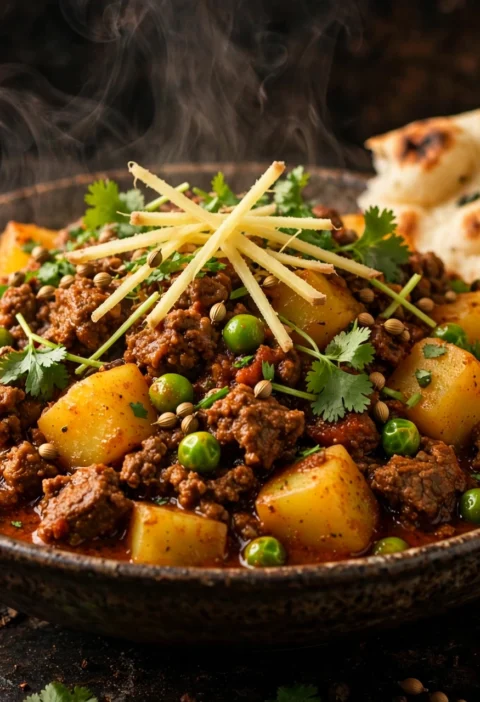
Every family has one dish that only appears dressed in its Sunday best, and in ours it was always beef korma. My strongest memory of it comes from my cousin’s shadi in Karachi — long tables under a striped shamiana, waiters weaving between guests with trays from a deg the size of a bathtub, and that smell arriving before the food did: onions fried dark, warm whole spices, ghee. I was maybe nine, sitting cross-legged on a plastic chair, and I remember the beef giving way at the merest nudge of a naan, the gravy so dark and glossy you could nearly see your face in it. This beef korma recipe is my attempt, many years and many pots later, to recreate that wedding-hall magic in an ordinary home kitchen — no caterer, no bathtub-sized deg, just a heavy pot and a free afternoon.
Beef korma is not chicken qorma with the protein swapped. Beef brings a tougher, harder-working cut to the party, and that cut demands time in exchange for depth. Where chicken simmers politely for half an hour, beef wants a long, low braise in an onion-heavy gravy until the meat surrenders and the sauce turns the colour of strong black tea. The gravy itself is stubbornly old-school — no tomatoes, no cream from a carton — nothing but onions cooked down to mahogany, yogurt folded in with respect, and whole garam masala perfuming the pot. It is celebration food, certainly, but a confident, unhurried kind: nothing flashy on the surface, everything earned underneath.
Why This Beef Korma Recipe Works
Beef korma goes wrong in predictable ways — chewy meat, a gravy that tastes of raw onion, yogurt that splits into sad little grains. Every one of those failures is preventable, and this beef korma recipe is built around the five habits that prevent them:
- The cut does half the work for you. Chuck or shank, marbled and threaded with connective tissue, is exactly what a long braise wants. Over two slow hours that tissue melts into natural gelatin, which is where the gravy’s body and the meat’s silkiness come from. Lean stewing cubes have nothing to give; they simply dry out.
- Onions are not an ingredient here; they are the gravy. Four large onions, shaved thin and fried to a deep, even brown, supply both the colour and the sweet backbone of the sauce. Rush them to a polite gold and your korma stays pale and faintly raw-tasting whatever you add later.
- Yogurt is folded in gradually, over gentle heat. Dump a full cup into a fiercely hot pot and it shocks and splits almost every time. Whisked smooth first, then added a spoonful at a time while you stir, it melts into the gravy instead of curdling against it.
- Whole spices bloom in the hot fat before anything else joins them. Bay leaves, cinnamon, cardamom and cloves crackling in ghee-scented oil flavour the fat itself, and that fat then carries their perfume through every bite.
- The braise stays low, slow, and barely watered. Beef sweats out a surprising amount of its own juice as it cooks. Flood the pot and you are boiling meat in tinted water; give it only what it needs and the gravy stays concentrated, dark and clinging.
Ingredients
Korma travelled a long road to reach the wedding halls of Karachi. It began in Mughal court kitchens — the word korma comes from the Urdu qorma, to braise — where meat was sealed in hot fat and then coaxed tender in onion and yogurt, and the wedding-style beef version descends directly from those deg pots. Its aroma comes from garam masala used in whole form rather than ground, so the spice sits in the background like music from another room instead of shouting over the meat. For this beef korma recipe, ask your butcher for 2-inch chunks, bone-in if you can — bones give the gravy a depth no stock cube has ever faked.
Serves 6
For the beef and the braise:
- 2 1/2 pounds beef chuck or shank, cut into 2-inch chunks, bone-in if possible
- 1/2 cup oil, ghee, or a half-and-half mix of both
- 4 large onions, sliced as thin as you can manage (about 5 cups)
- 1 1/2 tablespoons ginger paste
- 1 tablespoon garlic paste
- 1 cup plain full-fat yogurt, whisked until completely smooth
- 1 1/2 cups hot water, plus a little more if the pot runs dry
Whole spices:
- 2 bay leaves
- 1 cinnamon stick, about 2 inches
- 6 green cardamom pods, lightly cracked
- 1 black cardamom pod
- 6 whole cloves
- 1 teaspoon black peppercorns
Ground spices:
- 2 teaspoons ground coriander
- 1 1/2 teaspoons red chilli powder (Kashmiri for colour, hot for fire, or a mix)
- 1/2 teaspoon ground turmeric
- 1 1/4 teaspoons fine salt, or to taste
To finish:
- 1 tablespoon fresh ginger, cut into fine juliennes
- 3 to 4 fresh green chillies, slit lengthwise
- Juice of 1/2 lemon, plus extra wedges for the table
- 1/2 teaspoon ground garam masala, for sprinkling
- A small handful of fresh cilantro leaves (optional)
How to Make This Beef Korma Recipe – Step by Step
Step 1: Brown the onions slowly to a deep mahogany. Warm the oil and ghee in your heaviest pot over medium heat and add every last onion slice. Stir every few minutes for 15 to 18 minutes, until the onions pass gold, pass amber, and arrive at a rich, even mahogany — take them further than feels comfortable, but pull them the moment the smell turns from sweet to scorched. Lift them out onto a paper-towel-lined plate. Once crisp, crush half roughly with your hands and blitz the rest in a blender with 2 or 3 tablespoons of water into a coarse paste. Both forms go back in later.
Step 2: Bloom the whole spices and sear the beef hard. Return the pot with its onion-sweet oil to medium-high heat. Drop in the bay leaves, cinnamon, both cardamoms, cloves and peppercorns and let them crackle for 30 seconds, until the oil smells like a spice shop. Add the beef in a single layer — work in two batches if your pot is small — and sear each piece until it wears a proper brown crust, about 3 minutes per side. Stir in the ginger and garlic pastes; fry a minute more, until the sharp raw smell softens.
Step 3: Build the gravy with ground spices and a careful hand with the yogurt. Lower the heat, sprinkle in the coriander, chilli powder, turmeric and salt, and stir for half a minute, adding a splash of hot water if the spices threaten to catch. Now the yogurt: add it two spoonfuls at a time, stirring all the while, and wait until each spoonful has melted in before adding more. Stir back in the crushed onions and the onion paste. Cook this base, stirring often, for 8 to 10 minutes, until it deepens in colour and beads of oil begin to rise around the edges — the bhun that separates a wedding korma from a weeknight curry.
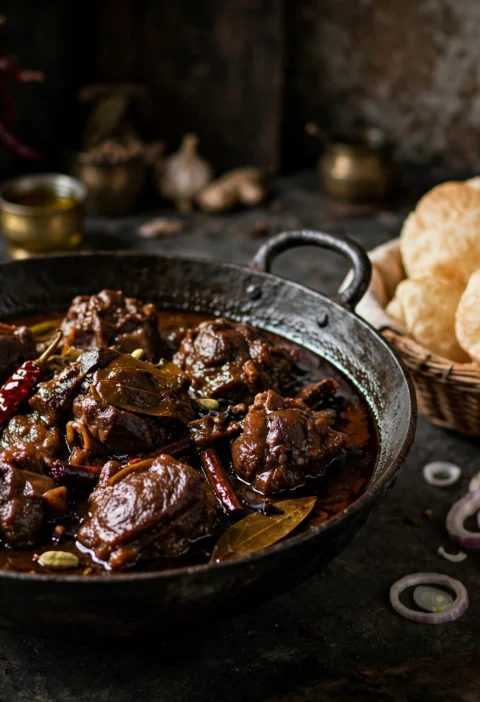
Step 4: Braise low and slow until the beef surrenders. Add the hot water, give it one stir, and let it come up to the barest simmer. Lid on, heat at its lowest, and walk away: 1 1/2 to 2 hours, checking every 30 minutes, adding a splash of hot water only if the gravy is catching. (A 325°F oven does the same job hands-free.) The korma is done when a chunk of beef falls apart under spoon pressure and the sauce clings to the back of a spoon in a glossy sheet.
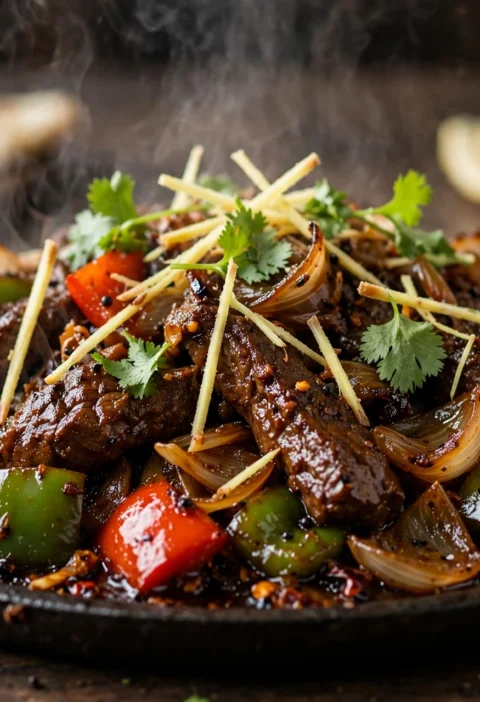
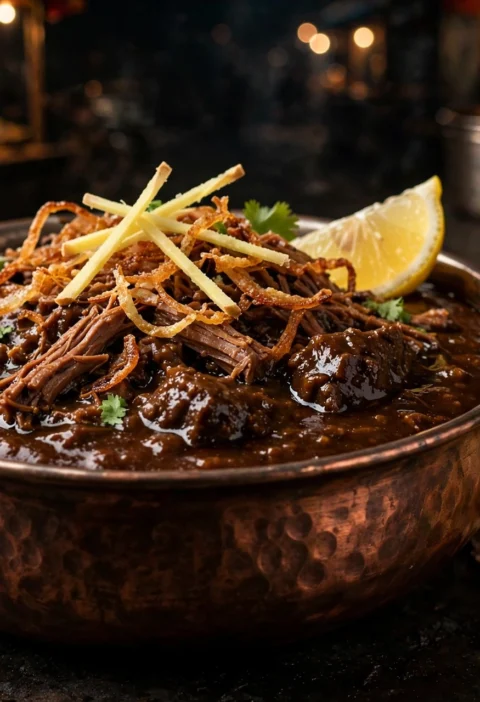
Step 5: Finish bright, rest, and serve. If the gravy looks thinner than you like, boil it uncovered for 5 minutes — beef korma should be thick enough to sit proudly on a naan, not run from it. Scatter over the ginger juliennes and slit green chillies, squeeze in the lemon juice, and shower the top with the ground garam masala and the reserved crisp onions. Lid back on, heat off, ten minutes of rest — this pause lets the fat settle into a gleaming layer and the flavours stop arguing and agree. Serve it straight from the pot.
Serving Suggestions
At a wedding this would arrive with sheermal — the saffron-tinted, slightly sweet bread that seems designed by fate to mop up korma gravy — but a good naan or a flaky paratha does nearly as well. At home I serve it with plain steamed basmati when the crowd is big — rice stretches a pot further than bread. Keep the sides simple and cool: a bowl of raita, a plate of sliced onions and cucumber with lemon, and nobody will ask for anything else. Put extra lemon and green chillies on the table and let people adjust their own plate — korma eaters are particular, usually rightly.
This beef korma recipe is the one I save for dawats and Eid lunches, but the family has its weekday loyalties too. When the craving strikes without the free afternoon, my chicken qorma delivers the same silky, spice-perfumed gravy in a fraction of the time, with tender chicken standing in for the beef. And when only beef will do but you want it falling off the bone in a thinner, spicier gravy, my beef nihari is the other great slow pot in this house; together they bookend every celebration menu we make.
Storage and Reheating
Here is the good news: beef korma is better on day two. The beef keeps drinking in the gravy overnight, the spices settle and marry, and the whole pot tastes deeper reheated than it did fresh. Cool leftovers promptly and store them in a lidded container in the fridge for 3 days at most, or in the freezer for up to 2 months. Warm it back up slowly on the stove over the lowest heat, with a spoonful of water worked in, stirring now and then, until hot through. Avoid a violent boil at this stage — the yogurt in the gravy has already been through enough, and rough reheating can turn its silkiness grainy. The crisp onion garnish does not survive storage, so fry a fresh pinch if you want that finish again.
Frequently Asked Questions
Which cut of beef works best for this beef korma recipe?
Chuck is my first choice, with shank a very close second. Both carry the fat and connective tissue that a two-hour braise converts into tenderness and body. Avoid lean stewing beef, round or topside — those cuts have so little marbling they finish the braise dry and stringy no matter how long you cook them. If your butcher sells beef on the bone, take it; the bones quietly enrich the gravy the whole time it simmers.
Why did my yogurt split and make the gravy grainy?
Heat shock, almost every time: cold yogurt hitting fiercely hot masala curdles on contact. Three habits prevent it in this beef korma recipe: whisk the yogurt smooth as silk, leave it on the counter for 20 minutes so the fridge chill leaves it, and add it gradually over lowered heat while stirring without pause. If yours still splits slightly, take heart — whisk a tablespoon of the hot gravy into 2 tablespoons of fresh yogurt, stir that back in off the heat, and the sauce will mostly come back together.
Can I make this beef korma recipe in a pressure cooker or Instant Pot?
Yes — and I do exactly that on busy weeks. Fry the onions, bloom the spices, sear the beef and build the yogurt masala exactly as written using the sauté function — none of that is negotiable — then seal and pressure-cook on high for 35 to 40 minutes with a natural release. Simmer the open pot 10 minutes afterwards to drive off the extra moisture pressure cooking leaves behind. The result is honestly tender and very good; it only lacks the last whisper of depth that the long open braise gives.
Why is my korma pale when the wedding version is so dark?
Colour in korma comes from exactly two places: onions fried to a genuine deep brown, and beef seared until it crusts. If either step stops at golden, the finished gravy stops at beige. Check also that you are not drowning the pot — excess water dilutes the colour along with the flavour. Resist the urge to cheat with food colouring — a properly browned onion gives you that dark, glossy wedding look honestly, and it tastes of something too.
Recipe Summary
- Prep time: 25 minutes
- Cook time: About 2 hours
- Total time: Roughly 2 hours 25 minutes
- Servings: 6
- Cuisine: Pakistani
- Course: Main Course