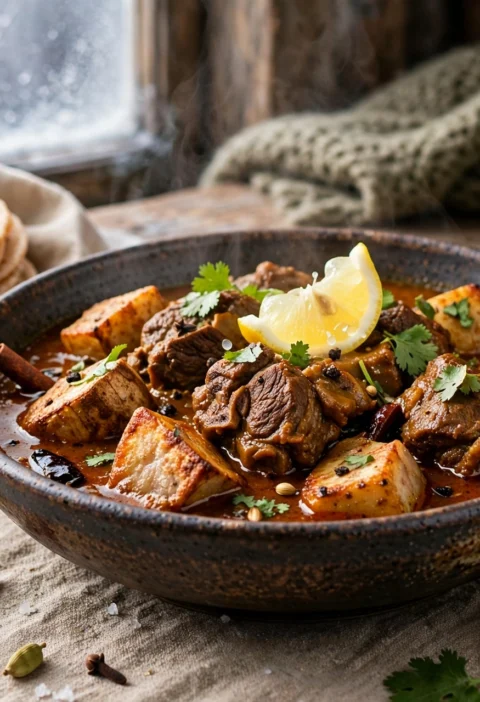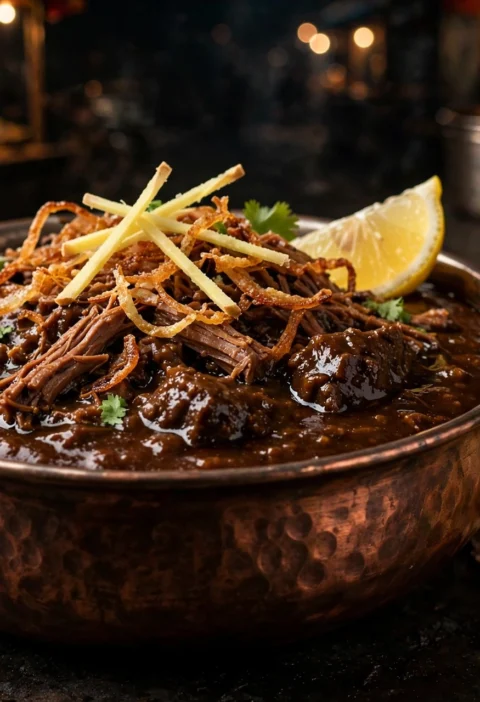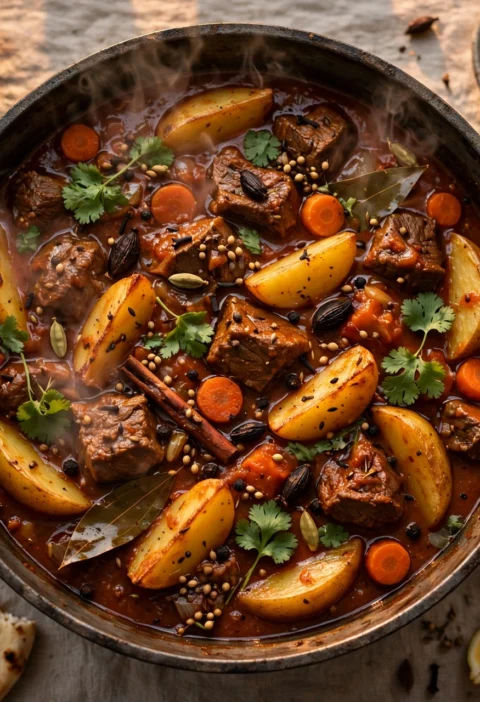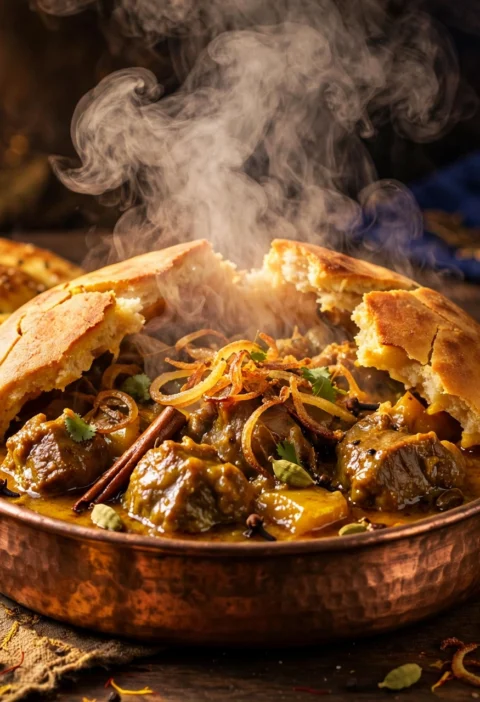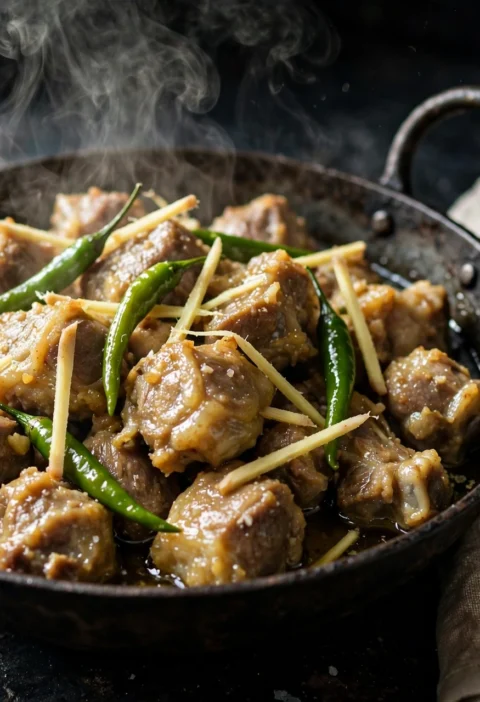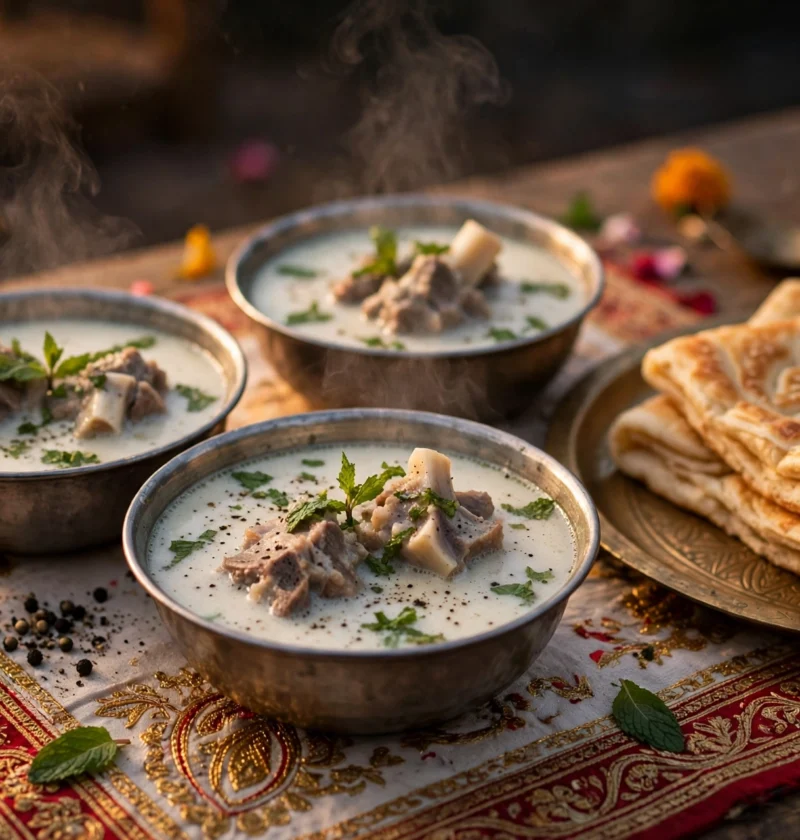
The first time I tasted marag, I was not in anyone’s kitchen. I was at a wedding — a Hyderabad-style dawat my cousin had married into — watching waiters thread through the crowd with trays of small steel bowls, steam curling off every one — and the hall, though the biryani had not even been announced, had gone quiet in that particular spoon-in-hand way. This mutton marag recipe is the bowl I have been chasing ever since: a thin, milky-white broth, bone-in mutton gone soft enough to sigh away from the bone, and a slow pepper warmth that builds at the back of the throat and stays for the whole feast.
I should say plainly where it comes from, because marag is not a dish my own family grew up cooking. It is Hyderabadi through and through — the traditional opening course of a Deccani wedding, served before the biryani lands and the real noise begins. I learned it by pestering the caterers that night and home cooks since, and I have written this mutton marag recipe down the way they taught it — with respect for that origin, and a little envy for how effortlessly Hyderabad keeps its classics alive. What defines it never changes: the broth stays white, the body stays thin, and black pepper does the talking that red chili does elsewhere.
Why This Mutton Marag Recipe Works
Marag looks simple — meat, water, spices — and that is why it goes wrong so often. Every step of this mutton marag recipe is guarding one of three things: the colour, the clarity, or the pepper.
- Nothing in the pot is allowed to colour it. No turmeric, no red chili powder, no tomato, no dark-fried onion. The ivory broth is not an accident of a short ingredient list; it is the identity of the dish, protected on purpose.
- The mutton simmers; it never boils hard. A rolling boil churns fat into the liquid and turns a clean broth cloudy and greasy; a bare, lazy simmer keeps it clear and lets the meat surrender slowly.
- The onions are cooked pale, never browned. Almost everywhere else in our cooking, onions go deep amber for sweetness. Here they stop at soft and translucent, lending body and gentle sweetness without tinting the pot.
- A modest pour of milk gives the broth its body. Not cream, not a heavy nut paste — just enough milk stirred through near the end to turn the broth opaque and soft, the wedding-caterer way.
- The pepper lands late, and fresh. Black pepper simmered for two hours goes flat and dusty. Crushed at the last moment and stirred through warm, it stays bright to the bottom of the bowl.
Ingredients for This Mutton Marag Recipe
Marag sits proudly inside Hyderabadi cuisine, that old Nizam-era kitchen where a wedding feast runs to five courses and the soup — the aghaz — is expected to wake the table, not fill it. The ingredient list is short and stubborn: bone-in mutton, whole spices, pale onion, mint, milk. What it is ladled alongside matters nearly as much — warm sheermal, the saffron-tinted milk bread, torn and dipped, though plain naan or rumali roti does the job at home. Buy mutton on the bone — shoulder or leg, in pieces of about two inches. Boneless meat makes a thinner-tasting bowl, because half of marag’s depth cooks out of the bones as it simmers.
For the marag
- 2 pounds (900 g) bone-in mutton (goat), shoulder or leg, cut into roughly 2-inch pieces
- 2 tablespoons ghee
- 1 large onion (about 8 ounces / 225 g), thinly sliced
- 1 1/2 tablespoons ginger-garlic paste
- a 1-inch piece of cinnamon, 4 whole cloves, 1 bay leaf, 4 green cardamom pods, and 1 black cardamom pod
- 1 teaspoon black peppercorns, lightly crushed, plus 1 1/2 teaspoons freshly ground black pepper, divided
- 4 to 5 fresh green chilies, slit (keep 2 whole if you want the gentler bowl)
- 1 1/2 teaspoons fine sea salt, plus more to taste
- 5 cups (1.2 litres) water
- 1/2 cup (120 ml) whole milk, at room temperature
- 1 tablespoon cashew paste (optional — a small richness some families add)
For the finish and serving
- A small handful of fresh mint leaves, torn, plus extra sprigs for the bowls
- 2 fresh green chilies, slit
- Freshly ground black pepper, for the table
- Lemon wedges
- Warm sheermal or naan, for serving
How to Make This Mutton Marag Recipe – Step by Step
Step 1: Sear the mutton gently and wake the whole spices. Melt the ghee in a heavy pot over medium heat and let the cardamoms, cinnamon, cloves and bay leaf crackle for thirty seconds. Add the sliced onion and cook, stirring, until it is soft, pale and translucent — six or seven minutes, and stop there; you are not browning it. Stir in the ginger-garlic paste until the raw smell leaves, about a minute. Now add the mutton and the crushed peppercorns and turn the pieces in the spiced ghee for five or six minutes, until the surfaces lose their raw pink and take the lightest golden edge. Deep browning is delicious in a curry and forbidden here — it browns the broth with it.
Step 2: Simmer low and slow until the meat is spoon-tender. Pour in the water and the salt, bring the pot just to the boil, then drop the heat to the barest simmer you can hold — a lazy bubble breaking the surface every few seconds. Skim off the grey foam that rises in the first fifteen minutes; that small patience keeps the finished soup clean-tasting. Lid ajar, let it go for 1 1/2 to 2 hours, until a piece of mutton presses apart easily with a spoon. In a pressure cooker, 20 to 25 minutes at full pressure does it — the FAQs are honest about the small trade.
Step 3: Build the white broth. With the meat tender, drop in the slit green chilies and let them perfume the pot for five minutes. If using the cashew paste, loosen it with a ladle of hot broth and whisk it back in. Then lower the heat to its minimum and stir in the milk in a slow stream, so it melts into the broth instead of feathering. Hold the pot just under a simmer for five more minutes — a hard boil now can split the milk and rough up the surface, and a marag’s surface should look like still, opalescent water.
Step 4: Skim, then season with the pepper forward. Lift off any beads of fat gathered at the edges — a spoon dragged across the surface, or a slice of bread laid on top for a second, does it neatly. Marag should taste rich from the bones, never greasy on the tongue. Now season properly: the remaining ground black pepper, and salt a pinch at a time, tasting as you go. Pepper here is not a garnish and not a background note; it is the seasoning, and the bowl should warm you steadily all the way down. If it tastes flat, it almost always wants salt before it wants more pepper.
Step 5: Finish with mint and green chili, and serve it like a first course. Scatter the torn mint and the last slit chilies over the pot, lid it, and rest it off the heat for five minutes, so the mint breathes into the broth without cooking dark. Ladle into small, warmed bowls, making sure every bowl gets its share of meat and at least one good piece on the bone. Set out lemon wedges and extra ground pepper, bring the sheermal warm in a folded cloth, and serve before anything heavy arrives — marag is an opening, and it deserves ten quiet minutes of the table’s full attention.
Serving Suggestions
Serve this mutton marag recipe the way the dawats do: small bowls, eaten first, with warm sheermal or naan for dipping and nothing heavier beside it. If it is opening a meal at home, follow it with a biryani or a simple pulao and let it do its original job. On its own, with bread and a lemon wedge, it makes a complete light supper — the bowl I make when someone in the house is run down and the evening wants something warming that will not sit heavily. A few extra mint leaves and a final dusting of pepper in each bowl, and it is ready.
Among the slow mutton pots on this site, marag keeps its own counsel. My mutton paya is the trotters’ marathon: hours of simmering until the broth turns gelatinous and lip-sticking, rich enough to coat the back of a spoon — a magnificent bowl, but the opposite pleasure. Marag is clean meat pieces in a thin, drinkable broth. My kunna gosht goes the other way entirely: a thick, atta-bound gravy cooked down in a clay pot, built for tearing bread through and mopping up every trace. Marag is spoon-and-bowl food — a course, not a centrepiece — first, fragrant and deliberately light, so the feast still has somewhere to go.
Storage and Reheating
This mutton marag recipe keeps for up to 3 days in the fridge in a lidded container, and like most broths it improves overnight, the pepper mellowing into the meat. Reheat it the gentle way it was cooked: lowest heat, stirring now and then, until it steams and the meat is hot through — never a rolling boil, which clouds the broth and can rough up the milk. Shower fresh mint and a pinch of fresh pepper over each bowl after reheating; those two are always added at serving, never stored in the pot. It also freezes well for up to 2 months. Defrost it gently in the fridge, then warm it through over low heat. For a freezer batch, leave the milk out and stir it in fresh at reheating — the broth comes back noticeably smoother.
Frequently Asked Questions
Why is marag white — and what ruins the colour?
The whiteness is not decoration; it is the signature of the dish, and it comes from discipline rather than from any one ingredient. There is no turmeric, no red chili powder and no tomato anywhere near the pot, the onions are never browned, and a finish of milk turns the broth properly opaque. The usual culprits when a marag comes out beige or brown: onions fried to the amber we use in curries, a heavy hand with a dark, roasted garam masala, or a hard boil emulsifying everything together. Keep every colouring agent out and the onions pale, as this mutton marag recipe insists, and the soup stays ivory on its own.
Pressure cooker or open pot — how do the timings compare?
The open pot takes 1 1/2 to 2 hours at a bare simmer, and gives the clearest broth and the most control — you can skim as you go. The pressure cooker does the same tenderness in 20 to 25 minutes at full pressure with a natural release, which is how most home cooks I know make it on a weeknight. The honest trade: pressure-cooked marag tastes every bit as good, but the broth runs a fraction cloudier, because the sealed, hotter environment works the fat into the liquid. Let it rest, skim carefully at the end, and almost nobody will know.
What is the best cut of mutton for marag?
Bone-in pieces from the shoulder or the leg, cut to about two inches, are the sweet spot — enough meat to eat, enough bone and connective tissue to body the broth. A few marrow bones are a genuine bonus; caterers prize them. Rib pieces work too, and cook a little faster. What I would avoid is boneless leg meat: convenient, yes, but the soup loses the deep, savoury backbone that only the bones give, and no seasoning quite puts it back. Ask the butcher to cut it curry-style on the bone and you are most of the way there.
Can I make marag with chicken instead?
Yes — chicken marag is a real and respected lighter cousin, not a compromise invented for this page, and plenty of Hyderabadi homes make it. Use bone-in chicken pieces and cut the simmer right down: 35 to 40 minutes in an open pot, or about 10 minutes under pressure, because chicken gives up its flavour fast and overcooks into stringiness if you follow mutton timings. The broth will be paler in flavour as well as colour — gentler, cleaner, more delicate — and it takes the pepper and mint beautifully. It is a lovely bowl. It is simply a different, quieter one than the wedding original.
Recipe Summary
- Prep time: 20 minutes
- Cook time: 1 hour 45 minutes
- Total time: About 2 hours 5 minutes
- Servings: 6
- Cuisine: Pakistani
- Course: Main Course