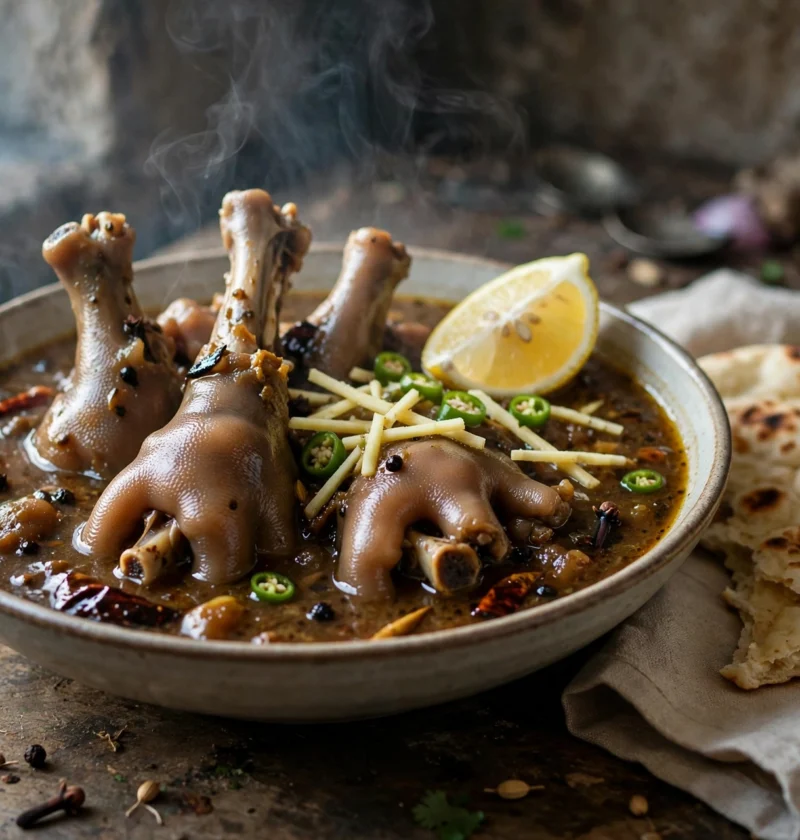
The mutton paya recipe I measure everything against was served to me at a famous old-city breakfast spot in Lahore, on a January morning so cold the steam from the bowl fogged my glasses before the first bite. We had queued since before the azaan, standing over coal braziers with a dozen rickshaw drivers and night-shift workers, and when the paya finally came — goat trotters standing in a broth that shivered like set jelly, the surface glossed with ghee — nobody at that steel table spoke for a full minute. It was breakfast, medicine, and an argument for winter itself, all in one bowl. My mutton paya recipe exists because I needed that morning to be repeatable in my own kitchen.
The road there was not short. My first home attempt smelled wrong from the moment the pot boiled, because I had rinsed the trotters and nothing more — no singeing, no scrubbing, and the broth carried that barnyard edge straight to the table. My second attempt was clean but thin: I simmered for two polite hours and got trotter-flavored water with rubbery skin, the kind of bowl that makes a man question the whole project. The corrections, when they came, were about patience and preparation in equal measure: singe and scrub the paya properly, blanch and throw that first water away, then simmer low and long until the broth turns milky and your lips stick together after a spoonful. This mutton paya recipe is built on those three acts of patience.
Why This Mutton Paya Recipe Works
Paya is a dish with nowhere to hide — a handful of bones, water, and spices, where every flaw in cleaning or timing lands directly in the broth. This mutton paya recipe works because it attacks the dish’s three classic failures head-on:
- The trotters are singed, scrubbed, and blanched before cooking begins. Any fine hair left on a goat trotter perfumes the whole pot with an off, farmyard smell that no spice can cover. Passing each paya over an open flame, scrubbing it with flour and salt, and discarding the first blanching water removes that risk entirely — the unglamorous first step of this mutton paya recipe is the one that makes it taste clean.
- Goat trotters are given their own clock, not the beef paya’s. Goat paya are smaller and finer-boned than beef trotters, so they surrender their gelatin faster — three to four hours of gentle simmering instead of an overnight marathon. Follow the beef timetable and the meat falls to shreds; this mutton paya recipe is timed for the smaller bone, and the broth sets lighter and silkier for it.
- The simmer is kept at a tremble, never a boil. A rolling boil beats the fat and gelatin into a cloudy, greasy emulsion and toughens the skin. A lazy, barely-moving surface lets the collagen melt out slowly into a broth that turns pale gold, almost milky, and clear at the same time. Temperature discipline is what separates a great mutton paya recipe from a murky one.
- The masala is built separately and married late. Frying the onions, ginger-garlic, and ground spices into a proper bhuna in their own pan, then adding them to the simmered trotters, keeps the broth’s delicate flavor intact while giving it a real backbone. Dumping raw spice into the stock pot — the beginner’s shortcut — produces raw-spice soup, not paya.
- The stickiness test decides when it is done, not the clock. Done paya broth coats the back of a spoon, sets trembling like jelly as it cools, and makes your lips tack together slightly after a taste. This mutton paya recipe teaches you to read those signs, because trotters vary in size and no printed hour can promise the exact moment the gelatin gives itself up.
Ingredients
Serves 4-5
For the paya and stock:
- 6 goat trotters (paya), about 1 1/2 pounds (700g), singed and scrubbed clean
- 2 tablespoons all-purpose flour or atta, for scrubbing
- 1 large onion, quartered
- 8 garlic cloves, lightly crushed
- 2 bay leaves
- 2 black cardamom pods
- 1-inch piece cinnamon stick
- 1 teaspoon black peppercorns
- 8 cups water, plus more as needed
- 1 teaspoon salt, for the stock
For the masala:
- 1/3 cup ghee or neutral oil
- 2 medium onions (about 250g), sliced thin
- 1 1/2 tablespoons ginger-garlic paste
- 1 tablespoon ground coriander (dhaniya)
- 1 teaspoon garam masala
- 1 teaspoon ground cumin (zeera)
- 1 1/2 teaspoons red chili powder, or to taste
- 1/2 teaspoon turmeric powder (haldi)
- Salt, to taste
To serve:
- Lemon wedges
- 2-3 fresh green chilies, sliced
- 1-inch piece fresh ginger, cut into fine matchsticks
- Fresh coriander leaves, chopped
Paya — from the Persian word for leg or trotter — traveled across Central and South Asia as the breakfast of working people, a dish that turned the cheapest cut from the butcher into the richest bowl on the table. Its magic is pure food science: the trotters are dense with collagen, the connective protein that melts over long, gentle heat into gelatin, which is why a good broth sets into a trembling jelly in the fridge and coats your lips as you eat. A mutton paya recipe is, in the end, a lesson in respecting what slow heat does to humble ingredients.
How to Make This Mutton Paya Recipe – Step by Step
Step 1: Singe, scrub, and blanch the trotters until they are truly clean.
Hold each trotter with tongs and pass it over an open gas flame, turning until every trace of fine hair is singed away. Rub the paya all over with the flour and a pinch of salt — the flour grips the grime — then scrub under running water with a stiff brush and rinse very well. Place them in a pot, cover with fresh water, boil hard for 5 minutes, then drain and throw that water away completely. This blanch carries off the impurities that cloud and sour a broth, and no mutton paya recipe should skip it.
Step 2: Start the long simmer with the whole spices, and skim.
Return the blanched trotters to the cleaned pot with the 8 cups of fresh water, the quartered onion, garlic, bay leaves, black cardamom, cinnamon, peppercorns, and the teaspoon of salt. Bring to a boil, then drop the heat to the barest tremble and skim off every bit of grey foam that rises in the first 20 minutes. Cover with the lid slightly ajar and simmer gently for 2 hours — the long, quiet middle of this mutton paya recipe, during which you mostly stay out of its way. The broth will slowly turn from watery to pale and faintly opalescent — the first sign the gelatin is moving.
Step 3: Build the masala separately and fry it properly.
While the trotters simmer, heat the ghee in a separate wide pan and fry the sliced onions for 10 to 12 minutes until evenly golden. Add the ginger-garlic paste and fry for 2 minutes, then the ground coriander, red chili powder, cumin, and turmeric, with a splash of the hot paya stock to keep the spices from scorching. Cook this masala for 5 to 6 minutes, stirring, until it darkens a shade and the ghee rises around the edges. A properly fried masala is what gives a mutton paya recipe its depth without muddying the broth.
Step 4: Marry the masala to the pot and simmer until the broth turns sticky.
Stir the fried masala into the trotter pot, rinsing the pan with a ladle of stock so nothing is wasted. Continue simmering at the same gentle tremble for another 1 1/2 to 2 hours, until the meat and skin are completely tender — the skin should feel like soft jelly between your fingers — and the broth has turned milky-gold and viscous. (A pressure cooker compresses the total simmering to about 45 to 50 minutes under pressure; the cleaning, skimming of the first boil, and separate masala stay exactly the same.) Check the stickiness the way this mutton paya recipe judges doneness: dip a spoon, let the broth cool on it for a few seconds, and press a drop between finger and thumb — it should feel tacky and pull a fine thread.
Step 5: Rest, skim if needed, and serve the Lahore way.
Take the pot off the heat, stir in the garam masala and adjust the salt, and rest the paya for 15 minutes; if a thick layer of fat has pooled and your household prefers it leaner, skim some — but leave a sheen, because this is a winter dish and the gloss is part of its pleasure. Serve this mutton paya recipe in deep bowls with the trotters standing in the broth, and put the lemon wedges, sliced green chilies, ginger matchsticks, and coriander on the table for each person to finish their own bowl. A squeeze of lemon at the last moment wakes the whole thing up.
Serving Suggestions
Paya is a breakfast dish by birth and by temperament — rich, warming, and built to carry a person through a cold working morning. Serve it early, with the broth at a steaming, lip-coating pour, and something plain and absorbent beside it. The garnishes are not decoration: the lemon cuts the gelatinous richness, the raw ginger and green chili add the fresh heat the long cooking deliberately left out, and every eater at that Lahore table seasoned their bowl differently. Cook the full quantity even for a small family; the broth only gains character overnight — which is why this mutton paya recipe is written in a generous quantity to begin with.
The only bread this mutton paya recipe truly wants is a blistered, fresh naan, torn and dragged through the broth until it sags — kulcha runs it a close second. And if trotters have won you over entirely, my bigger-boned beef paya is the natural next project: the same patience and the same sticky reward, but with a deeper, beefier broth and a longer simmer that suits a slow weekend. Between the two pots, most paya lovers eventually declare an allegiance — goat for breakfast delicacy, beef for depth — and this recipe is my own vote cast early.
Storage and Reheating
This mutton paya recipe keeps magnificently — in the fridge it sets into a firm jelly, which is the surest proof your simmer was long enough. Store it in a sealed container for up to 3 days, or freeze the broth and trotters for up to 2 months. Reheat in a pot over low heat with a small splash of water, letting the jelly melt back into broth without ever bringing it to a hard boil, which would break its silky texture. The flavor deepens on the second day as the spices settle into the gelatin, so this mutton paya recipe is honestly better made the evening before a planned breakfast and reheated at dawn, the way the old-city shops themselves work.
Frequently Asked Questions
How do I clean paya properly so the broth does not smell?
The smell lives in three places: unsinged hair, surface grime, and the impurities in the first boil. Singe every trotter over a flame until no hair remains, scrub with flour and salt under running water, then boil for 5 minutes and discard that water entirely. Ask your butcher to singe and chop the paya for you if you prefer — most desi butchers do it without being asked twice. Follow the full cleaning in this mutton paya recipe and the finished broth smells only of spice and ghee.
Why is my paya broth thin and watery instead of sticky?
Either the simmer was too short, the heat was too high, or the pot held too much water for the number of trotters. Gelatin leaves the bone slowly, and a thin broth is usually just an impatient one — give it another hour at a tremble and test again. If you must rescue a finished batch, simmer it uncovered to reduce, but understand that reduction concentrates flavor more than it creates body; the real fix is time, which is why this mutton paya recipe builds in a generous simmer and a stickiness test instead of a strict clock.
Can I make mutton paya in a pressure cooker?
Yes — pressure cookers and paya are old friends in Pakistani kitchens. Do the full cleaning and blanching first, give the stock its first open boil and skim, fry the masala separately, then seal and cook under pressure for 45 to 50 minutes. Let the pressure drop naturally. The texture of the broth will be very good, though a long open simmer produces a slightly clearer, more delicate result; on a weekday morning, the cooker is a trade this mutton paya recipe happily accepts.
What is the difference between mutton paya and beef paya?
Size, timing, and character. Goat trotters are smaller and finer, so they cook faster and give a lighter, silkier broth that sets into a delicate jelly — the breakfast paya of Lahore’s old city. Beef trotters are much larger, need considerably longer, and produce a deeper, heavier, beefier broth. The method is the same family — clean thoroughly, skim, simmer gently, garnish boldly — which is why learning one mutton paya recipe teaches you both dishes.
Recipe Summary
- Prep time: 40 minutes
- Cook time: 3 hours 30 minutes
- Total time: About 4 hours 10 minutes
- Servings: 4-5
- Cuisine: Pakistani (Lahori Breakfast)
- Course: Breakfast / Main