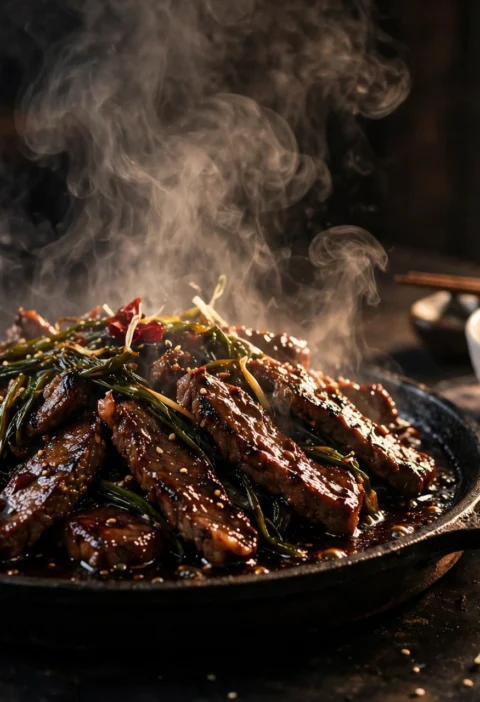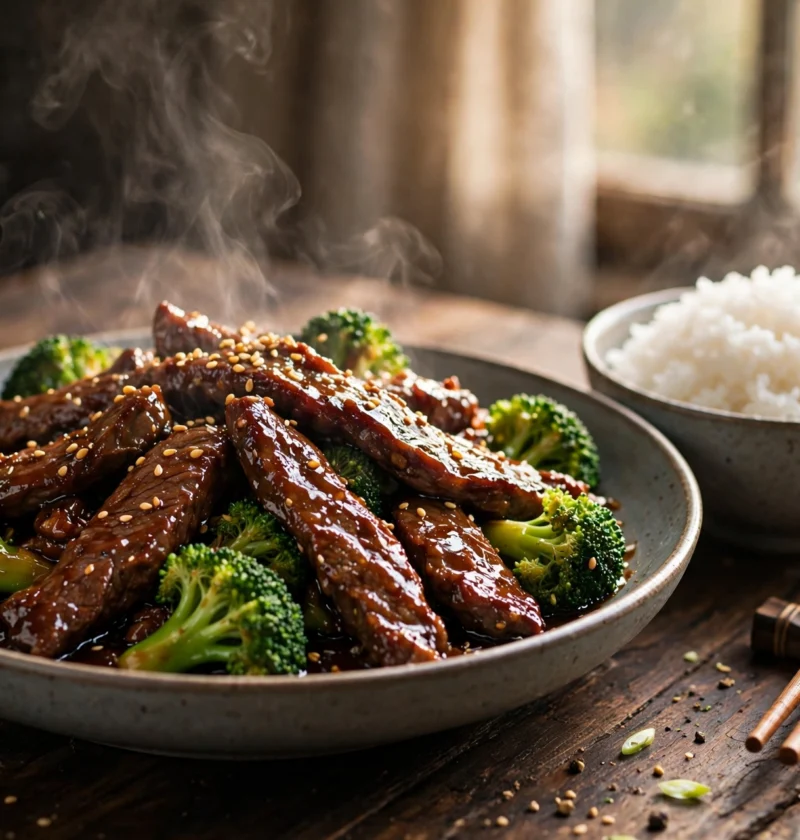
Friday nights in our house had a sound — the crackle of a takeout bag coming through the front door. My father would arrive with two white cartons swinging from one hand, and one of them was always beef and broccoli: beef so silky it seemed to have been persuaded rather than cooked, broccoli green as paint, everything lacquered in a dark, shiny sauce that clung instead of puddling. I spent years trying to reproduce that carton and producing, instead, grey beef in brown water with broccoli the colour of an old army blanket. This beef broccoli recipe finally ended the losing streak — the takeout box, rebuilt at home, and better than the original because it reaches the table still steaming.
What changed everything was realising the dish is not really about the sauce — that part is five humble things whisked in a bowl. The magic is in two habits our desi kitchens do not always bother with for a stir-fry: velveting the beef so it stays tender under fierce heat, and treating the broccoli to its own schedule — blanched one minute, shocked cold, dried properly, and introduced to the wok only at the very end. There is no mirchi-masala here, no tomato, no long bhunao. It is soy, oyster sauce, garlic and ginger doing quiet, confident work, and the whole thing is cooked in less time than the delivery rider used to take to find our street.
Why This Beef Broccoli Recipe Works
Beef and broccoli fails in three predictable ways — chewy beef, dull broccoli, watery sauce — and every step in this beef broccoli recipe exists to head off one of them:
- The beef is velveted, not merely marinated. Cornstarch with a whisper of baking soda changes the surface of the meat: it holds its moisture under brutal wok heat and stays silky instead of seizing into shoe leather. It is the single biggest difference between takeout beef and home beef.
- The slices are thin, and cut against the grain. Slice across the long lines of the grain, never along them: short fibres mean a tender bite even from a hardworking, inexpensive cut.
- The broccoli is blanched separately — sixty seconds, no more. Raw broccoli thrown straight into the wok steams in its own water and turns khaki before it cooks through. A one-minute blanch and a cold shock set its colour emerald, so the wok only warms it through.
- Everything is dried before it meets the oil. Wet beef steams instead of searing; wet broccoli spits and dilutes the sauce. Ten patient minutes of draining is what keeps the final dish glossy rather than soupy.
- The sauce is fully mixed before the wok gets hot. The stir-fry itself takes ninety seconds — no time to be measuring soy sauce with shaking hands. Bowl first, wok second, and the glaze thickens the moment it hits the heat.
Ingredients for This Beef Broccoli Recipe
Beef and broccoli is a Chinese-American takeout classic that has quietly become a weeknight regular in desi homes too — it sits very comfortably beside the chow mein and fried rice our kitchens already claim as their own. The flavour backbone is oyster sauce, that thick, savoury-sweet Cantonese staple made from oyster extracts, which gives the glaze its deep, almost caramel savouriness; buy a proper bottle of it, because the whole sauce leans on it. The beef wants to be a cut with long, visible grain — flank is the classic, sirloin a fine stand-in — and the broccoli should be one firm, dark-green head, cut into florets with some sweet stem kept on. Nothing here is exotic, which is exactly the point: this beef broccoli recipe is a technique dish, not a shopping expedition.
For the beef and marinade
- 1 1/4 pounds (570 g) flank steak (or sirloin), sliced about 1/4 inch (6 mm) thick, against the grain
- 1 tablespoon soy sauce
- 1 tablespoon Shaoxing wine or dry sherry (or water, if you prefer)
- 2 teaspoons cornstarch
- 1/2 teaspoon baking soda
- 1 teaspoon neutral oil
- 1/4 teaspoon ground white pepper (or black pepper)
For the sauce and stir-fry
- 4 cups broccoli florets (about 12 ounces / 340 g), from 1 large head, with a little stem attached
- 1/3 cup (80 ml) low-sodium chicken stock or water
- 3 tablespoons oyster sauce
- 2 tablespoons soy sauce
- 1 tablespoon brown sugar
- 1 teaspoon cornstarch
- 1 teaspoon toasted sesame oil
- 2 tablespoons neutral oil, for stir-frying
- 4 garlic cloves, minced
- 1 tablespoon grated fresh ginger
- 1 teaspoon sesame seeds, to finish
- Steamed white rice, to serve
How to Make This Beef Broccoli Recipe – Step by Step
Step 1: Slice the beef thin and velvet it. Pop a thick steak in the freezer for 20 minutes first — half-frozen beef slices cleanly instead of tearing. Find the direction of the grain, those long parallel lines in the meat, and slice across them into thin strips. Toss the strips with the soy sauce, wine, cornstarch, baking soda, oil and pepper, massaging the mixture over every piece until each slice feels slick. Rest it on the counter for those 20 minutes, or cover and chill it for up to 2 hours if you are cooking ahead. Meanwhile, whisk the sauce ingredients together in a small bowl and park it beside the stove — once the wok is hot, there will be no time to go hunting for the oyster sauce.
Step 2: Blanch the broccoli for sixty seconds, then dry it like you mean it. Bring a pot of well-salted water to a rolling boil, 212°F (100°C), drop in the florets and count to sixty — they should turn a vivid, electric green and still feel firm when bitten. Fish them straight into a bowl of cold water to stop the cooking, drain well, and spread them on a clean towel. This drying is not fussiness: broccoli that goes into the wok dripping will steam, spit and bleed water into the sauce. Pat the beef with a paper towel too, for the same reason.
Step 3: Sear the beef in a smoking wok, in a single layer. Heat a wok or your widest, heaviest pan over your stove’s highest flame until the metal smokes faintly. Add the oil, swirl, and lay in half the beef in one flat layer — no crowding, no stirring for 45 seconds. Let the underside take a deep brown crust, then toss 30 seconds more, until the strips are cooked at the edges but still a shade pink in the middle. Slide them onto a plate and repeat with the rest. Beef cooked in a pile steams in its own juices and turns grey; beef given space and smoke turns mahogany, which is the whole game in this beef broccoli recipe.
Step 4: Garlic, ginger, and the sauce goes in to gloss. Drop the heat a moment and add a drizzle of oil if the wok looks dry. Garlic and ginger go in for barely 20 seconds — until the raw smell blooms into fragrance, not a second longer; burnt garlic haunts a whole dish. Give the sauce bowl a quick re-whisk (the cornstarch settles) and pour it in. It will bubble almost immediately and thicken within 30 to 45 seconds into a dark, shiny glaze that coats the back of a spoon. If it tightens too much, splash in a tablespoon of water; it should pour like warm honey.
Step 5: Everything back in, one toss, and straight over rice. Return the beef with all its resting juices, add the broccoli, and toss 30 to 60 seconds — just until the florets are hot, glazed and still shamelessly green, and the beef glossy edge to edge. Kill the heat, scatter the sesame seeds over the top, and spoon it immediately over bowls of steamed white rice so the extra sauce soaks down into it. Eat it now, starting with a cook’s bite standing at the counter — it does not improve while everyone finds their chair.
Serving Suggestions
The classic presentation needs no improvement: a mound of plain steamed rice, the beef and broccoli spooned over with all its sauce, and chopsticks or a fork depending on your household’s politics. A drizzle of chili oil at the table wakes it up nicely for those of us who cannot leave our desi palates at the door. Keep the rest simple — the dish is rich, glossy, and does not want competition.
For the full Friday-night spread, pair it with the other members of this site’s takeout family. My chicken chow mein is the noodle of the house — springy, smoky, built for sharing from one big platter — and a table holding both the chow mein and this beef broccoli recipe is a table nobody leaves early. And if plain steamed rice feels too plain for the occasion, spoon the beef over my egg fried rice instead: the rice brings its own savoury, eggy richness to the plate. My honest guidance — on an ordinary weeknight, plain rice wins, because it lets the dark oyster glaze be the whole story; the fried rice is for when the meal is the event.
Storage and Reheating
Any leftovers go into a lidded box in the fridge, where they keep well for three days; the beef itself stays remarkably tender thanks to the velveting. Be honest about the broccoli, though: overnight it softens and surrenders some of its green, and no reheating restores that first-night snap — a good leftover, not a great one. Reheat fast and hot: a wok or wide pan over high heat with a teaspoon of water, tossing for a minute until everything is steaming and the sauce loosens back to glossy. The microwave works in one-minute bursts if you must, but it steams the broccoli further. I do not freeze this beef broccoli recipe as a finished dish — frozen broccoli turns to mush — though the cooked beef in its sauce freezes acceptably for a month.
Frequently Asked Questions
What is the best cut of beef for beef and broccoli?
Flank steak is the classic for a reason: its long, open grain slices into strips that velvet beautifully and stay tender through a fast, fierce fry. Sirloin is the easiest substitute and nearly as good; skirt steak works too. Whatever you buy, the slicing matters as much as the cut: slice across the grain and each bite shears through short fibres; slice along it and even a wonderful steak chews like rope.
What does velveting actually do — and why the baking soda?
Velveting is the Chinese restaurant technique of coating meat in cornstarch (sometimes with egg white or a little soda) before a quick fry. The starch forms a thin jacket that shields the beef from the wok’s violence, sealing in juices and giving that silky, slippery bite. The baking soda works differently: a small amount raises the surface pH of the meat, which stops the proteins from knitting tightly together as they cook, so the beef stays tender — and it browns better, too. Half a teaspoon across a whole batch is genuinely all you need; more than that and you risk a faint soapy note, so measure it rather than guessing.
Why did my broccoli turn dull and soggy?
Almost always one of three things: it was blanched too long, it went into the wok wet, or it sat waiting in the sauce. Broccoli is a sixty-second vegetable here, not a five-minute one — pull it while it still crunches, shock it cold, and drain it on a towel. Then give it the shortest possible time in the wok: it arrives already cooked, so it only needs warming through the glaze. If yours came out olive-coloured, it simply spent minutes too long in hot water or hot sauce; next time, use a timer and be ruthless about pulling it early.
I don’t have oyster sauce. What can I substitute?
The most honest stand-in is hoisin sauce mixed half and half with soy sauce — it gives you the sweet, dark body, though it leans sweeter and less savoury, so trim the brown sugar in the sauce to a teaspoon. A second option is soy sauce with a pinch of extra sugar and a small dash of fish sauce, which borrows back some of that deep sea-savouriness; mushroom-based “vegetarian oyster sauce,” sold in most Asian grocers, is a genuinely good swap and keeps the dish’s character intact. What I would not do is simply leave it out and add more soy — the sauce turns thin, salty and one-dimensional, and the dish loses the very thing that made you want it.
Recipe Summary
- Prep time: 20 minutes (plus 20 minutes marinating)
- Cook time: 10 minutes
- Total time: About 50 minutes
- Servings: 4
- Cuisine: Pakistani
- Course: Main Course