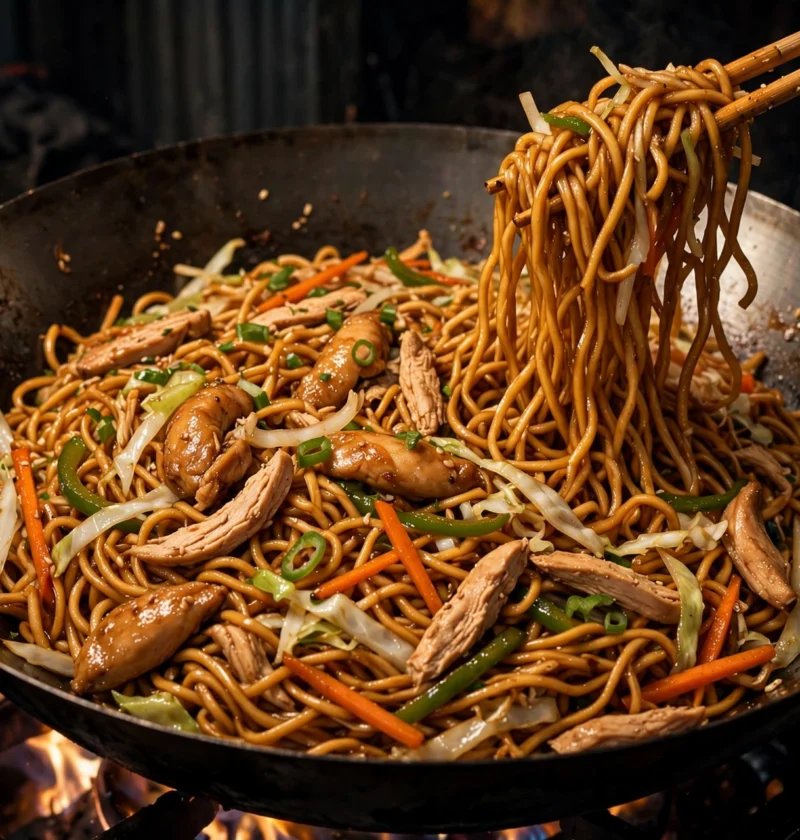
Every college in Pakistan seems to have the same chow mein man stationed just outside its gate, working a wok the size of a satellite dish over a flame that roars like a small jet. Between lectures we would crowd his cart with our orders shouted over the noise — “ek chow mein, extra mirchi!” — and watch him toss noodles in a cloud of steam and soy-scented smoke, the whole performance over in three minutes. This chicken chow mein recipe is my attempt to reproduce that cart in a home kitchen, because the canteen version, eaten standing up with a plastic fork, remains the finest noodles of my life.
The home versions I made for years were a different, sadder species. I boiled the noodles to full softness, so they snapped into short, mushy pieces the moment the wok spatula touched them. I tipped wet, dripping noodles into a modest pan along with every vegetable I owned, and the whole thing steamed into a grey tangle that tasted of boiled cabbage. The cart cook’s discipline, once I watched for it, was total: noodles boiled shy of done, rinsed cold, and left to dry; everything cut in matchsticks so it cooks in the same two minutes; the wok never more than half full; and the sauce added in the last half minute. Those rules, respected, changed everything.
Why This Chicken Chow Mein Recipe Works
Chow mein is a texture dish before it is a flavor dish — springy noodles, crunchy vegetables, everything glossed but nothing drowned. This chicken chow mein recipe protects those textures one rule at a time:
- The noodles are boiled just under, then dried. Pull them a minute before the packet says they are done, rinse them cold to stop the cooking, toss them with a teaspoon of oil, and spread them out to dry. Noodles that enter the wok dry and slightly firm finish perfectly in its heat; noodles that enter wet and fully cooked only steam and break.
- Everything is cut in matchsticks. Chicken in thin strips, carrot and capsicum in julienne, cabbage in fine shreds — uniform thin pieces all cook in the same fierce two minutes, so nothing waits around in the wok getting tired while something else catches up.
- The wok is never crowded. A mountain of noodles in a small pan drops the temperature, releases steam, and boils instead of frying. Cook in two batches if your wok is modest; each batch should hiss the whole time it is in the pan, and that hiss is the sound of frying, not steaming.
- The sauce is light and late. Soy, vinegar, white pepper, and a pinch of sugar make a seasoning, not a soup — the noodles should come out glossy and separate, not swimming. It goes in during the final thirty seconds, tossed around the hot edges of the wok so it reduces slightly as it coats.
- The vegetables keep their crunch on purpose. Cabbage and capsicum go in late and come out still snapping. In street chow mein the contrast is the pleasure: soft noodles, firm vegetables, tender chicken, all in one forkful — overcooked vegetables collapse that contrast into uniform softness.
Ingredients
Serves 4
For the noodles and chicken:
- 8 ounces (225g) dried egg noodles or chow mein noodles
- 1 pound (about 450g) boneless chicken breast or thigh, cut into thin strips
- 1 tablespoon soy sauce
- 1 teaspoon cornstarch (cornflour)
- 1/2 teaspoon white pepper
- 1 teaspoon neutral oil, for tossing the drained noodles
For the vegetables:
- 2 cups green cabbage, finely shredded
- 1 large green bell pepper (capsicum), cut into thin strips
- 1 medium carrot, cut into matchsticks
- 1 small onion, thinly sliced
- 4-5 garlic cloves, finely chopped
- 2-3 fresh green chilies, sliced (optional, canteen style)
- 3 spring onions, cut into 1-inch pieces — whites and greens separate
For the sauce:
- 3 tablespoons soy sauce
- 1 tablespoon white vinegar
- 1 tablespoon chili sauce, or to taste
- 1 teaspoon sugar
- 1/2 teaspoon white pepper
- 3 tablespoons neutral oil, divided
- Salt, to taste (go gently — the soy is already salty)
- 1 teaspoon sesame oil, to finish (optional)
Chow mein means simply “stir-fried noodles,” and the dish traveled from Guangdong to every corner of the world where Chinese cooks set up a wok — including the carts and canteens of Pakistan, where it absorbed green chilies, vinegar, and a heavier hand with the soy. The breath of the wok, that faint smokiness clinging to properly fried noodles, is what all the chasing is really about; heat and dryness, not any secret sauce, are how you catch it.
How to Make This Chicken Chow Mein Recipe – Step by Step
Step 1: Boil the noodles shy of done, then dry them properly.
Bring a large pot of salted water to a boil and cook the noodles 1 minute less than the packet directs — they should be flexible but still firm in the center. Drain, rinse under cold water until cool, and toss with the teaspoon of oil so the strands stay separate. Spread them on a tray or a clean cloth for 15 to 20 minutes to shed their surface moisture; this drying step is the least exciting and the most important in the recipe.
Step 2: Sear the chicken fast and take it out.
Toss the chicken strips with the soy sauce, cornstarch, and white pepper. Heat a wok until it just begins to smoke, add 1 tablespoon of oil, and stir-fry the chicken in a single layer for 3 to 4 minutes, until it is cooked through with a few browned edges. Tip it onto a plate — it returns later; leaving it in while the vegetables cook would toughen it and crowd the pan.
Step 3: Fry the vegetables hardest-first, keeping the heat fierce.
Add another tablespoon of oil to the smoking wok. Garlic and spring onion whites go in for 20 seconds, then the carrot and onion for 1 minute, then the cabbage and capsicum for 1 minute more, tossing constantly. The vegetables should soften at the edges while keeping their snap — if liquid pools in the wok, your heat has dropped; push everything up the sides for a few seconds and let it recover.
Step 4: Return the noodles and let them catch the wok’s heat.
Add the final tablespoon of oil and the dried noodles, and toss with two spatulas or tongs for 2 minutes, lifting and turning rather than pressing down. Let the noodles sit undisturbed for 20 seconds once or twice during this stage — those pauses are where the light char and smokiness develop. Slide the cooked chicken back in and toss everything together.
Step 5: Sauce around the edges, spring onions over, serve.
Stir the sauce ingredients together and pour them around the hot rim of the wok rather than over the middle, so the soy sizzles and darkens slightly as it runs down. Toss for 30 seconds until every strand is glossed and nothing pools at the bottom, then scatter the spring onion greens and green chilies over, drizzle the sesame oil if using, and serve this chicken chow mein recipe straight from the wok, still crackling.
Serving Suggestions
Chow mein is a complete plate on its own — protein, vegetables, and noodles already in negotiation — and at the cart it was eaten exactly as it came, with a bottle of chili vinegar and a red plastic stool. At home I serve it in wide bowls with extra chili sauce on the table, because half the household’s idea of “extra mirchi” is the other half’s idea of inedible, and peace is worth a side bottle.
For a proper desi-Chinese sitting, pair it with my chicken manchurian — the saucy, garlicky platter that noodles were invented to accompany — or set it beside my chicken fried rice and let everyone argue over which carb wins. A cold, sweet drink is the traditional referee: the canteen glass of fresh lime soda, or a tall mint lemonade, cuts the soy and oil cleanly.
Storage and Reheating
Leftover chow mein keeps for up to 2 days in a sealed container in the fridge; the noodles will drink some of the sauce and set firm, which is normal. Reheat in a hot wok or wide frying pan with a teaspoon of oil and a tablespoon of water, tossing for 2 to 3 minutes until the strands loosen, gloss returns, and everything is steaming — the wok revival is far kinder than the microwave, which heats unevenly and turns the vegetables limp. Chow mein does not freeze gracefully; the cabbage and capsicum surrender their crunch entirely.
Frequently Asked Questions
Why do my noodles break into short pieces and clump?
They were overcooked before they met the wok, or they went in wet. Fully boiled noodles have no strength left and shatter under a spatula; wet noodles stick to each other and to the pan. The fixes in this chicken chow mein recipe — boiling a minute under, rinsing cold, oiling lightly, and drying — address exactly that, and using tongs instead of a sharp-edged spatula helps too.
I do not have a wok. What should I use?
The widest, heaviest frying pan or karahi you own, heated until properly hot, and strict batch discipline. A skillet holds less, so fry the noodles in two rounds and combine at the end. What matters is fierce heat and room to toss; the shape of the pan is secondary to those two things.
Which noodles are best, and what can I substitute?
Dried egg noodles or purpose-made chow mein noodles are ideal — thin, springy, and quick. In a pinch, the cakes from instant ramen packets (seasoning sachet discarded) work surprisingly well, boiled for just 2 minutes. Ordinary spaghetti is a last resort: cook it in water with a teaspoon of baking soda to give it a springier, more noodle-like bite.
How do restaurants get that smoky flavor?
Mostly heat and dryness, plus restraint. Their burners are fiercer than home stoves, but you can get close: dry noodles, a pan heated until it smokes, no crowding, and brief pauses where the noodles sit still against the metal and catch a whisper of char. Stirring constantly in a lukewarm pan produces the opposite — steamed, pale noodles with no smoke at all.
Recipe Summary
- Prep time: 20 minutes
- Cook time: 12 minutes
- Total time: About 35 minutes
- Servings: 4
- Cuisine: Pakistani (Desi-Chinese)
- Course: Main