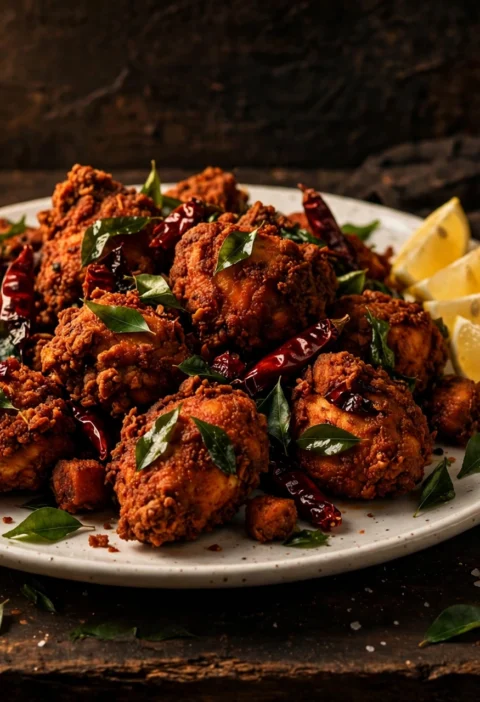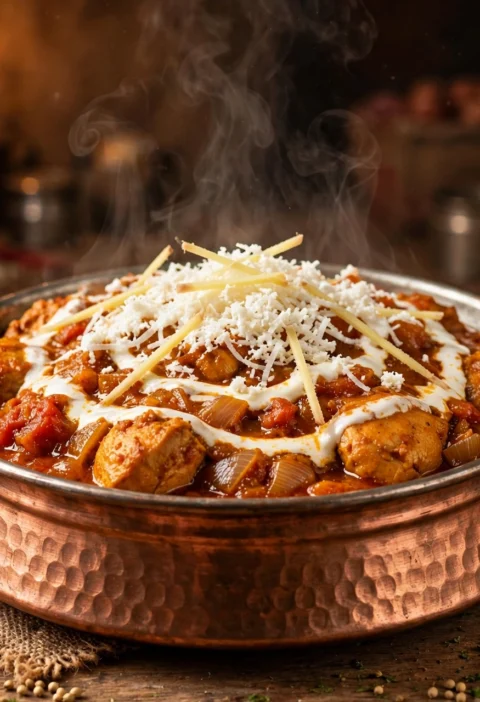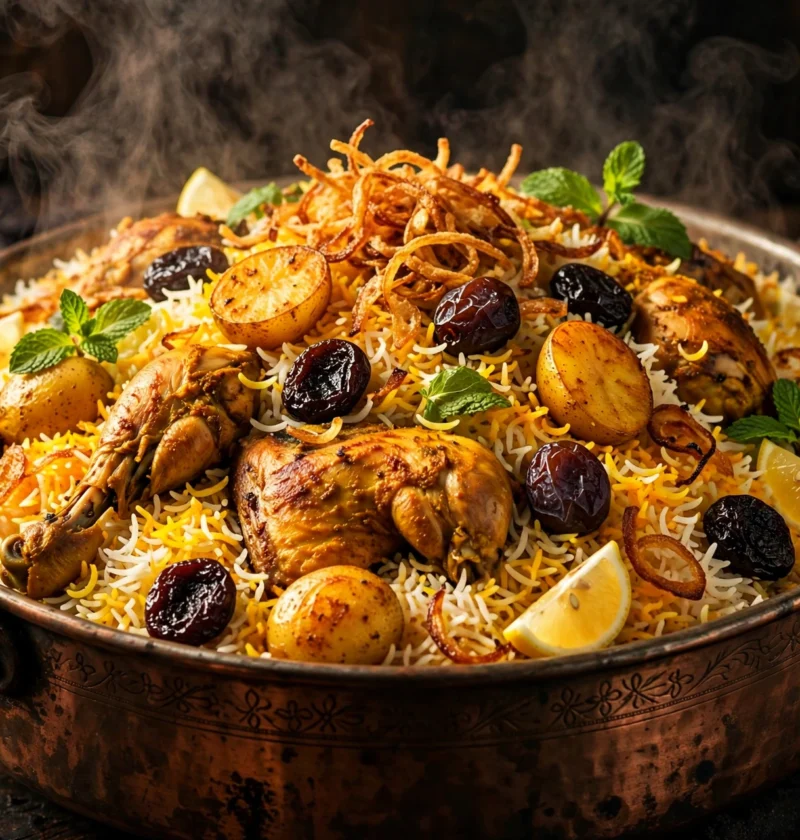
The first time I ate real Sindhi biryani, it didn’t arrive on a restaurant platter. It came out of a steel dabba my colleague Aslam had carried on the bus from Hyderabad, made by his mother that same morning, still faintly warm. I considered myself a biryani person — I’d grown up on the Karachi kind and thought I knew the ceiling. One spoonful ended that confidence. It was hotter, sharper, and more alive than any biryani I’d had: chili heat up front, a deep sour tang underneath, and a potato that had soaked up all of it like it was born for the job. This sindhi biryani recipe is my attempt to rebuild his mother’s dabba from memory, phone calls, and three years of Fridays spent adjusting the heat.
Sindhi biryani plays by different rules than its gentler cousins. Where a regular chicken biryani balances spice, this one leans in — extra green chilies, a heavier hand with red chili, and sourness coming from two directions at once: tart yogurt in the masala and dried plums, the aloo bukhara that melt down into sweet-sharp pockets between the rice layers. Potatoes aren’t a garnish here; they’re non-negotiable. My early versions failed because I cooked it like the biryani I already knew: too timid with the chilies, plums thrown in dry so they stayed hard as pebbles, potatoes boiled separately and tasting like strangers. This sindhi biryani recipe fixes all three mistakes, and the result finally tastes like that bus-ride dabba.
Why This Sindhi Biryani Recipe Works
Sindhi biryani fails when it’s merely spicy instead of spicy-tangy, when the plums stay woody, or when the potatoes disintegrate into the rice. Every one of those disasters has a cause — and this sindhi biryani recipe is built to prevent them:
- The potatoes are fried before they ever meet the rice. Raw or boiled potatoes layered straight into biryani either stay hard or collapse into mash. Frying them first in the onion oil gives them golden, sealed edges, so they survive the dum, hold their shape on the plate, and drink in the masala without falling apart.
- The dried plums soak for twenty minutes first. Aloo bukhara dropped into the pot dry stay chewy and give up almost no tang. A warm-water soak plumps them back to life, so during cooking they slump and release their sweet-sour juices gradually through the masala. That slow release is the backbone of this sindhi biryani recipe.
- Yogurt goes into the masala, not just the marinade. The sour spine of Sindhi biryani comes from yogurt cooked down with the chicken until the masala turns sharp and rich. Skipping it, or adding only a spoonful, leaves you with heat and no tang — and heat alone is just noise.
- The rice is parboiled to exactly seventy percent. Biryani rice finishes cooking in the steam of the dum, drinking up masala as it goes. Boil it fully first and the grains turn to porridge under the lid; underdo it and they stay chalky at the center. Pulling the rice when a grain breaks with a small white dot remaining is the whole game.
- Lemon slices and green chilies go between the layers. Most biryanis get their freshness only from herbs on top. Here, lemon slices and slit chilies are layered through the rice, so the dum traps their aroma inside every stratum. Each serving spoon hits pockets of fresh heat and citrus instead of one flat flavor.
Ingredients
Serves 6-8
For the chicken masala:
- 1 whole chicken (about 2.2 lbs / 1 kg), bone-in, cut into 12 pieces
- 1 cup (240g) plain whole-milk yogurt, whisked
- 3/4 cup (180 ml) neutral oil
- 3 large onions, thinly sliced
- 4 medium potatoes, peeled and halved
- 3 medium tomatoes (about 350g), chopped
- 10-12 dried plums (aloo bukhara), soaked in warm water for 20 minutes
- 2 tablespoons ginger-garlic paste
- 2 teaspoons red chili powder
- 1 tablespoon ground coriander
- 1 teaspoon turmeric powder (haldi)
- 2 teaspoons salt, plus more to taste
For the rice:
- 3 cups (600g) aged basmati rice, rinsed and soaked for 30 minutes
- 4 green cardamom pods
- 2 black cardamom pods
- 4 whole cloves
- 1 cinnamon stick (about 2 inches)
- 2 bay leaves
- 1 teaspoon cumin seeds
- 1 tablespoon salt
- 1 tablespoon lemon juice
For layering:
- 6-8 fresh green chilies, slit lengthwise
- 1 lemon, thinly sliced into rounds
- 1/2 cup fresh mint leaves
- 1/2 cup fresh coriander leaves, chopped
- A generous pinch of saffron soaked in 1/4 cup warm milk (or 1/2 teaspoon yellow food color in 1/4 cup water)
- 1 teaspoon garam masala
A note on identity: Sindhi biryani comes from Sindh province and is famous across Pakistan precisely because it refuses to tone anything down — more chili, more sour, more everything than the biryani of neighboring regions. And use proper aged basmati if you can find it; its long, separate grains are what let the layers stay distinct instead of clumping into a single mass.
How to Make This Sindhi Biryani Recipe – Step by Step
Step 1: Fry the onions and potatoes.
Heat the oil in a large, heavy degchi or Dutch oven over medium-high heat. Add the sliced onions and fry, stirring often, for 12 to 15 minutes until they turn a deep, even golden brown — this birista is half the flavor of the dish, so don’t rush it pale. Lift the onions out with a slotted spoon onto a plate. In the same oil, fry the potato halves for 6 to 8 minutes until their outsides are golden and crisped at the edges. They won’t be cooked through; that’s intended. Remove and set aside with the onions.
Step 2: Cook the chicken masala.
In the remaining oil, add the ginger-garlic paste and fry for a minute until fragrant. Add the chicken pieces and sear for 5 to 6 minutes until they lose their raw look. Stir in the tomatoes, red chili powder, ground coriander, turmeric, and salt. Cook for 8 to 10 minutes, stirring and breaking the tomatoes down, until the masala thickens. Now lower the heat and stir in the whisked yogurt a few spoonfuls at a time so it doesn’t split. Add the drained plums and the fried potatoes, pour in 1/2 cup of water, cover, and simmer for 12 to 15 minutes, until the chicken is nearly tender and the potatoes are just cooked through.
Step 3: Parboil the rice.
Bring a large pot of water to a rolling boil with the whole spices, salt, and lemon juice. Drain the soaked rice and tip it in. Boil for 5 to 7 minutes, testing grains as you go: the rice is ready when a grain pressed between your fingers breaks into pieces but still shows a tiny hard white dot in the middle — roughly seventy percent cooked. Drain immediately in a colander. Work quickly here; rice sitting in its hot water keeps cooking.
Step 4: Layer the biryani.
Spread half the rice over the chicken masala in the degchi. Scatter over half the fried onions, half the mint and coriander, half the lemon slices, and half the green chilies. Add the remaining rice on top, then the rest of the onions, herbs, lemon, and chilies. Drizzle the saffron milk over the surface in streaks, sprinkle the garam masala, and dot the top with a spoonful of oil from the masala. This layering is what makes every serving different — some bites mild, some fiery.
Step 5: Dum, rest, and serve.
Cover the pot with a tight lid (seal the edge with a strip of dough or a folded tea towel under the lid if yours is loose). Cook on high heat for 5 minutes to build steam, then drop to the lowest flame and let it dum for 25 minutes without lifting the lid — every peek lets the steam escape. Rest off the heat for 10 minutes. Open, and fold the layers together gently with a wide spatula, cutting down the side and lifting from the bottom so the grains stay whole. Serve straight from the pot, while the lemon and plum pockets are still steaming.
Serving Suggestions
Sindhi biryani demands a cooling counterweight: a bowl of plain raita — yogurt whisked with salt and a pinch of roasted cumin — and a crunchy salad of onion, cucumber, and tomato with lemon juice. In Sindhi homes a bowl of mirchon ka salan sometimes shows up alongside, but honestly, this biryani carries enough fire of its own. A glass of cold water within reach is not optional equipment.
If you want to taste what makes this sindhi biryani recipe different, set it next to my chicken biryani — the classic, balanced version most of us grew up on. The comparison teaches you more about both dishes than either plate alone. And on days when the family wants rice without the blaze, my chicken pulao is the gentle sibling: same comfort, a fraction of the heat.
Storage and Reheating
Biryani keeps well for 3 days in the fridge in a sealed container, and plenty of people swear the flavors marry even better by day two as the rice absorbs more of the masala. To reheat, sprinkle a tablespoon of water over a portion, cover it, and warm it in the microwave or in a lidded pot on the lowest flame until steam rises through it. It freezes for up to 2 months, though the potatoes soften noticeably after thawing — if you’re cooking a batch specifically for the freezer, leave the potatoes out and fry fresh ones to serve on the side.
Frequently Asked Questions
What makes Sindhi biryani different from regular biryani?
Heat, sourness, and potatoes. Sindhi biryani uses noticeably more chili, builds tang from both yogurt and dried plums, and treats potatoes as a core ingredient rather than an add-on. The regular biryani most people know is fragrant and balanced; the Sindhi version is deliberately bolder. This sindhi biryani recipe stays loyal to that bolder profile.
I can’t find dried plums (aloo bukhara). What can I use?
Unsweetened prunes are the closest stand-in — use 6 to 8, soaked the same way. In a real pinch, stir a tablespoon of tamarind pulp into the masala for the sour note, but you’ll miss the plums’ jammy sweetness. The plums matter enough that I’d order them online before substituting.
Can I reduce the heat without ruining it?
Yes, within reason. Drop the red chili powder to 1 teaspoon and use 3 to 4 green chilies instead of 8. Keep the plums and yogurt at full strength — they’re the dish’s identity, not the chili. A biryani that’s tangy but mild still reads as Sindhi; one that’s just hot doesn’t.
Can I make this with boneless chicken or mutton?
Boneless thighs work well — cut them large and reduce the masala simmer by about 5 minutes. Mutton is actually traditional in many Sindhi homes: use the same weight, but simmer the masala for 35 to 40 minutes with an extra cup of water until the meat is nearly tender before layering.
Recipe Summary
- Prep time: 30 minutes (plus 30 minutes soaking the rice)
- Cook time: 1 hour
- Total time: Roughly 1 hour 30 minutes, start to finish
- Servings: 6-8 hungry people
- Cuisine: Pakistani (Sindhi)
- Course: Main