There is a small restaurant near our home in Lahore where my father has not opened the menu in fifteen years. He sits down, orders chicken lababdar and naan, and tells the waiter — the same waiter, thinning hair and all — to make it the way he likes it: masala coarse, mirchi honest, no shortcuts. The first time he let me order for myself, I asked for butter chicken like every other teenager in the city. He looked at me the way you would look at someone who chose the shallow end of the pool. This chicken lababdar recipe is my surrender, years later: he was right. The day I finally cooked it at home and he asked for a second helping without a single comment, I knew the recipe had earned its place.
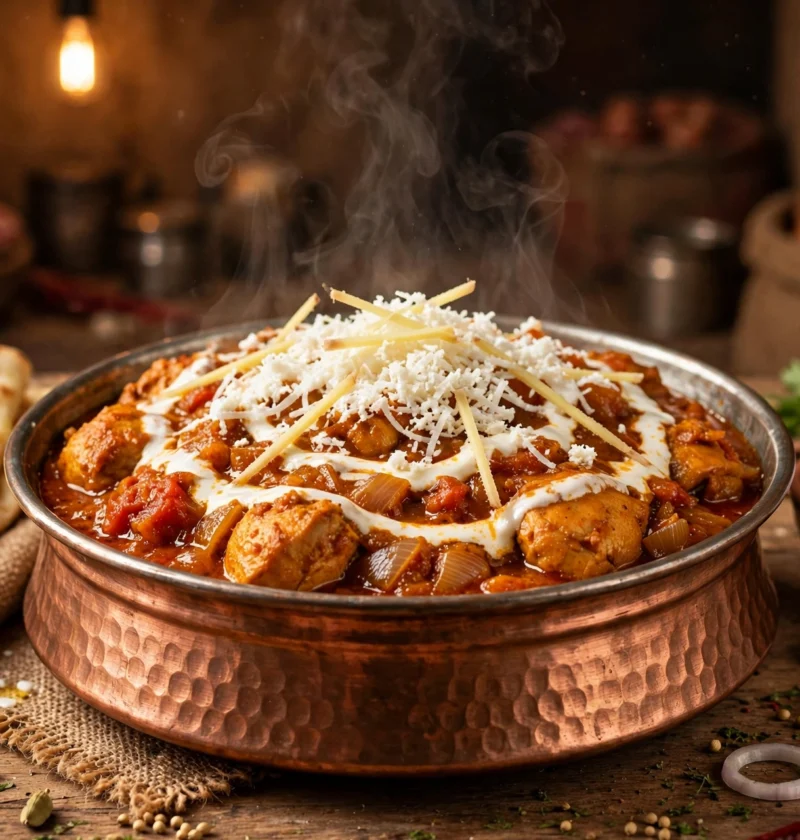
What won me over is the texture. Lababdar belongs to the same rich, tomato-and-cream family as the famous makhani dishes, but it refuses to be smooth. The onion and tomato masala stays chunky on purpose — visible, spoon-coating, almost rustic — with cashew paste giving it body, real chili heat running through it, and a heavy hand of kasuri methi at the end. Cream comes in only in the last minutes, and then the whole thing gets dressed up with ginger julienne and a snowfall of grated paneer. It is a celebration dish that still eats like home food, and once you have made it, the polite, strained gravies will feel like they are missing something — because they are.
Why This Chicken Lababdar Recipe Works
Five habits separate a lababdar that tastes like the restaurant’s best table from one that tastes like generic curry. This chicken lababdar recipe keeps all five:
- The masala is chopped, never puréed smooth. Finely chopped onions and tomatoes cooked down slowly keep their body, and that coarseness is the soul of the dish. Blend it silky and you have made butter chicken’s gravy with the wrong chicken in it.
- The chicken is seared before it ever meets the gravy. A yogurt-marinated chicken that hits a hot pan first picks up browned edges and holds its juices. Chicken poached raw in masala turns pale, stringy and sad by comparison.
- Cashew paste does the heavy lifting, not cream alone. Soaked cashews blended silky give the gravy its restaurant body and a quiet nuttiness, so the cream at the end can stay a finishing touch instead of a crutch.
- The bhunao is patient. The masala is fried until the oil visibly separates and the raw tomato smell is completely gone. Rush this stage and the gravy tastes sharp and unfinished no matter what you add later.
- Kasuri methi and cream go in last, off the fiercest heat. Dried fenugreek crushed between your palms at the end keeps its perfume; boiled for twenty minutes it turns bitter and fades. Cream added to a gentle simmer stays glossy instead of splitting.
Ingredients for This Chicken Lababdar Recipe
Lababdar grew up in the restaurant kitchens that inherited Mughlai cuisine — the slow, butter-and-cream cooking of the Mughal courts, loosened up over the years into something earthier and more forgiving. You can taste that double heritage in the spice list: whole spices and a good garam masala for courtly warmth, then green chilies and kasuri methi for the roadside energy a dhaba would insist on. Buy the best kasuri methi you can find — it should smell intensely savoury the moment the box opens — and use Kashmiri chili powder for colour with fresh green chilies for the actual fire. Chicken thighs, boneless or bone-in, are the cut this gravy deserves; breast works, but it dries if you look away, as the FAQ explains.
For the chicken and its marinade
- 2 pounds (900 g) boneless, skinless chicken thighs, cut into 2-inch pieces (or bone-in thighs, see FAQ)
- 1/2 cup (120 g) plain whole-milk yogurt, beaten until it pours smooth
- 1 tablespoon ginger-garlic paste (homemade or a good jarred one)
- 1/2 teaspoon ground turmeric
- 1 teaspoon Kashmiri red chili powder
- 1 teaspoon fine sea salt
- 1 tablespoon lemon juice
- 1 tablespoon neutral oil, for searing
For the chunky masala
- 3 tablespoons unsalted butter
- 1 tablespoon neutral oil
- 1 teaspoon cumin seeds
- 2 large onions (about 14 ounces / 400 g), very finely chopped — not puréed
- 2 or 3 fresh green chilies, chopped fine
- 1 tablespoon ginger-garlic paste
- 4 large ripe tomatoes (about 1 1/4 pounds / 560 g), finely chopped
- 1 teaspoon Kashmiri red chili powder
- 1 1/2 teaspoons ground coriander
- 1/2 teaspoon ground turmeric
- 1 teaspoon fine sea salt, or to taste
- 1/3 cup raw cashews (about 1 3/4 ounces / 50 g), soaked in hot water 20 minutes and blended to a silky paste
- 1/2 cup (120 ml) hot water, as needed
To finish
- 1/2 cup (120 ml) heavy cream, plus a spoonful for swirling
- 1 tablespoon kasuri methi (dried fenugreek leaves), rubbed between your palms to wake it up
- 1/2 teaspoon garam masala
- 1 tablespoon butter, to gloss
- 1 tablespoon julienned fresh ginger
- 2 tablespoons grated paneer (optional, but very much the restaurant flourish)
- 2 tablespoons chopped fresh cilantro
How to Make This Chicken Lababdar Recipe – Step by Step
Step 1: Marinate the chicken. Stir the yogurt, ginger-garlic paste, chili powder, turmeric, salt and lemon juice into a smooth marinade and fold the chicken through it until every piece is coated. Cover and rest at least 30 minutes on the counter, or up to overnight in the fridge (bring it back toward room temperature before cooking). This short bath seasons the meat itself, so the chicken tastes of something even before the gravy joins the story.
Step 2: Sear the chicken and set it aside. Heat the tablespoon of oil in a wide, heavy pot over medium-high until it shimmers. Lift the chicken out of its marinade — let the excess drip off — and lay the pieces in a single layer, in batches if your pot is modest. Sear 2 to 3 minutes per side until golden patches form; the chicken will not be cooked through, and that is fine. Move it to a plate with every drop of its juices. Those browned edges are flavour the gravy will borrow.
Step 3: Build the chunky masala, slowly. In the same pot, melt the butter with the oil over medium heat and add the cumin seeds; when they crackle, in go the onions with a pinch of salt. Cook, stirring often, for 12 to 15 minutes until they melt down soft, sweet and deeply golden at the edges — chopped small, but still themselves. Stir in the ginger-garlic paste and green chilies for a minute, then the tomatoes, Kashmiri chili, coriander, turmeric and salt. Now the bhunao: fry this masala for a good 10 to 12 minutes, stirring and scraping, until it thickens, darkens and the butter glistens free around the sides. Raw tomato smell gone, oil showing — that is your green light.
Step 4: Add the cashew paste and bring the chicken home. Stir the cashew paste into the masala and cook 2 minutes, until it disappears into the gravy and everything smells faintly nutty. Pour in the hot water and stir into a thick, spoon-coating sauce. Return the chicken and all its resting juices, cover the pot and drop the heat to its lowest; give it 10 to 12 minutes of gentle simmering, until the chicken turns tender right through and the gravy clings to it in coarse, generous folds. Bone-in thighs will want closer to 18 minutes.
Step 5: Finish like a restaurant — cream, methi, and the flourish. Drop the heat to its lowest point; the gravy should barely tremble. Stir in the cream, scatter over the garam masala, then rub the kasuri methi between your palms and shower it in; let it warm through for 2 minutes without ever boiling. Swirl in the final tablespoon of butter, taste for salt, and take the pot off the heat. Rest it 5 minutes, then serve crowned with ginger julienne, cilantro and the grated paneer snowing down over everything, plus one shameless swirl of cream.
Serving Suggestions
Lababdar was born for bread. Serve it in a wide handi or shallow bowl with butter naan, garlic naan or plain tandoori roti for tearing and dragging through the gravy, plus sliced onions, a lemon wedge and a green chili or two for the table’s brave hearts. Jeera rice is a respectable second partner. Keep the sides cool and plain — a cucumber raita, a chopped salad — because the curry brings all the richness anyone needs.
To place this chicken lababdar recipe among its famous cousins: my butter chicken is the smooth operator of the family — a strained, silky makhani that leans sweet and gentle, all polish. My chicken tikka masala starts with charred tandoori tikka folded into a brighter, spicier tomato gravy. Lababdar is the rustic one: the masala left coarse on purpose, the heat a notch louder, the methi unmistakable. Same clan, three very different dinners — and in my father’s house, only one of them gets ordered without looking at the menu.
Storage and Reheating
Leftovers keep beautifully: cool the curry, refrigerate it covered, and eat within 3 days; it also freezes well for up to 2 months (freeze before adding any garnish). Like most masala curries it improves overnight, as the chicken drinks in the gravy and the kasuri methi mellows into the background. Thaw frozen portions in the fridge overnight. To reheat, warm it gently in a pan over low heat, adding a splash of water and stirring until it just steams and barely simmers — a hard boil will tighten the chicken and can split the cream you added so carefully. A fresh swirl of cream and a pinch of crushed methi at serving wakes it right back up.
Frequently Asked Questions
Boneless or bone-in thighs — which is better for this chicken lababdar recipe?
Both work, and the choice is about mood. Boneless thighs are the restaurant standard: quick, tender, easy to eat with naan, cooked through in about 12 minutes of simmering. Bone-in thighs give a deeper, brothier gravy — the bones quietly enrich the masala as it simmers — but want 18 to 20 minutes and a table happy to work a little. What I would avoid is breast alone: it dries out in a rich gravy before the masala is even ready. If breast is what you have, cut it large, sear it briefly, and simmer it no more than 8 minutes.
How do I keep the cream from splitting?
Cream splits when it meets a furiously boiling, acidic gravy, so stack the odds: take the pot down to the barest simmer — or even off the heat for a minute — before the cream goes in, use full-fat cream (low-fat versions split if you look at them sternly), and stir it in gradually rather than dumping it. The cashew paste in this chicken lababdar recipe is also quiet insurance: it stabilises the gravy, so splitting is rare here. If it ever does grain slightly, whisk in a spoonful of warm water off the heat; the flavour never suffers.
Can I skip the cashews? What works instead?
You can, but swap rather than skip — the paste is what gives the gravy its body. The closest stand-ins are melon seeds (char magaz) or white poppy seeds, soaked and blended exactly the same way; both are traditional in this style of cooking and keep the flavour neutral. Blanched almonds or a spoonful of almond flour whisked in also work, with a faintly sweeter note. In a real pinch, stir in 2 extra tablespoons of cream and a knob of butter at the finish — the gravy will be a little looser, but still very much itself.
How do I get that smoky, dhaba-style finish at home?
Use the dhungar trick once the curry is finished and off the heat. Heat a small piece of natural charcoal over a flame until it glows red, set it in a tiny steel bowl (or on a piece of onion) floated on the curry, drizzle over 1/2 teaspoon of ghee, and clamp the lid on the instant it smokes. Three to four minutes is plenty — you want a whisper of the tandoor, not a bonfire. Lift the bowl out, stir, and serve immediately; the smoke softens into the cream and cashew in a way that tastes unmistakably like the restaurant version.
Recipe Summary
- Prep time: 20 minutes (plus 30 minutes marinating)
- Cook time: 45 minutes
- Total time: About 1 hour 35 minutes
- Servings: 4 to 5
- Cuisine: Pakistani
- Course: Main Course