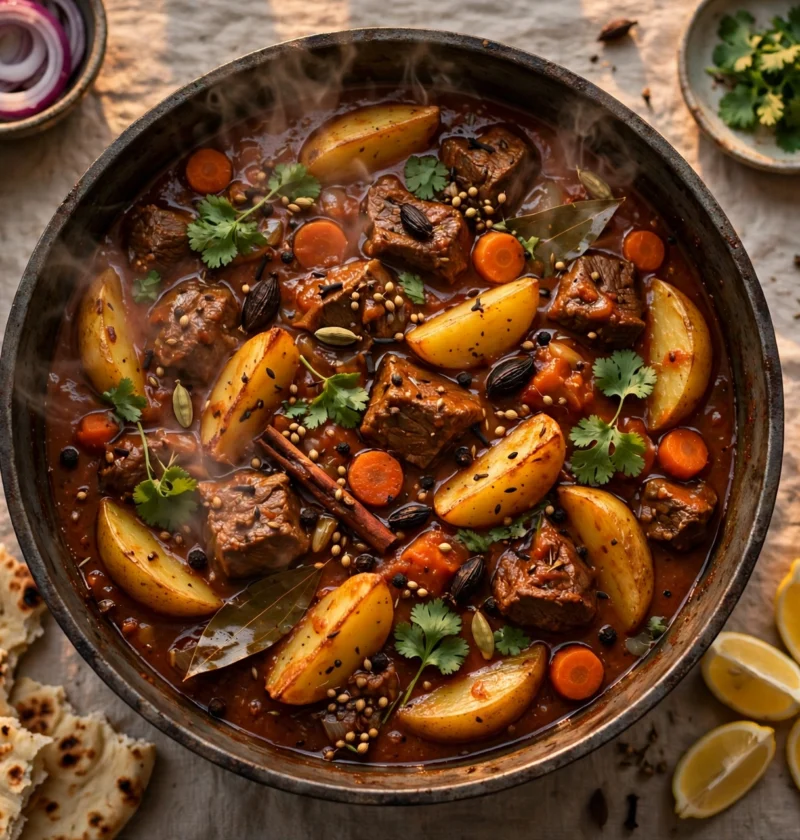
Sundays in our house ran on a schedule nobody ever wrote down. My father claimed the good armchair and the newspaper, my brother and I were exiled to the dining table with our school homework, and my mother disappeared into the kitchen soon after breakfast with a paper bag of beef from the butcher and absolutely no intention of hurrying. By eleven the whole house smelled of onions softening in oil, and by lunch we were gathered around a pot that had practically cooked itself. This beef stew recipe is that pot — the one she set on the lowest flame and left alone for hours while the rest of Sunday unfolded around it.
It is not a fiery curry, and it never pretended to be. The gravy is built on tomatoes and onions cooked down slowly until they turn sweet and deep, the beef simmers until it surrenders under the side of a spoon, and the potatoes and carrots go in late enough to still be themselves on your plate. On cold evenings, when fog pressed against our windows and nobody wanted to step out, this was the dinner that made staying in feel like the better plan all along. A bowl of it, a stack of warm naan, homework forgotten — the day was done.
Why This Beef Stew Recipe Works
A pot like this lives or dies on patience. There is no cream to round it out and no thickener to rescue a thin gravy, so this beef stew recipe leans on a handful of unglamorous habits:
- The beef is browned first, in batches, before anything else happens. Stewing beef that goes straight into liquid boils grey and tastes flat. Given a few minutes in hot oil, a single layer at a time, each piece builds a browned crust — and that crust is where half the gravy’s depth comes from.
- The tomatoes cook down until the oil separates. Raw or undercooked tomato leaves a stew sour and watery. Fried patiently with the onions until the mixture darkens and oil glistens at the edges, it turns sweet, concentrated, and thick enough to coat the meat.
- Whole spices go in early and stay whole. Black cardamom, cinnamon, cloves and bay leaves warm in the oil at the start and perfume the gravy for hours. Ground into it, those same spices would taste gritty and loud; left whole, they hum in the background and get fished out at the table.
- The potatoes and carrots wait their turn. Added for only the last stretch of cooking, they hold their shape, drink in the gravy, and stay recognisably potato and carrot. In from the beginning, they would dissolve and thicken it in the saddest possible way.
- It simmers gently and is never allowed to boil hard. A lazy bubble keeps the beef relaxing toward tenderness and the gravy glossy. A rolling boil tightens the meat into stringy knots and churns the fat through the liquid, and no amount of extra time undoes either.
Ingredients
Every cuisine that cooks through a cold season arrives at the same conclusion sooner or later, and the humble stew is that conclusion in a pot: tough meat, gentle liquid, and time. In a desi kitchen the details shift — where another cook might reach for stock and herbs, we build the base from onion, tomato and whole garam masala, so the finished dish sits happily halfway between a classic stew and a gentle home salan. The cut you buy matters as much as the spices: well-worked beef like chuck, threaded with fat and connective tissue, is what melts into tenderness over a long simmer, while lean cuts stay stubbornly chewy however kindly you treat them. Everything in this beef stew recipe is ordinary market shopping, which is rather the charm of it.
Serves 6
For the beef and gravy:
- 2 pounds beef chuck or bone-in stewing beef, cut into 2-inch pieces
- 1/3 cup neutral oil or ghee
- 2 large onions (about 3 cups), thinly sliced
- 3 medium tomatoes, finely chopped (about 2 cups) — or 1 can (14 ounces) crushed tomatoes
- 1 tablespoon ginger-garlic paste
- 1/2 teaspoon ground turmeric
- 1 teaspoon ground coriander
- 1 teaspoon red chili powder
- 1 teaspoon salt, plus more to taste
- 1 black cardamom pod, lightly bruised
- 4 green cardamom pods, lightly cracked
- 2 bay leaves
- 1 cinnamon stick (2-inch piece)
- 4 whole cloves
- 1 teaspoon cumin seeds
- 3 cups hot water
The vegetables:
- 3 medium potatoes (about 1 pound), peeled and cut into large chunks
- 3 medium carrots, peeled and cut into thick coins
- 1 cup frozen peas (optional, but cheerful)
- 3 to 4 fresh green chilies, slit lengthwise
To finish:
- 1/2 teaspoon garam masala
- 1 tablespoon lemon juice
- 1/2 cup fresh coriander leaves, roughly chopped
- Fine ginger juliennes, to serve (optional)
How to Make This Beef Stew Recipe – Step by Step
Step 1: Brown the beef in batches and set it aside. Pat the beef pieces dry with paper towels — damp meat steams instead of browning — and season them with half the salt and the turmeric. Heat the oil in your heaviest pot over medium-high heat, then brown the beef in two or three uncrowded batches, about 4 minutes a side, until each piece carries a deep golden crust. Lift the meat out onto a plate as it finishes. Those dark, sticky bits clinging to the bottom of the pot are not a problem; they are the foundation, and the onions are about to collect them all.
Step 2: Soften the onions and wake the whole spices. Drop the heat to medium, add the sliced onions to the same pot with a pinch of salt, and cook them, scraping up the browned bits as they soften, for 10 to 12 minutes, until they are limp, sweet and evenly golden. Stir in the ginger-garlic paste and give it a minute, until the raw smell fades. Add the black and green cardamom, cinnamon, cloves, bay leaves and cumin seeds, and let them sizzle in the hot oil for 30 seconds or so, until the pot smells warm and woody.
Step 3: Cook the tomatoes down into a proper gravy. Add the chopped tomatoes, the chili powder, ground coriander and the remaining salt. Cook this masala patiently for 8 to 10 minutes, stirring and mashing the tomatoes with the back of your spoon, until they have completely collapsed, the colour has deepened to brick red, and oil glistens around the edges of the mixture. This is the stage that decides whether your beef stew recipe tastes like a stew or like beef floating in tomato water — do not rush it.
Step 4: Return the beef and settle into the long simmer. Tip the browned beef back into the pot along with any juices that collected on the plate, and toss everything through the masala for a couple of minutes. Pour in the hot water, bring the pot just up to a boil, skim off any grey foam, then turn the flame right down to the gentlest simmer your stove will hold. Rest the lid on at a slight angle, so a ribbon of steam can escape, and let it murmur away undisturbed for 1 1/2 to 2 hours, checking now and then that the surface is barely trembling. The beef is ready when a piece gives way under gentle pressure from a spoon.
Step 5: Add the vegetables, finish, and rest the pot. Fold in the potato chunks, carrot coins and slit green chilies, and simmer for another 30 to 35 minutes, until the vegetables are tender and the beef is on the verge of falling apart. Stir the peas through for the last 5 minutes, if using. Lift the pot off the stove, scatter the garam masala over the surface, stir through the lemon juice and coriander, then cover it and let the stew rest for 10 minutes. That short rest settles the gravy and lets the meat drink a little of it back — the difference between a good stew and the one people ask about.
Serving Suggestions
Serve this the unhurried Sunday way: the pot carried straight to the table, hot naan or tandoori roti stacked alongside for tearing, and a side plate of raw onion rings and lemon wedges for anyone who wants a sharp bite against the richness. Plain steamed rice works beautifully too, especially the next day, when the gravy has thickened into something almost scoopable. In winter my family follows the bowls with small, very hot glasses of doodh patti — my father’s habit: a slow meal deserves a slow ending.
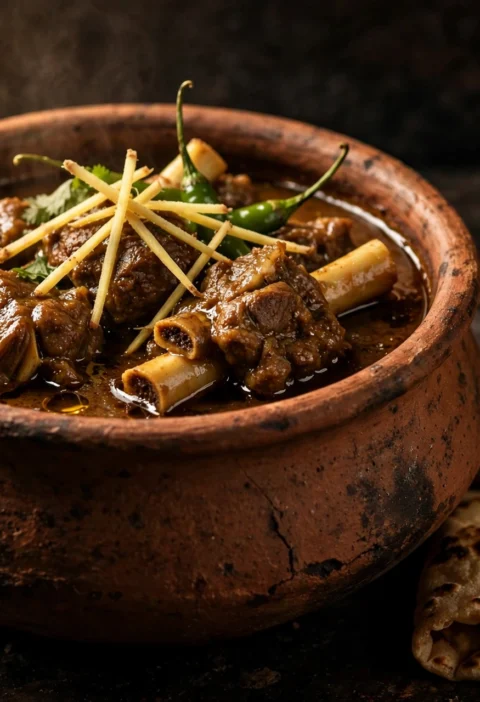
Stews show up at our table in several moods, and this one has relatives on the site worth knowing. When I want the broth thin, peppery and built for sipping, I make my mutton stew — all yakhni and black pepper, no tomato anywhere near it. And when the occasion calls for the full celebration treatment, it is kunna gosht, the slow clay-pot beef that simmers for half a day and arrives with more ceremony. This beef stew recipe is the one between those two poles: richer than the yakhni, humbler than the kunna, and the pot I actually reach for when the family is home and the evening is cold.
Storage and Reheating
Like most slow pots, this stew is arguably better on the second day, once the spices have melted into the gravy and everything has had a night to get acquainted. Sealed tight in a box, it keeps in the fridge for up to 4 days, and it freezes happily in portions for up to 2 months — thawed overnight and warmed through, it tastes like it was made that morning. Bring it back slowly on the stove over the gentlest heat, with a splash of water if the gravy has thickened too far, and let it reach only a bare simmer; a hard boil at this stage will tighten beef you spent two patient hours relaxing. The potatoes soften a little more each time they are reheated, which nobody at my table has ever complained about. Save a little fresh coriander and a squeeze of lemon for the reheated bowls — those bright notes fade first in storage, and the stew needs them.
Frequently Asked Questions
Why is my beef still tough after an hour of cooking?
It needs more time. Stewing cuts like chuck are full of connective tissue that only turns tender after a long, gentle simmer — at the one-hour mark it is often at its chewiest, and cooks who panic there give up just before it surrenders. Keep the heat low, keep the lid on, and give this beef stew recipe its full 1 1/2 to 2 hours. Slicing it against the grain at serving helps more than you would expect.
Can I make this in a pressure cooker or Instant Pot?
Yes, and on busy Sundays I do. Brown the beef and build the tomato masala on sauté mode exactly as written, add the hot water, then cook at high pressure for 35 to 40 minutes with a natural release. Hold the potatoes and carrots back and simmer them in the finished stew for 15 minutes afterward — pressure-cooked from the start, they disintegrate. The gravy comes out a touch less glossy than the stovetop version, but the tenderness is all there.
Can I skip the tomatoes, or swap in canned ones?
Canned crushed tomatoes are a perfectly respectable swap — use the 14-ounce can listed and cook them down just as patiently. Skipping tomato altogether gives you a different and also lovely dish, closer to a yakhni stew, but it will not be this stew: the tomato is what makes the gravy thick, sweet and clinging. If your fresh tomatoes are pale winter ones, a tablespoon of tomato paste stirred in with them fixes the flavour kindly.
My gravy came out thin. How do I thicken it?
Three easy ways, no flour needed. Simmer the pot uncovered for 10 to 15 minutes to let the liquid reduce. Or fish out two potato chunks, mash them smooth, and stir them back in — they thicken the gravy invisibly. Or simply rest the stew overnight; cold, it sets almost firm, and reheated gently it comes back noticeably richer and thicker than the day it was made.
Recipe Summary
- Prep time: 20 minutes
- Cook time: 2 hours 30 minutes
- Total time: About 2 hours 50 minutes
- Servings: 6
- Cuisine: Pakistani
- Course: Main Course