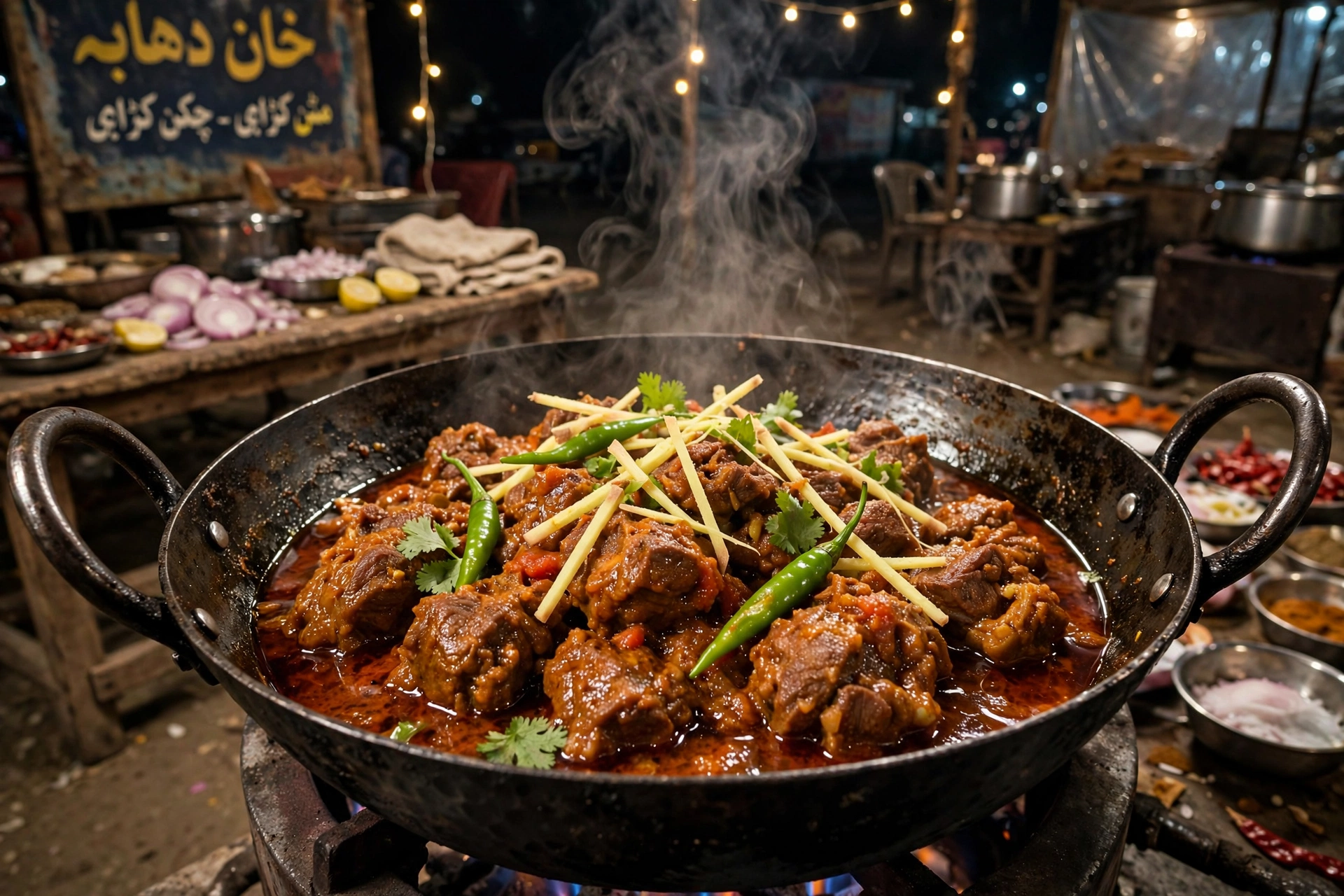
The first time a nargisi kofta was cut open in front of me, I was nine years old and sitting cross-legged at a family dawat in Lahore, too small for the dining table and entirely unbothered by that. My khala placed what looked like an ordinary, rather large meatball on my plate, borrowed a knife, and sliced it clean down the middle. Inside was a whole boiled egg — white ring, golden yolk, perfect as a picture — and she told me the dish was named after the nargis, the narcissus flower, because that is what the cut face looks like. I have eaten many koftas since, but this nargisi kofta recipe is still the one I make when I want people to stop talking for a second when the platter lands.
Do not let the drama fool you into thinking it is difficult. A nargisi kofta is really three humble things done carefully: a well-seasoned mince, a properly boiled egg, and the patience to wrap one around the other without leaving cracks. The gravy is the rich, onion-and-yogurt kind our families have made forever, and the koftas simmer in it whole — the slicing happens at the very end, because that reveal is half the pleasure. Take your time with the wrapping, and this dish will make you look far more accomplished than the effort deserves.
Why This Nargisi Kofta Recipe Works
Most failed nargisi koftas fail at the wrapping stage, not the cooking, so this nargisi kofta recipe is built around keeping the mince coat sealed, thin, and calm from start to finish:
- The mince is kneaded until it turns tacky. Three or four minutes of working the mixture by hand makes the proteins sticky, so the coat clings to the smooth egg instead of sliding off in the pan.
- Roasted gram flour binds without heaviness. A few spoonfuls of besan drink up the onion’s moisture and hold the coat together, where breadcrumbs can swell and split as they fry.
- The eggs are boiled for exactly nine minutes. The whites must be fully firm to survive wrapping, but the yolks should stay deep gold and just set — an over-boiled egg gives you a grey-green ring and a chalky middle.
- The wrapped koftas rest in the fridge before frying. Half an hour of chilling firms the mince coat so it sets instantly when it meets the oil, sealing every seam shut instead of opening them.
- The slicing waits until the very end. Koftas simmer whole in the gravy and are halved only after a short rest, so the cut face stays sharp and the yolk stays put.
Ingredients for This Nargisi Kofta Recipe
The kofta travelled a long road — Persia, the Arab world, Central Asia — before Mughal kitchens in India took it up and made it their own, and few dishes show that Mughlai cuisine flair for theatre better than this one: plain ingredients arranged to look like a garden flower. For the mince, choose ground beef with a little fat in it, around 80/20, because lean mince wraps poorly and fries dry. Everything else in this nargisi kofta recipe is likely already in your kitchen — the luxury here is technique, not shopping.
For the koftas
- 6 large eggs, at room temperature
- 1 pound (450 g) ground beef, 80/20
- 1 small onion (about 3 1/2 ounces / 100 g), grated and squeezed hard in a cloth to remove its juice
- 3 tablespoons roasted gram flour (besan)
- 1 tablespoon ginger-garlic paste
- 2 green chilies, very finely chopped
- 2 tablespoons finely chopped fresh cilantro
- 1 teaspoon garam masala
- 1 teaspoon ground coriander
- 1/2 teaspoon ground cumin
- 1/2 teaspoon red chili powder
- 3/4 teaspoon fine sea salt
- Neutral oil, for frying (about 2 cups / 475 ml if deep-frying)
For the gravy
- 3 tablespoons ghee or neutral oil
- 2 medium onions (about 10 ounces / 285 g), thinly sliced
- 1 tablespoon ginger-garlic paste
- 2 medium tomatoes (about 9 ounces / 255 g), pureed
- 1/2 cup (120 g) plain whole-milk yogurt, whisked smooth
- 1 teaspoon ground coriander
- 1 teaspoon Kashmiri red chili powder
- 1/2 teaspoon ground turmeric
- 1 teaspoon garam masala
- 1 teaspoon fine sea salt, or to taste
- 1 1/2 cups (355 ml) warm water
To finish
- 1 tablespoon julienned fresh ginger
- 2 tablespoons chopped fresh cilantro
- 1 green chili, sliced into rings
- A squeeze of lemon juice, optional
How to Make This Nargisi Kofta Recipe – Step by Step
Step 1: Boil and peel the eggs without tearing them. Lower the eggs into a pot of already-boiling water, set a timer for exactly 9 minutes, then lift them straight into a bowl of cold water and leave them there for 10 minutes. Peel them under a thin trickle of tap water, easing the shell away in ribbons — patience here matters, because a torn, cratered white shows through the mince coat and prints every scar onto your finished kofta. Pat each egg completely dry with a paper towel. A dry egg is not a small detail in this nargisi kofta recipe; it is what the mince will grip.
Step 2: Mix and knead the mince until it feels sticky. Put the ground beef in a wide bowl with the squeezed grated onion, roasted gram flour, ginger-garlic paste, green chilies, cilantro, and every ground spice and the salt. Now knead — really knead, the way you would a bread dough — for 3 to 4 full minutes, folding the mixture over itself and pressing it flat with the heel of your hand. You will feel it change — crumbly mince turning smooth, glossy and tacky, lifting off the bowl in one mass. Cover and refrigerate for 20 minutes; cold mince wraps far more obediently than warm.
Step 3: Wrap each egg in a thin, even coat. Divide the mince into 6 equal portions. Oil your palms lightly, take one portion, and press it between your hands — or between two pieces of cling film — into an oval patty about 1/4 inch (6 mm) thick, large enough to wrap an egg. Lay a dry boiled egg in the centre and bring the mince up and around it, cupping and turning in your hands until the egg disappears inside. Pinch any seam closed, then roll the kofta gently between your palms, smoothing with damp fingers until the surface is unbroken and the coat feels even all over — no thick shoulders, no thin patches. Lay it on an oiled tray, repeat with the rest, then refrigerate the tray, uncovered, for 30 minutes.
Step 4: Fry the koftas until deeply golden. Heat the oil in a deep pan or karahi to 350°F (175°C) — a small pinch of mince dropped in should sizzle steadily and rise within seconds. Lower the chilled koftas in one at a time, in two batches if your pan is modest, and resist touching them for the first minute while the crust sets. Then turn them gently with a slotted spoon so they colour evenly, frying 5 to 6 minutes in total until the outside is a deep, even gold. Lift them onto a rack or paper towels. Do not worry if they are not cooked through — they finish in the gravy; this fry is about sealing and colour.
Step 5: Build the gravy, simmer, then slice. Pour off all but 3 tablespoons of the frying oil (or use ghee in a fresh pan) and fry the sliced onions over medium heat until they turn a deep amber, 12 to 15 minutes. Stir the ginger-garlic paste through for a minute, then pour in the tomato puree with the coriander, chili powder, turmeric, and salt, and cook until the mixture thickens and oil beads at the edges. Off the heat, stir in the whisked yogurt a spoonful at a time, then return the pan to a low flame with the warm water and garam masala and simmer for 5 minutes. Slide the fried koftas in whole, spoon gravy over them, cover, and simmer gently for 8 to 10 minutes, turning once. Rest off the heat for 5 minutes, then lift each kofta out and slice it in half lengthwise with one confident stroke of a sharp knife. Arrange the halves cut-side up in a shallow dish, spoon the gravy around and over them, and finish with ginger, cilantro, and green chili.
Serving Suggestions
Serve this nargisi kofta recipe as the centrepiece it wants to be: a wide, shallow platter, the halved koftas fanned out with their yolk faces showing, gravy pooled underneath rather than drowning the pattern. It eats beautifully with plain basmati rice, or with warm naan and a sharp kachumber salad of onion, tomato, and lemon to cut the richness. A bowl of raita is welcome but not required — the gravy already carries yogurt’s tang.
For a full kofta week, compare the family. My beef kofta curry is the everyday relation: smaller, plain meatballs with no secret inside, simmered straight in their masala for a weeknight. And when the table wants something richer and softer, my malai kofta swaps meat for paneer dumplings resting in a pale, creamy gravy. Same word on the menu, three entirely different dinners — the nargisi is simply the one wearing jewellery.
Storage and Reheating
Leftover koftas keep well in their gravy in a sealed container in the fridge for up to 3 days, and honestly the flavour improves overnight as the mince takes on more of the masala. Store them unsliced if you can; the egg inside stays fresher and the halves cut cleaner the next day. The fried, unsimmered koftas also freeze well — tray-freeze them, bag for up to 2 months, and thaw in the fridge before making fresh gravy around them.
To reheat, simmer the koftas gently in their gravy over the lowest heat for about 10 minutes, covered, with a splash of water if the sauce has thickened too far. Avoid the microwave if you can — it heats the egg unevenly and can turn the yolk rubbery at the edges while the mince is still cool. If you must use it, go in short bursts at half power, and let the dish stand a minute before slicing and serving.
Frequently Asked Questions
Why does the mince coating crack or slip off the egg?
Nearly every failure traces back to one of four things. The egg was wet — mince cannot grip a damp, slick white, so dry the peeled eggs thoroughly. The seams were not sealed — pinch them shut and smooth the surface with damp hands until no line shows. The koftas skipped their chilling rest, so the soft coat sagged in the oil instead of setting. Or the oil was wrong: too cool and the coat soaks and slumps off; too hot and it crusts and splits before the inside firms. Hit 350°F (175°C), chill before frying, and the coat on this nargisi kofta recipe stays exactly where you put it.
Can I make nargisi kofta with chicken mince instead?
Yes, and many families do. Use ground chicken thigh rather than breast, since breast mince dries out during the fry and the simmer, and add one extra tablespoon of roasted gram flour — chicken mince is wetter and softer than beef and needs the help holding its shape around the egg. The wrapping and gravy stay exactly the same, and the finished dish is a little lighter, which some people prefer.
How do I get a clean slice without the kofta crumbling?
Three habits make the difference. Rest the simmered koftas for at least 5 minutes so the mince firms up around the egg. Use your longest, sharpest knife — a sawing motion with a dull blade drags the yolk out of place. And cut lengthwise in one slow, confident stroke, wiping the blade between koftas. Slice only as many as you are serving; whole koftas reheat far better than halves.
Can I skip the deep-frying and use the oven or air fryer?
You can, though the crust will be a shade less shattering. Brush or spray the chilled, wrapped koftas generously with oil and bake at 400°F (200°C) for about 20 minutes, turning once, or air-fry at 375°F (190°C) for 12 to 14 minutes, until deep golden. The chilling step matters even more with these methods, because there is no hot oil to set the coat instantly. Finish them in the simmering gravy exactly as written and nobody at the table will interrogate you about the method.
Recipe Summary
- Prep time: 40 minutes (plus 50 minutes chilling)
- Cook time: 40 minutes
- Total time: About 2 hours 10 minutes
- Servings: 6
- Cuisine: Pakistani
- Course: Main Course