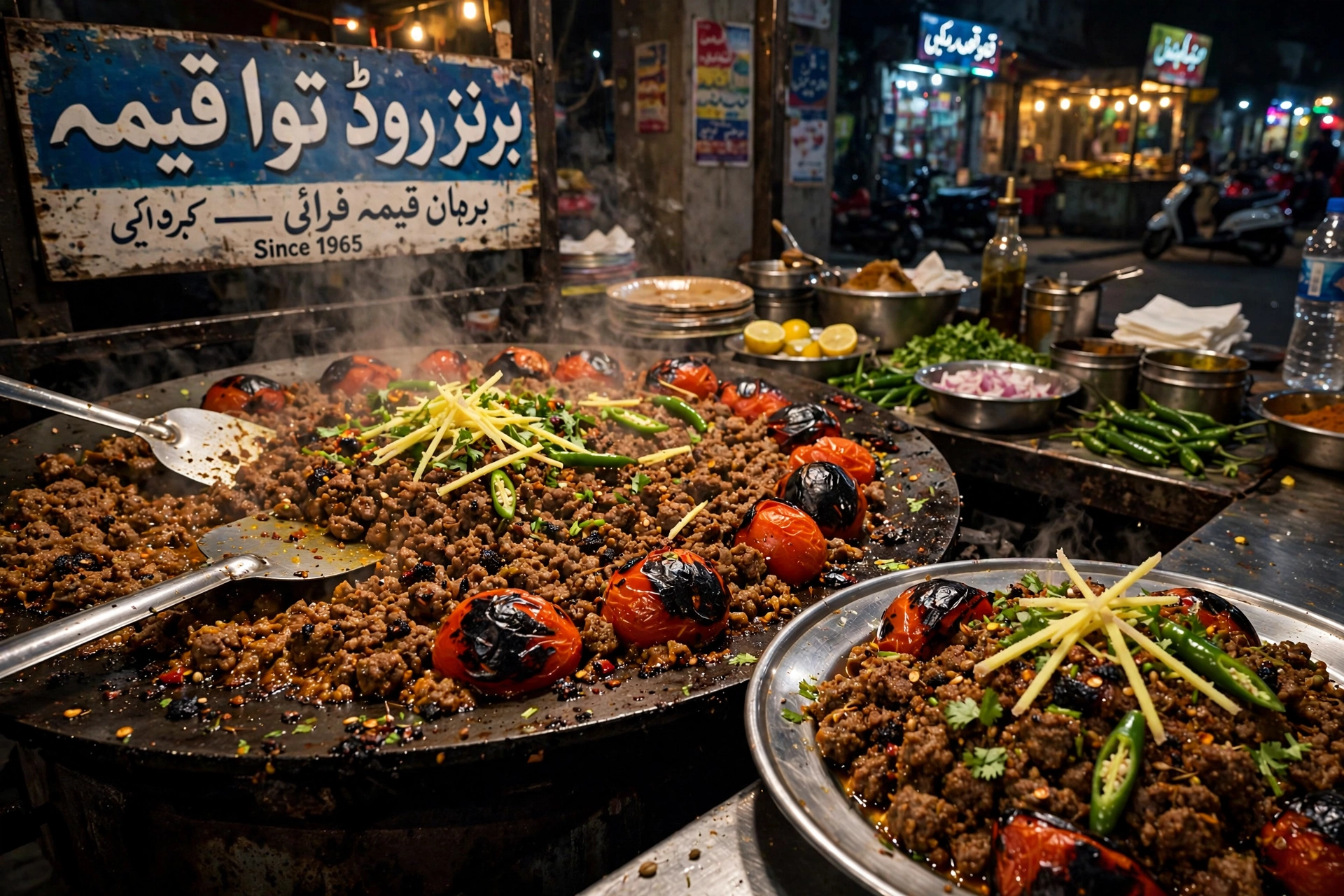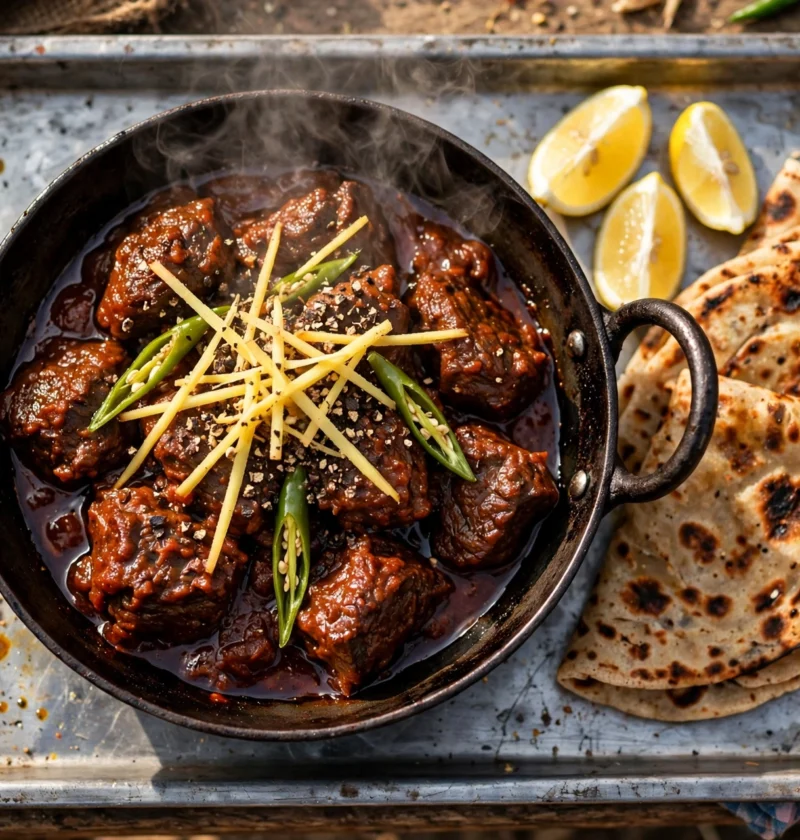
Some of the best meals of my life have happened with truck exhaust in the air. Years ago, on a long drive back from Lahore with my father, we pulled into a gravel-fronted dhaba somewhere past midnight — plastic chairs, charpoys along the wall, one cook working a karahi over a burner that roared like a jet. We ordered the beef karahi because the driver at the next table was eating it and the smell kept reaching us. What arrived was dark and glossy, the beef in rough chunks under a slick of tomato masala, ginger matchsticks piled on top, and it burned with black pepper in a way no restaurant karahi ever had. We ate it with tandoori rotis straight off the tandoor wall, in near silence, and my father asked for the cook’s name like he’d want to write to him. This beef karahi recipe is my attempt to earn that silence at home.
The thing nobody tells you about beef karahi is that beef plays by different rules than chicken. Chicken can go from raw to karahi in twenty-five minutes; beef asked to do the same stays stubbornly chewy, no matter how fierce your flame. So this beef karahi recipe gives the meat a head start — a short pressure cook until it is just tender — and only then does the karahi work begin: a hard fry, ginger-garlic paste, tomatoes cooked down to a glaze, a spoonful of yogurt for body, and black pepper treated like the headline act it is at every good dhaba.
Why This Beef Karahi Recipe Works
Beef karahi fails in predictable ways — tough meat, watery masala, timid seasoning. This beef karahi recipe is built to dodge every one of them:
- The beef is tender before the karahi ever gets hot. A pressure cook of about twenty minutes does the slow work up front, so the high-heat karahi stage can be purely about frying and flavour instead of a losing fight against chewiness.
- Ginger-garlic paste is in — proudly. Where some karahi styles strip everything back, the dhaba beef version builds its base on ginger-garlic paste fried in oil until the raw edge disappears. That savoury depth is what separates beef karahi from a plain tomato fry.
- Tomatoes stay in a supporting role. Four tomatoes for two pounds of beef — enough to collapse into a dark, clinging glaze, never enough to drown the meat in sauce. Beef karahi should look almost dry, with the masala wrapped around each piece.
- Yogurt does two jobs at once. A half cup whisked in near the end adds body to the masala and a gentle tang, and its acidity takes the last of the fight out of the beef fibres. The result is tender meat in a masala that coats rather than pools.
- Black pepper goes in coarse, and plenty of it. Finely ground pepper vanishes; coarsely crushed pepper survives the fry and lands in warm little bursts. It is the dhaba signature on this dish, and this beef karahi recipe does not hold back.
Ingredients for This Beef Karahi Recipe
The dish takes its name from the pan it is cooked in — the karahi, a round-bottomed, wok-shaped vessel whose sloped sides let a cook toss meat through fierce heat without it steaming in its own juices. Its natural home is the dhaba, the roadside eatery where truckers, travellers and night owls eat food cooked to order, loudly and without ceremony. That setting explains the ingredient list: nothing fussy, nothing that wilts on a shelf — beef, tomatoes, chilies, ginger, pepper. If you do not own a karahi, a wide, heavy wok or a deep cast-iron skillet is an honest stand-in; what matters is surface heat and room to fry hard without crowding.
For the beef
- 2 pounds (900 g) beef chuck or shoulder, cut into 1 1/2-inch pieces
- 1 teaspoon fine sea salt
- 2 cups (480 ml) water, for pressure cooking
For the karahi masala and finish
- 1/2 cup (120 ml) neutral oil, or half oil and half ghee
- 2 tablespoons ginger-garlic paste
- 4 medium tomatoes (about 1 1/4 pounds / 560 g), roughly chopped
- 1 teaspoon salt, or to taste
- 1 teaspoon ground coriander
- 1/2 cup (120 g) plain whole-milk yogurt, whisked until smooth
- 6 to 8 fresh green chilies, slit lengthwise
- 1 1/2 teaspoons black peppercorns, coarsely crushed
- 1 (2-inch) piece fresh ginger, cut into fine juliennes
- A small handful of fresh cilantro leaves, roughly chopped
- Lemon wedges, to serve
How to Make This Beef Karahi Recipe – Step by Step
Step 1: Pressure-cook the beef until just tender. Put the beef, salt and water in a pressure cooker, lock the lid, and cook on high pressure for 20 to 25 minutes. You are after a very specific doneness: a piece should yield when you press it with a spoon, but still hold its shape and need a bite — remember it still has a hard fry ahead of it, and falling-apart beef will shred in the karahi. Lift the meat out with a slotted spoon and strain the cooking liquid into a jug. That stock is gold; set it aside for splashes later.
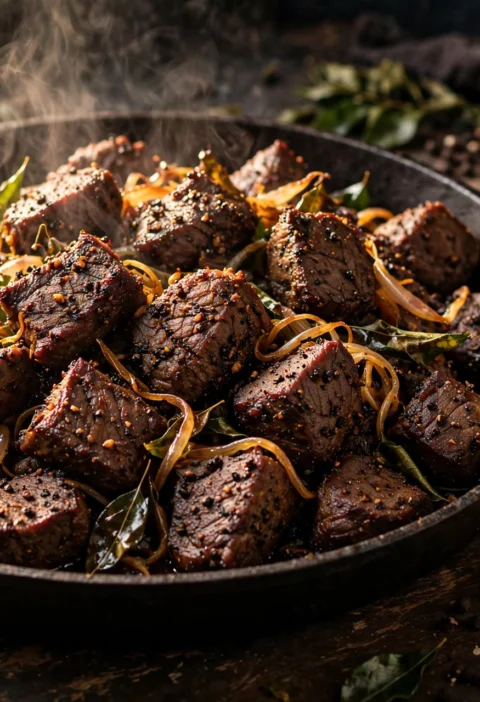
Step 2: Fry the beef hard in the karahi. Heat the oil in your karahi over high heat until it shimmers and moves like water. Add the drained beef in a single layer — crowd it and it will steam instead of fry, so work in two batches if your pan is small. Leave the pieces alone for the first two minutes to take on colour, then toss and fry for 6 to 8 minutes total, until the edges are properly browned and a few corners have gone crisp and dark. This browning is not decoration; it is the deep, roasted flavour the whole dish stands on.
Step 3: Ginger-garlic paste and tomatoes, bhunao to separation. Drop the heat a touch, stir in the ginger-garlic paste, and fry for 1 to 2 minutes until the raw, pungent smell turns sweet and nutty. Add the chopped tomatoes and the salt, turn the heat back up, and start the bhunao — the patient, splattering fry that defines karahi cooking. Press the tomatoes down with your spoon as they soften, stirring and scraping, for 8 to 10 minutes, until they have completely collapsed into a thick, dark masala and the oil rises and glistens around its edges. If the pan dries out and threatens to catch, splash in a few tablespoons of the reserved stock.
Step 4: Yogurt, green chilies and black pepper. Lower the heat to medium. Add the yogurt a spoonful at a time, stirring constantly and letting each addition cook in before the next — this patience is what keeps it from splitting into grains. Once the masala is glossy again, stir in the slit green chilies and the crushed black pepper, and cook for 4 to 5 minutes more. The masala should tighten until it clings to the beef in a dark, peppery coat, with just enough moisture to shine. Taste, and adjust the salt now, while you still can.
Step 5: Ginger over the top, and straight to the table. Scatter the julienned ginger and cilantro across the karahi, take it off the heat, and give it two minutes for the ginger to soften slightly in the residual warmth. Then serve it the dhaba way: in the karahi itself, set on a trivet in the middle of the table, with lemon wedges alongside and a stack of hot tandoori rotis or naan for tearing and scooping. Nobody plates beef karahi into neat portions at a dhaba, and once you have eaten it communally, straight from the pan, you will understand why.
Serving Suggestions
Beef karahi wants the full dhaba spread around it: blistered tandoori rotis or thick naan, a plate of sliced onion and cucumber with lemon, and a jug of something cold to stand up to the pepper. A simple raita is welcome but optional; the yogurt is already inside the dish, doing quieter work. What is not optional is eating it hot, the minute it leaves the stove.
If you know its relatives on this site, the contrasts are the quickest way to understand it. The family elder is my mutton karahi — richer and fattier, the meat softer and gamier, the whole dish heavier on the table. This beef karahi recipe is its leaner, darker sibling: less fat, a firmer and more substantial chew, and the black pepper pushed much further forward. At the other extreme sits the chicken shinwari karahi, which refuses onion and garlic on principle and seasons with little more than salt, tomato and restraint. Beef karahi has no such puritan streak — it happily builds on ginger-garlic paste and a spoon of yogurt, and it is better for it.
Storage and Reheating
Beef karahi keeps better than most karahis — arguably, it improves overnight, as the pepper and ginger settle deeper into the meat. Cool it quickly, seal it in a container, and refrigerate — use it inside 3 days, or freeze it for as long as 2 months. Reheat it in a wide pan over medium heat with two or three tablespoons of water or leftover stock, tossing until the masala loosens, turns glossy and starts to bubble at the edges again. A small shower of fresh ginger juliennes after reheating wakes the whole thing back up.
Frequently Asked Questions
Which cut of beef is best for karahi?
Chuck or shoulder, every time. These hardworking cuts carry the marbling and connective tissue that melt into tenderness during the pressure cook, and they stay juicy through the hard karahi fry. Lean cuts like round or topside have nothing to give — they dry out as they tenderise and chew like boot leather no matter what you do. Ask for pieces around 1 1/2 inches, too: smaller pieces vanish into the masala, bigger ones take forever to fry evenly.
Can I make this beef karahi recipe without a pressure cooker?
Yes — you just trade speed for stove time. Put the beef, salt and about 4 cups of water in a heavy pot with a tight lid, bring it to a bare simmer, and cook on the lowest heat for 1 1/2 to 2 hours, topping up with hot water if the level drops. Check from the 90-minute mark with the same test: a piece should press apart with a spoon but still hold together. Then drain it, reserve the stock, and carry on from Step 2 exactly as written.
Why did my beef turn out chewy?
Almost always, the beef was under-tenderised before the karahi stage — and no amount of frying fixes that, because the karahi fry adds colour, not tenderness. The second culprit is the cut: lean beef stays chewy however long you cook it in a dry fry. And a quieter one: adding the tomatoes too early. Tomato acid slows beef’s tenderising right down, which is exactly why this recipe holds the tomatoes back until the meat is already tender. If yours is chewy tonight, simmer the finished karahi gently with a splash of stock for 15 minutes — it rescues more dinners than you’d think.
Can I make it with chicken instead?
You can, but be honest with yourself about what you are making: it becomes chicken karahi, a different and quicker pleasure. Skip the pressure cook entirely — raw chicken pieces go straight into the hot karahi and are done in about 25 minutes, because chicken brings its own tenderness with it. Keep the ginger-garlic paste, tomatoes, yogurt and pepper exactly as they are and you will get a very good karahi; it will simply be lighter and milder than the beef version, without that dark, roasted depth the long beef cook builds.
Recipe Summary
- Prep time: 20 minutes
- Cook time: 55 minutes
- Total time: 1 hour 15 minutes
- Servings: 4 to 6
- Cuisine: Pakistani
- Course: Main Course