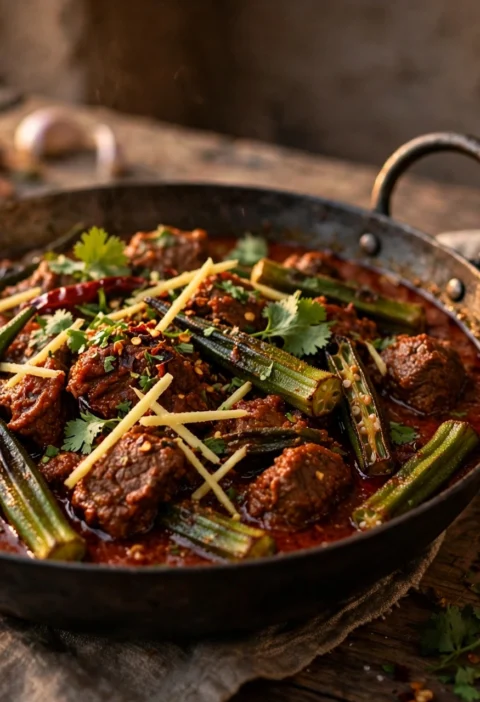
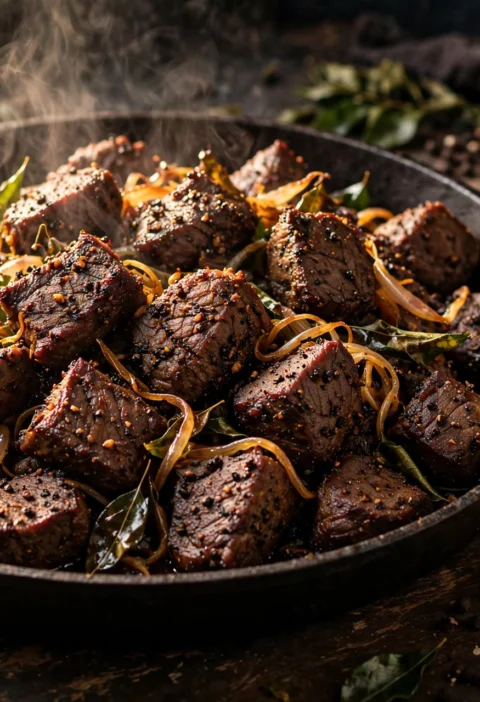
The GT Road in January is a cold, foggy ribbon, and when I was fifteen my father and I drove it from Lahore up to Rawalpindi in his old Suzuki, heater coughing, windows misting over every few minutes. Somewhere past Gujranwala, in that blue hour when the fog turns truck headlights into halos, he turned in at a dhaba he clearly knew well — charpoys ringed around a brazier, a row of Bedfords ticking as their engines cooled, and a cook in a wool cap presiding over one enormous deg. What arrived in deep steel bowls looked almost too plain to matter: a pale golden broth, big pieces of mutton on the bone, whole green chilies floating on top like little green boats. Then I took a spoonful, and I have been chasing that mutton stew recipe ever since. This is the version that finally tastes like that night.
What took me years to accept is that those drivers were not eating a curry, and I kept failing because I cooked it like one. I would fry my onions dark, stir in tomato, grind my spices, build a thick masala — and end up with a perfectly decent qorma that had nothing to do with the bowl in my memory. The stew the truckers trust is built in the opposite direction: no tomato anywhere, spices left whole so they perfume the broth instead of shouting over it, and a thin, peppery yakhni that the mutton creates itself as it simmers. It is winter food in the truest sense — a bowl you wrap both hands around while the steam fogs your glasses. Make it once on a bitter night and you will understand the loyalty.
Why This Mutton Stew Recipe Works
There is almost nothing in this dish to hide behind, which is exactly why the few decisions in it matter so much:
- Bone-in mutton, no exceptions. Shoulders and chops carry the connective tissue that melts into the broth over a long simmer, giving the yakhni body without flour, cream, or any thickener at all. Boneless meat makes a pleasant soup; bone-in makes a stew that coats the spoon and warms you from the inside out.
- No tomato — and that is the entire point. Tomato would sour the broth and drag it toward curry territory. Without it, the liquid stays clean and golden, and the mutton’s flavour stands in the middle of the bowl where it belongs, with black pepper conducting around it.
- The spices stay whole. Bruised cardamom, cloves, a cinnamon stick, bay leaves and whole peppercorns release their perfume slowly into the fat, hour after hour. Grind those same spices and they cloud the broth and turn peppery heat into a muddy paste. Whole is what keeps a stew tasting like a stew.
- Black pepper does the heating, in two additions. Half goes in early to season the broth itself; the rest is stirred through near the end so its bite stays bright. Pepper heat sits at the back of the throat and builds a slow warmth instead of burning — exactly what a man about to drive through fog at midnight wants from his dinner.
- A lazy simmer, never a rolling boil. Hard boiling whips the fat into the liquid and turns the yakhni cloudy and greasy. Kept at the gentlest bubble, the broth stays clear gold, the fat gathers where it can be skimmed, and the meat relaxes instead of toughening.
Ingredients
Every old food culture arrived at the same one-pot answer to cold weather, and the stew — in its thousand regional forms — is that answer: tough meat, water, aromatics, and time. Our GT Road version leans on garam masala used the old way, as whole spices rather than the ground powder, which is what separates it from an ordinary family qorma. For the mutton itself, ask your butcher for a shoulder-and-chop mix cut into two-inch pieces; the variety of bones is what makes the broth interesting. This mutton stew recipe serves six the dhaba way, in deep bowls with plenty of broth.
Serves 6
For the stew:
- 2 pounds bone-in mutton (shoulder and chops), cut into 2-inch pieces
- 1/3 cup ghee or neutral oil
- 2 large onions (about 3 cups), thickly sliced
- 1 tablespoon ginger-garlic paste
- 2 black cardamom pods, lightly bruised
- 5 green cardamom pods, lightly bruised
- 2 bay leaves
- 1 cinnamon stick (about 2 inches)
- 6 whole cloves
- 1 teaspoon cumin seeds
- 1 teaspoon whole black peppercorns
- 6 whole green chilies, stems left on
- 7 cups hot water
- 1 teaspoon black pepper, coarsely crushed
- 1 1/2 teaspoons salt, plus more to taste
To finish and serve:
- 1 lemon, cut into wedges
- A 2-inch piece of ginger, shaved into fine julienne strips
- 1/2 cup fresh coriander leaves, roughly torn
- Extra coarsely crushed black pepper, for the table
- 1 tablespoon ghee, melted (optional, the dhaba flourish)
How to Make This Mutton Stew Recipe – Step by Step
Step 1: Soften the onions to sweet gold and wake the whole spices. Melt the ghee in your heaviest pot over medium heat, then tip in the sliced onions with a pinch of the salt. Cook them slowly, stirring now and then, for 8 to 10 minutes until they slump down and turn a soft, even gold — sweet and mellow, not birista-dark, since dark onions would pull the broth toward curry. Drop in the black and green cardamom, cinnamon, cloves, bay leaves, whole peppercorns and cumin seeds, and let them crackle in the fat for about 30 seconds. Stir in the ginger-garlic paste and give it one full minute, until the raw smell gives way to something warm and rounded.
Step 2: Sear the mutton until its edges take colour. Add the mutton pieces and raise the heat a notch. Brown them patiently for 8 to 10 minutes, turning them so the fat renders and the edges catch a proper golden crust. With no tomato and no ground spices to lean on, this browning is where the depth comes from — the flavour the broth will carry for the next two hours — so do not crowd the pot or rush it, and work in two batches if yours is narrow.
Step 3: Add the hot water and settle into the long simmer. Pour in the hot water, add the whole green chilies and half of the crushed black pepper, and bring the pot just to the boil, skimming off the grey foam that rises in the first few minutes. Then drop the heat to the lowest simmer you can manage, set the lid slightly ajar, and leave it alone for 1 1/2 to 2 hours. You want the surface barely trembling, a bubble rising every few seconds — nothing more violent. You will know it is done when a piece collapses under nothing more than the back of a spoon pressed to the side of the pot.
Step 4: Season properly and settle the broth. Stir in the salt and the remaining crushed black pepper and simmer for 10 more minutes. Taste the broth now: it should be thin, golden and clearly peppery, with the mutton flavour running underneath it all. If it tastes watery, take the lid fully off and let it reduce for 10 minutes; if it has gone too far, splash in a little hot water. Skim any fat pooling on the surface if your family prefers it lean — at the dhaba they leave it, and on a freezing night I understand why.
Step 5: Rest it, then finish it the dhaba way. Take the pot off the heat, lid it, and rest the stew for 10 minutes; the broth settles, the pepper mellows into it, and the meat drinks a little of it back. Serve in deep bowls — a piece or two of mutton per person, broth ladled generously over — and finish each bowl at the table with ginger juliennes, torn coriander and a hard squeeze of lemon. The optional spoon of melted ghee over the top is pure dhaba theatre and worth it. Pass the extra crushed pepper around and let everyone heat their own bowl to their own courage.
Serving Suggestions
At the dhaba this stew arrives with nothing but hot naan for tearing, a side plate of raw onion rings and lemon wedges, and more whole green chilies for the brave. That simplicity is worth copying: the broth is the event, and it asks only for bread to drag through it and something raw and sharp alongside. Plain steamed rice works too, and on genuinely cold evenings we follow the bowls with small glasses of very hot, very sweet doodh patti — the truck-stop full stop. Keep the sides quiet and let the pepper do its warming work.
Mutton shows up at our table in different moods all week, and this stew has close relations on the site. When the family wants richness instead of broth, I make my mutton handi — boneless meat in a creamy, tomato-based masala, all restaurant gloss. When they want the opposite extreme, it is namkeen gosht, the Peshawar dry fry where salt, fat and green chili do everything with almost no help. This mutton stew recipe sits peacefully between those two: lighter than the handi, gentler than the namkeen, and the one I reach for when someone at home is cold, tired, or quietly coming down with something.
Storage and Reheating
Like most slow pots, this mutton stew recipe is arguably better on the second day, once the pepper has settled into the broth and the broth has settled into the meat. Refrigerate it in a sealed container for up to 4 days; a cap of fat will set on the surface as it chills, which you can lift off for a leaner bowl or stir back in for the full dhaba experience. To reheat, warm it gently to a bare simmer and hold it there a few minutes — a hard boil now would tighten the meat you spent two hours relaxing. It freezes well for up to 2 months in portioned containers; let it thaw slowly in the fridge overnight before warming it back the same low, gentle way. Save the lemon, ginger and coriander until after reheating — those bright top notes fade fastest in storage, and the bowl needs them fresh.
Frequently Asked Questions
Can I make this mutton stew recipe in a pressure cooker?
Yes — after the browning in Step 2, add the water and chilies, seal the cooker, and give the mutton about 25 to 30 minutes at high pressure with a natural release, and dinner lands an hour sooner. The trade-off is a slightly cloudier broth, since pressure forces fat and liquid together, so for guests I take the slow road on the stove. Either way, rest it and finish with lemon and ginger as written.
Why did my broth come out cloudy and greasy?
Almost certainly the pot boiled when it should have simmered. A rolling boil whips the fat into the liquid and they never fully separate again, leaving the yakhni milky and heavy on the tongue. Keep the heat so low the surface only trembles, skim the foam at the start, and if a batch has already gone cloudy, chill it fully — the fat will set into a cap you can lift away, and the broth beneath will taste far cleaner reheated.
Can I use boneless mutton instead of bone-in?
You can — leg meat in generous chunks, with the simmer shaved down to roughly 1 hour and 15 minutes. What you lose is body: the bones quietly give the broth its gelatin and depth during the long cook, and without them the yakhni tastes thinner no matter how well you season it. A good compromise is boneless meat plus one or two marrow bones borrowed from the butcher, fished out before serving.
Can I add potatoes to this mutton stew recipe?
Plenty of home cooks do — big potato chunks added for the last 30 minutes of simmering drink up the peppery broth beautifully — just know that you have left the dhaba original behind and entered family territory. Carrots travel well in it too. What I would not add is tomato in any form — one chopped tomato pulls the whole pot toward qorma, and the clean, pepper-led character of the stew is gone.
Recipe Summary
- Prep time: 20 minutes
- Cook time: 2 hours
- Total time: 2 hours 20 minutes
- Servings: 6
- Cuisine: Pakistani
- Course: Main Course