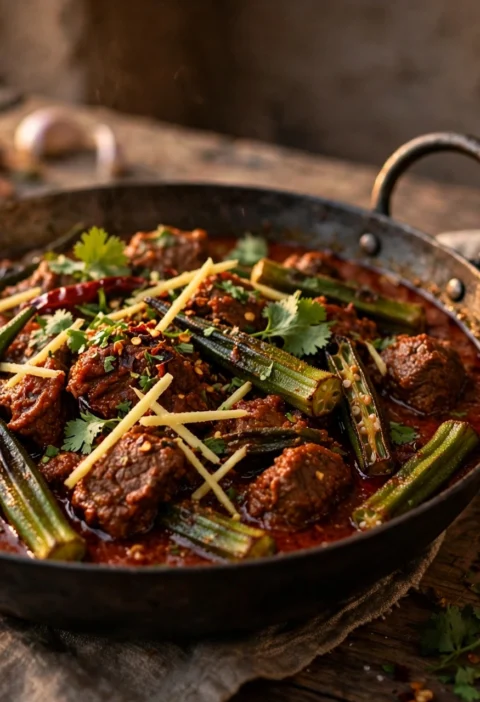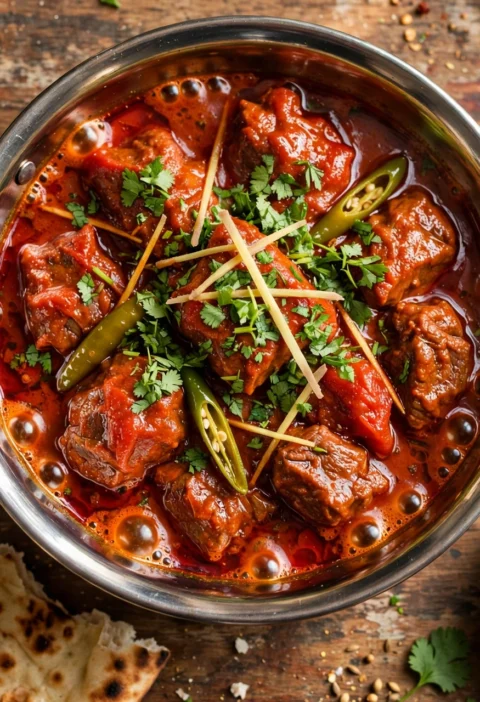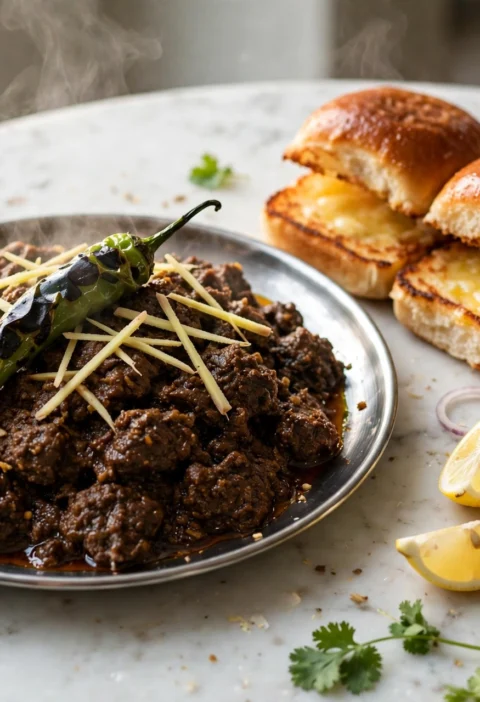
My nani kept two handis in her kitchen: a plain one for everyday daal, and a heavy, darkened one that came out only when somebody worth impressing was expected at dinner. The second handi meant mutton. I can still picture her settling that pot over the lowest flame she could coax out of the stove, stirring the yogurt in with the patience of a woman who had never once split a gravy in six decades of cooking. The first time she let me taste straight from the pot, I finally understood the ceremony — meat so tender it seemed to sigh, wrapped in a gravy that was somehow rich and bright at the same time. This mutton handi recipe is my long attempt to cook the way she did: slowly, in one pot, with respect for the yogurt. It took me years of curdled failures to earn it, and this mutton handi recipe is the version that finally tastes like her table.
What defines a handi is its gravy — a tomato and yogurt base, bhunoed until the oil glistens at the edges, then enriched at the very end with cream and a whisper of dried fenugreek. It is not a karahi, with its fierce dry heat and onion-free rules, and it is not an everyday salan either; it sits between the two, silkier than both. My early versions failed in all the classic ways: yogurt dumped into a boiling pot that split on contact, cream stirred in so early it turned the whole dish greasy, mutton pulled out still stubborn because I treated the braise as a race. The lessons hardened into rules — temper the yogurt, braise without mercy, cream absolutely last — and every one of them is baked into this mutton handi recipe.
Why This Mutton Handi Recipe Works
Handi gravies fail by splitting, by staying thin and watery, or by burying good meat under a raw, half-cooked masala. Each of those failures is a technique problem, not a talent problem — and this mutton handi recipe is built around the five fixes:
- The masala is bhunoed until the oil separates. Tomatoes and onions cooked past the watery stage, until the mixture darkens and oil beads at the edges, become a gravy with actual body instead of a sauce that pools sadly around the meat. That patience is the backbone of this mutton handi recipe.
- The yogurt is whisked smooth and tempered off the boil. Cold yogurt meeting a rolling boil splits into grainy curds before you can blink. Whisked until pourable, brought closer to room temperature, and stirred in gradually over low heat, it melts into the masala like it was always meant to be there. This is what keeps the gravy of this mutton handi recipe unbroken and glossy.
- The mutton braises inside the gravy, not before it. Unlike a karahi’s separate stages, handi meat simmers directly in its masala for the better part of an hour, drinking the spiced yogurt deep into every piece. That is why each bite of this mutton handi recipe tastes seasoned all the way to the bone.
- Cream enters at the end, off the heat. Cream boiled in a curry turns greasy and loses its sweetness; cream rested into a finished gravy stays silky and luxurious. This mutton handi recipe treats cream strictly as a finishing touch, never a cooking ingredient.
- Kasuri methi and fresh ginger close the dish. Dried fenugreek crushed between warm palms and a tangle of ginger juliennes supply the unmistakable restaurant aroma that makes people lean over the pot before it reaches the table. It is the signature finish this mutton handi recipe never skips.
Ingredients
Serves 5-6
For the handi:
- 1 kg (about 2.2 lbs) mutton, bone-in, cut into 2-inch pieces
- 1/2 cup (120 ml) ghee or neutral oil
- 2 large onions (about 300g), sliced thin
- 1 tablespoon ginger-garlic paste
- 4 medium tomatoes (about 400g), blended into a smooth puree
- 1 cup (240g) plain whole-milk yogurt, whisked until completely smooth
- 1 1/2 teaspoons salt, plus more to taste
- 1 tablespoon red chili powder
- 1 tablespoon ground coriander (dhaniya)
- 1/2 teaspoon turmeric powder (haldi)
- 1 teaspoon ground cumin (zeera)
- 1/2 teaspoon garam masala
- 1 to 1 1/2 cups hot water, added as needed
For finishing:
- 1/2 cup (120 ml) fresh cream
- 1 tablespoon dried fenugreek leaves (kasuri methi), crushed between your palms
- 2-inch piece of fresh ginger, cut into fine juliennes
- 3 to 4 green chilies, slit lengthwise
- 1/4 cup fresh coriander leaves, chopped
- 1 tablespoon butter (optional, for gloss)
A word about the pot itself: a handi is a deep cooking vessel with a narrow mouth — clay in the old kitchens, metal in most modern ones — and its shape matters more than its material, because the narrow opening traps steam and keeps a long braise moist. That is exactly what mutton asks for. A heavy Dutch oven, or any deep pot with a well-fitting lid, does the same job honestly. What you cannot substitute is the low, patient heat; this mutton handi recipe is a slow dish wearing a rich gravy, and rushing it always shows.
How to Make This Mutton Handi Recipe – Step by Step
Step 1: Brown the onions, then sear the mutton.
Heat the ghee in your handi or a heavy, deep pot over medium-high heat. Fry the sliced onions for 10 to 12 minutes, stirring often, until they turn an even golden brown. Add the mutton and sear for 6 to 8 minutes until the pieces take color at the edges, then stir in the ginger-garlic paste and fry 2 minutes more. This deep browning is the first layer of flavor in this mutton handi recipe — pale onions make a pale handi.
Step 2: Build the tomato masala and bhuno it properly.
Pour in the tomato puree with the salt, red chili powder, coriander, turmeric, and cumin. Cook over medium heat for 10 to 12 minutes, stirring and scraping the bottom, until the masala thickens, deepens in color, and oil begins to shimmer around the edges. Do not move on while the tomatoes still smell raw — an under-bhunoed masala is the one mistake no amount of cream can rescue later.
Step 3: Temper the yogurt in, slowly.
Drop the heat to its lowest setting. Add the whisked yogurt a few spoonfuls at a time, stirring constantly and letting each addition disappear into the masala before adding more. Once it is all in, let the gravy come back to the gentlest simmer and cook 5 minutes, stirring now and then, until it turns unified and glossy. Tempering the yogurt this way is the step that protects this mutton handi recipe from the split-gravy disaster.
Step 4: Braise the mutton until it surrenders.
Stir in 1 cup of hot water, cover with a tight lid, and braise over the lowest heat for 50 to 60 minutes, checking once or twice and adding a splash more water only if the gravy is catching. The mutton is ready when a piece yields to the side of a spoon with almost no pressure. Tough meat at this stage means more time, never more heat — this mutton handi recipe does not serve chewy mutton.
Step 5: Cream, fenugreek, and the ten-minute rest.
Sprinkle in the garam masala and stir once. Turn the heat off completely, then swirl in the cream, the crushed kasuri methi, and half the ginger and green chilies. Cover and rest for 10 minutes so the cream settles into the gravy instead of cooking in it. Uncover, scatter over the remaining ginger, chilies, coriander, and the butter if using, and carry the whole pot to the table.
Serving Suggestions
Handi is celebration food, and it should be served like it — the pot in the middle of the table, everyone tearing hot naan or sheermal and helping themselves. A plate of onion rings with lemon and a plain green salad are all the side support it needs; anything heavier steals the gravy’s thunder. In my house, this mutton handi recipe is the dish that ends the argument about what to cook when guests are coming.
This mutton handi recipe also plays well with stronger personalities around it. If your table leans fiery, cook my mutton karahi alongside — its dry, tomato-blasted heat against the handi’s creaminess is a genuine study in contrasts. The same silky method on a weeknight clock lives in my chicken handi, and when I want a full mutton spread, I open the meal with my mutton chops as a starter and let the handi arrive as the main event.
Storage and Reheating
Leftovers keep 3 to 4 days in the refrigerator in a sealed container, and the gravy deepens overnight in the way all good gravies do. Warm the leftovers back up slowly in a covered pot on the gentlest heat, loosening the gravy with a spoonful or two of water and stirring until steam just rises — never let a cream-based gravy boil hard on the reheat, or it can split and turn grainy. Freezing works for up to 2 months; thaw overnight in the fridge, warm it low and slow, and swirl in a spoonful of fresh cream at the end to bring this mutton handi recipe back to its first-day gloss.
Frequently Asked Questions
Why did my yogurt split and turn grainy?
Heat shock — cold yogurt thrown into a boiling gravy. Whisk the yogurt until it pours like cream, let it sit out of the fridge for 20 minutes before cooking, drop the heat to low, and add it gradually while stirring. Follow the tempering in step 3 of this mutton handi recipe and it will not happen again.
Can I make this with boneless mutton?
Yes — use leg meat cut into chunks and shorten the braise by about 10 minutes, since boneless pieces give up their tenderness sooner. Bone-in will always give you a richer gravy, but boneless is easier serving at a dawat, and the dish loses surprisingly little.
Can I skip the cream?
You can. The gravy will be a shade less luxurious, but the yogurt and tomato base carries the dish on its own — stir in two extra spoonfuls of whisked yogurt at the end if you like. That said, the cream is what makes this mutton handi recipe taste like a proper restaurant handi, so save the skipping for ordinary Tuesdays.
Can the braise be done in a pressure cooker?
Yes. Complete steps 1 to 3 on the stovetop, add the water, then pressure cook for 12 to 15 minutes and let the pressure release naturally. Return the pot to gentle heat, check the gravy’s thickness, and finish with cream and fenugreek exactly as written — that part never goes under pressure.
Recipe Summary
- Prep time: 20 minutes
- Cook time: 1 hour 20 minutes
- Total time: 1 hour 40 minutes
- Servings: 5-6
- Cuisine: Pakistani
- Course: Main