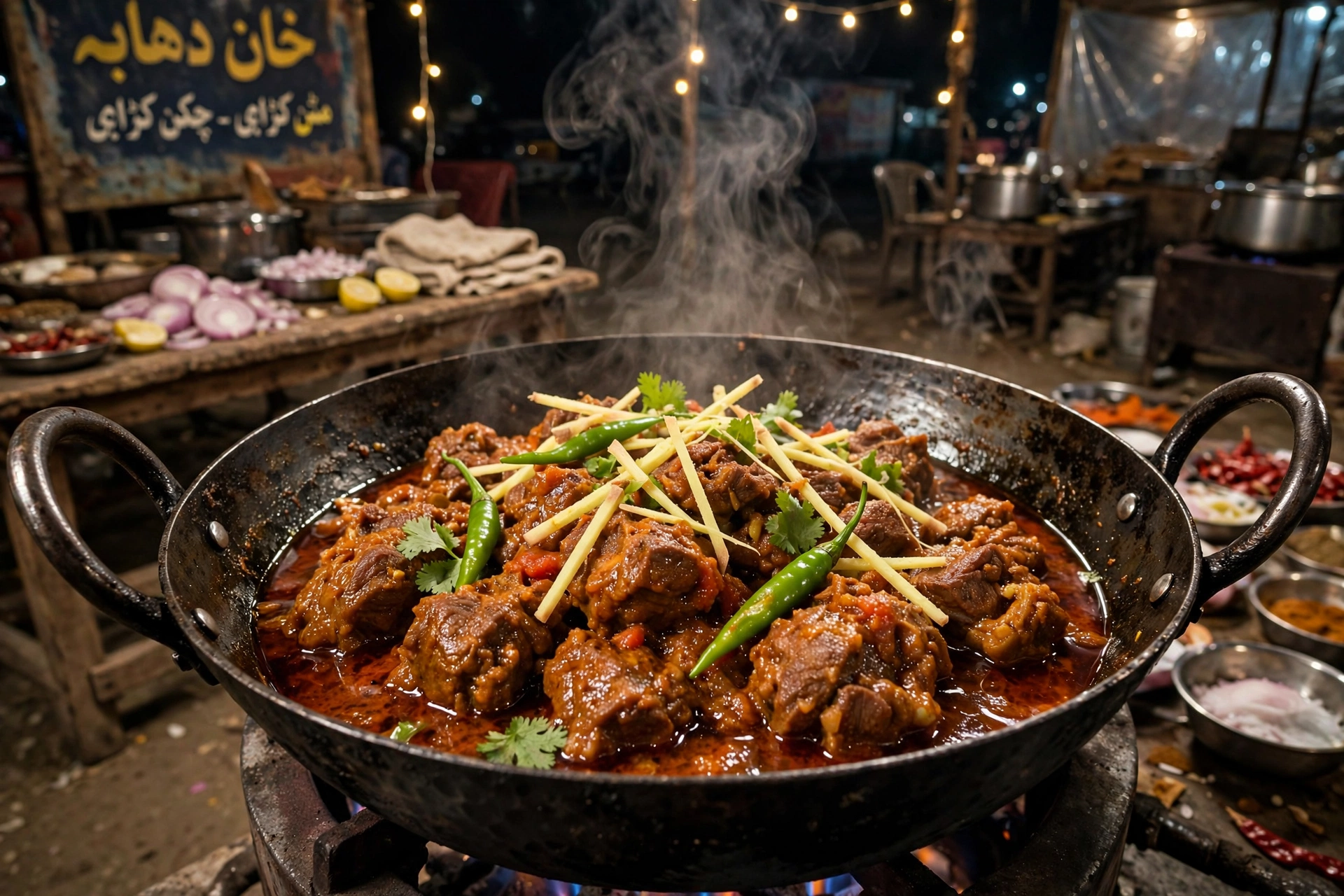
Khichra was the pot that arrived in a deg from a neighbor’s house during Muharram, carried between two people, still warm under its cloth. I remember standing over it as a child and being able to see everything in it — the swollen grains of wheat, the shreds of beef pulled long by the wooden ghotna, the daals half-melted into the body of it. Nothing was hidden and nothing was pureed. It ate like a meal you could chew and spoon at the same time. This khichra recipe is my attempt at that pot: beef simmered tender in its masala, cracked wheat, rice, and three daals cooked soft on their own, then everything married in one heavy pot and stirred by hand until the meat threads itself through the grains and the whole thing holds together, coarse and steaming.
It took me a while to learn what khichra is not. My first attempt, I treated it like its famous cousin and attacked the finished pot with a blender — and produced a grey, gluey cement that set in the bowls like plaster. My second pot I left to simmer proudly on its own while I answered the door and laid the table, and the thick base caught and scorched, so the whole batch tasted faintly of the bottom of the pan. And a third time I stirred undercooked chunks of beef into finished grains and called it done; the meat sat in lumps like uninvited guests instead of shredding into the mix. The rules in this khichra recipe are those three failures, corrected: nothing goes near a blade, the final simmer is stirred like it is your only job, and the meat must be falling-apart tender before it ever meets the wheat.
Why This Khichra Recipe Works
Khichra is haleem’s coarser relative, and its whole character lives in texture — so this khichra recipe is engineered around keeping that texture alive:
- The texture stays coarse, on purpose. The pot is worked with a wooden spoon or ghotna — pressed, stirred, and turned — but never blended, pureed, or whisked smooth. You should be able to see the wheat grains, find the shreds of beef, and tell where the daals melted in. Smooth is a different dish; a khichra recipe guards its roughness like a signature.
- Every component cooks on its own clock first. Cracked wheat, rice, and daals each need different times to go soft, and beef needs longer than all of them to go tender. Cooked separately and combined at the end, each arrives at its best; thrown in together, something is always raw or something is always mush — the khichra recipe’s whole timetable depends on it.
- The meat is shredded into the grains, not added to them. Beef cooked until it collapses, then worked with the spoon against the side of the pot, pulls into long threads that distribute through every spoonful. Meat that merely sits in chunks inside cooked wheat will never integrate — shredding is how a khichra recipe turns two pots into one dish.
- The final simmer is stirred constantly. A pot this thick catches at the bottom in minutes, and a caught base seasons the whole batch with scorch. Twenty to thirty minutes of patient stirring, scraping the bottom in slow figure-eights, is not a suggestion — it is the price of the pot.
- Hot water goes in by the splash, never the flood. The mixture thickens relentlessly as it cooks and stands. Kept at a thick, spoonable porridge with small additions of hot water, it stays generous; left to dry out, it sets. You are aiming for something that drops slowly off the spoon and holds a garnish on its back. That spoon test is the consistency a khichra recipe is judged by.
Ingredients
Serves 6 to 8
For the grains and daals:
- 1 cup cracked wheat (dalia), rinsed and soaked for 2 hours or overnight
- 1/4 cup basmati rice, rinsed and soaked
- 1/4 cup chana daal, rinsed and soaked for 1 hour
- 1/4 cup masoor daal (red lentils), rinsed
- 1/4 cup moong daal, rinsed
- About 5 cups water, for cooking the grains
For the beef:
- 1 1/2 pounds beef stew meat, cut into 2-inch pieces
- 1/3 cup oil
- 2 large onions, sliced into thin half-moons
- 2 medium tomatoes, cut into rough chunks
- 1 tablespoon ginger-garlic paste
- 1/2 teaspoon turmeric powder
- 2 teaspoons coriander powder
- 1 teaspoon red chili powder
- 2 teaspoons salt, or to taste
- 1 teaspoon garam masala, for the finish
- About 2 cups water, for simmering the beef, plus hot water as needed later
To serve, at the bowl:
- Crisp fried onions (birista)
- Fresh ginger, cut into fine julienne
- Green chilies, chopped, and fresh coriander leaves
- Lemon wedges and chaat masala
- A knob of butter or a spoonful of ghee per bowl (optional)
The dish itself, khichra, is widely regarded as the older, rougher draft of haleem: the same family of wheat, meat, and lentils, slow-cooked into one pot, but finished with a spoon instead of being beaten and blended into a paste. Where haleem is pounded until the meat disappears into silk, khichra keeps its evidence — whole grains, visible shreds, a stew’s honest texture. A khichra recipe is the version for people who like to know what they are eating, in the best possible way.
How to Make This Khichra Recipe – Step by Step
Step 1: Cook the grains and daals until completely soft.
Put the drained cracked wheat, rice, chana daal, masoor, and moong into your largest pot with the 5 cups of water and bring it to a boil. Skim any foam, drop the heat, and simmer for 45 to 55 minutes, stirring now and then, until the wheat has swollen and burst, the chana daal crushes easily between finger and thumb, and the whole pot looks like a thick, pale porridge. Top up with hot water if it tightens too much. This base is the body of the khichra recipe, and undercooking it here cannot be repaired at any later stage.
Step 2: Cook the beef in its masala until it falls apart.
While the grains simmer, heat the oil in a second heavy pot and fry the onions slowly, stirring often, until they take a rich, even gold — a good 10 to 12 minutes. Now the ginger-garlic paste goes in for a minute of frying, and then the beef, browned well on high heat. Stir in the tomatoes with the turmeric, coriander, chili powder, and salt, and bhuno the masala until the tomatoes melt away and the oil separates. Add the 2 cups of water, cover, and simmer for 50 to 60 minutes — or about 20 minutes under pressure — until a piece of beef tears apart when you press it with a spoon. Tender is not enough for a khichra recipe; the meat must be ready to shred.
Step 3: Shred the beef in its own pot.
With a sturdy wooden spoon, press the beef pieces against the side of the pot and work them apart into coarse shreds, right there in their masala. Some pieces will pull into long threads, others into rough chunks — that unevenness is welcome here. Leave all the cooking liquid in; it carries the masala that will season the entire combined pot of this khichra recipe.
Step 4: Combine the pots and begin the long stir.
Pour the shredded beef and all of its masala into the grain pot, or the grains into the beef pot — whichever vessel is bigger and heavier. Set it over the lowest heat and start stirring, slowly and constantly, scraping the bottom and sides. Over the next 25 to 30 minutes, work the pot with the back of the spoon, pressing and turning, until the beef threads are distributed through the grains and the mixture pulls together into one thick, coarse mass. Splash in hot water whenever it stiffens toward cement; a khichra recipe should move like slow lava, not set like concrete.
Step 5: Finish the seasoning and serve with the full garnish.
Stir in the garam masala, taste for salt — a grain pot this size drinks more than you expect — and simmer for a final 5 minutes, still stirring. Rest the pot, covered, for 10 minutes; it will thicken as it stands, which is expected. Ladle this khichra recipe into bowls and send out the garnishes to be added at the table: birista in a snowfall, ginger julienne, green chilies, coriander, a squeeze of lemon, a pinch of chaat masala, and the butter or ghee melting on top.
Serving Suggestions
This khichra recipe is a meal standing on its own — thick, meaty, and built to be eaten slowly with a spoon, the garnishes tuned bowl by bowl. Warm naan on the side is welcome but optional; the pot needs nothing beside it except lemon and company. It is food for a crowd and for cold evenings, and it has a long tradition of being made in quantity and shared beyond the house.
Its two closest relatives on this site explain it by contrast. My beef haleem is the smooth celebrity of the family — the same wheat, meat, and lentils, but beaten and blended until the meat vanishes into a silky paste; stand the two side by side and the difference between the cousins is one spoonful deep. And my khichdi is the name-twin with none of the meat: rice and daal simmered soft, the gentle vegetarian comfort pot. A khichra recipe sits between them in spirit — haleem’s ingredients, khichdi’s honesty, and a texture entirely its own.
Storage and Reheating
Khichra keeps in the refrigerator for up to 3 days and thickens dramatically as it sits — do not be alarmed when the leftovers hold the shape of the container. Reheat it in a heavy pot over low heat with a generous splash of water, stirring steadily as it loosens, until it returns to a slow, spoonable porridge; a hard boil will catch the base all over again. It freezes exceptionally well for up to 2 months in portions — thaw overnight, reheat the same patient way, and wake each bowl with fresh lemon, chilies, and a new snowfall of birista so a frozen khichra recipe tastes freshly stirred.
Frequently Asked Questions
What is the actual difference between khichra and haleem?
Texture, and texture alone decides it. Haleem is beaten, pounded, and usually blended until wheat, lentils, and meat become one smooth, stretchy paste in which nothing is distinguishable. Khichra stops far earlier: the grains stay whole and swollen, the beef stays in visible shreds, and the daals melt only partly into the body. Same ingredients, same slow cooking, two different finishes — a khichra recipe is done when everything is tender and combined; a haleem is done when everything has disappeared into each other.
Can I use a pressure cooker or a slow cooker?
For the components, gladly — pressure-cook the beef to tenderness and the grains to softness and you will save real time. The final combining, though, belongs on the stove, because the pot needs constant stirring and the occasional splash of water, and that last half hour is where the texture is decided. A slow cooker can hold the combined pot on low if you stir it well every so often, but a khichra recipe rewards the cook who stays nearby.
My khichra turned gluey and set like cement. What happened?
Two usual causes: the pot was blended or over-worked with a whisk, which bursts the wheat’s starch into glue, or it simply ran out of water in the final simmer and as it stood. The rescue for a stiff pot is hot water, stirred in a little at a time over low heat, until it loosens back to a thick porridge. The prevention is the spoon — stir and press, never blend, and keep this khichra recipe wetter than feels safe; it thickens on standing more than any dish I know.
Can I make khichra with chicken or mutton instead of beef?
Mutton works beautifully — give it the same long cook until it shreds, and the pot will be a little richer. Chicken khichra is made in many homes too; use bone-in pieces, cook them until they just reach shredding tenderness in about half the beef’s time, and lift out the bones before you combine the pots. The grains, the garnishes, and the coarse finish of the khichra recipe stay exactly the same.
Recipe Summary
- Prep time: 25 minutes (plus 2 hours of soaking)
- Cook time: About 2 hours
- Total time: Around 2 hours 30 minutes, plus the soak
- Servings: 6 to 8 people
- Cuisine: Pakistani
- Course: Main Course