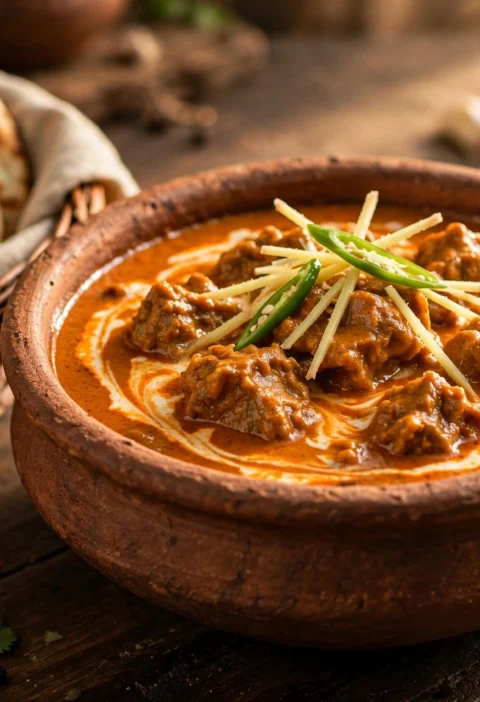
The first time I sat down to a full Wazwan, the courses simply refused to end. Plate after plate arrived, and just when I was quietly loosening my belt and wondering how anyone survives a Kashmiri wedding feast, the waza himself appeared with a bowl of enormous pale meatballs floating in a white, gently steaming gravy. The elderly uncle beside me leaned over and whispered, “When the goshtaba comes, the feast is politely telling you to stop.” It is the final meat course — the full stop at the end of a long and glorious sentence. This goshtaba recipe is my attempt to honor that bowl at home: hand-pounded mutton worked with fat until it turns silky and spongy, poached with patience, and finished in a yogurt gravy perfumed with fennel, dry ginger, and cardamom.
I will be honest — my early attempts embarrassed that memory. My first batch went through the electric grinder because pounding sounded like hard work, and the balls came out dense and squeaky, closer to golf balls than to anything a waza would sign. My second try had the gravy split into sour, grainy curds because I let the yogurt come to a cheerful boil while I laid the table. A third batch lost two meatballs entirely in the poaching pot because the water was at a rolling, violent boil and they simply tore apart. So the rules in this goshtaba recipe are written in my own failures: pound the meat by hand, keep everything cold, poach at barely a murmur, and never, ever let the yogurt boil.
Why This Goshtaba Recipe Works
Goshtaba is a dish of texture before everything else — the gravy is gentle so the meatball can be the marvel. This goshtaba recipe is built around protecting that texture at every stage:
- The meat is pounded, never machine-ground. A waza works the mutton on a flat stone with a heavy wooden mallet until it becomes a smooth, sticky paste. A grinder does the opposite of what you want: its blades heat the meat and smear the fat, and the result cooks up tight and rubbery. Pounding keeps everything cold and develops the fine, silky bind that makes a goshtaba recipe feel almost like a soufflé wearing a gravy coat.
- Fat is an ingredient, not an accident. Well-chilled mutton fat is worked right into the paste, roughly a fifth of the total — that fat is where the famous spongy bounce lives. Pound lean meat alone and you get dense little cannonballs, however long you work them.
- The balls are poached before they ever meet the gravy. A gentle poach in barely simmering water sets their shape and cooks them through, so by the time they slide into the yogurt gravy they are firm enough to hold together and tender enough to drink it in. Skip the poach and they either break in the sauce or stay raw-hearted in the middle.
- The yogurt is whisked, warmed gradually, and stirred without pause. White gravies split for one reason: shock. Cold yogurt dumped into a hot pot, or a gravy left to boil, will curdle into something sour and sad. Whisk it silky first, stir it in a slow stream, keep a wooden spoon moving, and hold the pot below a simmer — the gravy stays as smooth as cream.
- Fennel, dry ginger, and cardamom do all the talking. There is deliberately no chili fire and no tomato in this dish. The Kashmiri trio of ground fennel, dry ginger, and green cardamom gives warmth without heat — exactly right for a course designed to close a feast gently rather than set off fireworks at the finish line of a goshtaba recipe.
Ingredients
Serves 6
For the meatballs:
- 2 pounds boneless mutton (leg or shoulder), cut into small cubes, kept very cold
- About 3/4 cup finely chopped well-chilled mutton fat (roughly 5 ounces), or the fattiest trimmings from the same joint
- 1 1/2 teaspoons fine salt
- 1 teaspoon ground fennel
- 1/2 teaspoon ground dry ginger
- 1/2 teaspoon green cardamom powder
- 1 tablespoon ice water, plus more for wetting your hands
For the poach and the white gravy:
- 6 to 8 cups water, for poaching, with 1 teaspoon salt
- 2 cups plain whole-milk yogurt, whisked until completely smooth
- 2 tablespoons ghee
- 4 green cardamom pods, lightly cracked
- 1 black cardamom pod
- 1 small cinnamon stick, about 1 inch
- 2 whole cloves
- 1 teaspoon ground fennel
- 1/2 teaspoon ground dry ginger
- 1/2 teaspoon salt, or to taste
- 1/2 cup warm water, to loosen the gravy if needed
- 1 teaspoon dried mint and a little extra melted ghee, to finish
The dish, goshtaba, is the crowning final course of the Wazwan, the multi-course Kashmiri feast cooked by a team of wazas under a head chef called the vasta waza. Where most of the feast runs red and fiery, goshtaba arrives white, mild, and enormous — meatballs traditionally fist-sized, though I shape mine a little smaller for a home pot. Old hands say a proper one should bounce gently if dropped an inch onto the plate; I have never had the nerve to test mine.
How to Make This Goshtaba Recipe – Step by Step
Step 1: Pound the meat and fat into a silky paste.
Keep a bowl of ice water beside you for your hands. Pound the mutton cubes on a heavy board or stone with a meat mallet or the flat of a heavy pestle, folding and scraping the meat back together as you go, until it stops looking like mince and becomes a smooth, pale, sticky paste — a good 15 to 20 minutes of honest work for the full batch. Pound the chilled fat the same way and work it through the meat with the salt, fennel, dry ginger, and cardamom, plus the tablespoon of ice water. Everything must stay cold; warm meat will not bind, and this is the step the whole goshtaba recipe stands or falls on.
Step 2: Shape large balls and chill them firm.
With wet hands, roll the paste into 8 large balls, roughly 2 1/2 inches across — smaller than the waza’s fist-sized originals, but generous. Roll each one between your palms a few extra turns than feels necessary; that final smoothing seals the surface and is your insurance against cracks. Lay them on a tray without touching and chill for at least 30 minutes. A cold, firm ball goes into the poach like a stone into a pond; a warm, soft one arrives like an argument.
Step 3: Poach at the gentlest possible simmer.
Bring the salted water in a wide pot to about 180°F (82°C) — steaming, shivering at the edges, with only the occasional lazy bubble rising. Slide the balls in one by one and hold the water at that murmur for 15 to 18 minutes, turning them once with a spoon. They will firm up, pale further, and float a little proudly when they are done. Lift them out with a slotted spoon and keep 1 cup of the poaching liquid aside — it carries good flavor and thins the gravy if needed.
Step 4: Build the white gravy without ever boiling it.
Melt the ghee in a wide, heavy pot over medium-low heat and add the cracked cardamoms, cinnamon, and cloves; give them half a minute to perfume the fat. Turn the heat down to its lowest setting and pour in the whisked yogurt in a slow, steady stream, stirring constantly with a wooden spoon in one direction. Keep stirring as it warms — five patient minutes — until it turns glossy and just begins to thicken. Stir in the fennel, dry ginger, and salt. If it ever threatens to bubble, lift the pot off the heat and keep stirring; a goshtaba recipe forgives many things, but boiled yogurt is not one of them. Loosen with splashes of the warm water or reserved poach liquid until it coats a spoon like thin cream.
Step 5: Finish the balls in the gravy and rest the pot.
Lower the poached meatballs into the gravy one at a time and spoon the sauce over them. Cover and hold at the barest simmer — steam, a tremble, nothing more — for 10 minutes, turning the balls once, very gently. Take the pot off the heat and rest it for 10 minutes; the balls finish drinking in the gravy and the sauce settles into its final silk. Serve straight from the pot with a thread of melted ghee and the dried mint crumbled over the top.
Serving Suggestions
At a Wazwan, goshtaba closes the feast after a parade of kebabs and red curries, and it is served with nothing more dramatic than plain steamed rice, which is exactly how I serve this goshtaba recipe at home. The gravy is mild and creamy, the balls are the event, and anything louder on the plate would be an interruption. A little extra ghee at the table and dried mint to crumble over your own portion is all the ceremony it asks for.
To understand its place, set it against the feast’s opening act on this site. My rogan josh is the red, assertive beginning of the same Wazwan — mutton in a deep, spiced gravy that announces itself across the room — while goshtaba is the white, gentle full stop that ends it. And if you want to see what the rest of the world does with a meatball, my mutton korma simmers tender mutton in a browned-onion gravy of a completely different temperament: where a kofta curry keeps its balls small and its sauce dark, a goshtaba recipe keeps its balls huge, its sauce pale, and its voice barely above a whisper.
Storage and Reheating
Goshtaba keeps in the refrigerator for up to 3 days, and the balls continue to soften gently in the gravy as they sit — the next-day portion is, if anything, more tender. Reheat the whole thing in a covered pot over the lowest heat you have, with a splash of warm water, stirring the gravy as it warms and never letting it approach a boil, because yesterday’s silky sauce can still split if bullied. The poached balls on their own, before they meet any gravy, freeze well for up to 2 months; thaw them overnight in the refrigerator, make a fresh pot of white gravy, and finish them as in Step 5, and a stored goshtaba recipe tastes like the waza just left your kitchen.
Frequently Asked Questions
Can I use a food processor instead of pounding the meat by hand?
You can, and I have, on a weekday when my arms filed a formal complaint — but do it in short cold bursts, with the meat and fat almost frosty from the freezer, and stop the moment it comes together. The processor’s blade generates heat as it spins, and heat is the enemy twice over: it smears the fat instead of dispersing it and starts the proteins tightening before the meat ever sees a pot. Hand-pounded meat stays cold and develops a finer, stickier bind, which is why hand-pounding has survived a thousand years of available shortcuts.
Why did my yogurt gravy split and turn grainy?
Almost certainly heat or shock. Yogurt curdles when it boils, when it hits a fiercely hot pan, or when cold yogurt is stirred into a hot pot all at once. Whisk it completely smooth first, bring the pot down to its lowest heat, add the yogurt in a slow stream while stirring steadily in one direction, and keep it below a simmer the entire time. Full-fat yogurt is also far more forgiving than low-fat — for a white goshtaba gravy, this is not the moment for diet dairy.
Why are my meatballs dense instead of spongy?
Three usual suspects: the meat was too lean (that worked-in fat is what creates the bounce), the pounding stopped too early (you are looking for a smooth paste, not fine mince), or everything got warm during shaping (cold meat binds tight and fine; warm meat binds coarse). Chill the meat, chill the fat, wet your hands with ice water as you shape, and give the pounding its full time — the sponge is earned in Step 1 or not at all.
Can I make goshtaba with beef or chicken instead of mutton?
Beef versions exist in some homes and work respectably if you use a fatty cut and the same pounding method — the gravy and technique stay identical. Chicken produces something softer and more delicate that purists would refuse the name entirely, and its balls need a shorter poach. Mutton is the tradition for a reason: its fat is firm, its flavor stands up to the gentle gravy, and it pounds into that characteristic pale, springy paste better than anything else I have tried.
Recipe Summary
- Prep time: 40 minutes (plus 30 minutes chilling)
- Cook time: About 45 minutes
- Total time: Around 1 hour 55 minutes
- Servings: 6 people
- Cuisine: Pakistani (Kashmiri)
- Course: Main Course