Growing up, the monsoon had a sound and a smell. The sound was rain drumming on the tin awning outside our kitchen window, and the smell — the one that pulled everyone toward the table without being called — was moong dal toasting in a dry pan while my mother stood over it, stirring lazily with a wooden spoon. Rainy days meant one thing in our house: bhuna khichuri. Not the soft, soupy kind you feed someone with a fever, but this one — rice and dal roasted together with whole spices until the grains stayed separate, glossy and rich, crowned with a snowfall of crisp fried onions. This bhuna khichuri recipe is the one she taught me, the one I now make whenever the sky turns grey, and honestly, plenty of times when it doesn’t.
Bhuna khichuri is Bangladesh’s answer to a rainy afternoon. The word bhuna means roasted or well-fried, and that single word changes everything about the dish. In an ordinary khichdi, rice and lentils simmer down into a gentle porridge. Here, the dal is dry-roasted first until it smells nutty, then the rice and dal are fried together in spiced ghee — the bhuna step — before just enough hot water goes in to cook them through. What comes out is closer in spirit to a pilaf: fluffy, fragrant, almost dry, each golden grain distinct, with the deep, rounded flavour of onions cooked past golden into sweet. It is comfort food with posture. In Dhaka, the first heavy downpour of the season is practically an announcement: markets sell out of moong dal by noon, and every home cook I know starts slicing onions before the rain has even settled in. It is the dish of adda-filled evenings, of wet umbrellas dripping by the door and a pot steaming in the middle of the table.
Why This Bhuna Khichuri Recipe Works
Khichuri has a reputation for turning into mush, and bhuna khichuri forgives nothing — but five small habits guarantee the fluffy, restaurant-style result every single time:
- Dry-roasting the moong dal first. Toasting the dal in a bare pan until it turns pale gold and smells like warm hazelnuts is non-negotiable. It deepens the flavour enormously and, just as importantly, helps the dal hold its shape instead of dissolving into the rice.
- Frying the rice and dal in the spiced oil. This is the bhuna step that gives the dish its name. Coating every grain in ghee, onion and spice before the water goes in keeps the grains separate and builds the savoury base that plain boiled khichdi never has.
- Measured hot water, never cold. Too much water is the number one cause of soggy khichuri. Adding hot water in a measured ratio — and no stirring once it goes in — lets the grains absorb evenly and stay distinct.
- Whole spices bloomed at the start. Bay leaves, cinnamon, cardamom and cloves crackled in hot ghee perfume the entire pot from the bottom up, so the fragrance is baked into the grains rather than sprinkled on at the end.
- A proper rest and a ghee finish. Ten undisturbed minutes off the heat lets the last steam finish the cooking gently. A final spoonful of ghee and a handful of crisp fried onions over the top is how every good bhuna khichuri recipe signs its name.
Ingredients
At its heart, this dish belongs to the great South Asian family of khichdi — rice and lentils cooked together in one pot — but the Bangladeshi bhuna style takes it in a richer, drier direction. The lentil of choice is the split, hulled mung bean, sold as yellow moong dal; it cooks quickly, tastes faintly sweet, and turns the whole pot the colour of late-afternoon sunlight. In Bangladesh the rice would be a short, fragrant variety like kalijeera or gobindobhog — if you can find either at a South Asian grocer, use it, but good basmati works beautifully too. Everything else is pantry staples: ghee, onions, ginger, and a small parade of whole spices.
Serves 4 to 6
For the khichuri:
- 1 cup yellow moong dal (split mung beans)
- 1 1/2 cups fragrant rice (kalijeera or gobindobhog if available, otherwise basmati)
- 3 tablespoons ghee, plus more for serving
- 1 tablespoon neutral oil
- 1 teaspoon cumin seeds
- 4 whole cloves
- 4 green cardamom pods, lightly crushed
- 1 cinnamon stick (about 2 inches)
- 2 bay leaves
- 1 large onion, thinly sliced (about 1 1/2 cups)
- 1 teaspoon garlic paste
- 1 tablespoon ginger paste
- 1/2 teaspoon red chili powder
- 1 teaspoon ground cumin
- 1/2 teaspoon ground turmeric
- 4 to 5 whole green chilies, slit
- 1 1/2 teaspoons salt, or to taste
- 1/2 teaspoon sugar
- 3 3/4 cups hot water
For the finish:
- 1/2 cup crispy fried onions (beresta), store-bought or homemade
- 1 tablespoon ghee, melted
- Lemon wedges, extra green chilies and mango or chili pickle, to serve
How to Make This Bhuna Khichuri Recipe – Step by Step
Step 1: Roast the dal and wash the rice. Tip the moong dal into a dry, heavy pan over medium heat and stir steadily for 4 to 5 minutes, until the grains turn a shade darker, pale gold at the edges, and smell warm and nutty. Tip it straight into a bowl of water so it stops cooking, swish it around, drain, and set aside. Rinse the rice under running water a few times over, until the cloudiness fades and the water runs fairly clear, then leave it to soak for 20 minutes and drain thoroughly in a colander — a good drain matters, because surface water throws off the cooking ratio later.
Step 2: Bloom the spices and fry the onions. Heat the ghee and oil together in a heavy pot or Dutch oven over medium heat. Add the bay leaves, cinnamon, cardamom, cloves and cumin seeds and let them crackle for 30 seconds, until the kitchen smells like a spice shop. Add the sliced onion along with a small pinch of salt and fry it down, stirring regularly, for a good 10 minutes, until the strands turn a deep, even amber — not pale gold, not burnt, but properly bronzed. This onion is the backbone of the whole dish, so do not rush it.
Step 3: Bhuna — fry the rice and dal in the masala. Add the ginger and garlic pastes and cook briefly, stirring all the while, until that raw, sharp edge mellows — about a minute is enough. Then stir in the red chili powder, ground cumin and turmeric with a splash of water, and let the spice paste fry for another minute. Now add the drained rice and roasted dal together, and gently fry everything for 4 to 5 minutes, folding with a wide spoon so the grains coat in the spiced ghee without breaking. The mixture should look glossy and smell intensely savoury — this frying is the soul of any bhuna khichuri recipe worth repeating.
Step 4: Add hot water and cook undisturbed. Pour in the hot water, add the remaining salt, the sugar and the slit green chilies, and stir once — once only — to level everything out. Bring it to a lively boil, then clamp on a tight lid, drop the heat to the lowest setting, and cook for 18 to 20 minutes without lifting the lid. Resist every urge to stir: stirring breaks the grains and releases starch, and starch is what turns khichuri into glue.
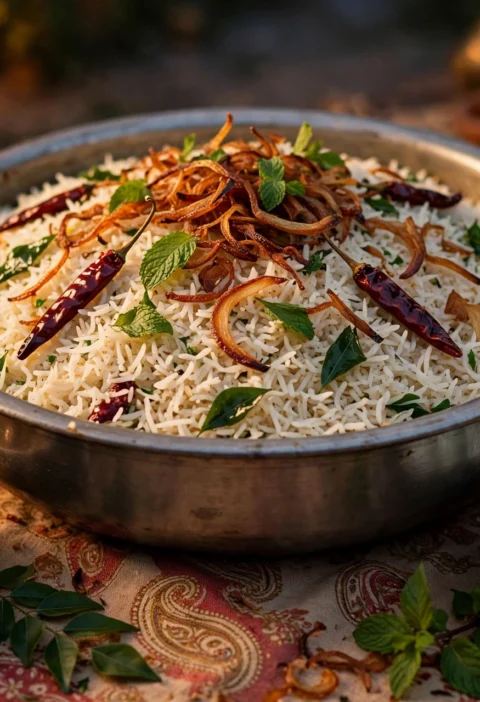
Step 5: Rest, fluff and finish with ghee and onions. Lift the pot off the burner and leave it entirely alone, lid still firmly on, for a full 10 minutes. Then lift the lid, let the fragrant steam roll out, and fluff the khichuri gently with a fork or the edge of a spoon, lifting from the bottom so the whole spices rise up through the grains. Drizzle the melted ghee over the top, scatter the crispy fried onions across the surface, cover for 2 more minutes so the onions warm through, and carry the whole pot to the table. That is the bhuna khichuri recipe from start to steaming finish.
Serving Suggestions
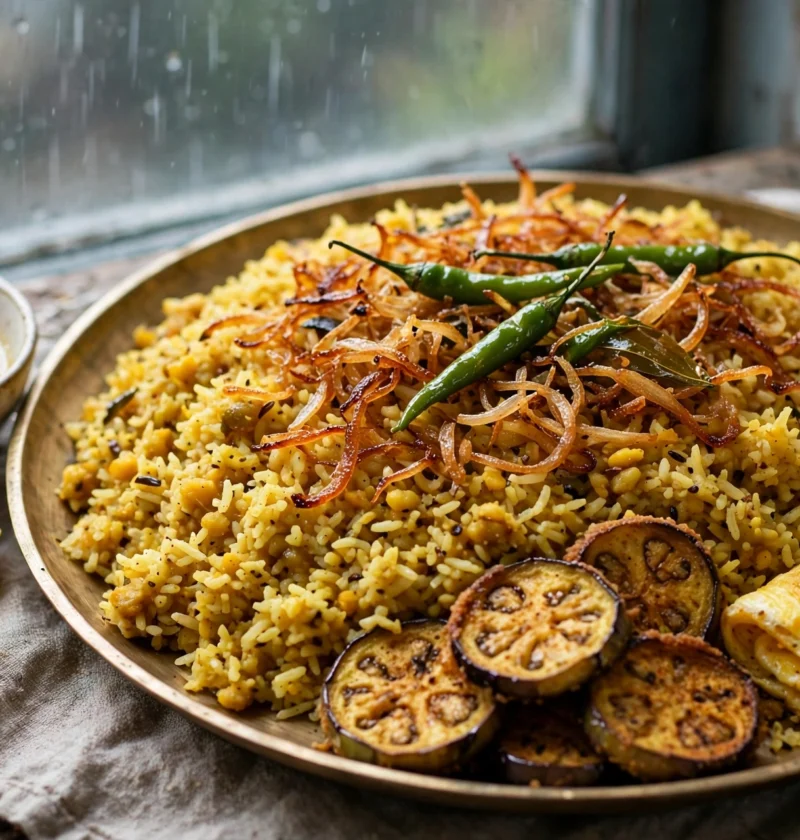
Bhuna khichuri is the main event, but it loves company of the crisp and the sharp. The classic partner on a Dhaka table is beguni — eggplant slices dipped in spiced batter and fried until the edges go lacy — and the contrast is perfect: soft, golden rice against crunchy, just-fried aubergine. Add lemon wedges and a fiery mango pickle for brightness, and you have the rainy-day plate exactly as it should be.
The other beloved companion is eggs, in almost any form. A plain folded omelette with green chili and onion is traditional, but on days when I want something punchier I serve it with anda bhurji, the spiced scrambled eggs that soak up the ghee-rich grains beautifully. A simple cucumber-and-onion salad and a bowl of yogurt on the side round things out, and if there are meat-eaters at the table, a small portion of leftover curry spooned over the top turns the plate into a feast. Serve it straight from the pot if you can — khichuri waits for no one, losing a little of its perfume with every minute it sits, and part of the pleasure is watching the steam rise as the first spoon goes in.
Storage and Reheating
This bhuna khichuri recipe also keeps its leftovers well. Spoon what remains into a sealed container, refrigerate it, and use it within 3 days — it reheats surprisingly well for a rice dish because the grains were cooked dry to begin with. Portions freeze happily for up to a month; just thaw overnight in the fridge before reheating.
To reheat, sprinkle a tablespoon of water over the top and warm it through under a lid — either in a pot on the gentlest heat for about 10 minutes, or in the microwave in one-minute bursts, fluffing the grains between rounds. A fresh drizzle of ghee and a few extra fried onions over the reheated portion brings it almost all the way back to fresh.
Frequently Asked Questions
What is the difference between bhuna khichuri and regular khichdi?
Regular khichdi is soft and porridge-like — the rice and dal cook down together into something spoonable and soothing. Bhuna khichuri starts the same way but is built differently: the dal is dry-roasted, the grains are fried in spiced ghee, and the water is measured tight, so the finished dish is fluffy, rich and almost dry, much closer to a pilaf than a porridge.
Can I use basmati rice instead of kalijeera or gobindobhog?
Yes, absolutely. The short Bengali rices give the most authentic fragrance and a slightly softer bite, but basmati makes an excellent version of this bhuna khichuri recipe too — just drain it very well after soaking, since long grains carry more surface water, and keep the same measured water ratio so the grains stay separate.
Why did my khichuri turn out mushy?
Almost always, one of three things: too much water, stirring while it cooked, or skipping the dal roast. Unroasted moong dal dissolves quickly and turns the pot soupy, and stirring breaks the rice grains and releases their starch. Measure the water, roast the dal until it smells nutty, and once the lid goes on, walk away.
Can I add vegetables or make it in a pressure cooker?
You can do both. Cubed potatoes, cauliflower florets, peas or diced carrots can go in with the rice and dal — just keep the pieces small so they cook in the same time. For a pressure cooker, reduce the water to 3 1/4 cups, cook on high pressure for 4 minutes, let the pressure release naturally for 10 minutes, then rest and fluff exactly as written.
Recipe Summary
- Prep time: 25 minutes
- Cook time: 40 minutes
- Total time: 1 hour 5 minutes
- Servings: 4 to 6
- Cuisine: Pakistani
- Course: Main Course