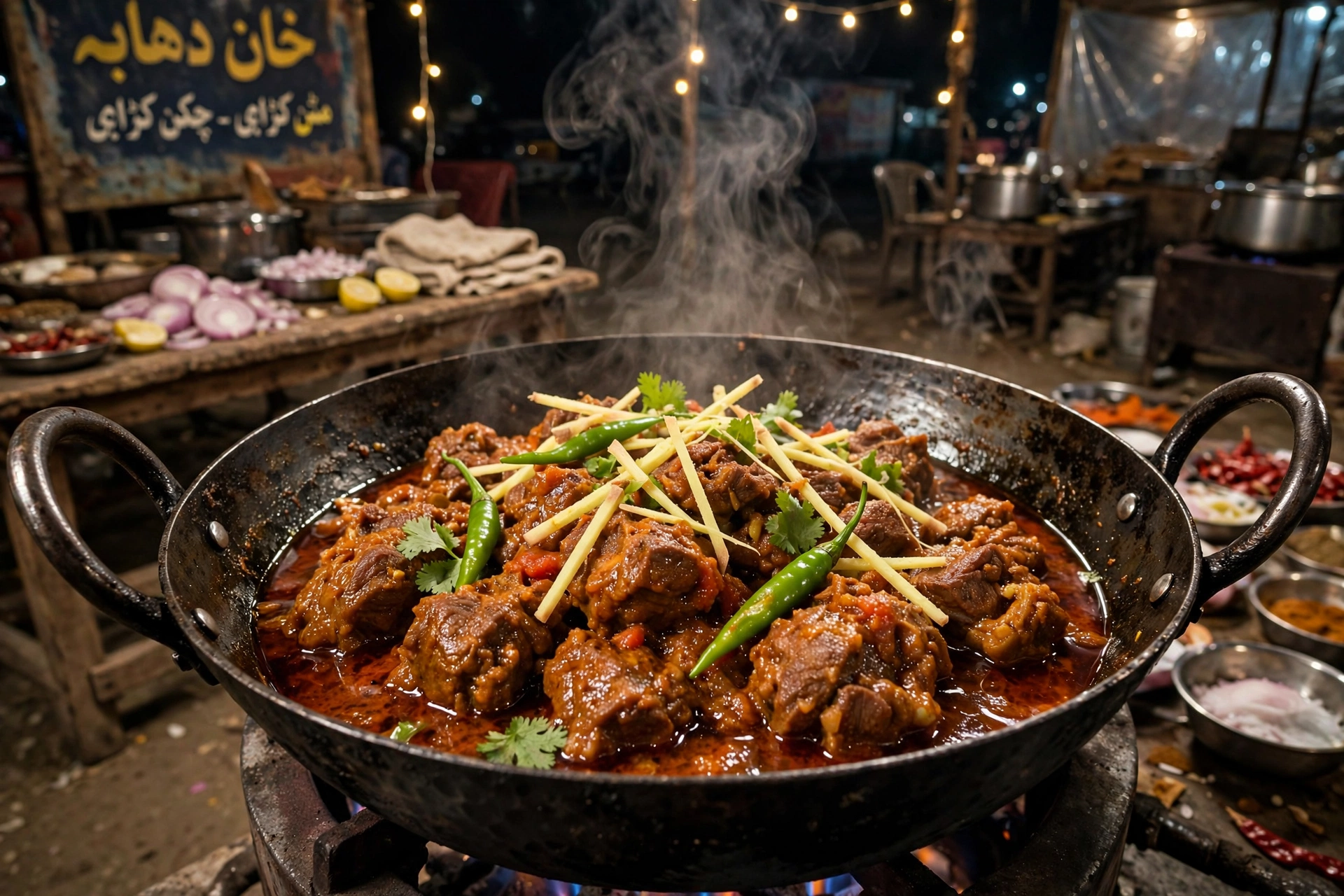
There is a moment at a Hyderabadi dawat that no other dish can steal. The degchi comes to the dastarkhwan sealed, a pale rope of dough baked hard around its lid, and somebody’s uncle — it is always an uncle — cracks the seal with the back of a spoon. The steam that escapes carries browned onion, warm cardamom, and something deeper underneath, almost smoky, and the whole table goes quiet for a second. That steam is what I chased for years, and this dum ka qeema recipe is where the chase finally ended.
My khala, who married into a Hyderabad family and came back to Karachi cooking like she was born to it, taught me her version one winter afternoon. There is no tomato in a true dum ka qeema recipe, she said, tapping the raw mince with her spoon, and no water either — not a spoonful. The qeema marinates in yogurt and raw papaya, gets folded through with onions fried to a deep amber, and then cooks sealed in nothing but its own juices. What comes out is dry-ish, dark, and so fragrant that the parathas on the side barely stand a chance.
Why This Dum Ka Qeema Recipe Works
Everything about a dum ka qeema recipe goes against weeknight instincts — no browning the meat first, no splash of water, no peeking. These five choices are exactly why it works:
- Raw papaya does the tenderizing before the pot is even lit. The enzyme in unripe papaya quietly loosens the mince during marination, so a short, gentle steam gives you a melting-soft texture that hours of simmering never reach.
- Deeply browned onions are the entire base. There is no tomato and no curry paste in this dum ka qeema recipe. Onions fried to a rich mahogany, half of them crushed into the marinade, give the dish its body, its sweetness, and that dark, unmistakably dawat color.
- Not a drop of water is added. The mince steams in its own marinade and juices, so instead of diluting, every flavor concentrates. By the end, the liquid has all but vanished into the meat itself.
- The seal keeps the perfume in the pot. Whole spices under a dough-sealed lid cannot scent your kitchen, so they scent the qeema instead. When the seal cracks open, that trapped aroma is the whole point of a dum ka qeema recipe.
- The charcoal smoke is a finish, not a trick. Five minutes of real smoke at the end settles into the fat of the mince and gives a dum ka qeema recipe that faint tandoor-like whisper which makes people ask what your secret is.
Ingredients
For the qeema and its marinade:
- 2 pounds ground beef (qeema), 80/20 — not the leanest pack; the fat carries the smoke and keeps the dum tender
- 2 tablespoons raw green papaya paste (ground from unripe papaya, skin and all) — the tenderizer, measured carefully
- 3/4 cup plain yogurt, whisked smooth
- 2 tablespoons ginger-garlic paste
- 2 teaspoons red chili powder
- 2 teaspoons ground coriander
- 1/2 teaspoon turmeric powder (haldi)
- Juice of 1 lemon
- 1 teaspoon garam masala
- Salt, 1 1/2 teaspoons to start, more to taste
For the browned onions and whole spices:
- 3 large onions, thinly sliced (about 4 cups)
- 3/4 cup oil or ghee, for frying the onions (most stays in the pan)
- 5 green cardamom pods, lightly bruised
- 2 black cardamom pods
- 1 cinnamon stick, about 2 inches
- 5 whole cloves
- 1 teaspoon black peppercorns
- 1 teaspoon shah zeera (black cumin / caraway seeds) — the Hyderabadi signature
- 2 bay leaves
- 3 tablespoons warm ghee, for layering the pot
For the smoke and the finish:
- 1 small piece of natural charcoal, about the size of a walnut
- 1 teaspoon ghee, for the coal
- 3 to 4 green chilies, slit lengthways
- 2 tablespoons fresh coriander leaves, chopped
- 1 tablespoon fresh mint leaves, torn
- 1 tablespoon ginger, cut into fine juliennes
- Lemon wedges and thin onion rings, for the table
- A strip of dough or a sheet of foil plus a tight lid, for sealing
The technique at the heart of any dum ka qeema recipe is older than any family notebook. Cooking in a sealed vessel over the gentlest heat, so food matures in its own steam, is the tradition described in the story of dum pukht, and Hyderabadi kitchens made it entirely their own. The other quiet hero is the papaya: the fruit of the papaya tree carries an enzyme called papain, and in its unripe green state it has been the desi cook’s trusted meat tenderizer for generations — two tablespoons and a few patient hours do what an afternoon of pounding never could.
How to Make This Dum Ka Qeema Recipe – Step by Step
Step 1: Fry the onions to a deep, even birista.
Heat the oil or ghee in a wide pan and add the sliced onions with a pinch of salt. Fry on medium heat, stirring often, for 18 to 22 minutes. They will slump, turn golden, then go the color of strong tea — that deep amber is where you stop, because they darken one shade more off the heat. Lift them out onto a plate lined with paper and let them cool until crisp. Crush about two-thirds of them roughly with your fingers; keep the rest whole for layering. Pale onions are the one shortcut a dum ka qeema recipe will not forgive, so give this step its full, unhurried time.
Step 2: Marinate the qeema with papaya and crushed onion.
Put the raw mince in a large bowl and add the papaya paste first, mixing it through thoroughly by hand so every bit of meat meets the tenderizer. Then add the yogurt, ginger-garlic paste, red chili powder, ground coriander, turmeric, garam masala, salt, lemon juice, and all the crushed birista. Massage everything together for a good two minutes — the mixture should smell rich and look speckled with onion. Cover and refrigerate for at least 2 hours and up to 4. Do not stretch a dum ka qeema recipe marinade overnight: papain keeps working, and past about six hours the texture turns unpleasantly soft.
Step 3: Layer the pot with whole spices and the marinated mince.
Choose your heaviest pot with a tight lid. Warm the 3 tablespoons of ghee in it and drop in the green and black cardamom, cinnamon, cloves, peppercorns, shah zeera, and bay leaves; give them thirty seconds to bloom. Take the pot off the heat and spoon the marinated qeema in, spreading it into one even layer — no browning, no frying. Scatter the reserved whole birista and the slit green chilies over the top. A dum ka qeema recipe is assembled cold like this on purpose, so the meat and spices heat together gradually and nothing catches.
Step 4: Seal the pot and cook on the lowest dum.
Roll your dough into a rope, press it around the rim, and set the lid down firmly into it — or lay foil snugly over the pot and weight the lid on top. Put the pot on high heat for exactly 5 minutes, until you hear the first busy bubbling of building steam. Then turn the flame down to the lowest setting your stove has, slide a flat tawa under the pot if your burner runs hot, and leave it completely alone for 40 minutes. No lifting, no peeking, no shaking. Inside that sealed dark, the mince cooks in its own marinade while the whole spices perfume it and the onions melt into the meat. This patience is the whole soul of a dum ka qeema recipe.
Step 5: Smoke it, rest it, and open it like you mean it.
While the dum finishes, hold the charcoal in tongs over a flame until it is glowing red and ashed grey at the edges. When the 40 minutes are up, take the pot off the heat and break the seal. Set a small foil cup (or a thick onion ring) in the center of the qeema, place the hot coal in it, drizzle the teaspoon of ghee over the coal, and slam the lid back on the instant it smokes. Leave it sealed for 5 to 7 minutes, then lift out the coal, fold the qeema gently so the smoky top layer mixes through, and rest it, covered, for 10 more minutes. Scatter coriander, mint, and ginger over the top, and your dum ka qeema recipe is ready for its audience.
Serving Suggestions
Open the pot at the table whenever you possibly can — half the pleasure of this dish is that first fragrant cloud, and a proper dum ka qeema recipe deserves that bit of theatre. Serve the qeema mounded on a wide platter with the onion rings fanned around it, lemon wedges tucked at the edge, and a stack of ghee-brushed parathas wrapped in cloth. The qeema is dry and intense, so it wants bread rather than rice; a plain kachumber of chopped onion, tomato, and cucumber with lemon cuts the richness cleanly, and a bowl of green chutney never lasts long.
Qeema wears many costumes in our kitchen. On a weeknight I make my tawa qeema, all fast searing and green chili fire, this dish’s loud Karachi cousin — same family, opposite temperament. And if a little of tonight’s batch survives, fold it into bread dough the next morning and make a keema paratha; the smoky, onion-rich filling inside a crisped paratha is the single best use of leftovers on this entire site. A dum ka qeema recipe that feeds you twice is a recipe worth keeping close.
Storage and Reheating
Leftovers keep beautifully in the fridge for up to four days in a sealed container, and the spices settle even deeper into the meat overnight — the second-day qeema tastes rounder than the first. Reheat a dum ka qeema recipe gently — covered, on the lowest flame, with one spoonful of water sprinkled over, for about ten minutes — so it steams back to tenderness instead of frying. The microwave works if you cover the bowl and stir halfway, though the edges lose a little of their softness. Cooked qeema also freezes well for up to two months; thaw it overnight in the fridge and reheat the same slow way. The charcoal whisper fades a bit in storage, but the deep onion-and-spice character of a dum ka qeema recipe survives the freezer honestly.
Frequently Asked Questions
I can’t find raw green papaya. What else can I use?
One teaspoon of kachri powder (dried wild melon tenderizer) is the closest traditional stand-in for a dum ka qeema recipe, and most desi grocers stock it near the spices. In a pinch, marinate overnight in just the yogurt and spices — the texture will be firmer, more like a rustic hand-chopped qeema, but the flavor will all be there.
Why did my qeema come out mushy instead of tender?
Almost always, the papaya stayed on too long or there was too much of it. Two tablespoons of paste for two pounds of mince, with a marinade of two to four hours, is the safe window for this dum ka qeema recipe. Beyond six hours the enzyme breaks the meat down past tender into paste. Set a timer — the marinade clock matters as much as the cooking clock.
Can I make this with mutton or chicken qeema?
Mutton mince is wonderful here and arguably the most traditional of all — give it the full four-hour marinade and stretch the dum to 50 minutes. Chicken qeema is the delicate one: marinate it for just one hour and steam for about 25 minutes, or it will dry and tighten. Whichever meat you choose, the method of this dum ka qeema recipe — seal it, steam it, smoke it — stays exactly the same.
Is the charcoal smoke safe, and can I skip it?
Yes to both. Use natural lump charcoal (never the self-lighting kind soaked in chemicals), let it ash over properly, and keep the smoking brief — that is how it has been done at desi tables for generations. And skipping it costs you only the final whisper, not the dish: a dum ka qeema recipe without the coal is still dark, tender, and deeply spiced, so make it on a Tuesday and save the smoke for when the sealed pot has an audience.
Recipe Summary
- Prep time: 25 minutes, plus 2 to 4 hours of marinating
- Cook time: 45 minutes
- Total time: About 3 hours 10 minutes, including marinating
- Servings: 6 people, generously, with parathas
- Cuisine: Pakistani
- Course: Main Course