Sunday lunch at my nani’s house ran on a single, unbreakable rule: nobody touched the salan until the gravy had “sat.” She would slide the degchi off the flame, clamp the lid on, and guard it like a bank vault while the rest of us circled the dastarkhwan, starving. My first bite, when it finally came — a piece of beef that surrendered at the mere touch of a spoon, gravy dark as strong tea and twice as warming — set the standard I still cook against. My own first attempt, years later in a tiny apartment kitchen, produced grey meat floating in a thin onion soup. This beef curry recipe is everything I had to relearn between that sad pot and hers.
Gosht ka salan looks humble, but it is a patience dish wearing a simple disguise. My early versions failed in the same three places every beginner fails: I rushed the onions, so the gravy stayed pale and sweet in the wrong way; I drowned everything in water and boiled the beef into shoe leather; and once I watched a ladle of cold yogurt split into sad white flecks the second it hit the pot. The repairs were old-fashioned ones — brown the meat properly, fry the onions until they mean it, treat the yogurt gently, and give the beef the long, quiet simmer it demands. Follow those, and this beef curry recipe stops being a gamble and becomes your house curry, the one people text you about the next morning.
Why This Beef Curry Recipe Works
A homestyle salan has nowhere to hide — no cream, no ground nuts, no shortcut pastes — so its success is decided by five unglamorous techniques. This beef curry recipe is built on getting every one of them right:
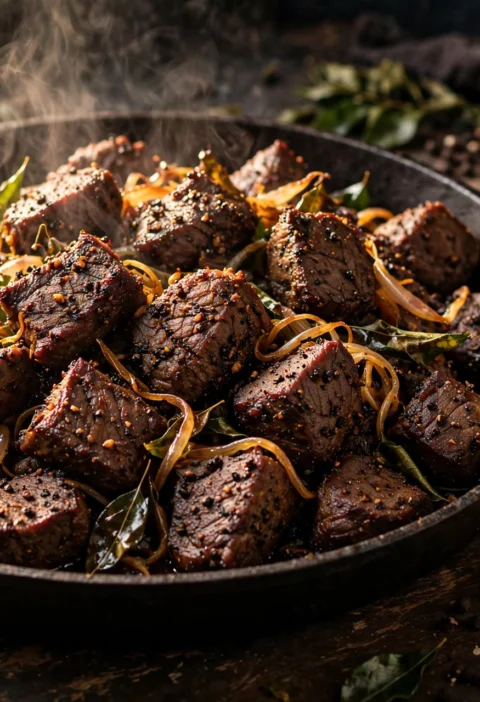
- The beef is browned before a single spice appears. Raw beef simmered straight in gravy tastes boiled, because it is. A hard sear in hot oil, done in uncrowded batches, builds a dark crust and a layer of fond on the pot’s floor that later melts into the gravy. That roasted depth is the backbone of this beef curry recipe, and no quantity of spice can fake it afterwards.
- The onions go all the way to deep amber. Pale onions make pale, sugary gravy. Cooked slowly to a rich mahogany, they dissolve into the salan and give it body, color, and a savory sweetness that tastes like it simmered all day. This beef curry recipe judges the onions by color, not by the clock — you stop when they look like strong tea, not when a timer says so.
- The yogurt is whisked and warmed before it joins the pot. Cold, lumpy yogurt shocked by a hot gravy curdles into grains that no amount of stirring can rescue. Whisk it smooth, stir through a ladle of the hot masala, and only then add it, off the fiercest heat. This beef curry recipe keeps its gravy glossy and unified because the yogurt is never ambushed.
- Whole spices open the dish, ground garam masala closes it. Bay leaf, black cardamom, and cinnamon bloom in the hot oil at the start, perfuming everything that follows; the garam masala goes in during the final minutes so its top notes stay bright instead of cooking away. Layering the same spice family at both ends is what makes this beef curry recipe taste deep rather than merely hot.
- The beef simmers until it yields, then rests in its gravy. Chuck and shin need time for their collagen to melt into gelatin — pull them out early and they chew like erasers. A low, lazy simmer followed by ten minutes of rest off the heat lets the meat relax and the gravy settle to a spoon-coating thickness. Restraint at the finish is this beef curry recipe’s last technique, and it is not optional.
Ingredients
Serves 6
For the curry:
- 2 lbs (900g) beef chuck or shin, bone-in if possible, cut into 2-inch pieces
- 1/2 cup (120 ml) neutral oil or ghee
- 3 large onions (about 450g), thinly sliced
- 3 medium tomatoes (about 350g), finely chopped
- 3/4 cup (180g) plain whole-milk yogurt, whisked smooth
- 1 tablespoon ginger-garlic paste
- 1/2 teaspoon turmeric powder (haldi)
- 1 tablespoon ground coriander (dhaniya)
- 2 teaspoons red chili powder (adjust to taste)
- 1 1/2 teaspoons salt, or to taste
- 2 1/2 cups hot water
- 1 teaspoon garam masala (add at the end)
Whole spices:
- 2 bay leaves
- 2 black cardamom pods
- 1 cinnamon stick (about 2 inches)
- 4 cloves
- 1 teaspoon cumin seeds (zeera)
For serving:
- 1-inch fresh ginger, cut into thin juliennes
- 2-3 green chilies, slit
- 1/4 cup fresh coriander leaves, chopped
- Lemon wedges
A word on the seasoning: a salan is, at heart, a curry in the oldest home sense — meat, onions, and patience — and its warmth leans on garam masala, the blend whose name literally means “hot spices.” Keep your jar fresh and add it late; a stale, dusty garam masala is the quietest way this beef curry recipe can lose its perfume.
How to Make This Beef Curry Recipe – Step by Step
Step 1: Brown the beef.
Pat the beef pieces completely dry — surface moisture is the enemy of a good sear. Heat the oil in a heavy pot over high heat until it shimmers, then add the beef in a single, uncrowded layer, working in two batches. Leave each piece alone for 3 to 4 minutes before turning, until every side carries a deep brown crust. Lift the beef onto a plate and pour off all but 3 tablespoons of the oil. Those dark, sticky drippings clinging to the pot’s floor are liquid gold; everything in this beef curry recipe builds on them.
Step 2: Fry the onions to amber, then bhunao the masala.
Drop the whole spices into the same oil and let them sizzle for 30 seconds. Add the sliced onions with a pinch of salt and cook over medium heat for 15 to 18 minutes, stirring often, until they collapse into a deep amber tangle. Give the ginger-garlic paste a minute in the oil, then add the tomatoes along with the coriander, red chili powder, turmeric, and salt. Cook this masala down, stirring and scraping the pot’s floor, for 8 to 10 minutes, until it darkens and thickens and oil beads around its edges.
Step 3: Return the beef and simmer low.
Tip the beef back in with every drop of its resting juices. Stir for 2 minutes so each piece wears a coat of masala, then pour in the hot water and bring everything to a gentle boil. Clamp on the lid, drop the heat to the lowest simmer, and cook for 60 to 75 minutes, until a piece of beef breaks apart under spoon pressure with only mild persuasion. A pressure cooker does this stage in 25 minutes and a slow cooker in 5 hours on low. Do not rush this beef curry recipe here — tenderness is scheduled, not negotiated.
Step 4: Finish with the yogurt.
Turn the heat to its lowest setting. Stir a ladle of the hot gravy into your whisked yogurt to warm it through, then pour the yogurt into the pot, stirring steadily as it goes in. Let the curry burble gently, uncovered, for 8 to 10 minutes — the gravy will turn a shade richer and start clinging to the beef. If it ever looks thicker than you like, loosen it with a splash of hot water; a salan should pour slowly, like warm honey, not sit in a lump.
Step 5: Garnish, rest, and serve.
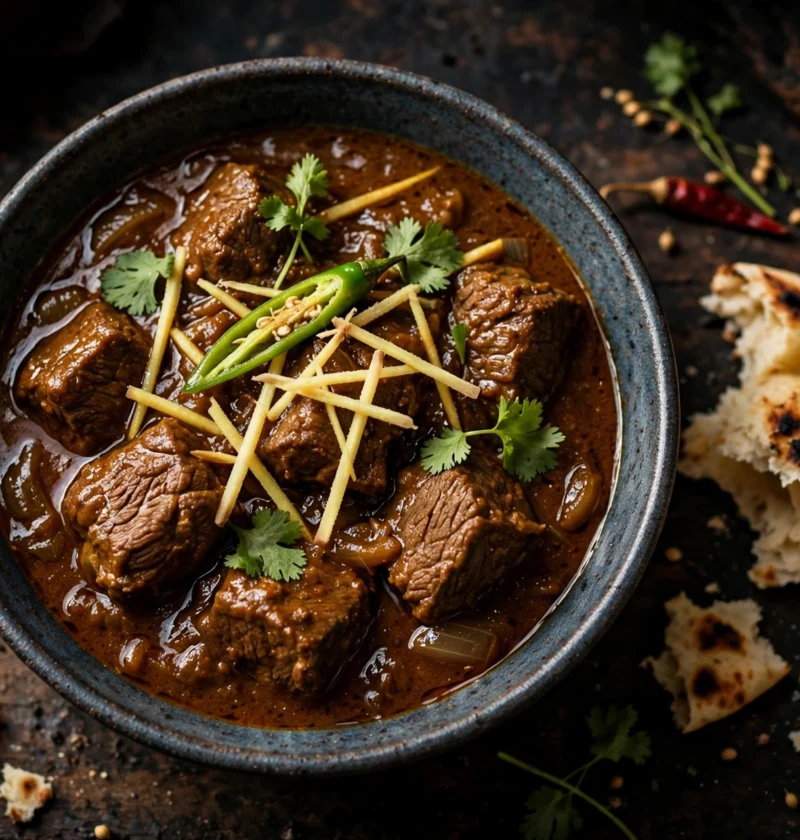
Stir in the garam masala, scatter over the ginger juliennes, slit chilies, and coriander, and take the pot off the heat. Lid on, ten full minutes — this is nani’s rule, and this beef curry recipe keeps it faithfully: the meat relaxes, the gravy settles, and the flavors marry. Serve straight from the pot with lemon wedges on the side for anyone who likes a bright edge on their salan.
Serving Suggestions
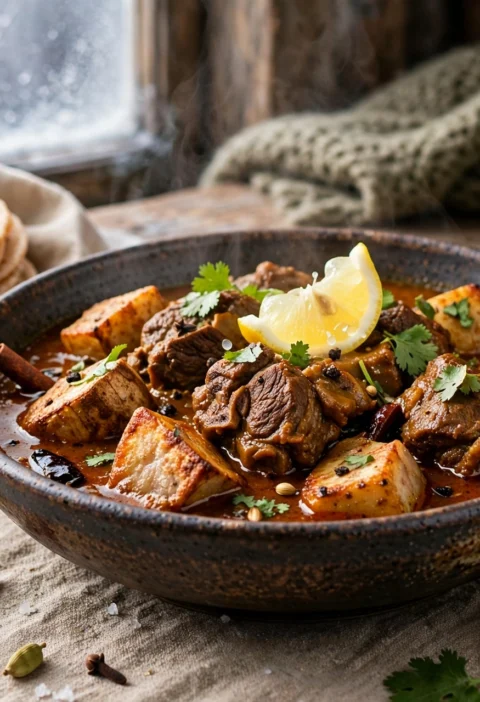
A salan this honest wants plain partners: steamed basmati rice to catch the gravy, or soft tandoori rotis torn and used as edible spoons. My family’s standing order is rice on day one, when the gravy is plentiful, and thick naan on day two, for leftovers that have reduced to something almost spreadable. A bowl of sliced onions in lemon juice and a green chili or two complete the table the way every desi home table expects.
For beef lovers planning a proper spread, this beef curry recipe sits comfortably after my bihari kababs — smoky grilled strips first, then the slow salan — and for a full rice course on another day, my beef pulao carries the same cut of meat in a completely different, stock-fragrant direction. Between the three, your beef repertoire covers grilling, simmering, and one-pot rice without a single repeat performance.
Storage and Reheating
Like every slow curry worth its salt, this one improves overnight: the beef drinks in the masala, the gravy deepens, and day-two salan is the cook’s quiet reward. Keep it in the fridge in a sealed container for up to 4 days, and warm it back up in a covered pot over low heat with a splash of water, letting it reach a slow bubble rather than a hard boil, which would toughen the meat you worked so patiently to tenderize. It also freezes well for up to 3 months; move it to the fridge the night before you want it and reheat it the same slow way. Many families quietly suspect this beef curry recipe exists mainly to be frozen in portions for the nights nobody wants to cook.
Frequently Asked Questions
Which cut of beef is best for this curry?
Chuck is the reliable all-rounder — well marbled, forgiving, and tender within about an hour of simmering. Shin gives the richest gravy, because its collagen melts into body, and bone-in pieces of any cut bring the depth that bones always contribute. Avoid lean stewing steak with no fat or connective tissue; it dries out before it ever turns tender, whatever this beef curry recipe tries to do for it.
Why is my beef still tough after an hour?
Almost certainly it simply needs more time — toughness in a simmered curry means the collagen hasn’t finished melting, not that you have overcooked it. Keep the heat low, keep the lid on, and check every 15 minutes. The other culprit is a boil that’s too aggressive: a violent, rolling boil tightens meat fibers, while a lazy simmer relaxes them. Low and slow is the whole religion of this beef curry recipe.
Can I make this in an Instant Pot or pressure cooker?
Yes, happily. Brown the beef and build the masala using the sauté function exactly as written, then pressure-cook on high for 25 minutes with a natural release of 10 minutes. Add the tempered yogurt afterwards on the lowest sauté setting and simmer it briefly. The texture lands a touch softer than the stovetop version, but on a weeknight this beef curry recipe accepts that trade without complaint.
How do I fix a gravy that’s too thin — or too thick?
Too thin: simmer uncovered for 10 to 15 minutes, stirring now and then, until it reduces; mashing one or two pieces of beef against the pot’s side thickens it further, the old home trick. Too thick: stir in hot water a few spoonfuls at a time. Aim for a gravy that coats the back of a spoon and leaves a clean trail when you draw a finger through it — that is the salan standard this beef curry recipe cooks to.
Recipe Summary
- Prep time: 25 minutes
- Cook time: 1 hour 35 minutes
- Total time: 2 hours
- Servings: 6
- Cuisine: Pakistani
- Course: Main