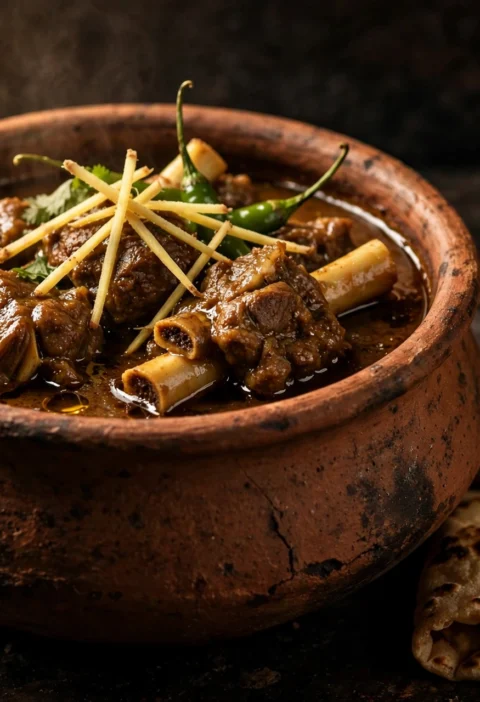
The first hareesa of the year was always cooked on the first truly cold morning in my grandmother’s house in Lahore, and the whole street knew about it before breakfast. She would set her heaviest degchi on the stove while it was still dark, and by the time we children came down wrapped in shawls, the windows had fogged up and the air smelled of beef, cardamom and warm wheat. My job, the smallest job in the house, was to stand on a stool and push the big wooden ghotna around the pot in slow circles while my grandmother watched my arms tire and laughed at me. This hareesa recipe is hers, written down exactly the way she taught it — patient, plain-spoken, and completely unbothered by shortcuts.
Hareesa is a porridge, really: cracked wheat and beef cooked together for so long that they stop being two things and become one. It is the quieter cousin of haleem — no lentils, no long parade of spices, just wheat, meat, whole spices and time, pounded into something smooth enough to pour. My own first solo attempt, years later in a small apartment kitchen, taught me the two lessons this hareesa recipe is built on. First, the wheat must be soaked and properly swollen before it ever meets the beef, or it stays stubbornly chewy. Second, the pounding is not a flourish at the end — it is the dish. Beat it well and it turns silky; skip it and you have a perfectly nice soup that is not hareesa at all.
Why This Hareesa Recipe Works
Hareesa has nowhere to hide — the ingredient list is short, so every decision shows. This hareesa recipe rests on five of them:
- Bone-in beef shank. The marrow and gelatin in shank melt into the wheat and give the finished bowl its body. Lean, boneless cubes cook up stringy and thin by comparison.
- Overnight-soaked cracked wheat. Soaking swells each grain before cooking, so it bursts and dissolves into the porridge instead of staying separate and chewy.
- Whole spices only in the pot. Bay, cinnamon, cardamom and peppercorns perfume the beef gently without darkening the porridge — hareesa should taste deep, not spicy-hot.
- Pounding in stages. Beating the mixture while it is hot, resting it, then beating again gives that signature smooth texture with just a whisper of body left in it.
- The flavor is finished at the table. A sizzling ghee tarka, fried onions and a squeeze of lemon go on at serving time, so the bowl tastes alive instead of flat and heavy.
Ingredients
Hareesa travelled a long road to reach a Lahori stove. The dish is known across the Middle East and Central Asia as harees, and Kashmiri and Punjabi cooks made it their own centuries ago. Its famous relative haleem came later, adding lentils and a far busier spice shelf; if that lentil-loaded bowl is the one you are craving, my beef haleem recipe covers it. Hareesa keeps the older, simpler faith: wheat, meat, patience. Everything in this hareesa recipe is an ordinary bazaar staple — nothing to hunt down, nothing fussy — because this was always working people’s food long before it was restaurant food.
For the Hareesa
- 1 cup cracked wheat (dalia), picked over, rinsed and soaked overnight in plenty of water
- 1½ pounds bone-in beef shank or stewing beef, cut into 2-inch chunks
- 8 cups water, plus more as needed
- 1 large onion, quartered
- 2 tablespoons ginger-garlic paste
- 2 bay leaves
- 1 cinnamon stick (about 3 inches)
- 5 green cardamom pods, lightly crushed
- 1 teaspoon black peppercorns
- 1 teaspoon ground coriander
- 1 teaspoon red chili powder
- ½ teaspoon ground turmeric
- 1½ teaspoons fine salt, plus more to taste
- ¼ cup ghee
For the Tarka
- ⅓ cup ghee
- 1 medium onion, sliced as thin as you can manage
- 3 garlic cloves, thinly sliced
- 1 teaspoon cumin seeds
- ½ teaspoon Kashmiri red chili powder or sweet paprika
For Serving
- 2 to 3 fresh green chilies, sliced
- Lemon wedges
- 1 tablespoon fresh ginger, cut into fine juliennes
- A small handful of cilantro leaves
How to Make This Hareesa Recipe – Step by Step
Set aside a slow morning for this. Most of the time is the stove’s work, not yours, but the hareesa recipe rewards anyone who stays nearby, stirring and tasting as it comes together.
Step 1 – Start the wheat. Drain the soaked cracked wheat and tip it into a large, heavy pot with 5 cups of the water and a pinch of the salt. Bring it to a boil, skim off any foam, then lower the heat and let it simmer, partially covered, for about 45 minutes. Stir now and then, scraping the bottom, until the grains have swollen, softened and begun to burst — the liquid should look milky and starchy. This swollen wheat is the foundation of the whole bowl, so do not rush it along.
Step 2 – Cook the beef until it surrenders. While the wheat simmers, heat the ¼ cup of ghee in a second pot and add the quartered onion, bay leaves, cinnamon, cardamom and peppercorns. When the onion softens and the spices smell warm, stir in the ginger-garlic paste, then the beef. Brown the meat well on all sides, add the coriander, chili powder, turmeric, remaining salt and the last 3 cups of water, and simmer gently for about 1½ hours, until the beef is so tender a spoon can pull it apart. Lift out the whole spices and shred the meat roughly, keeping its cooking liquid — every drop of it is flavor.
Step 3 – Bring the two pots together and pound. Pour the shredded beef and all its liquid into the wheat pot. Now the real work begins. Beat the mixture hard with a sturdy wooden spoon or a ghotna, mashing the meat fibers into the wheat, for a good 8 to 10 minutes. If you are using an immersion blender, work in short bursts and stop often — you want the beef to melt into the wheat, not a completely uniform baby-food puree. The hareesa should look pale, thick and glossy, with the meat vanished into it.
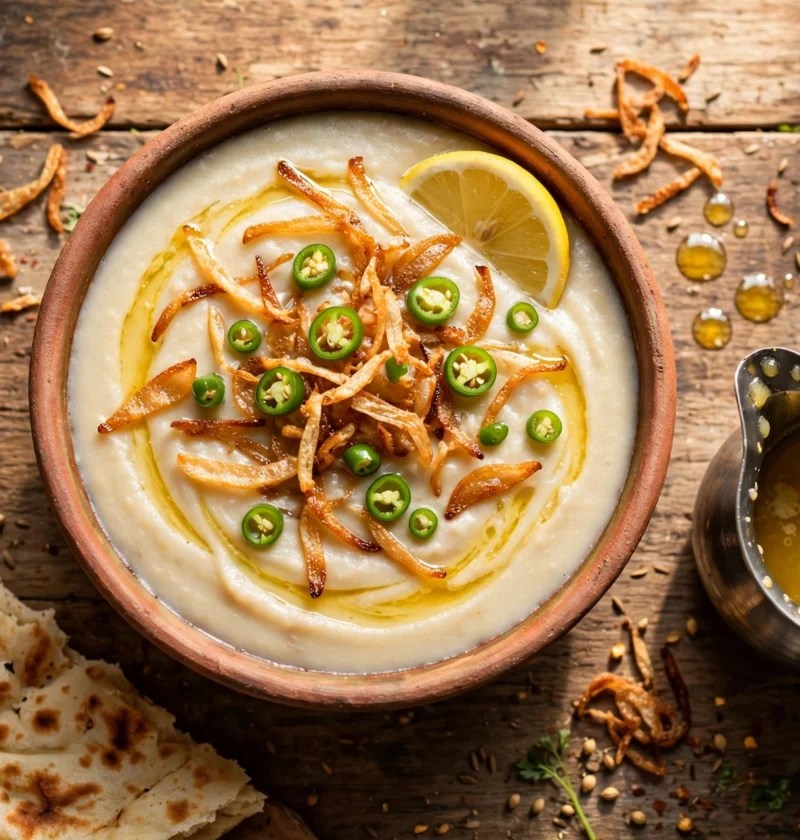
Step 4 – The long, low finish. Set the pot over the lowest heat and cook for another 45 to 60 minutes, stirring every few minutes so the bottom never catches. The porridge will thicken as it sits; loosen it with splashes of hot water until it falls off the spoon in a slow, heavy ribbon. Taste now and adjust the salt. A finished hareesa coats the back of a spoon and holds a soft swirl — thick enough to mound, loose enough to pour. In this hareesa recipe I still test it the way my grandmother did: dip the spoon, lift it high, and watch the porridge slide off in one slow, glossy sheet.
Step 5 – Tarka, garnish, serve. Heat the ⅓ cup of ghee in a small frying pan until it shimmers. Fry the sliced onion in it, stirring, until deep golden and crisp at the edges; lift half out onto a plate for garnishing. Add the garlic and cumin seeds to the pan and, the moment the garlic turns pale gold, take the pan off the heat and stir in the Kashmiri chili powder. Ladle the hareesa into warm bowls, spoon the sizzling tarka over the top, and finish with the reserved fried onions, green chilies, ginger juliennes, cilantro and a lemon wedge on the side.
Serving Suggestions
Hareesa is a complete bowl on its own, but in our house it arrives with warm naan or soft roti for scooping, and extra lemon wedges in the middle of the table — that squeeze of lemon at the end is not decoration, it cuts through the ghee and wakes the whole dish up. A small plate of kachumber-style chopped onion, cucumber and tomato with a pinch of salt sits well alongside, and my father insists on a spoon of mint raita nearby, though my grandmother called that an unnecessary distraction. Serve it for a slow weekend breakfast, the way Lahori homes do, or as the centerpiece of a winter dinner with nothing more than salad and naan around it. If slow-cooked beef comfort food is your weakness generally, the other Sunday project worth your afternoon is my beef nihari recipe — a different pot, the same patience.
One more piece of family wisdom: this hareesa recipe doubles beautifully, and it is worth making the full pot even for a small household. In Lahore, hareesa is gathering food — winter weddings, Moharram niyaz, a houseful of cousins on a cold Sunday — and a big degchi on the stove has a way of pulling everyone into the kitchen to talk while it bubbles. If you do scale this hareesa recipe up, fill the pot no more than two-thirds, because the wheat swells as it cooks and the pounding needs room to move without decorating your stove.
Storage and Reheating
This hareesa recipe keeps well as leftovers in the fridge for up to 4 days in a covered container, and honestly it tastes deeper on the second day, once the wheat and beef have had a night to settle into each other. It will thicken considerably as it chills — that is the wheat starch setting, and it is completely normal. To reheat, spoon it into a pot with a generous splash of water and warm it over low heat, stirring steadily and adding more water until it loosens back into a pourable porridge. It freezes well for up to 2 months; thaw it overnight in the fridge before reheating the same way. One small revival trick: a fresh mini-tarka of a tablespoon of ghee and a few slices of garlic, poured over reheated bowls, makes leftovers taste newly made.
Frequently Asked Questions
What is the difference between hareesa and haleem?
Haleem is built on a mixture of wheat, barley and several kinds of lentils, heavily spiced and pounded until dense. Hareesa uses wheat (or barley in Kashmir) and meat alone, with gentler seasoning, so the finished bowl is smoother, paler and more delicate — the flavor of the beef and the wheat themselves, rather than the spice shelf. This hareesa recipe follows that older pattern faithfully: wheat, beef, gentle spice, and a thorough pounding.
Can I make this hareesa recipe in a pressure cooker?
Yes, and it cuts the day down considerably. Cook the soaked wheat under pressure for about 20 minutes and the beef for 25 to 30 minutes, then combine and pound as written, and give the combined pot 20 minutes of open simmering at the end so the texture settles. The pounding step stays exactly the same — the cooker saves time, not effort.
Should hareesa be made with wheat or barley?
Both are traditional. Lahori hareesa leans on cracked wheat, which gives a smoother, silkier bowl. Kashmiri versions often use barley, sometimes with a spoon of rice flour stirred in at the end, and the result is a little earthier and more rustic. Use pearl barley, soaked overnight, in exactly the same quantity if you want to try that route.
Can I use chicken instead of beef?
You can — bone-in chicken pieces are the best choice, and they need only about 45 minutes of simmering before shredding. Chicken hareesa is a beloved Lahori breakfast dish in its own right: lighter, quicker, and a good place to start if the full beef version feels like a project. Just keep the tarka and the lemon exactly as they are.
Recipe Summary
- Prep Time: 20 minutes, plus overnight soaking of the wheat
- Cook Time: 3 hours
- Total Time: 3 hours 20 minutes
- Servings: 6 generous bowls
- Cuisine: Pakistani
- Course: Main Course