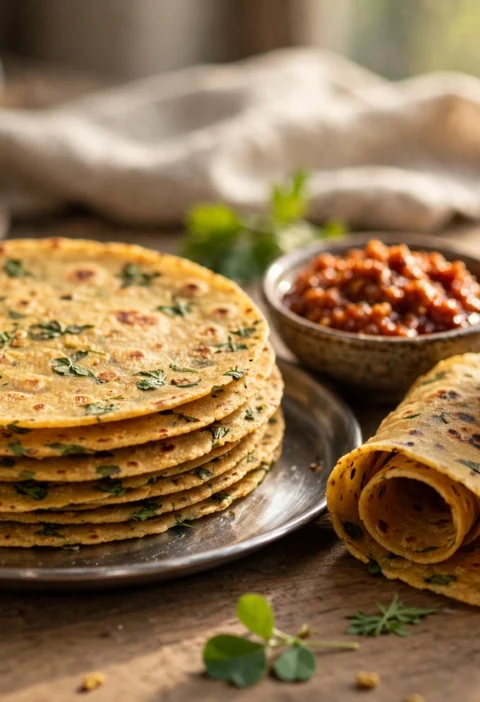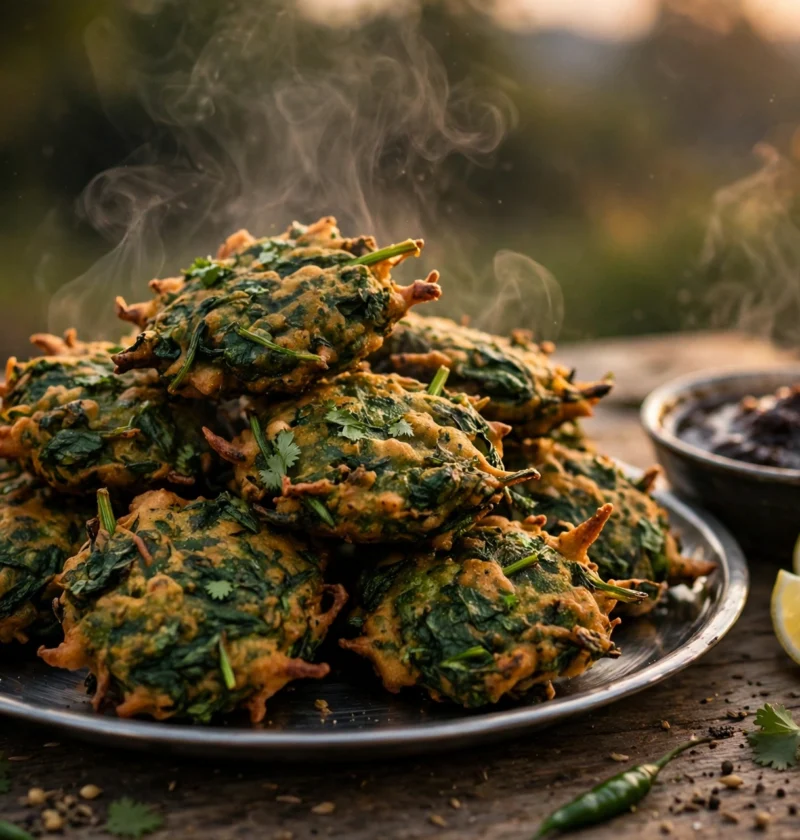
I did not expect to fall for palak pakora the way I did. Spinach, in my childhood kitchen, was the dutiful green that showed up in dal and saag, always healthy, rarely exciting, and never something anyone fought over at the table. Then one rainy evening at a friend’s house, her mother brought out a plate of what looked like dark green lace, thin and crackling, with a bowl of tamarind chutney beside it, and I ate half the plate standing up before I even sat down. The leaves had turned into something completely different in hot oil, crisp as paper, salty, spiced, and impossible to stop eating. This palak pakora recipe is my attempt to recreate that plate at home, and after many monsoon evenings of practice, this is the version I trust.
What makes this snack so clever is how little it asks of you. A bunch of spinach, a bowl of spiced besan, hot oil, and twenty-five minutes later you have something that tastes like a celebration. No chopping marathon, no stuffing, just leaves dipped in batter and fried until they shatter. This palak pakora recipe has become my answer to unexpected guests and to grey afternoons when everyone wants something hot and salty with their chai.
Why This Palak Pakora Recipe Works
- The leaves stay whole, not chopped. Whole spinach leaves fry into delicate, lacy crisps with ruffled edges, while chopped spinach turns into dense, doughy lumps. Keeping the leaves intact is what gives this palak pakora recipe its signature crackle.
- The batter is thin and clingy. A light batter coats each leaf without burying it, so you taste spinach and spice together instead of a mouthful of fried dough. This palak pakora recipe treats the batter as a veil, not a blanket.
- Rice flour adds the shatter. A spoonful of rice flour in the chickpea batter fries up brittle and glassy, which is why the coating on this palak pakora recipe stays crisp long after the pakoras leave the pan.
- Carom seeds season from within. Ajwain bloomed into the batter gives every leaf a warm, peppery note that plain salted batter never achieves, and it helps the fried snack sit lighter on the stomach too.
- The oil is kept properly hot. Leaves fry in seconds, so oil that is even slightly cool turns them greasy instead of crisp. This palak pakora recipe watches the heat closely, and the difference shows in the first bite.
Ingredients
The list is short, and if you keep besan in the cupboard, you are most of the way there already. The one thing worth fussing over is the spinach itself. Look for a bunch with broad, dark, unblemished leaves that feel sturdy rather than limp. Baby spinach from a bag works in a pinch, but the smaller leaves fry up fiddly and are harder to dip.
- 1 large bunch fresh spinach (about 8 ounces), leaves picked and washed
- 1 cup chickpea flour (besan), sifted
- 2 tablespoons rice flour
- 1/2 teaspoon baking soda
- 1 teaspoon ajwain (carom seeds), lightly crushed
- 1 teaspoon Kashmiri red chilli powder, for colour
- 1/2 teaspoon turmeric powder
- 1 teaspoon chaat masala, plus extra for dusting
- 1 teaspoon fine salt, plus more to taste
- 1 green chilli, deseeded and finely chopped (optional)
- 2 tablespoons fresh coriander leaves, finely chopped
- Roughly 3/4 cup water, adding more by the spoonful if the batter feels stiff
- Juice of half a lemon
- Vegetable oil, about 3 cups, for the kadhai
- Tamarind chutney and lemon wedges, to serve
A note on washing the spinach: grit hides in the folds of the leaves, so swish them in a big bowl of cold water twice, lifting them out each time so the grit stays behind. Dry them well in a clean towel or salad spinner, because wet leaves make batter slide off and spit in the oil.
Method
Step 1: Wash, dry, and sort the spinach
Pick the leaves off the stems, discarding any yellowed or torn ones, and wash them in two changes of cold water, lifting them out each time so the grit stays behind in the bowl. Spread them on a clean kitchen towel and pat them dry, then leave them to air for ten minutes while you make the batter. You want leaves that are completely dry on the surface but still supple, not wilted. Sorting matters in this palak pakora recipe, because one damp leaf can sputter oil, and one gritty leaf can ruin a whole plate.
Step 2: Whisk a thin, spiced batter
Tip the sifted chickpea flour, rice flour, baking soda, ajwain, chilli powder, turmeric, chaat masala, and salt into a wide bowl and whisk them dry first so the spices spread evenly. Pour the water in gradually, stirring all the while, until the mixture turns into a light coating that sheets thinly off a spoon and falls in a steady thread, noticeably lighter than the batter you would use for paneer or potato pakoras. Fold in the green chilli, coriander, and lemon juice. Rest the batter for ten minutes, which lets the flours hydrate and the soda wake up, and loosen it with a spoonful of water if it thickens while it sits.
Step 3: Heat the oil until it is properly hot
Fill a deep kadhai with oil and warm it on a medium-high flame until it hits roughly 360°F. No thermometer? Drop in a dab of batter: it ought to hiss hard, swell, and rise straight to the surface, going pale gold in moments. A dab that sinks or bubbles lazily means the oil is still too cool, and leaves fried in cool oil drink grease instead of crisping. Getting this heat right is the single most important judgement in this palak pakora recipe, because the leaves spend barely a minute in the pan and there is no second chance to fix a soggy batch.
Step 4: Dip and fry the leaves in small batches
Hold each spinach leaf by its stem, dip it into the batter, and let the excess drip back into the bowl for a second so the coating stays thin. Lay it gently into the hot oil, away from you, and fry only 5 to 6 leaves at a time for 45 to 60 seconds per side, flipping them once with tongs, until the coat goes rich gold and the rims turn lacy and brittle. Lift them onto a wire rack so air moves underneath and the crispness holds. Wait for the oil to climb back to full heat between batches, because a crowded pan cools fast and turns this palak pakora recipe from crackling to limp.
Step 5: Season and serve straight away
Shower the pakoras with a little more chaat masala and lemon juice while they are still crackling from the pan. That last seasoning lands on the warm, rough surface and wakes up every spice in the batter. This palak pakora recipe is at its absolute best in the first ten minutes, when the leaves still shatter between your teeth and the spinach inside is just wilted and warm, so pile them onto a plate with tamarind chutney and lemon wedges and get them to the table without ceremony.
Serving Suggestions for This Palak Pakora Recipe
At my place, a plate of these rarely makes it to a proper serving. Someone always drifts into the kitchen as the first batch comes off the rack, and a handful disappears before I have finished frying the second round. When they do reach the table intact, tamarind chutney is my first choice, dark and tangy against the warm spice, with lemon wedges for extra brightness. A steaming cup of masala chai on the side completes the rainy-evening picture.
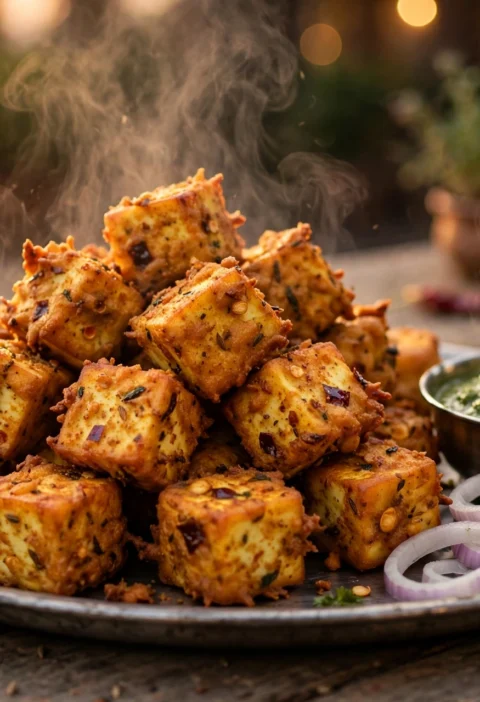
When friends come over, I skip the single-plate routine and lay out a grazing board instead: the spinach crisps, a chutney bowl, onion slivers, and papad, which makes the evening feel abundant for almost no extra effort. Where fried snacks already have admirers at the table, our vegetable pakora pairs wonderfully here, the chunky mixed vegetables against the delicate spinach leaves, and for anyone who wants something richer, a plate of paneer pakora brings soft, golden cubes to contrast with the lacy greens.
Storage and Reheating
I will be honest with you: palak pakora is best eaten fresh from the pan, and no storage trick brings back that first shattering bite. The leaves are so thin that they soften faster than any other pakora once they cool. Still, leftovers are far from wasted if handled kindly. Once completely cool, keep the pakoras in one layer inside a sealed box in the fridge for no more than a day, chutney in its own bowl, because dampness softens a crisp coat quicker than anything.
To bring this palak pakora recipe back to life, lay the pakoras spaced apart on an oven tray and heat at 375°F for 4 to 5 minutes, turning once, until they crisp up again. A 350°F air fryer for 2 to 3 minutes does the same job even faster. Skip the microwave entirely for this palak pakora recipe, because it steams the coating limp within seconds. The uncooked batter keeps chilled for a day, so the cleverest party move is to wash and dry the leaves ahead, then dip and fry fresh just before guests walk in.
Palak Pakora Recipe FAQs
Why did my palak pakoras turn soggy?
Almost always, the oil was not hot enough or the batter was too thick. Leaves fry in under a minute, so oil below temperature soaks into the coating instead of sealing it, and a heavy batter never crisps on something as thin as a leaf. Keep the oil near 360°F, keep the batter thin enough to drip in a steady stream, and fry small batches so the heat never drops. Those three habits are the whole secret of this palak pakora recipe.
Can I make this palak pakora recipe in an air fryer?
Yes, with one honest warning: the result is good but never quite as lacy as deep-fried. Lay the battered leaves in a single layer, spray well with oil, and cook at 390°F for 5 to 6 minutes, flipping once, until crisp and golden. Work in small batches so leaves do not overlap, because stacked leaves steam instead of crisping. The washing, drying, and battering steps stay the same, since those are what make it taste like this palak pakora recipe rather than just roasted spinach.
Can I use frozen spinach for pakoras?
I would not recommend it. Frozen spinach collapses into a wet mass with no leaf structure left, and without whole leaves there is nothing for the thin batter to cling to. You would end up with soft fritters rather than crisp, lacy pakoras. If fresh spinach is unavailable, wait for another day or make a different pakora altogether, because this palak pakora recipe depends entirely on the shape and texture of a fresh leaf.
What chutney goes best with palak pakora?
Tamarind chutney is my first choice, because its dark sweetness and tang cut through the warm spice beautifully. Mint chutney works too, cooler and sharper, and a simple squeeze of lemon with chaat masala is honestly enough on its own. Avoid very thick, yoghurt-based dips here, because they weigh down the delicate leaves. Serve the chutney on the side, never poured over, so the crispness of this palak pakora recipe survives until the last leaf.
Recipe Summary
Prep time: 15 minutes, plus ten minutes of drying. Frying: about 10 minutes in small batches. Total time: roughly 25 minutes. Feeds 4 as a snack. Level: easy, though the oil heat deserves your attention. This palak pakora recipe takes whole spinach leaves, a thin spiced chickpea batter, and properly hot oil, and turns them into the lacy, shattering snack that disappears fastest on any rainy evening I host. Try it once when the rain sets in, and I reckon it will settle into your evening-snack lineup for good.
A little background for the curious: spinach has been grown and cooked across Asia for centuries, valued as much for its colour and flavour as for its nourishment, and pakora is the much-loved clan of batter-fried bites sold at carts, cooked in homes, and served in tea stalls all over South Asia. Dunking a fresh green leaf into that golden, spiced batter marries two treasured food traditions on one plate, and that marriage is precisely the flavour of this palak pakora recipe.