Every Friday, my mother declared open war on the vegetable drawer. Whatever the week had failed to finish — half an eggplant going soft at the stem, two potatoes sprouting ambitions, a cauliflower with one floret too many, spinach that would not survive the weekend — all of it was marched to the cutting board and reborn as pakoras. Nothing in my childhood kitchen performed a rescue like it. This vegetable pakora recipe is hers, written down at last: a mixed-vegetable fritter where the whole crisper drawer joins one batter and every pakora comes out of the oil a different shape, a different bite, the same golden crunch.
It took me years of Fridays to stop ruining her method. My early attempts chopped the vegetables into cheerful chunks, and the pakoras browned beautifully around raw, crunchy centers. I mixed the batter in a separate bowl, thin and smooth like pancake batter, and it slid off every vegetable into a lacy puddle at the bottom of the karahi. Once, I salted the cut vegetables an hour ahead and returned to a soupy swamp nobody could fry. This vegetable pakora recipe is built from those three corrections: cut everything to cook at one speed, build the batter directly on the vegetables, and give the salted vegetables exactly ten minutes — no more — to hand over their juices.
Why This Vegetable Pakora Recipe Works
A plain onion pakora has one vegetable to manage. A mixed vegetable pakora recipe has five personalities in a single spoonful, and the whole craft lies in making them behave as one:
- Every vegetable is cut to finish at the same moment. Potato goes in as matchsticks, cauliflower as florets no bigger than a thumbnail, eggplant as thin half-moons, onion in fine slices, spinach simply torn. Thick pieces are why mixed pakoras betray you — golden outside, raw inside. Matched for size, each spoonful of this vegetable pakora recipe fries evenly from edge to center.
- The batter is built on the vegetables, not beside them. Besan is showered over the cut vegetables and worked through with your hands, so the flour coats every surface instead of wrapping the mixture in a smooth shell. The pakoras come out craggy and irregular, with crispy corners where batter pooled and bare edges where a vegetable pokes through. That unevenness is not a flaw in this vegetable pakora recipe — it is the texture everyone reaches for.
- The vegetables season the batter with their own juice. Salt and spices go onto the raw vegetables first, and ten minutes of resting coaxes out just enough liquid to turn the besan into a thick, clinging paste. Water is added only by the spoonful, if at all. A batter born from vegetable juice tastes of the vegetables themselves, and that is the quiet difference inside this vegetable pakora recipe.
- Crushed whole spices, not fine powders, do the seasoning. Coriander seeds cracked between your palms and ajwain rubbed to wake it up survive the fry as little pockets of flavor, instead of dissolving into a general background warmth. Powdered spice has its place — a measured pinch of turmeric for color lives here too — but the character of this vegetable pakora recipe comes from spices you can still identify with your teeth.
- A pinch of baking soda lifts the centers. Besan alone can fry up dense, almost doughnut-heavy. A quarter-teaspoon of soda, folded in at the last moment, puffs the interior into something light and almost fluffy, so the contrast is crisp shell against tender middle. Do not be tempted to double it for extra lightness — soda past its pinch turns bitter, and this vegetable pakora recipe guards that quarter-teaspoon jealously.
Ingredients
Serves 5-6 (makes about 24 pakoras)
For the vegetables:
- 2 medium potatoes (about 14 oz / 400g), cut into thin matchsticks
- 1 cup small cauliflower florets (about 5 oz / 150g)
- 1 small eggplant (about 7 oz / 200g), cut into thin half-moons
- 1 medium onion, thinly sliced
- 2 cups fresh spinach leaves, roughly chopped
- 2-3 green chilies, finely chopped
- 1/4 cup fresh coriander leaves, chopped
For the batter:
- 1 1/2 cups besan (gram flour), about 6 1/2 oz (180g)
- 2 tablespoons cornflour (cornstarch)
- 1 tablespoon coriander seeds, coarsely crushed
- 1 teaspoon ajwain (carom seeds), lightly crushed
- 1/2 teaspoon turmeric powder
- 1 teaspoon red chili powder
- 1/4 teaspoon baking soda
- 1 1/2 teaspoons salt
- 1/4 cup (60 ml) water, only if needed, added a spoon at a time
- 3 cups (720 ml) neutral oil, for deep frying
The batter’s backbone is besan — gram flour, milled from chickpeas, nutty and golden and entirely without gluten, which is why it fries crisp instead of chewy. And the fritter itself belongs to a family far bigger than one kitchen: the pakora travels across the whole subcontinent under a dozen names, changing its vegetables with every region and season. This vegetable pakora recipe is simply the Pakistani home version — the one where the week’s leftover sabzi always wins.
How to Make This Vegetable Pakora Recipe – Step by Step
Step 1: Cut and salt the vegetables.
Put all the prepared vegetables into your widest mixing bowl — the potato matchsticks, cauliflower florets, eggplant half-moons, onion, spinach, green chilies, and coriander. Scatter over the salt, crushed coriander seeds, ajwain, chili powder, and turmeric. Toss everything thoroughly with your hands, lifting from the bottom, so the spices touch every cut surface. Set the bowl aside for exactly 10 minutes: you are watching for the vegetables to gloss over and slump slightly as their juices emerge.
Step 2: Shower on the besan and build the batter.
Sift the besan and cornflour over the vegetables in three additions, tossing and squeezing gently after each one, the way you would rub fat into flour. The mixture should end up as a rough, shaggy mass where every piece wears a dusty golden coat — not a pourable batter. If dry flour still hides at the bottom of the bowl after a full minute of mixing, rain in water one spoonful at a time until it just comes together. Fold in the baking soda last of all. This vegetable pakora recipe wants a batter that must be persuaded off the spoon, never one that drips.
Step 3: Fry the test pakora.
Heat the oil in a karahi to about 350°F (175°C) — a crumb of batter dropped in should sink a half-inch, then bob straight back up fizzing. Drop in one heaped teaspoon of mixture, flatten it slightly with the back of the spoon, and fry for 2 to 3 minutes until deep golden. Taste it. This single fritter is your seasoning report: mixed pakora batters almost always need a pinch more salt or chili than you expect, and adjusting now rescues the whole batch of this vegetable pakora recipe.
Step 4: Fry in uncrowded batches.
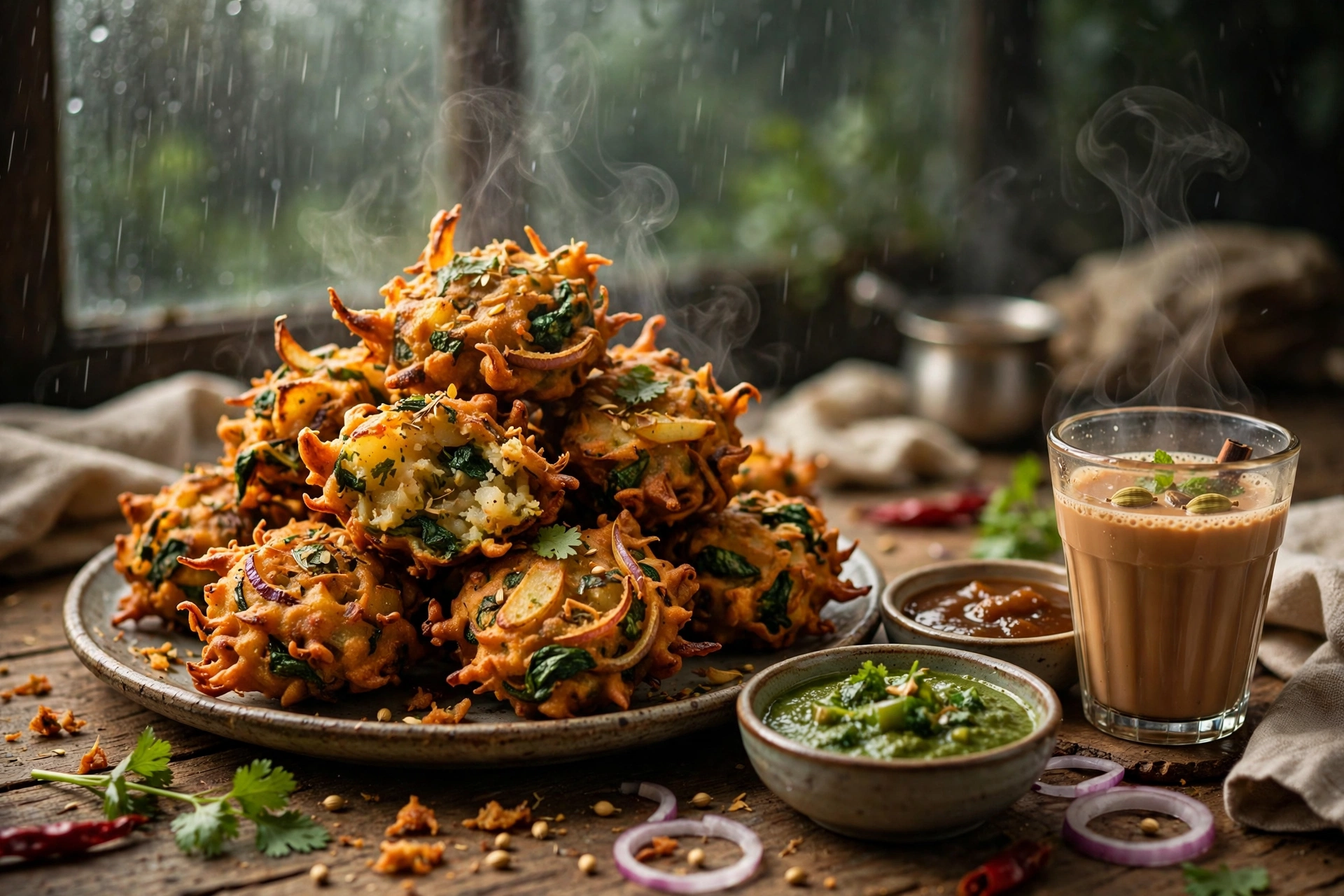
Working with wet fingertips or two teaspoons, lower rough spoonfuls of the mixture into the oil — six or seven at a time, no more, so the temperature holds its nerve. Fry for 3 to 4 minutes, turning once with a slotted spoon when the undersides set, until the pakoras are a deep, burnished gold with darker craggy edges. Soft, pale pakoras are under-done pakoras; be brave with the color. Keep the batches turning over steadily and this vegetable pakora recipe will reward you with a mountain, not a puddle.
Step 5: Drain upright, season, and serve hot.
Lift each batch onto a wire rack — upright draining keeps the undersides from steaming against a plate — and dust them while hot with a pinch of chaat masala if your family insists, as mine does. Give the oil a minute to climb back to temperature between batches. Pile the pakoras onto a platter the moment the last batch lands, and carry them to the chai. A vegetable pakora recipe lives or dies in its first five minutes out of the oil, and this one intends to live.
Serving Suggestions
The classic arrangement is a platter, a bowl of green mint-coriander chutney for dunking, and chai strong enough to stand up to fried food — doodh patti if the day deserves it. A plate of sliced onion and lemon wedges on the side costs nothing and makes the whole spread feel like a dhaba order. On monsoon evenings my family adds nothing else at all; pakoras and chai are a complete sentence.
For a full tea-time board, this vegetable pakora recipe pairs naturally with the other fried things this kitchen loves. My classic pakora recipe is the onion-leaning original the purists ask for, while a tray of crisp samosas turns the same batter-and-oil afternoon into a proper spread. Fry the samosas first — they hold their crunch patiently — and send the pakoras out last, still crackling from the karahi.
Storage and Reheating
Pakoras are at their peak for about an hour, but leftovers are far from a tragedy. Cool them completely, box them airtight, and refrigerate for up to 2 days. To reheat, spread them in a single layer in a 400°F (200°C) oven for 7 to 8 minutes, or an air fryer for 4 to 5, until the edges crisp and sizzle again — the microwave is banned in my house for this job, since it returns them soft and steamy. The raw batter, vegetables and all, will wait in the fridge for up to 4 hours before frying; any longer and the spinach darkens the whole batch. Given a choice, this vegetable pakora recipe prefers you fry fresh and reheat bravely rather than the other way round.
Frequently Asked Questions
Why are my pakoras browned outside but raw in the middle?
Almost always the cut, not the oil. A chunky piece of cauliflower or a thick potato wedge simply cannot cook through in the time the batter needs to turn golden. Cut smaller and thinner — matchsticks and thumbnail florets — and the inside and outside finish together. If the pieces were right, the oil was running too hot, bullying the crust dark before the heat could travel. This vegetable pakora recipe holds 350°F (175°C) as its steady middle ground.
Which other vegetables can I swap in?
Nearly anything firm and quick-cooking: shredded cabbage, grated carrot, zucchini half-moons, sweet potato matchsticks, or a handful of peas straight from the freezer. Leafy greens beyond spinach — fenugreek leaves are the beloved one — work beautifully but darken the batter, so fry those batches a shade lighter. Avoid watery vegetables like cucumber or ripe tomato; their juice floods the batter this vegetable pakora recipe has balanced so carefully.
Can I bake or air-fry these pakoras instead?
You can, with honest expectations. Spoon the mixture onto a well-oiled tray or into an air-fryer basket in a single layer, brush or spray the tops with oil, and cook at 400°F (200°C) for 12 to 15 minutes, turning once, until crisp at the edges. They come out lighter and a little flatter than their deep-fried cousins — more roasted fritter than pakora — but on a weeknight this vegetable pakora recipe accepts the trade without sulking.
Why did the batter slide off my vegetables?
The vegetables were too wet, or the batter was too thin — usually both, since one causes the other. Pat sliced eggplant and washed spinach dry before they meet the besan, and resist adding water until you have mixed for a full minute; the salted vegetables release more juice than they first admit. If a batch is already sliding, shower in another tablespoon of besan and mix again. In this vegetable pakora recipe, a thick coat that clings is the whole game.
Recipe Summary
- Prep time: 25 minutes
- Cook time: 20 minutes
- Total time: 45 minutes
- Servings: 5-6
- Cuisine: Pakistani
- Course: Snack