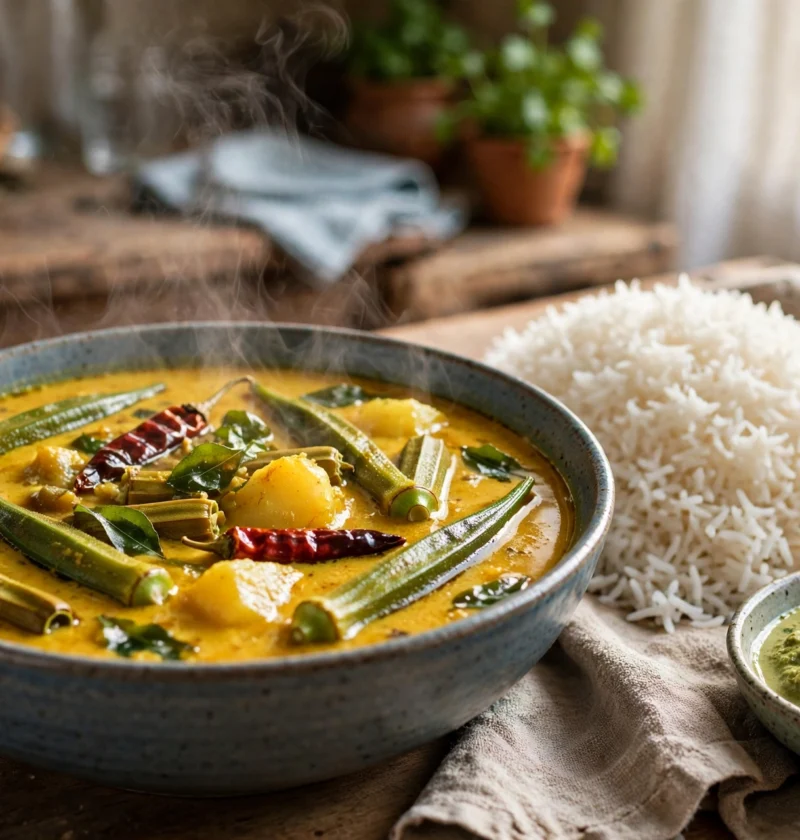
Growing up in a Karachi apartment block, Sunday lunch was not something you had to plan — you just had to follow your nose. Two doors down lived a Sindhi family, and on Sundays their door stayed open while a huge pot of kadhi came together in their kitchen. The first time Aunty invited me in to watch, I stood there confused, looking around for the yogurt. There wasn’t any. No dahi, no lassi, nothing white at all — just a pan of gram flour turning golden, a tangle of vegetables waiting their turn, and her whisk, which never stopped moving. This sindhi kadhi recipe is the one I coaxed out of her over many Sundays, and it changed how I think about kadhi completely.
What I remember most is that the whole mohalla seemed to end up at that table. Cousins, neighbours, a rickshaw uncle — everyone got a steel plate of kadhi over rice, and the pot never seemed to empty. It was a completely different creature from the Punjabi kadhi I knew: thinner, sharper, almost soupy, with whole vegetables bobbing in it like they were swimming. The tang came from tamarind, not curd, and the flavour underneath came from besan roasted slowly in oil until the whole kitchen smelled nutty. It took me three attempts at home before I understood that this dish is really about two things: patience with the flour, and courage with the whisk.
Why This Sindhi Kadhi Recipe Works
Sindhi kadhi has no yogurt to hide behind, so every step has to earn its place. Here is what makes this sindhi kadhi recipe come out silky, tangy and full of vegetables every single time:
- The besan is roasted first, and properly. Cooking the gram flour in oil until it turns a deep golden colour and smells like toasted nuts is the entire flavour base of the dish. Raw or half-roasted flour tastes pasty no matter how long you simmer it later, and roasting helps the flour blend into the water without clumping.
- Water goes in slowly, whisk moving the whole time. This is the famous drama of the dish. Pour the water in a thin stream while whisking fast and constantly, and the roasted flour dissolves into a smooth, lump-free base. Stop whisking for ten seconds at the wrong moment and you will be fishing out little flour dumplings for the rest of the afternoon.
- Vegetables are added in stages, not all at once. Drumsticks and potatoes need a proper head start; okra and cluster beans cook much faster. Staggering them means every vegetable finishes tender at the same time instead of half turning to mush while the rest stay raw in the middle.
- Tamarind does the souring, and it goes in near the end. Because there is no yogurt, the tang is cleaner and sharper, and adding the tamarind late keeps it bright instead of cooking it dull. You can also adjust it at the end, spoon by spoon, until it tastes right.
- The final tempering is poured over, not stirred in. Mustard, cumin, fenugreek and curry leaves crackled in hot oil at the very end sit on top of the kadhi like a perfume. That sizzling finish is the first thing you smell when the plate lands in front of you, and it wakes up the whole pot.
Ingredients
Kadhi belongs to a whole family of gram-flour curries across the subcontinent, but the Sindhi version stands apart in Sindhi cuisine for one bold decision: it skips dairy entirely. The body of the curry comes from gram flour — besan — roasted in oil and whisked into water, which makes the dish lighter than its yogurt-based cousins and keeps it friendly for anyone avoiding curd. The vegetables are not decoration either; in the Sindhi home kitchen, kadhi is how a garden’s worth of produce gets used up in one pot. Swap in what you have for this sindhi kadhi recipe, as long as you respect their different cooking times.
Serves 4
For the kadhi base:
- 1/2 cup besan (gram flour), sifted
- 3 tablespoons oil
- 5 cups water, divided
- 1 teaspoon ground turmeric
- 1 teaspoon red chili powder, or to taste
- 1 tablespoon fresh ginger, finely grated
- 2 green chilies, slit lengthwise
- 1 1/2 teaspoons salt, or to taste
- 2 tablespoons tamarind paste, or a lemon-sized ball of tamarind soaked in 1/2 cup warm water and strained
- 1/2 teaspoon sugar (optional, just to round off the sharp edges)
For the vegetables:
- 2 small potatoes, peeled and cut into large chunks (about 1 1/2 cups)
- 4 fresh drumsticks (moringa pods), scrubbed and cut into 3-inch pieces
- 1 cup cluster beans (guar), trimmed and cut into 2-inch pieces, or green beans
- 10 to 12 okra, washed, dried well and tops trimmed
- 1 large tomato, roughly chopped
For the tempering and garnish:
- 1 tablespoon oil or ghee
- 1 teaspoon black mustard seeds
- 1 teaspoon cumin seeds
- 1/2 teaspoon fenugreek seeds
- 10 to 12 fresh curry leaves
- 2 to 3 dried red chilies, broken
- 1 pinch asafoetida (hing)
- 2 tablespoons fresh coriander leaves, chopped
How to Make This Sindhi Kadhi Recipe – Step by Step
Step 1: Roast the besan until it smells like toasted nuts. Heat the oil in a deep, heavy-bottomed pot over medium heat, add the sifted besan, and start stirring. This is not a step you can walk away from. Keep the flour moving with a wooden spoon or whisk for 6 to 8 minutes, scraping the bottom constantly, until it loosens, turns a shade deeper than golden, and the raw, chalky smell is replaced by something warm and nutty. If the flour is browning too fast at the edges, drop the heat — burnt besan is bitter besan, and there is no saving it.
Step 2: Add the water slowly and whisk like you mean it. Take the pot off the heat. Pour in about 1 cup of water in a slow stream, whisking furiously nonstop; the mixture will hiss, seize and form a thick paste — keep whisking until it turns smooth and glossy. Return the pot to low heat and continue adding the remaining water a cup at a time, whisking after each addition. Once all the water is in, stir in the turmeric, red chili powder, grated ginger, slit green chilies and salt. Bring it to a gentle boil, still stirring often, then lower the heat. The base should look like a thin, golden, completely smooth soup.
Step 3: Give the hard vegetables their head start. Add the potato chunks and drumstick pieces to the simmering kadhi. These two are the slowpokes of the pot and need about 12 to 15 minutes before anything else joins them. Let the kadhi bubble gently — a lazy simmer, not a rolling boil — and stir now and then so nothing settles on the bottom. You will notice the base thickening slightly as the flour cooks out; that is what you want. By the end of this step, a knife should slide into a potato with just a little resistance left.
Step 4: Add the quick vegetables and the tamarind. Tip in the cluster beans, okra and chopped tomato, and simmer for another 8 to 10 minutes until the beans are tender, the okra is soft but still holding its shape, and the tomato has melted into the curry. Now stir in the tamarind and the sugar, if using. Simmer 2 to 3 more minutes and taste carefully: you are looking for a bright, clear tang up front with the nutty besan underneath. Add more tamarind a spoon at a time if it tastes flat, and adjust the salt. The finished consistency should be like a thin soup that still leaves a coating on the back of a spoon — loosen with a splash of hot water if it has thickened too much.
Step 5: Finish with the sizzling tempering. In a small pan, heat the oil or ghee until it shimmers. Add the mustard seeds and let them crackle, then the cumin and fenugreek seeds, and seconds later the curry leaves, dried red chilies and asafoetida — stand back, the leaves will splutter. As soon as the spices smell fragrant, which takes under a minute, pour the entire tempering over the surface of the kadhi. Do not stir it in. Cover the pot for 2 minutes so the aroma settles into the curry, then scatter over the coriander and carry the whole pot to the table.
Serving Suggestions
There is really only one classic way to serve this sindhi kadhi recipe, and Aunty was firm about it: kadhi ladled generously over a mound of plain steamed basmati rice — kadhi chawal — with the rice soaking up that thin, tangy broth like it was made for it. Put out the small things alongside: a bowl of crisp papad, a spoonful of your favourite pickle, some sliced onions with lemon, and a green chutney for anyone who likes an extra kick. Because the kadhi itself is light and brothy, the meal feels big and satisfying without sitting heavy, which is exactly why it anchors a long, lazy Sunday lunch.
Once you fall for this version, it is worth tasting it against its famous cousin: our kadhi pakora is the Punjabi style, built on whisked yogurt with crisp onion fritters soaking in it, and comparing the two pots side by side is the fastest way to understand what roasted besan alone can do. And if vegetable-loaded, tamarind-tangy curries are your thing, the South Indian sambar on this site follows a similar spirit — different base, same idea of a pot that feeds the table.
Storage and Reheating
This sindhi kadhi recipe keeps well in the fridge for up to 2 days in a covered container, and the flavour of the besan base deepens overnight. It will thicken as it sits, so when you reheat it, warm it slowly on the stove, loosening it with a little water and whisking as it comes back up to temperature, so it turns silky instead of lumpy — never let it sit at a hard boil unattended. The vegetables will be softer the second day, especially the okra, but the pot loses none of its tang; in many Sindhi homes, leftover kadhi over fresh rice is considered its own small celebration.
Frequently Asked Questions
Why did my kadhi turn out lumpy?
Almost always, the water went in too fast or the whisking paused at the critical moment. The fix for next time is simple: take the pot off the heat, add the first cup of water slowly, and whisk without stopping until you have a smooth paste before adding more. If you already have lumps, strain the base through a sieve or give it a blitz with a hand blender before the vegetables go in — nobody will know.
I cannot find drumsticks or cluster beans. What can I use instead?
Both are traditional but neither is compulsory. Drumsticks can be swapped for extra potato, cauliflower florets, or chunks of eggplant added with the quick vegetables, and cluster beans are easily replaced with regular green beans or even a handful of peas near the end. The soul of this sindhi kadhi recipe is the roasted besan base and the tamarind tang — the vegetables are whoever shows up.
My kadhi is too thin. How do I fix it?
Simmer it uncovered for a few extra minutes and it will reduce gently. If it is still thinner than you like, whisk a tablespoon of besan with a little cold water into a smooth slurry and stir it in, then simmer for 3 to 4 minutes so the flour cooks out fully. Remember the kadhi also thickens as it cools and rests, so aim for slightly thinner than your target while it is still on the stove.
How is Sindhi kadhi different from Punjabi kadhi?
The difference is the base itself. Punjabi kadhi is built on sour yogurt whisked with a little besan, which makes it creamy and pale, and it usually carries pakoras. The Sindhi version uses no yogurt at all — roasted gram flour and water form the whole body of the curry, tamarind provides the sourness instead of curd, and the pot is loaded with vegetables rather than fritters. The result is thinner, tangier and lighter, closer to a spiced vegetable soup than a creamy curry.
Recipe Summary
- Prep time: 20 minutes
- Cook time: 40 minutes
- Total time: 1 hour
- Servings: 4
- Cuisine: Pakistani
- Course: Main Course