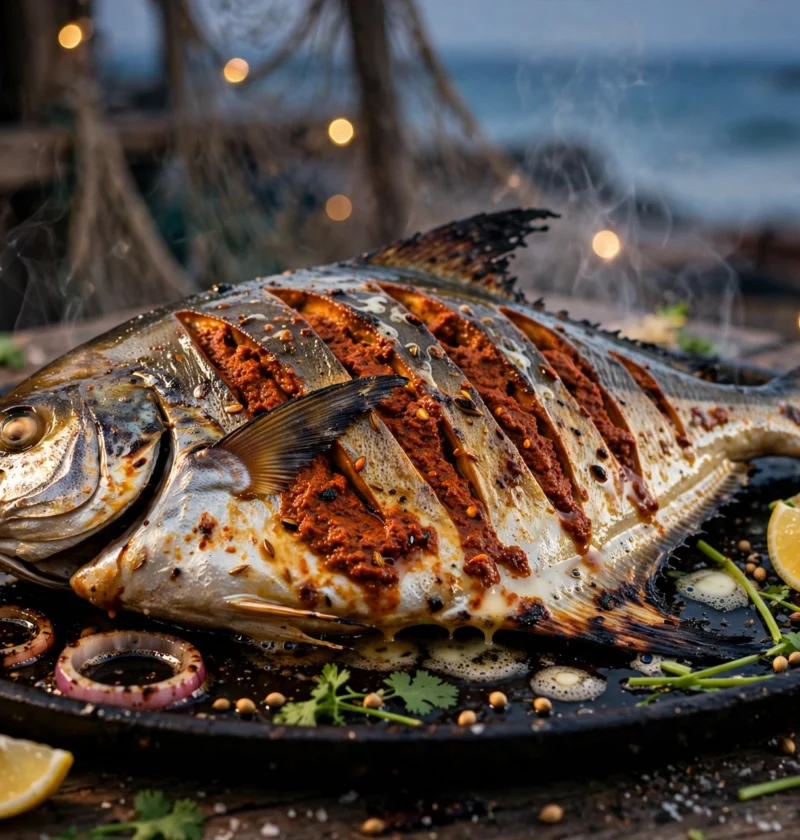
The pomfret arrived at our beach-shack table the way it always should: whole, on a dented steel platter, still whispering from the heat. We had picked it ourselves an hour earlier, pointing at a silver fish lying flat and gleaming in the fisherman’s ice box, and the cook had nodded like we had passed a test. I watched him work through the plastic curtain of the kitchen doorway — three fast slashes down each side, a rub, a red paste worked in with his thumbs, and the fish went straight over fierce coals. That night is where this tandoori pomfret recipe comes from: a whole pomfret cooked the seaside way, on the bone, dramatic enough to silence a table when it lands.
Back home I ruined a few pomfret learning what the shack cook knew in his hands. My marinade slid off into the pan. My fish steamed instead of charring. One poor pomfret cooked so long it ate like cardboard with bones. The lessons were simple once I slowed down and thought like that cook: cut deep so the flavour has somewhere to go, season the fish in two acts instead of one, and cook it fast and hot, because a pomfret is a thin fish and thin fish forgive nothing. What follows is the shack method, translated for a home oven or a backyard grill.
Why This Tandoori Pomfret Recipe Works
A marinated fillet is easy; a whole flat fish is a different puzzle. This tandoori pomfret recipe solves it the way the coast cooks do:
- Deep slashes to the bone turn the marinade from a coating into a filling. Pomfret flesh is mild and a surface rub never reaches the middle of even this thin fish. Three diagonal cuts on each side open the flesh up, and every cut becomes a pocket that holds spiced yogurt right against the bone.
- A lemon, salt and ajwain rub goes on first, before any yogurt. This is the fishmonger’s trick up and down the coast. The acid and salt draw out the surface moisture that carries any muddy, pondy smell, and by the time the main marinade goes on, the fish smells clean and sweet instead of fishy.
- Ajwain is non-negotiable in desi fish cookery, and here it leads. Carom seeds have a warm, thymey sharpness that was seemingly designed for seafood — they cut through richness, settle the stomach, and make fish taste more like itself. Skip it and the dish is fine; include it and the dish is right.
- Hung yogurt and mustard oil give the marinade grip and bite. Thick, drained yogurt clings to the slashes instead of pooling in the tray, while mustard oil brings a clean pungency that blooms beautifully under fierce heat and keeps the crust from tasting flat.
- The cooking is fast, fierce, and finished with butter. Eight to ten minutes a side at maximum heat chars the edges, crisps the paper-thin fins, and leaves the centre pearly. A butter baste in the last minutes glosses the skin and buys you a small margin against drying.
Ingredients
The fish itself is the silver pomfret, Pampus argenteus, the prized flat fish of the Arabian Sea coast — all silvery skin, fine bones, and sweet flesh that needs no help beyond salt and heat. Black pomfret works in this recipe too, with a meatier bite, and a large golden pomfret is a fair stand-in if that is what your market stocks. The cooking style borrows from tandoori tradition — a yogurt marinade, fierce dry heat, char at the edges — except the clay oven is swapped for the hottest setting your oven or grill can manage. Buy whole fish with bright eyes and a clean sea smell, and ask the fishmonger to gut and clean it while leaving the head and tail on, because the whole-fish presentation is half the pleasure of this tandoori pomfret recipe.
Serves 4
For the first rub:
- 2 whole silver pomfret, cleaned and gutted (about 3/4 pound each)
- 1 tablespoon fresh lemon juice
- 1 teaspoon fine sea salt
- 1 teaspoon ajwain (carom seeds), crushed lightly between your palms
For the tandoori marinade:
- 3/4 cup hung yogurt or thick Greek yogurt, whisked smooth
- 2 tablespoons mustard oil
- 1 tablespoon ginger-garlic paste
- 1 tablespoon Kashmiri red chili powder, for colour and gentle heat
- 1 teaspoon ground coriander
- 1/2 teaspoon ajwain (carom seeds), crushed
- 1/2 teaspoon ground turmeric
- 1 teaspoon garam masala
- 1/2 teaspoon salt, or to taste
- 1 teaspoon lemon juice
For cooking and serving:
- 2 tablespoons melted butter, for basting
- 1 medium red onion, cut into thin rings
- 1 lemon, cut into wedges
- 1 teaspoon chaat masala, for sprinkling
- Fresh coriander leaves, roughly chopped
- Mint chutney, to serve alongside
How to Make This Tandoori Pomfret Recipe – Step by Step
Step 1: Score the fish and give it the first rub. Rinse the cleaned pomfret and pat them completely dry with paper towels — a wet fish will never take a crust. Lay each fish flat and, with your sharpest knife, cut three deep diagonal slashes on both sides, slicing right down until the blade kisses the bone. Mix the lemon juice, salt and palm-crushed ajwain into a loose paste and rub it over the whole fish, working it down into every slash with your fingertips. Rest the fish for 15 minutes while this first seasoning does its quiet cleaning work; then give the surface a light pat so it is damp, not dripping.
Step 2: Whisk the marinade and pack it into the slashes. Stir all the marinade ingredients together until you have a rust-red paste the thickness of soft peanut butter — if your yogurt was watery, the marinade will be too, so drain it longer rather than adding anything to fix it later. Coat each fish generously on both sides, then use your thumbs to push the paste deep into every slash until the cuts sit full and level with the skin. Cover and refrigerate for 30 to 45 minutes. Longer is not better here: the lemon in the mix will start to cure the delicate flesh and turn it chalky past the hour mark.
Step 3: Set up fierce heat and protect the fish from sticking. Heat your oven to its maximum, 500°F (260°C), with a heavy tray or cast-iron pan inside so it gets properly hot, or light a grill for direct high heat. Pomfret skin loves to weld itself to metal, so oil the hot surface well, or lay the fish on a sheet of oiled foil or a grill basket if you own one. Take the fish out of the fridge 10 minutes before cooking so the marinade is not fridge-cold when it hits the heat.
Step 4: Roast hard and fast, flip once, and baste with butter. Lay the fish on the screaming-hot tray or grill and cook undisturbed for 8 to 10 minutes, until the underside has set, the edges have charred in spots, and the thin fins have gone crisp. Slide a wide spatula underneath and flip each fish exactly once, with confidence — hesitation is what tears skin. Give the second side 7 to 8 minutes, then brush the tops generously with melted butter and cook 1 minute more. The flesh at the deepest slash should look opaque and pearly, flaking when nudged; this tandoori pomfret recipe lives or dies on not pushing past that point.
Step 5: Rest it briefly and send it to the table whole. Lift the fish onto your warmest platter and leave them alone for 3 minutes — the juices settle back into the flesh instead of flooding the plate. Shower over the onion rings and coriander, dust with chaat masala, and tuck lemon wedges along the sides. Carry the platter out as it is, fish whole and heads on, and let people pull the flesh from the bone at the table. That small piece of theatre is not decoration; it is the dish as the coast intended it.
Serving Suggestions
Serve the fish the moment it rests, with mint chutney in a small bowl, extra lemon for the people who always want more, and something plain alongside to carry the marinade that flakes off — soft naan, roomali roti if you can find it, or plain steamed rice. A crunchy salad of sliced onion, cucumber and tomato with a pinch of salt keeps the plate bright. At the shack they brought the fish with nothing but chutney, onions and roti, and honestly that restraint is hard to improve on.
Once the whole-fish habit takes hold, the tandoori mood tends to spread across the week. My fish tikka is the boneless cousin — same ajwain logic, cut into char-grilled cubes for skewers — while the lahori fried fish goes the other way entirely, battered and crisped in hot oil the Lahore street-food way. Between the three, you have the desi fish repertoire most home cooks ever actually need: grilled chunks, fried fillets, and this whole roasted centrepiece.
Storage and Reheating
Tandoori pomfret is at its best within minutes of leaving the heat, and I would plan the meal so nothing is left over. If there are leftovers, refrigerate them in a covered container the same night and eat within a day; flake the cold flesh into a quick salad with onion, tomato, lemon and a pinch of chaat masala, and it makes a genuinely good second act. To reheat whole pieces, use a moderate oven at 350°F (175°C) for 6 to 8 minutes with a light brush of butter — the microwave turns that delicate flesh rubbery and the crust soggy, so keep it away from this fish.
Frequently Asked Questions
Can I use frozen pomfret for this tandoori pomfret recipe?
Yes, and frozen-at-sea pomfret is often fresher than a tired “fresh” fish. Thaw it slowly overnight in the fridge, then pat it drier than feels reasonable — frozen fish releases extra water, and surface moisture is the enemy of both the rub and the char. Add 5 minutes to the first rub so the seasoning can do its work.
I don’t have mustard oil. What can I use instead?
Any neutral oil will carry the marinade, but you will lose the pungent backbone. A good rescue is to stir a quarter teaspoon of ground mustard or a small dab of prepared mustard into the oil before mixing. If you do buy mustard oil, warm it until it just begins to smoke, let it cool, and then use it — that brief heating takes the raw edge off while keeping the character.
How do I know the pomfret is cooked without overcooking it?
Look into the deepest slash: the flesh should be opaque and pearly white all the way to the bone, and it should lift away in moist flakes when you press it gently with a fork. The moment that happens, the fish is done — pomfret has almost no fat to protect it, so even five extra minutes will dry the edges. When in doubt, err on the side of taking it off early and letting the rest finish the job.
Can I cook this in a pan or an air fryer instead?
A heavy cast-iron skillet on high heat works well: give the fish a film of oil, cook 6 to 7 minutes a side, and expect a softer char. In an air fryer, 400°F (200°C) for about 7 minutes per side gets you close, though the fins will not crisp quite as dramatically. Whichever route you choose, keep the fish in a single layer with space around it, or it will steam instead of roast.
Recipe Summary
- Prep time: 15 minutes, plus 45 to 60 minutes of rubbing and marinating
- Cook time: 18 minutes
- Total time: About 1 hour 20 minutes
- Servings: 4
- Cuisine: Pakistani
- Course: Main Course