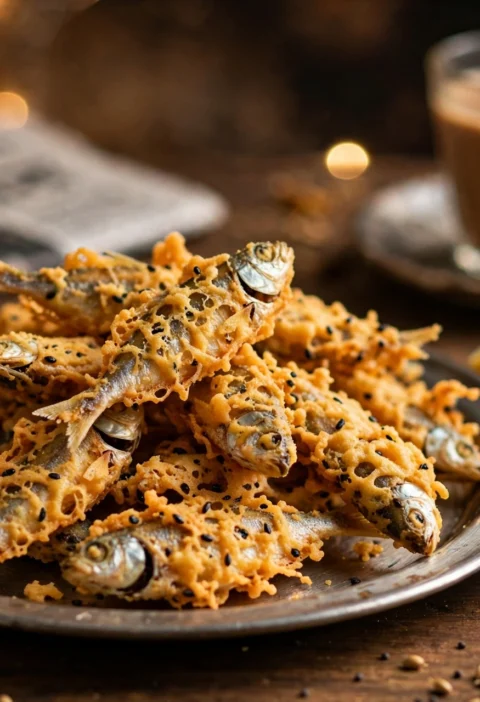
My first plate of koliwada arrived by accident. I was in Mumbai years ago, trailing a friend through the lanes near the fishing docks while she haggled over pomfret, and the rain that had been threatening all afternoon finally broke. We ducked under the awning of a tiny eatery run by a Koli family, and the owner, seeing two soaked strangers, simply put a plate in front of us without being asked: fish the colour of brick dust, crackling hot, with raw onion and a green chutney that meant business. I have chased that plate ever since, and this fish koliwada recipe is where the chase ended — in my own kitchen, with my own fryer, on a rainy evening that felt close enough.
What hooked me was not just the crunch. Plenty of fried fish crunches. It was the perfume that rose off the batter before I even bit in — something warm and almost medicinal, in the best way, that I could not name until the owner’s wife took pity on me and said one word: ajwain. That little seed, crushed into a red besan batter, is the signature of the Koli fishing community’s most famous gift to the world, and once you know it is there, no other fried fish quite measures up. This fish koliwada recipe keeps that signature front and centre.
Why This Fish Koliwada Recipe Works
Fried fish fails in predictable ways — soggy coat, batter left behind in the oil, flesh steamed grey inside armour. This version is built to dodge every one of them:
- Two flours, two jobs. Besan brings the nutty, unmistakably desi flavour and the deep colour; rice flour brings the glassy, shattering crispness besan alone never quite reaches. Together they fry into a shell that stays crisp long after it leaves the oil.
- The ajwain is crushed, not whole. Rolling the carom seeds between your palms before they go in wakes up their thyme-like, peppery perfume and spreads it through every bite instead of leaving it in occasional whole seeds.
- A short first marinade, then a pat dry. Lemon, salt and ginger-garlic season the flesh itself for twenty minutes — then the surface is dried properly. Batter clings to dry fish; on wet fish it lets go in the fryer, and this fish koliwada recipe refuses to let that happen.
- The batter is thick enough to coat a spoon. Koliwada batter should ribbon slowly off a lifted spoon, not pour like pancake mix. A thick coat fries into a real crust; a thin one fries into a suggestion.
- One spoon of hot oil in the batter. An old restaurant habit: whisking a tablespoon of the heating fry oil into the batter just before coating makes the crust blister lightly and fry crisper, the way moghlai cooks have done with pakora batter for generations.
Ingredients for This Fish Koliwada Recipe
Two things define this dish before anything else touches the bowl. The first is ajwain — carom seeds, the small ridged seeds whose sharp, thymol warmth is the whole personality of koliwada; buy them fresh and fragrant, because a stale jar gives you dust instead of perfume. The second is gram flour, the besan ground from chickpeas that forms the batter’s body and its burnished colour. Around those two, this fish koliwada recipe is honestly simple: good firm fish, Kashmiri chili for colour more than fire, ginger-garlic, lemon, and oil hot enough to do its work quickly.
For the first marinade
- 1 1/2 pounds (700 g) firm white fish fillets — cod, haddock, king fish (surmai) or rawas — cut into 2-inch chunks
- 1 tablespoon lemon juice
- 1 teaspoon fine sea salt
- 1 tablespoon ginger-garlic paste
- 1/4 teaspoon ground turmeric
For the koliwada batter
- 3/4 cup besan (gram flour) — give it a sift if yours has gone lumpy
- 1/4 cup rice flour
- 1 teaspoon ajwain (carom seeds), crushed roughly between your palms to wake the aroma
- 1 tablespoon Kashmiri chili powder — for that deep red colour; its heat is friendly
- 1/2 teaspoon regular red chili powder, or to taste
- 1/2 teaspoon ground turmeric
- 3/4 teaspoon fine sea salt, or to taste
- 1 teaspoon lemon juice
- About 1/2 cup cold water (120 ml), added gradually
- 1 tablespoon hot oil, whisked in at the end
For frying and serving
- Neutral oil for deep-frying, such as sunflower or canola — enough for 2 to 3 inches in your pan
- 1 teaspoon chaat masala, for sprinkling
- 1 small red onion, sliced into thin rings
- Lemon wedges
- Green chutney, for serving
- A few cilantro leaves, optional
How to Make This Fish Koliwada Recipe – Step by Step
Step 1: Marinate the fish, then dry its surface. Lay the fish chunks in a shallow bowl and rub them all over with the lemon juice, salt, ginger-garlic paste and turmeric. Cover and leave for 20 minutes — no longer than 30, because lemon juice left too long starts to cook the surface and toughen it. When the time is up, lift the pieces out and pat each one dry with paper towels, pressing gently. This drying is not fussiness; it is the single habit that decides whether your batter stays on in the oil.
Step 2: Whisk the batter thick. In a wide bowl, combine the besan, rice flour, crushed ajwain, both chili powders, turmeric and salt, and whisk them dry so the spices are evenly spread. Add the lemon juice, then pour in the cold water a little at a time, whisking hard to keep it smooth, until the batter ribbons slowly off the spoon and coats its back in an opaque layer. Stop before it turns pourable — you can always loosen with a teaspoon more water, but you cannot thicken a thin batter without dulling its seasoning. Rest it 10 minutes while the oil heats, then whisk in the tablespoon of hot oil.
Step 3: Coat every piece completely. Drop the dried fish chunks into the batter a few at a time and turn them with a spoon until each piece wears an even, generous coat with no pale flesh showing. Lift one out and let the excess drip for two seconds — the coat should stay put, thick and red. Work through all the fish and lay the coated pieces on a plate in one layer. If your kitchen is warm, give the plate 5 minutes in the fridge; a cold, set coat fries noticeably crisper.
Step 4: Fry hot, in batches, without crowding. Heat the oil in a karahi or deep, heavy pan to 350°F (175°C). One test drip of batter should sizzle instantly and rise golden in about 30 seconds. Slide in the fish pieces one by one, away from you, in a single uncrowded layer — five or six pieces at a time in a home pan. Fry 3 to 4 minutes, turning once with a slotted spoon, until the crust is a deep, confident red-gold and sounds hard when tapped. Lift out onto a wire rack, never paper, so steam escapes instead of softening the crust, and let the oil come back to temperature before the next batch.
Step 5: Season while hot and serve as a starter. The moment a batch lands on the rack, shower it with chaat masala — the heat makes the tang bloom. Pile all the fish onto a warm platter over the onion rings, scatter the cilantro if you are using it, and set lemon wedges around the edge. Serve immediately with the green chutney in a small bowl. Koliwada is a beginning, not a main event: it wants to be eaten standing around the platter, first piece in hand before anyone has sat down.
Serving Suggestions
Serve this the way the dockside eateries do: as the opening act. A platter of koliwada, a sharp green chutney, onion rings rinsed and squeezed with lemon, and something cold to drink — that is the whole ceremony, and it needs nothing more. If it is starting a full meal, follow it with plain rice and a mild curry so the starter stays the loudest voice at the table. It also makes a superb drinks snack, cut a little smaller, with the chutney on the side for dipping.
Because this site has a small fleet of fried and spiced fish, here is how they differ in my kitchen. My fish fry wears only a dry spice coat — no batter at all — and is pan-fried to sit beside rice as a main course. My fish pakora are the small, homely tea-time fritters in a plainer besan batter, the kind that share a plate with samosas at chai. Fish tikka goes the opposite road entirely: yogurt-marinated and grilled until smoky at the edges, with no coating to speak of. This koliwada is the restaurant starter of the family — battered, ajwain-perfumed, deep-red, and unapologetically crisp.
Storage and Reheating
Be honest with yourself here: koliwada is at its magnificent best in the ten minutes after it leaves the oil, and no storage method fully resurrects that crust. If you have leftovers, let them cool completely on the rack, then refrigerate in a covered container for up to 2 days. Raw battered fish should never wait around — coat and fry in one session, because the batter weeps and the fish suffers.
To reheat, spread the pieces on a rack over a tray in a hot oven at 425°F (220°C) for 6 to 8 minutes, or in an air fryer at 400°F (200°C) for 4 to 5 minutes, until the crust crackles again when tapped. The microwave is forbidden territory — it steams the coat into leather. A fresh pinch of chaat masala and a squeeze of lemon over the reheated pieces covers most of what the fridge took away.
Frequently Asked Questions
Which fish works best for a fish koliwada recipe?
In Mumbai the classic choices are rawas (Indian salmon) and surmai (king fish), and both are wonderful if you can get them. For most of us, firm white fish is the rule: cod and haddock hold together beautifully in the fryer, and tilapia or basa work if handled gently. What you want is flesh that stays in one proud chunk — avoid very delicate, thin fillets that flake apart, and avoid strongly oily fish, whose flavour fights the ajwain instead of riding with it.
Why does my batter slide off in the oil, and how do I stop it?
Three culprits, almost every time. The fish went in wet — pat it dry after the marinade, properly, piece by piece. The batter was too thin — it should ribbon and coat, never pour. Or the oil was not hot enough, so the coat soaked instead of setting on contact; 350°F (175°C) is the number, and a test drip should sizzle at once. Rest the coated pieces 5 minutes before frying and lower them in gently, and the batter will stay exactly where you put it.
Can I shallow-fry or air-fry koliwada instead?
You can shallow-fry it in a good half-inch of oil, turning once, and it comes out very respectable — slightly less puffed, still red and crisp. The air fryer is trickier: spray the coated pieces generously with oil and cook at 400°F (200°C) for 10 to 12 minutes, flipping halfway, accepting that the crust will be drier and paler. Deep-frying remains the real koliwada; the others are weeknight compromises I make without shame.
It looks fiery — is it actually very spicy?
It looks fiercer than it eats. Most of that dramatic red comes from Kashmiri chili powder, which is bred for colour and warmth rather than punishment, so the heat stays at a friendly glow. If you are cooking for cautious palates, drop the regular chili powder entirely and let the Kashmiri chili, ajwain and chaat masala carry the flavour — the plate will still look like koliwada and nobody will reach for water.
Recipe Summary
- Prep time: 15 minutes (plus 20 minutes marinating)
- Cook time: 15 minutes
- Total time: About 50 minutes
- Servings: 4 as a starter
- Cuisine: Pakistani
- Course: Starter