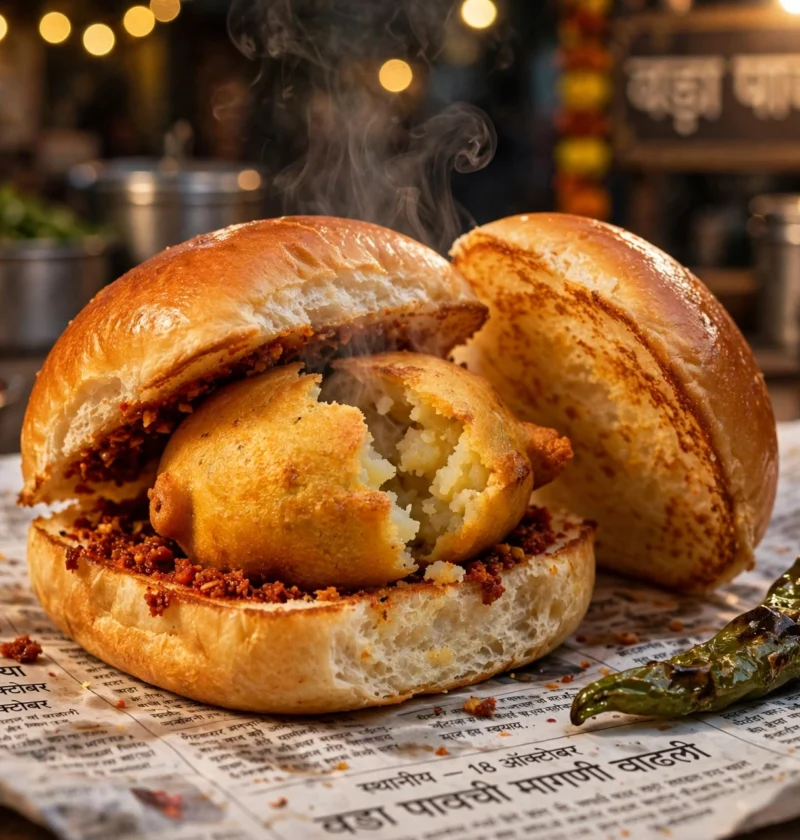
The local train had barely sighed to a stop at Dadar when the smell reached me through the open doorway — hot besan, mustard seeds, frying chillies. I followed it to a platform stall where a man worked two kadhais and a tawa in rotation, slapping golden potato vadas into slit pav buns faster than the queue could pay. He wrapped mine in a square of newspaper, tucked a fried green chilli on top like a signature, and I ate it standing in monsoon drizzle while trains announced themselves around me. It cost less than the change in my pocket and it completely ruined every other snack for me that trip. This vada pav recipe is the one I have been rebuilding at home ever since, one batch of batter at a time.
For anyone who has not met it yet: a vada pav is a ball of spiced mashed potato, dipped in chickpea-flour batter and deep-fried, served inside a soft white bun called a pav. It gets called Mumbai’s burger, but do not confuse it with Karachi’s bun kabab, which hides a shami — a lentil-and-meat patty — inside its bun; the vada is pure potato and proudly vegetarian. It is not a samosa in a bun either, however familiar that fried, spiced comfort feels. Two things define it and neither is negotiable: a coarse, fiery dry garlic chutney smeared inside the pav, and a whole fried green chilli served on the side, to be bitten between mouthfuls if you are brave.
Why This Vada Pav Recipe Works
Most home vada pav disappoints in predictable ways — a greasy coat, a bland middle, a bun that gives up. Five habits from that platform stall keep my vada pav recipe honest:
- The potatoes are mashed rough, never smooth. You want a fork-mashed filling with small lumps still in it, not a purée. Lumps mean texture in every bite and a filling that holds its ball shape instead of slumping in the batter.
- The tempering is fast, hot and generous. Mustard seeds, curry leaves, ginger and green chilli hit the oil for under a minute before the potato goes in. That brief, fierce blooming is where the vada’s perfume comes from — cook it gently and it never arrives.
- The batter coats a finger before it coats a vada. Besan batter should fall off a spoon in a thick ribbon, closer to cake batter than to crepe batter. Too thin and it fries into a greasy veil; too thick and you bite through armour to reach the potato.
- The garlic chutney is dry on purpose. No water, no oil bath — just garlic, coconut, peanut and chilli pounded coarse. A wet chutney would soak the pav and slide off the vada; the dry kind clings, and its raw garlicky heat is the sandwich’s whole personality.
- The pav is butter-toasted and the sandwich is pressed. Thirty seconds cut-side down on a buttery tawa warms the crumb and crisps the edges; a firm press then marries vada, chutney and bun into one bite instead of three.
Ingredients
Vada pav was born as working people’s food in Mumbai — cheap, filling, eaten one-handed between trains — and the ingredient list still reads that way. Everything is humble: potatoes, besan, garlic, chillies, a soft bun. The one ingredient worth a small hunt is proper ladi pav, the pull-apart white rolls sold in desi bakeries; soft dinner rolls are an honest substitute. Buy potatoes that mash dry and floury rather than waxy salad kinds, and use fresh besan — chickpea flour kept open for months tastes dusty in the fry.
Serves 4
For the potato vada filling:
- 4 medium floury potatoes (about 1 1/2 pounds), boiled whole and peeled while warm
- 2 tablespoons neutral oil
- 1 teaspoon black mustard seeds
- 10 to 12 fresh curry leaves
- 1 tablespoon finely grated fresh ginger
- 2 to 3 green chillies, minced fine
- 3 garlic cloves, minced to a paste
- 1/2 teaspoon ground turmeric
- 1 pinch asafoetida (hing), optional but traditional
- 3/4 teaspoon salt, more if the potatoes need it
- 2 tablespoons chopped fresh coriander leaves
- 1 tablespoon lemon juice
For the besan batter:
- 1 cup besan (chickpea / gram flour), sifted
- 1/2 teaspoon red chilli powder
- 1/4 teaspoon ground turmeric
- 1/2 teaspoon salt
- 1 pinch baking soda
- About 1/2 cup water, added gradually
- Oil, for deep-frying (about 3 cups in a kadai or deep pan)
For the dry garlic chutney:
- 10 to 12 garlic cloves (about 1/4 cup)
- 1 teaspoon oil
- 1/4 cup desiccated coconut
- 2 tablespoons roasted peanuts
- 1 tablespoon white sesame seeds
- 1 1/2 teaspoons red chilli powder
- 1/2 teaspoon salt
For assembly:
- 4 ladi pav buns (soft dinner rolls work in their place)
- 2 tablespoons soft butter
- 4 to 6 whole green chillies, stems on, for frying
- Green coriander-mint chutney, optional, for the second smear
How to Make This Vada Pav Recipe – Step by Step
Step 1: Make the dry garlic chutney first, while everything is calm. Warm the teaspoon of oil in a small pan and fry the garlic cloves over low heat until they turn pale gold at the edges and smell sweet rather than raw, about 3 minutes. Tip in the desiccated coconut, peanuts and sesame seeds and toast for one more minute, stirring constantly — coconut burns while you are still deciding it looks fine. Take the pan off the heat, stir in the chilli powder and salt, and let the mixture cool completely. Pound it in a mortar or pulse it in a grinder in short bursts until you have a coarse, rust-red crumble, nothing powdery about it. Set it aside; it keeps for weeks and this vada pav recipe is only its first outing.
Step 2: Temper the spices and mash the potato filling. Heat the 2 tablespoons of oil in a wide pan until it shimmers, then add the mustard seeds and let them crackle. Drop in the curry leaves, ginger, green chillies and garlic, and stir for 30 to 40 seconds until the raw smell lifts. Scatter in the turmeric and asafoetida, then add the boiled potatoes, breaking them into the pan with your hands or a fork. Mash roughly as you toss — small lumps are welcome, glue is not. Season with salt, fold through the coriander and lemon juice, and cook for 2 minutes more so the filling dries slightly. Spread it on a plate to cool, then roll it into 4 firm balls, each about the size of a lime.
Step 3: Whisk the batter to ribbon stage and rest it. Put the sifted besan in a bowl with the chilli powder, turmeric, salt and baking soda. Add the water a splash at a time, whisking hard to keep lumps out, until the batter falls from the whisk in a slow, thick ribbon and coats the back of a spoon without running off. It should feel one notch thicker than you expect; it thins slightly as it stands. Rest it for 10 minutes while the frying oil heats — rested batter clings better and fries crisper than fresh-whisked batter.
Step 4: Fry the vadas, then blister the chillies in the same oil. Heat the oil in a kadai or deep pan to about 350°F — a drop of batter should sizzle up immediately and turn golden in under a minute. Roll each potato ball in the batter until completely coated, let the excess drip for a second, and lower it gently into the oil. Fry two per batch for 3 to 4 minutes, flipping once halfway, until the crust turns a deep, even gold and sounds crisp when tapped. Drain on a rack or kitchen paper. While the oil is still hot, slit each whole green chilli lengthwise, toss them in for 30 seconds until their skins blister white, then lift them out and sprinkle with a pinch of salt.
Step 5: Toast the pav, build the sandwich, press and serve. Split each pav horizontally, keeping a hinge. Melt the butter on a flat tawa or skillet and lay the buns cut-side down for about 30 seconds, until the faces are golden and the edges crisp. Smear the inside generously with dry garlic chutney — a teaspoon or more per bun — and a swipe of green chutney if you are using it. Set a hot vada in the middle, press the top down firmly with your palm so the sandwich settles into itself, and serve immediately with a blistered chilli riding on top, exactly the way the platform stall sent mine out.
Serving Suggestions
Serve vada pav the second it is built. The whole pleasure of the sandwich is contrast — crisp coat against soft bun, mellow potato against raw garlic heat — and every minute of waiting blurs it. A glass of hot masala chai is the classic partner, and in my house extra dry chutney sits in the middle of the table because someone always opens their bun and adds more. Eat the fried chilli the Mumbai way: a bite of chilli, then a bite of sandwich, letting the two heats argue it out.
If street food is the mood, build a whole stall-style spread around this vada pav recipe. My misal pav is Maharashtra’s other great pav plate — fiery sprouted-bean curry where this sandwich is dry and hand-held — and a basket of hot, crackling samosa with imli chutney rounds the table out from the crisp corner. Pav, curry, pastry: put all three down together and nobody will ask what else is for dinner.
Storage and Reheating
The assembled sandwich does not keep — the pav drinks moisture from the vada and the crisp coat goes quiet within the hour — so store the parts, never the whole. Fried vadas keep in an airtight box in the fridge for up to 2 days; reheat them at 375°F for 5 to 6 minutes in a hot oven, or a couple of minutes less in the air fryer, and the crust comes back genuinely crisp — far better than the microwave, which leaves the batter leathery. The dry garlic chutney is the keeper of this vada pav recipe: sealed in a jar it stays good for 3 to 4 weeks in a cool cupboard, and I make a double batch purely so weekday eggs and sandwiches can borrow it. Uncooked potato balls freeze well for a month — thaw, batter and fry as normal. Buy or bake the pav the day you serve; a stale bun is the one shortcut this sandwich refuses to forgive.
Frequently Asked Questions
Why did my vada coating turn out soft and greasy instead of crisp?
Two culprits cover nearly every case: batter that was too thin, and oil that was not hot enough. Thin batter absorbs oil instead of sealing against it, and vadas in lukewarm oil sit there drinking grease while they cook. Whisk the batter to a thick ribbon, test the oil with a droplet first, and fry in small batches so the temperature does not crash.
Can I make this vada pav recipe in an air fryer instead of deep-frying?
You can, with one honest compromise. Spray the battered balls well with oil and air-fry at 375°F for 12 to 14 minutes, turning halfway; the coat sets firm and golden and the inside stays soft. What you lose is the shattering, slightly puffy crust that only submersion gives. For a weeknight it is a fair trade; for guests, I still fill the kadai.
What is the difference between a vada pav and a bun kabab?
Geography and filling both. The bun kabab is Karachi’s street sandwich, built around a shami kabab — a spiced patty of lentils and meat — with raita-style chutneys. The vada pav is Mumbai’s answer and entirely vegetarian: a besan-battered ball of tempered potato, its dry garlic chutney, and that fried green chilli on the side. Same idea of a bun doing street work; completely different sandwich.
I cannot find ladi pav. What bun should I use?
Any soft, slightly sweet white roll gets you most of the way there — dinner rolls, potato rolls or small brioche buns all work. What matters is softness: the bun should yield when pressed and never fight the vada. Avoid crusty rolls — a hard crust turns every bite into a wrestling match and squeezes the filling out of the back.
Recipe Summary
- Prep time: 30 minutes
- Cook time: 15 minutes
- Total time: About 45 minutes, all in
- Servings: 4
- Cuisine: Pakistani
- Course: Main Course