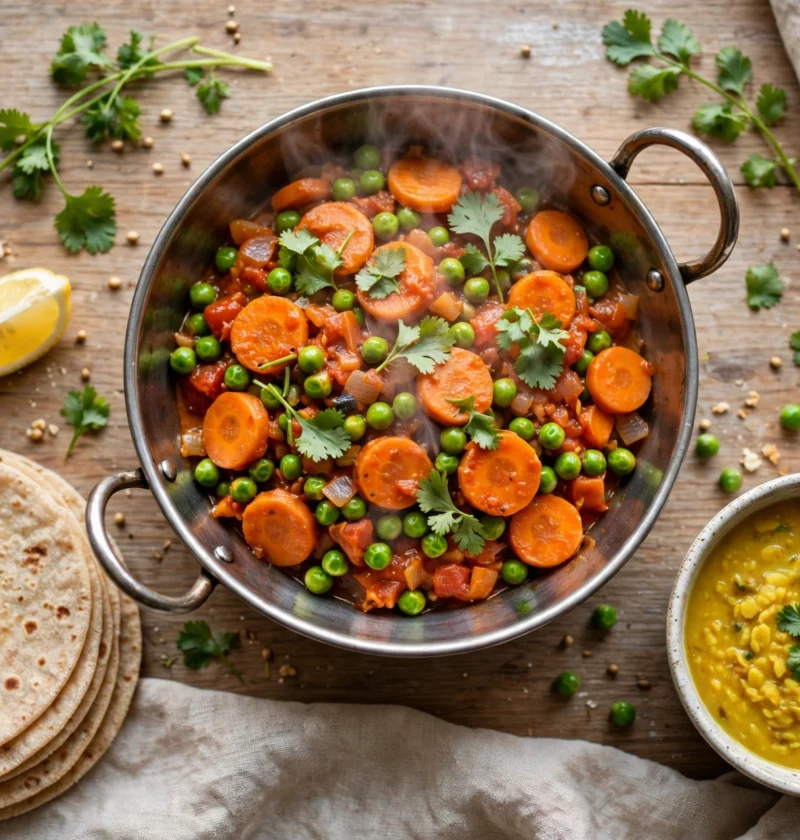
There is a week or two every winter when the sabzi wala’s cart turns almost entirely orange. The red carrots arrive — long, sweet, deep-coloured desi gajar that only show up in the cold months — and my mother would buy them by the kilo with the air of a woman who had been waiting all year. That night, without discussion, dinner was this gajar matar recipe: carrots and peas in a masala so light it barely counts as one, served with whatever daal was already on the stove and a pile of hot rotis. Nobody took a photograph of it. Nobody ever needed to. It was simply what winter tasted like at our house.
I have cooked far fancier sabzis since then, with cream and kasuri methi and restaurant ambitions, but this is the plate I measure them all against. The carrots stay sweet and hold their shape, the peas stay green, and the whole dish tastes of the vegetables themselves rather than the spice box. It is also, I should confess, the sabzi my family requests most often — not the paneer, not the special-occasion curries, but this plain weekday pot. It costs almost nothing to make, which in a winter when everything else in the bazaar seems priced for somebody’s export business is its own small mercy. There is a lesson in that, and it took me years of overcomplicating dinner to learn it: a gajar matar recipe does not need improving. It needs protecting from anyone who wants to improve it.
Why This Gajar Matar Recipe Works
Two vegetables, one small masala, and about half an hour — the dish is simple, but it is not careless. This gajar matar recipe is built around the few decisions that separate a bright, sweet sabzi from a dull, watery one:
- The carrots get a head start over the peas. Carrots are dense and need real cooking time; peas need almost none. Giving the carrots ten minutes alone in the masala before the peas join means both finish at the same moment — tender coins, bright peas — instead of sweet mush beside raw pods.
- The sabzi cooks covered, in its own moisture. A lid and a low flame turn the pot into a small steam room, so the carrots soften in the tomato juices and their own sweetness rather than a flood of added water. What little gravy forms is concentrated, not diluted.
- The masala stays deliberately light. Cumin, ginger, one tomato and the gentlest hand with chili — that is the whole supporting cast. A heavy onion-tomato base would bury the carrots; this one seasons them and steps aside, which is exactly what a supporting masala should do.
- Sugar is a rescue, never a routine. Proper winter red carrots are sweet enough to need nothing. The pinch of sugar exists only for pale, out-of-season carrots that taste more of water than of carrot — taste first, and add it only if the pot honestly asks.
- Lemon and coriander go on at the table end. A squeeze of lemon over the finished sabzi wakes up every other flavour without any cooking at all, and fresh coriander added off the heat keeps its colour and perfume instead of wilting into the steam.
Ingredients
The carrot at the centre of this dish deserves a moment of respect: the long red winter carrots of South Asia are a different creature from the squat orange ones sold year-round — sweeter, juicier, and coloured all the way through, which is why halwa and this sabzi both wait for their season. The humble pea is the carrot’s oldest partner in our kitchen, and frozen peas are one of the few frozen vegetables I use without a single apology — they are picked and frozen sweet, and they hold their green better than tired fresh pods. Beyond those two, everything here is the everyday desi base: oil, cumin, ginger, one onion, one tomato. This gajar matar recipe asks for nothing you do not already own.
Serves 4
The vegetables:
- 1 1/2 pounds carrots (about 5 large), peeled and cut into 1/4-inch coins
- 1 1/2 cups green peas, fresh or frozen
- 2 to 3 fresh green chilies, slit lengthwise
For the light masala:
- 2 tablespoons neutral oil or ghee
- 1 teaspoon cumin seeds
- 1 small onion (about 3/4 cup), finely chopped
- 1 tablespoon finely grated fresh ginger
- 1 large tomato (about 1 cup), finely chopped
- 1/2 teaspoon ground turmeric
- 1/2 teaspoon red chili powder, or to taste
- 1 teaspoon ground coriander
- 1/4 cup water, added only if the pan looks dry
- 3/4 teaspoon salt, or to taste
- 1/2 teaspoon sugar (optional — only for pale, unsweet carrots)
To finish:
- 1/2 teaspoon garam masala
- 1 tablespoon fresh lemon juice
- 1/4 cup fresh coriander leaves, roughly chopped
How to Make This Gajar Matar Recipe – Step by Step
Step 1: Bloom the cumin and soften the onion. Warm the oil in a wide pan or karahi over medium heat and drop in the cumin seeds; give them about 30 seconds, until they darken a shade and smell nutty. Add the chopped onion and cook it for 5 to 6 minutes, stirring now and then, until it is soft, translucent and just catching gold at the edges. You are not browning a curry base here — the onion only needs to lose its rawness and turn sweet, because anything darker would start bossing the carrots around.
Step 2: Add the ginger, tomato and ground spices. Stir in the grated ginger and let it fry for a minute, until the sharp smell mellows. Tip in the chopped tomato, turmeric, chili powder, ground coriander and salt, and cook the mixture for 4 to 5 minutes, mashing the tomato down with your spoon, until it collapses into a soft, glossy sauce and a little oil glistens at the edges. It will look like less masala than you expect. That is correct — in this gajar matar recipe the masala is a coating, not a swimming pool.
Step 3: Give the carrots their head start, covered and low. Add the carrot coins and stir them through the masala until every piece wears a little of it. Splash in the water only if the pan looks dry — winter carrots usually release enough of their own juice. Clamp the lid on, turn the heat to low, and let the carrots cook for 10 to 12 minutes, lifting the lid once or twice to stir. They should be nearly tender when you test one: a knife should slide in with just a whisper of resistance left.
Step 4: Peas in for the final few minutes. Scatter the peas and the slit green chilies over the carrots, fold them through, and cover the pan again for 4 to 5 minutes more. Frozen peas need nothing beyond warming through and a brief steam; fresh peas may want a minute extra. The moment the peas are bright green and tender and the carrots are fully soft, the cooking is finished — another five minutes would only grey the peas and start collapsing the coins.
Step 5: Finish off the heat and serve it plain. Take the pan off the stove, sprinkle the garam masala over the surface, and stir through the lemon juice and chopped coriander. Rest the sabzi, covered, for 2 minutes so the flavours settle, then taste and adjust the salt. Serve this gajar matar recipe straight from the pan while the colours are still loud — orange and green, glossy with just enough masala to shine, and no puddle of gravy anywhere in sight.
Serving Suggestions
This sabzi was built for the classic weekday thali: a bowl of it beside yellow daal, plain steamed rice or hot rotis, a wedge of lemon and perhaps a green chili on the side for whoever runs hotter than the rest of the table. It is gentle enough to sit next to almost anything — I have served it beside fried fish on a Friday and beside nothing but daal and roti on a tired Tuesday, and it has never once felt out of place. A spoonful of plain yogurt on the side of the plate is my mother’s habit, and on a winter night it is a good one.
Within the family of everyday sabzis, this pot has close cousins worth rotating through the week. My aloo matar swaps the carrots for potatoes in a slightly heartier masala — the version to make when the crowd is hungrier — and a bowl of daal tadka beside either of them is the pairing our table returns to all winter long. Carrots one night, potatoes the next, daal underneath it all: that small rotation has carried more family dinners than any recipe book I own.
Storage and Reheating
Leftover gajar matar keeps in the fridge, sealed, for up to 3 days, and it reheats kindly — the carrots soften a touch more but the flavours settle into each other overnight in a way nobody complains about. Warm it gently in a lidded pan on the lowest flame, adding a splash of water, until it steams through, or give it short bursts in the microwave with a stir between. It freezes acceptably for up to a month, though the peas lose some of their spring; if you plan to freeze a batch, undercook the peas slightly. A fresh squeeze of lemon and a pinch of coriander over the reheated plate brings the colours and brightness most of the way back.
Frequently Asked Questions
Can I make this gajar matar recipe with frozen carrots and peas?
Frozen peas are ideal here, as this recipe says. Frozen carrots work in a pinch but disappoint a little — they are usually cut from blander varieties and turn soft faster than fresh winter carrots, so give them a shorter head start, about 6 minutes instead of 10, and check them early. When the red winter carrots are actually in the bazaar, they are worth every rupee of the difference.
Why did my sabzi turn watery?
Almost always too much water added at the start, or a lid left on over high heat so the vegetables boiled in the steam they made. This sabzi should cook low and covered with at most a splash of water — the tomato and the carrots provide the rest. If a finished batch looks soupy, take the lid off and let it bubble gently for 3 to 4 minutes until the extra liquid cooks away and the masala clings again.
Should I add the sugar or not?
Taste a carrot coin before you decide. Sweet red winter carrots need no help at all, and adding sugar to them makes the dish taste candied. Pale, woody, out-of-season carrots are another matter — a half teaspoon balances their flatness and coaxes out whatever sweetness they have. The sugar is a correction, not an ingredient; let the carrots vote.
Can I add potatoes or paneer to stretch this dish?
You can, and many families do — but know that it becomes a different sabzi with a different name at that point. Potatoes turn it toward aloo gajar matar and want a slightly bigger masala; paneer makes it richer and more of an occasion dish. This plain version exists for the nights when the vegetables themselves are the point, and on those nights I would rather stretch the meal with an extra roti than change the pot.
Recipe Summary
- Prep time: 15 minutes
- Cook time: 30 minutes
- Total time: About 45 minutes
- Servings: 4
- Cuisine: Pakistani
- Course: Main Course