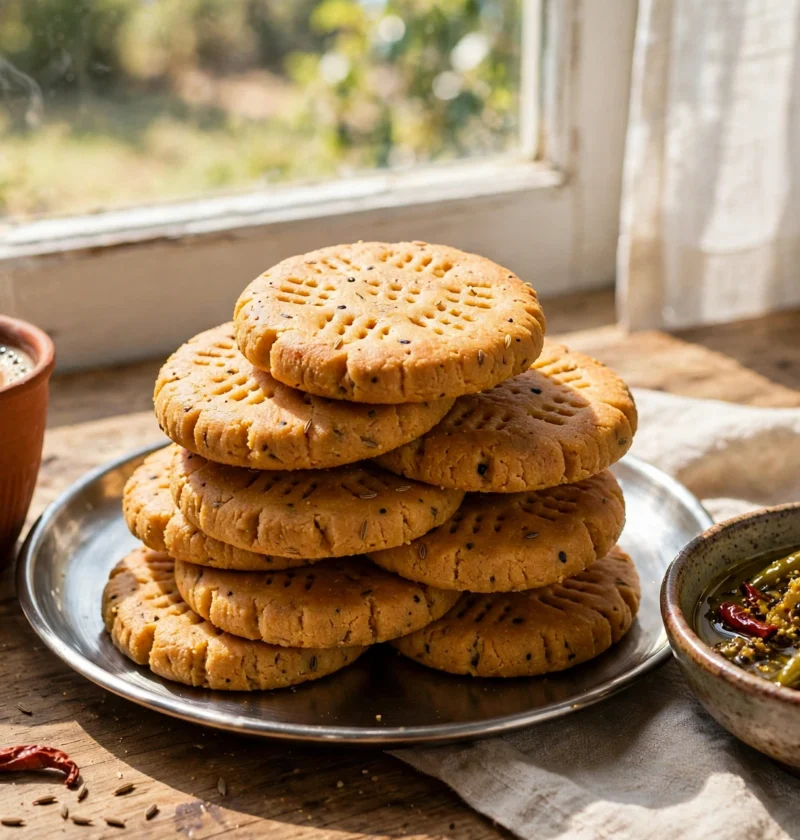
The mathri jar in my grandmother’s kitchen sat on the highest shelf, which told you everything about how precious it was. Nobody reached for it casually. It came down at tea time, or when a guest arrived unannounced, or on long train journeys when the whole family needed something solid to nibble. I remember the sound of it most of all: a dry, satisfying crack when you broke a disc in half, then the warm, peppery smell of ajwain rising off the crumbs. This mathri recipe is my attempt to recreate that jar, tested batch after batch until the crackers came out exactly right — thick, golden, flaky through the middle, and still crisp three weeks later.
What makes mathri different from every other cracker in the Indian snack drawer is its heft. These are not thin, shattering crisps. A proper mathri is a sturdy round disc, rolled thick, pricked all over with a fork so it does not puff up, and fried slowly until the centre dries out completely. That thickness is the whole point: it gives the cracker a dense, layered bite that stands up to a smear of pickle or a dunk in hot chai without falling apart. Once you understand the two things that matter — plenty of fat rubbed into the flour, and a gentle fry — this mathri recipe becomes one of the most reliable snacks you will ever make.
Why This Mathri Recipe Works
- Generous moyan makes the layers. Rubbing ghee and oil deep into the flour before any water goes in coats every particle, so this mathri recipe bakes up short and flaky instead of hard or bready.
- Ajwain and kasuri methi season every bite. The carom seeds bring warmth and the dried fenugreek brings a faint bitterness, which is why this mathri recipe tastes seasoned all the way through, not just on the surface.
- Fork pricks keep the discs flat. Docking each round stops steam from puffing it into a poori, giving this mathri recipe its signature dense, even crumb.
- Thick rolling means a real crunch. Rolling to nearly a quarter inch thick is what separates mathri from thin crackers, and it is why this mathri recipe survives weeks in a jar.
- Low frying dries the centre fully. A gentle oil temperature lets moisture escape slowly from the thick discs, so this mathri recipe stays crisp instead of softening from the inside out.
Ingredients
The pantry list is short, and the only choice worth pausing over is the fat. Pure ghee gives the richest flavour, but a mix of ghee and neutral oil fries a little lighter and still tastes traditional. I use half of each. The flour, too, deserves a note: plain all-purpose flour makes the classic version, while a spoonful or two of semolina adds a grainy crunch that many old recipes swear by. This mathri recipe was tested with both, so use whichever your shelf already holds.
- 2 cups all-purpose flour
- 2 tablespoons fine semolina (optional, for extra crunch)
- 1/4 cup ghee, melted
- 2 tablespoons neutral oil, plus more for deep frying
- 1 teaspoon ajwain (carom seeds), lightly crushed
- 1 tablespoon kasuri methi (dried fenugreek leaves), crushed between the palms
- 1 teaspoon salt, adjust to your taste
- 1/2 teaspoon cracked black pepper
- 1/4 teaspoon baking soda (optional, for a slightly lighter crumb)
- About 1/2 cup lukewarm water
- Chilli pickle, to serve
On the kasuri methi: crush it well before it goes into the bowl, rubbing the leaves between your palms until they turn to fragrant flakes. Whole leaves stay in clumps and leave bare patches in the dough, while crushed leaves spread their flavour everywhere. If you have never used dried fenugreek before, do not worry about its strong smell in the packet; once fried into the cracker it mellows into a savoury, almost nutty note that makes this mathri recipe taste complete rather than plain.
Method
Step 1: Rub the fat into the seasoned flour
Tip the flour and semolina into a wide bowl and stir in the salt, crushed ajwain, kasuri methi, black pepper, and baking soda if you are using it. Pour in the melted ghee and the oil, then work the mixture with your fingertips for three or four minutes, lifting and crumbling it again and again. You are finished when a squeezed handful holds its shape for a second, then falls apart when you nudge it. This rubbing stage is the quiet foundation of this mathri recipe: the fat shortens the gluten, and without it the crackers turn tough instead of flaky.
Step 2: Knead a firm dough and let it rest
Add the lukewarm water a splash at a time, gathering the crumbs into a dough that is noticeably firm — stiffer than bread dough, stiffer even than chapati dough, and never sticky. Knead it on the counter for five minutes until it feels smooth and tight, then cover it with a damp cloth and rest it for thirty minutes. The rest matters more than it looks: it lets the flour hydrate fully and the gluten relax, so the thick discs in the next stage of this mathri recipe roll out evenly instead of springing back.
Step 3: Roll thick rounds and prick them well
Divide the rested dough into twelve equal balls. Roll each ball into a round disc about three inches across and nearly a quarter inch thick, turning it often so it stays even. Do not roll thin — thin discs become a different snack entirely. Prick every disc generously all over with a fork, pressing right through, in a neat pattern of holes. This docking is not decoration; it lets steam escape during frying, which keeps each disc of this mathri recipe flat, dense, and evenly cooked.
Step 4: Fry gently until deep golden
Warm plenty of oil in a heavy kadhai over a medium flame, then test it with a pinch of dough: it should sink, then float up slowly with lazy bubbles around it. Gently lower four or five discs into the oil, leaving space between them so they fry evenly, and keep the flame low to medium for eight to ten minutes, turning once or twice, until they turn a deep golden brown and the bubbling around them nearly dies away. That quiet oil tells you the moisture has left the thick centre. Lift the discs out with a slotted spoon and drain them on a wire rack. Should a batch colour in under four minutes, the oil is running too hot and the middles will stay soft, so turn the flame down before frying the next lot of this mathri recipe.
Step 5: Cool completely before storing
Let the fried discs cool fully on the rack — they harden and sharpen as the temperature drops, so hold off tasting until they are cold. Once cold, taste one: it should snap cleanly and crumble into dry, flaky layers, with no soft or doughy centre. Pack them into an airtight jar or tin, layered between sheets of paper if you like, and keep the jar in a cool, dry spot. The patience of this final stage is what gives this mathri recipe its famous shelf life.
Serving Suggestions for This Mathri Recipe
At my house, this mathri recipe needs nothing more than a hot cup of chai and a spoonful of sharp pickle. I break a disc in half, spread on a little chilli pickle, and let the heat of the pickle play against the peppery cracker. It is also the snack I pack for road trips and school tiffins, because it does not crumble to dust in a bag, does not go stale overnight, and still tastes wonderful on day ten, straight from the tin.
For guests, build a small tea-time plate around it. Serve this mathri recipe on a steel plate with a bowl of mirchi ka achar, a few slices of onion, and a pot of masala chai, and the spread feels generous without any extra cooking. The thick discs also make a fine base for a quick chaat: crush one over yogurt and chutneys for crunch, or split one and layer it with cheese and tomato for a desi-style cracker sandwich on a lazy evening.
Storage and Reheating
Mathri was made to last, and a good batch rewards a little care in storage. Keep this mathri recipe in a dry steel dabba or glass jar with a tight lid, lined with a sheet of paper to catch any stray oil, and leave the container in a cool cupboard for three to four weeks. The discs will hold their snap the whole time as long as nothing damp touches them — so always use dry hands and a dry spoon, and never leave the lid off on a humid day.
Should a batch lose a little of its edge after weeks in monsoon air, lay the discs on a baking tray and slide them into a low 275°F oven for about eight minutes, then leave them on the tray until fully cold before they go back in the tin. The gentle heat pulls the dampness out and restores the crackle. Skip the microwave, which turns them leathery, and keep them out of the refrigerator, where damp air ruins the crunch this mathri recipe works so hard to build.
Mathri Recipe FAQs
Is mathri the same as namak para?
No, and the difference is in the shape and the bite. Namak para is rolled thin and cut into small diamonds, so it fries up light and shattering. This mathri recipe rolls the dough much thicker and cuts it into round discs, pricked with a fork, so the cracker comes out dense, sturdy, and flaky through the middle rather than crisp all the way through. Same family, same kadhai, but a different snack on the tea tray, and the two are never interchangeable.
Is mathri the same as shakarpara?
No, and here the difference is the flavour itself. Shakarpara is the sweet cousin, made from a similar dough but sweetened with sugar, so it tastes like a dessert cracker. This mathri recipe is deliberately savoury, seasoned with salt, ajwain, kasuri methi, and black pepper, with no sweetness at all. The technique may rhyme, but the taste sits at the opposite end of the spectrum.
Why did my mathri turn soft in the middle?
Almost always, the oil was too hot or the discs came out too soon. Fierce oil colours the outside before the thick centre has dried, leaving a cracker that looks finished yet turns bendy once cold. Keep the flame gentle, fry for the full eight to ten minutes, and wait for the bubbling to fade. A disc that feels light and sounds hollow when tapped is the sign that this mathri recipe has reached full crunch.
Can I bake mathri instead of frying it?
You can, though the result is a lighter, drier cracker. Brush the pricked discs with a little oil and bake at 375°F for 18 to 20 minutes, turning them halfway, until they colour deeply. The oven version crunches nicely, but it misses the rich, layered flakiness that only a slow fry delivers. For the classic texture this mathri recipe aims for, the kadhai still wins.
Recipe Summary
You need roughly twenty minutes of hands-on work, half an hour of resting, and about thirty minutes of frying in batches. Makes 12 thick discs. Level: easy, with the generous fat rubbing and the gentle frying temperature as the only steps worth taking seriously. This mathri recipe takes flour, ghee, ajwain, and kasuri methi, and turns them into thick, golden, flaky rounds that keep for weeks and turn an ordinary cup of chai into a small celebration.
A little background for the curious: mathri is a beloved savoury cracker from North India, made in big batches in Punjabi and Rajasthani homes for festivals, weddings, and long journeys. And ajwain, the carom seed at its heart, is a bold spice Indian cooks reach for whenever a dough needs warmth and depth. A firm dough, a generous hand with the fat, and a patient fry are all the tradition asks — and that unfussy trio is exactly what you taste in this mathri recipe.