The Beetroot Halwa That Won Over the Sceptics
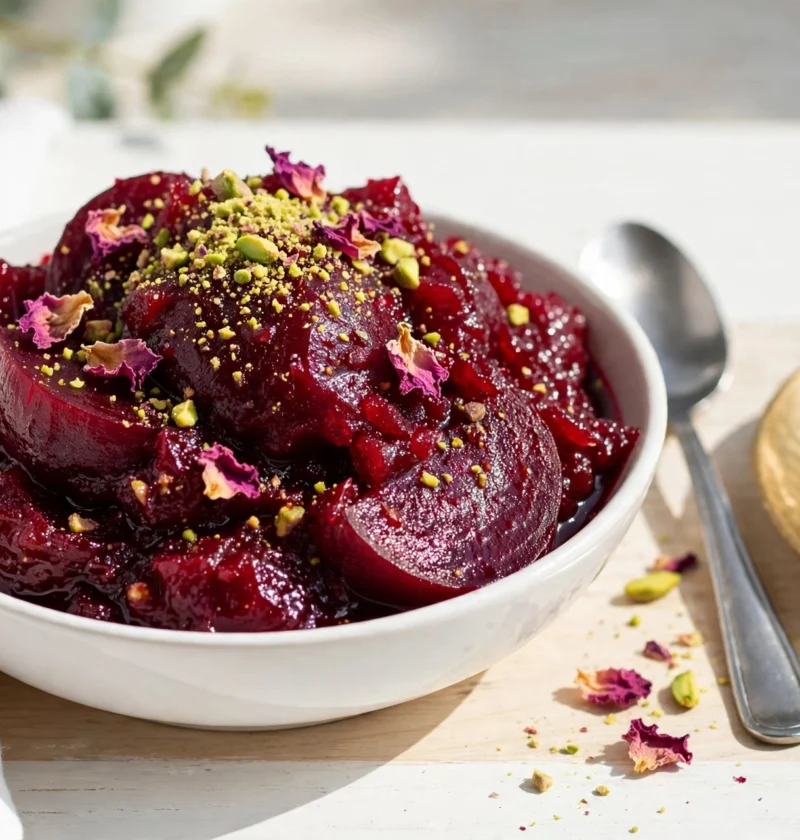
The first time someone served me this beetroot halwa recipe, I smiled politely and quietly planned to leave it untouched. Beetroot belonged in salads and juices in my mind, not in a dessert bowl, and I was certain a vegetable halwa would taste like a health lecture dressed up as pudding. Then the bowl came around the table — deep ruby-red, glossy with ghee, smelling of cardamom — and one spoonful ended the argument before it began. It was earthy but sweet, rich without being heavy, and the colour alone made the whole table lean in for a second look. That first taste is the reason this beetroot halwa recipe has become one of my favourite party desserts, the one I make when I want guests to ask what it is before they even finish the bowl.
What I learned that evening is that beetroot is almost made for halwa. It grates easily, it softens quickly, and its natural sweetness means the sugar stays modest while the colour does all the showing off. The method is forgiving too: grate, roast in ghee, simmer in milk, sweeten at the end, and finish with nuts. This beetroot halwa recipe takes about forty-five minutes from the first grate to the table, serves four generously, and turns a humble root vegetable into a dessert that looks like it came from a sweet shop window. If you have ever doubted a vegetable in a pudding, this is the bowl that changes your mind.
Why This Beetroot Halwa Recipe Works
- Grated beets cook fast and evenly: Fine grating gives the beetroot a huge surface area, so this beetroot halwa recipe softens into a jammy base in minutes instead of the long simmer a chopped root would need.
- A ghee roast deepens the flavour: Frying the grated beet in ghee before the milk goes in takes away any raw, earthy edge, which is why this beetroot halwa recipe tastes sweet and rounded rather than vegetal.
- Milk reduction makes it glossy: Simmering the beet in full-cream milk until the liquid thickens gives this beetroot halwa recipe its silky, spoon-coating body without a drop of cream.
- Sugar goes in last for a reason: Sweetening only after the beet is fully tender keeps the texture soft, so this beetroot halwa recipe never turns grainy or tough the way early-sweetened halwas can.
- Cardamom and pistachios finish the job: A little crushed cardamom perfumes the whole pot while crunchy pistachios cut the richness, and that contrast is what makes this beetroot halwa recipe feel festive rather than plain.
Ingredients for This Beetroot Halwa Recipe
One batch fills four good-sized bowls — plenty for a family pudding, or a small dinner party where everyone asks for more. Pick firm, smooth beetroots with no soft spots; smaller roots tend to be sweeter and less woody than very large ones. Peel them well, because any papery skin left on will darken the colour and add a bitter note. Full-cream milk matters here: it reduces into the halwa and gives the finished bowl its shine.
For the halwa
- 1 pound (about 450 g) fresh beetroot, peeled and finely grated
- 2 tablespoons ghee, plus 1 more for the pan
- 2 1/2 cups whole milk
- 6 tablespoons sugar, or to taste
- 5 green cardamom pods, lightly crushed, or 1/2 teaspoon ground cardamom
- 1 tablespoon condensed milk (optional, for extra richness)
For garnishing
- 2 tablespoons pistachios, roughly crushed
- 1 tablespoon almonds, slivered
- 1 teaspoon dried rose petals (optional)
- 1 tablespoon desiccated coconut (optional, for a traditional touch)
How to Make This Beetroot Halwa Recipe in 5 Steps
The road to the finished bowl has five stops, and the one cooks rush is the ghee roast. Beetroot tossed straight into milk stays faintly raw-tasting no matter how long it simmers, while a proper roast in ghee first turns the flavour sweet and deep. Roast patiently, then let the milk do the rest, and this beetroot halwa recipe is very hard to spoil.
Step 1: Grate and roast the beetroot
Peel the beetroots and run them over the fine holes of a box grater — thin ribbons, not chunks, so they soften evenly. Melt the ghee in a heavy, wide pan over medium heat and tip in the grated beet, stirring to coat every shred. Fry for 6 to 8 minutes, stirring often, until the beet darkens a shade, smells sweet rather than earthy, and the raw edge is gone. This roasting step is the quiet foundation of the whole beetroot halwa recipe, and skipping it is how most dull batches begin.
Step 2: Simmer in milk until thick
Pour in the milk and the crushed cardamom, and bring the pan to a gentle simmer over medium-low heat. Stir every minute or so, scraping the bottom so nothing catches, and let the mixture bubble quietly for 18 to 20 minutes. The milk will reduce by more than half and the beet will turn soft, jammy, and deeply red. If the pan looks dry before the beet is tender, splash in a little warm milk — this beetroot halwa recipe should stay loose and glossy at this stage, because it firms up as it cools.
Step 3: Sweeten and enrich
Once the beet is completely soft and the milk has thickened into a coating sauce, stir in the sugar and keep simmering for 3 to 4 minutes until it dissolves fully. Now add the condensed milk if you are using it, and stir once more until the halwa turns shiny and pulls away slightly from the sides of the pan. Taste and adjust the sweetness — the halwa should be sweet without being syrupy, with the cardamom still leading the flavour. Sweetening only at this point is what keeps this beetroot halwa recipe soft and glossy instead of grainy.
Step 4: Fry the nuts and fold them in
Heat the remaining spoon of ghee in a tiny pan and toast the pistachios and almonds for about a minute, just until they smell nutty and the almonds turn a pale gold. Tip half of them into the halwa and fold them through, keeping the rest for the top. The toasted nuts add crunch against the soft halwa, and frying them in ghee first wakes up their flavour in a way raw nuts never manage. Stir once more, then take the pan off the heat so the halwa stops cooking while it is still silky.
Step 5: Rest and garnish before serving
Take the pan off the heat and leave the halwa to settle for ten minutes, giving it one stir midway so no skin sets on the surface. Spoon it into bowls while still warm and scatter the reserved nuts, rose petals, and coconut over the top. Dish it up warm for a soft, comforting bowl, or refrigerate it for a couple of hours if you want it set enough to slice on the plate. That first spoonful, ruby-red and glossy with toasted nuts on top, is what this beetroot halwa recipe is all about.
Serving Suggestions
When I serve this halwa, I like it warm, in small white bowls, letting the ruby colour speak for itself, with a pot of masala chai alongside. The warm spice of the tea against the sweet, earthy halwa is a combination that turns an ordinary weeknight into a small celebration, and red halwa against a white bowl makes even a plain serving look festive. For a festive table, I serve it at room temperature in a large glass dish, so guests can see the colour before they taste a bite.
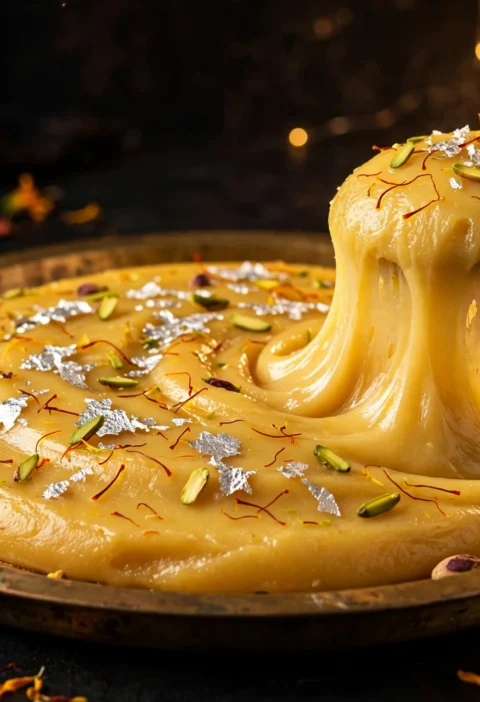
When guests come over, I put this halwa out next to its orange cousin so everyone can compare bowls. My Gajar Ka Halwa brings the classic carrot version to the same table, while my Suji Ka Halwa shows the golden semolina side of the family — and this beetroot halwa recipe sits between them as the dramatic, jewel-red dessert that disappears first. A scoop of vanilla ice cream alongside turns it into a proper celebration plate, and the hot-cold contrast is wonderful.
For a party, set the halwa in one large bowl with small bowls of extra nuts and rose petals for topping, and let guests help themselves. It also makes a lovely make-ahead dessert for Diwali or Eid gatherings, since the colour deepens overnight and the cardamom settles into the milk. This beetroot halwa recipe scales up without any fuss too: just use a wider pan so the milk has room to reduce, and give it an extra stir or two as the amount increases.
Storage and Reheating
Keep any leftover halwa in a covered container in the fridge for up to four days; it will set quite firm as it cools, which is expected. To bring it back, warm it gently in a heavy pan over the lowest heat with a splash of milk stirred in, until it softens to the texture you want, and it will taste like it was just cooked. Beetroot halwa is at its best within a day of making, when the colour is brightest and the texture is soft and glossy.
Warm it in a pan on the stove instead of the microwave, which heats in patches and can dry the edges while the middle stays cold. I would not freeze this halwa, because thawed beet turns watery and the milk separates — but the grated beet itself keeps in the fridge for a day, so you can grate ahead and cook fresh whenever the craving strikes. Grate ahead, cook at the last minute, and every bowl of this beetroot halwa recipe tastes just made.
Frequently Asked Questions
Will my beetroot halwa taste like salad?
Not if you roast the beet properly first. The ghee roast is what removes the raw, earthy flavour, and the milk reduction plus cardamom does the rest. If your halwa still tastes vegetal, it almost always means the beet went into the milk unroasted or under-roasted — give the fry a full 6 to 8 minutes next time, until the shreds smell sweet, and this beetroot halwa recipe will taste like dessert, not dinner.
Can I use canned or pre-cooked beetroot?
You can in a pinch, but the result will be softer and less vibrant. Pre-cooked beet is already wet, so skip the long milk simmer and reduce the milk by half, or the halwa turns soupy. Fresh grated beet gives the best colour and the firm, jammy texture this beetroot halwa recipe is known for, so use fresh whenever you can.
Can I make this beetroot halwa dairy-free?
Yes, with a couple of swaps. Use coconut oil in place of ghee and thick coconut milk in place of dairy milk, and skip the condensed milk or use a coconut-based version. The flavour leans more tropical, but the colour stays just as striking. Keep the heat low and the stirring steady, and this beetroot halwa recipe will still deliver its glossy texture.
How long does beetroot halwa keep?
Up to 4 days in the fridge in a sealed container, though the colour and texture are best on the first day. The halwa firms up as it sits, so loosen it with a splash of warm milk before serving. I would not keep it longer than 4 days, since milk-based desserts spoil quietly, and this beetroot halwa recipe is fast enough to cook fresh whenever the craving hits.
Recipe Summary
Allow ten minutes for grating and roasting, about twenty-five minutes at the stove, and four people are eating in roughly forty-five minutes. Each bowl runs close to 290 calories, and this dish has won a permanent place among my desserts as the ruby-red, cardamom-scented halwa that turns a sceptical table into a crowd of converts.
If you try it, I hope that first warm, glossy, nut-topped spoonful shows you why a humble root vegetable became one of my most-cooked desserts — vivid, silky, and gone long before anyone thinks to ask for seconds. If you want the backstory, read about beetroot and the wider halva tradition on Wikipedia.