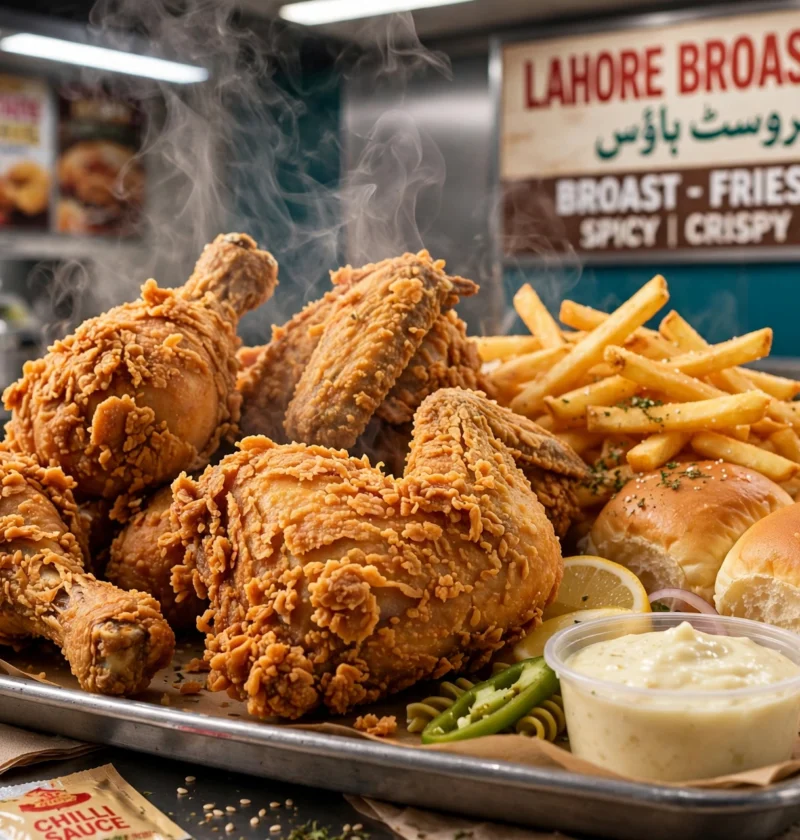
There was a broast house on our road in Lahore that my cousins and I treated like a shrine. You could smell it from two streets away — hot oil, tangy marinade, fries crisping in their basket — and the glass counter always fogged up from the trays coming out of that enormous rattling pressure fryer. We would split one order four ways, fight over the drumstick, and dip everything, even the dinner roll, into that little tub of white garlic sauce. This chicken broast recipe is my long project of bringing that tray home: chicken pieces soaked in a tangy yogurt and mustard marinade, rolled in heavily seasoned flour, and cooked until the crust shatters and the meat inside stays dripping with juice.
I will be honest about the failures, because there were plenty. My first attempt tasted like plain fried chicken wearing a costume — I had marinated for barely twenty minutes, and the signature tang, that slightly sharp, mustardy bite, simply was not there. My second batch lost its entire coating in the oil; it slid off in sad wet sheets because I dredged dripping-wet chicken and fried it immediately, so the flour never got the chance to cling. And my third try came out dark and handsome outside and stubbornly raw at the bone, because the oil was too hot and the pieces were straight from the fridge, enormous and ice-cold. So the rules in this chicken broast recipe are those three disasters, formalized: marinate long enough for the tang to move in, pat the chicken dry and let the coated pieces rest, and keep the oil at a steady, honest temperature.
Why This Chicken Broast Recipe Works
Broast is a two-act dish — a marinade that flavors to the bone, and a crust that behaves like armor. This chicken broast recipe is built so both acts succeed:
- The marinade is acidic, and it is given real time. Yogurt, lemon juice, vinegar, and yellow mustard work together for at least 4 hours, and overnight is better. The acid does not just sit on the surface — it carries the salt, garlic, and spices deep into the meat and builds that unmistakable broast-house tang. A short marinade is the single most common reason a homemade chicken broast recipe tastes like ordinary fried chicken.
- The flour coating is seasoned like it matters — because it is half the flavor. The dredge is not plain flour. It carries salt, paprika, garlic powder, black and white pepper, and a whisper of mustard powder, so every bite of crust tastes like something. A chicken broast recipe’s crust should never be a bland shell around seasoned meat.
- The coated chicken rests before it fries. Fifteen minutes on a rack after dredging lets the flour hydrate against the marinade film and set into a paste-like skin. Skip the rest and the coating swims off in the oil; give it the rest and it fries into one craggy, clinging crust — the quiet non-negotiable step of any good chicken broast recipe.
- The cook is two-stage, in spirit if not in equipment. The shops pressure-fry, which cooks the inside fast under steam while the crust crisps. At home, steady oil at 340°F (170°C) and sensibly sized pieces gets you the same contract — fully cooked, juicy meat and a crust that has had time to turn deep gold rather than scorch. A covered first few minutes in the fryer pot mimics the pressure effect beautifully.
- It is served the broast-house way. Fries, a soft dinner roll, and garlic sauce are not garnish here — they are part of the dish’s identity, the salty-crisp, cool-creamy frame the chicken was designed to sit in.
Ingredients
Serves 4 to 6
For the tangy marinade:
- 3 pounds chicken pieces on the bone (drumsticks and thighs), skin removed
- 1 cup plain yogurt, whisked smooth
- 2 tablespoons yellow mustard (prepared)
- 2 tablespoons lemon juice
- 1 tablespoon white vinegar
- 1 tablespoon ginger-garlic paste
- 1 1/2 teaspoons salt
- 1 teaspoon paprika
- 1 teaspoon red chili powder
- 1 teaspoon black pepper, freshly ground
- 1/2 teaspoon turmeric powder
For the seasoned flour coating:
- 2 cups all-purpose flour
- 1/4 cup cornstarch
- 1 1/2 teaspoons salt
- 1 tablespoon paprika
- 1 teaspoon garlic powder
- 1 teaspoon onion powder
- 1 teaspoon black pepper
- 1/2 teaspoon white pepper
- 1/2 teaspoon mustard powder
- 1/2 teaspoon red chili powder (optional, for heat)
- Oil, for deep-frying
To serve, the broast-house way:
- French fries, crisp and salted
- Soft dinner rolls
- Garlic sauce: 1/2 cup mayonnaise whisked with 1 tablespoon lemon juice, 1 small grated garlic clove, and a pinch of salt
- Ketchup and pickled green chilies (optional)
The method has a name and a history: broasting is pressure-frying — chicken cooked in hot oil inside a sealed pressure vessel — a technique patented in the 1950s and carried all over the world, where in Pakistan it took on its own accent of mustard, yogurt, and chili. It belongs to the wider family of fried chicken, but the marinade’s tang and the fine, craggy flour crust make a chicken broast recipe instantly recognizable next to its cousins: no buttermilk bath, no breadcrumbs, no cornmeal — just spiced flour, hot oil, and patience.
How to Make This Chicken Broast Recipe – Step by Step
Step 1: Marinate for the tang — hours, not minutes.
Slit each chicken piece twice down to the bone with a sharp knife; this is how the marinade reaches the middle instead of flavoring only the surface. Whisk every marinade ingredient together in a large bowl and turn the chicken through it again and again until no uncoated patch shows anywhere. Seal the bowl and refrigerate for a minimum of 4 hours, overnight if you can plan it. When a chicken broast recipe is rushed at this stage, no amount of seasoned flour later can put the tang back.
Step 2: Dredge in the seasoned flour, then rest the pieces.
Stir all the coating ingredients together in a wide tray. Lift the chicken out of the marinade, let the excess drip off, and pat each piece lightly with paper towels — damp, not wet, is what you want; that thin marinade film is the glue. Press each piece firmly into the flour mixture, turning and squeezing so the coating packs into every slit and fold. For an extra-craggy crust, dip the floured piece quickly in a bowl of cold water and dredge it a second time. Lay the coated pieces on a rack and rest them for 15 minutes, until the flour looks pasty and set rather than dusty. This rest is the difference between a crust that clings and a crust that abandons ship.
Step 3: Fry at a steady 340°F (170°C) — the home deep-fry route.
Heat 3 inches of oil in a deep, heavy pot to 340°F (170°C) and hold it there; a thermometer is not optional equipment for a chicken broast recipe, because ten degrees either way changes the ending. Lower the pieces in one at a time, never crowding the pot — four or five at most — and cover the pot for the first 4 minutes, trapping steam around the chicken the way the pressure fryer does. Uncover and continue frying, turning once, for 12 to 15 minutes total, until the crust is a deep, even gold and the juices run clear at the bone. One safety line matters: never put oil in an ordinary stovetop pressure cooker — only a purpose-built pressure fryer may fry under pressure.
Step 4: The pressure-cooker-then-crisp alternative.
On days when I want the broast texture without standing over a pot of oil, I do this. Put the marinated, uncoated chicken in an ordinary pressure cooker with 1/4 cup of water — water, never oil — and cook under pressure for 5 minutes, then let the pressure fall naturally for 10 minutes. The chicken emerges fully cooked and juicy but pale. Pat it completely dry, dredge it in the seasoned flour exactly as above, rest it 15 minutes, and give it a quick, hot fry at 375°F (190°C) for just 3 to 4 minutes, only to set and shatter the crust. The result fools most of my cousins, most of the time — the two-stage logic of this chicken broast recipe does the heavy lifting either way.
Step 5: Rest on a rack and serve the full tray.
Drain the fried chicken on a wire rack, never on paper towels, where the underside steams soft — five minutes of rest keeps the crust crisp and lets the juices settle back into the meat. Pile the broast onto a tray with the salted fries, warm dinner rolls, and the little tub of garlic sauce you whisked together while the oil heated. Serve this chicken broast recipe immediately, with ketchup and pickled chilies for the traditionalists at the table.
Serving Suggestions
A chicken broast recipe is a tray, not a plate: the chicken in the middle, fries tumbling around it, rolls for mopping up garlic sauce, and something cold and fizzy in tall glasses. It is Friday-night food, match-day food, cousin-invasion food. A simple coleslaw or sliced onion with lemon is the only fresh thing it asks for, and in our house a cucumber raita sometimes sneaks in for anyone who finds the chili doing push-ups.
It helps to know what broast is not, because Lahore loves its fried chicken in several distinct costumes. My chicken chargha is the city’s other legend — a whole bird, steamed first in its masala and then fried entire, served in one dramatic piece with no flour crust at all. And where this chicken broast recipe is mild, tangy, and built for dunking, my chicken 65 is bite-size and unapologetically fiery, all curry leaves and red chilies with no crust to slow it down. Order the chargha for a feast, the 65 for a snack with tea, and keep this chicken broast recipe for the nights when only that craggy golden crust will do.
Storage and Reheating
Broast is at its absolute best in the first twenty minutes, but leftovers keep in the refrigerator for up to 3 days in a covered container. Reheat them in an oven or air fryer at 375°F (190°C) for 8 to 10 minutes, straight from the fridge, until the crust crisps and crackles again — the microwave is forbidden territory for any chicken broast recipe, because it turns that beautiful crust to leather and sadness. A leftover chicken broast recipe also makes an excellent broast burger the next day: strip the meat, warm it in the oven, and pile it into a roll with the garlic sauce. The marinated raw chicken can be frozen in its marinade for up to a month; thaw it overnight in the refrigerator, then dredge and fry as written.
Frequently Asked Questions
Can I make this in an air fryer or oven instead?
You can come respectably close. Spray the rested, coated pieces generously with oil and air-fry at 375°F (190°C) for 20 to 24 minutes, turning once and spraying again, until crisp and cooked through. In the oven, bake on a rack at 425°F (220°C) for 30 to 35 minutes with the same oil spray. The crust will be a shade less shattering than the deep-fried version of this chicken broast recipe, but the marinade carries the flavor either way.
Why does the crust slide off some pieces while they fry?
Three habits are behind it nearly every time: the chicken went into the flour too wet, the coated pieces were fried before the flour had rested and set, or the pot was overcrowded and the temperature crashed, steaming the crust loose. Pat the chicken to damp, rest the dredged pieces the full 15 minutes, and fry in small batches — that trio rescues nearly every failed chicken broast recipe.
How do I know the chicken is cooked through at the bone?
Cut into the thickest part of the largest piece: the juices should run completely clear and the meat near the bone should be white and opaque, with no pink jelly. A thermometer makes it certain — 165°F (74°C) deep in the thigh, away from the bone. If the crust is golden but the center is not there, drop the heat slightly and give it more time rather than pulling it early — patience at the finish is written into every honest chicken broast recipe.
Can I use boneless chicken for broast?
Yes — boneless thighs are the best choice, because they stay juicy through the fry; cut them into large, even pieces and reduce the frying time to 8 to 10 minutes. Breast pieces work if you pound them to an even thickness first. Bone-in pieces remain the broast-house original, though, because the bone keeps the meat sweet and moist in a way no boneless version of a chicken broast recipe quite matches.
Recipe Summary
- Prep time: 25 minutes (plus 4 hours to overnight marinating)
- Cook time: About 30 minutes
- Total time: Around 5 hours, most of it marinating
- Servings: 4 to 6 people
- Cuisine: Pakistani
- Course: Main Course