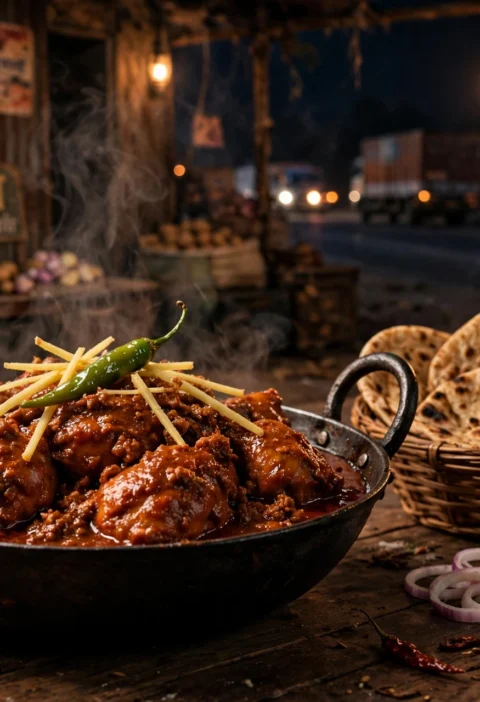
The first time I ordered chicken chaap, I did not actually order it — the waiter ordered it for me. I was nineteen, squeezed into a marble-topped table at an old Mughlai eatery off Zakaria Street in Kolkata, and I had asked only for biryani. The waiter, who had clearly settled this question a thousand times, shook his head and said, “Biryani akele nahi. Chaap ke saath.” Biryani never comes alone; it comes with chaap. What arrived was a whole leg quarter, bronzed and glistening, in a shallow pool of amber gravy that shone with ghee. I tore off a piece, dragged it through the gravy, and understood in one bite why this chicken chaap recipe has ruled Kolkata’s Mughlai tables for generations.
Chaap is named for the cut — a whole leg quarter, thigh and drumstick together, lightly flattened so it cooks evenly and drinks in marinade right to the bone. Where so many curries chop the bird into pieces, a chaap arrives whole, and the gravy matches its confidence: onion paste cooked to sweetness, poppy and cashew ground to silk, yogurt for tang, a finish of mace and kewra. It is mildly sweet, never fiery, rich in a way that feels festive rather than heavy — the dish Kolkata reaches for at weddings, Eid tables, and any Friday worth celebrating.
Why This Chicken Chaap Recipe Works
Chaap looks like restaurant food, but its secrets are patience and sequence, not skill. This chicken chaap recipe succeeds because of five habits borrowed straight from the old Kolkata kitchens:
- Whole leg quarters, scored deep. The chaap cut is not a gimmick. Three deep slashes across the thigh let the marinade reach the bone, and the bone keeps the meat juicy through the long braise in a way boneless pieces never manage.
- Poppy seed and cashew go into the marinade, not just the gravy. Ground white poppy seeds and cashews are worked into the yogurt from the start, so they tenderise as they flavour. By cooking time, that paste has melted into the sauce, giving it a body no flour or cream could imitate.
- Sattu, the quiet Kolkata binder. A spoonful or two of roasted gram flour — sattu — is the old restaurants’ trick: it keeps the yogurt marinade clinging to the chicken instead of sliding off in the pan, and thickens the gravy to a coating consistency.
- The marinade gets real time. Four hours is the honest minimum, overnight is better. Yogurt, salt and lemon work slowly on a whole leg quarter; thirty rushed minutes flavour only the surface.
- The chicken sears first, then braises in its own gravy. A hard sear in ghee lays down the bronze colour chaap is famous for, and the browned bits left in the pan become the gravy’s foundation; after that, the cooking is covered and gentle.
Ingredients
Chaap belongs to Mughlai cuisine, the courtly cooking of the Mughal kitchens in Kolkata and Lucknow — rich gravies, ground nuts and seeds, and perfume from whole spices rather than heat. Its defining seed is the poppy seed, ground white and sweet, which thickens without any of the heaviness of flour. Poppy seeds are sold as khus khus or posto in South Asian stores; where they are restricted, the FAQ below gives a substitute that works nearly as well. Everything else this chicken chaap recipe calls for — yogurt, onions, ghee, a blade of mace, a capful of kewra water — is easy to find.
Serves 4
For the chicken:
- 4 whole chicken leg quarters (about 2 1/2 pounds), skin removed
- 1 teaspoon fine salt
- 1 tablespoon lemon juice
For the marinade:
- 3/4 cup plain full-fat yogurt, whisked smooth
- 2 tablespoons white poppy seeds, soaked in warm water for 30 minutes and ground to a fine paste
- 1/4 cup raw cashews, soaked for 30 minutes and ground to a smooth paste
- 2 tablespoons sattu (roasted gram flour), or chickpea flour dry-roasted until fragrant
- 1 tablespoon ginger paste
- 1 tablespoon garlic paste
- 1 teaspoon Kashmiri red chilli powder
- 1 teaspoon fine salt, or to taste
- 1 teaspoon garam masala
- 1 teaspoon sugar
For the gravy and finish:
- 1/4 cup ghee, plus 1 tablespoon more for finishing
- 2 tablespoons neutral oil
- 2 large yellow onions, ground to a completely smooth paste (about 1 1/2 cups)
- 1 cinnamon stick (about 2 inches)
- 1/2 teaspoon ground mace (or 1/4 teaspoon grated nutmeg)
- 4 whole cloves
- 2 bay leaves
- 4 green cardamom pods, split open
- 1/4 cup warm milk
- 1 teaspoon kewra water
- 1/2 teaspoon rose water (optional)
- 1 teaspoon sugar, plus extra to balance
- Crisp fried onions and lemon wedges, to serve
How to Make This Chicken Chaap Recipe – Step by Step
Step 1: Make the pastes and marinate the chicken properly. Drain the soaked poppy seeds and grind them with a splash of their soaking water until completely smooth — gritty poppy paste is the one flaw a chaap cannot hide, so give it a full two minutes. Grind the cashews the same way. Rub the leg quarters with the salt and lemon juice, cutting three deep slashes across each thigh to the bone. Whisk the yogurt with the poppy paste, cashew paste, sattu, ginger, garlic, chilli powder, garam masala, sugar and salt, then massage this marinade into every slash and surface. Cover the bowl and chill it — four hours at the very least, a full night if the day allows. Set it on the counter half an hour before you cook, so the meat comes up toward room temperature.
Step 2: Sear the leg quarters until deeply bronzed. Lift the chicken from the marinade, letting the excess drip back into the bowl — reserve every spoonful of that marinade, because it becomes the gravy. Heat the ghee and oil in a wide, heavy pan over medium-high heat until the surface shimmers. Lay in the leg quarters, smooth side down, and do not touch them for a full 4 minutes. You are building the bronze crust that gives this chicken chaap recipe its looks and its depth. Turn once and sear the second side for 3 minutes. The chicken will still be raw in the middle; that is expected. Move the pieces to a plate; leave the pan and its browned sediment exactly as they are.
Step 3: Cook the onion paste down and build the gravy. Drop the heat to medium, add the bay leaves, cardamom, cinnamon and cloves to the same pan, and let them crackle for 20 seconds. Pour in the onion paste — it will hiss and spit — and settle in for the patient part: 12 to 15 minutes of cooking, stirring often, until the paste turns deep golden brown, smells sweet, and beads of oil surface at the edges. Lower the heat and stir in the reserved marinade a few spoonfuls at a time, letting each addition fry in before the next. This gradual marriage keeps the yogurt from splitting. Cook 5 minutes more, until the masala is thick and dark amber.
Step 4: Braise the chicken low and slow in the gravy. Return the leg quarters to the pan in a single layer, along with any juices from the plate. Spoon gravy over the tops, pour in the warm milk, and add just enough warm water to bring the sauce halfway up the chicken — the gravy in this chicken chaap recipe should coat, never drown. Cover tightly, drop the heat to its lowest setting, and braise for 30 to 35 minutes, turning the pieces once, gently, halfway through and basting them with gravy. The chicken is done when the meat pulls easily from the bone at the drumstick end and the sauce has thickened to a slow, coating pour.
Step 5: Finish with mace and kewra, then let it rest. Scatter the ground mace over the pan, sprinkle in the kewra water and rose water if using, and stir through the final tablespoon of ghee and the sugar. Taste and balance: a chaap should be gently sweet first, then savoury, the perfume arriving last. If the gravy feels flat, it wants a pinch more salt, not more spice. Switch off the heat and rest the chicken, covered, for 10 minutes — the gravy will settle onto the meat and gloss over. Serve straight from the pan, showered with crisp fried onions.
Serving Suggestions
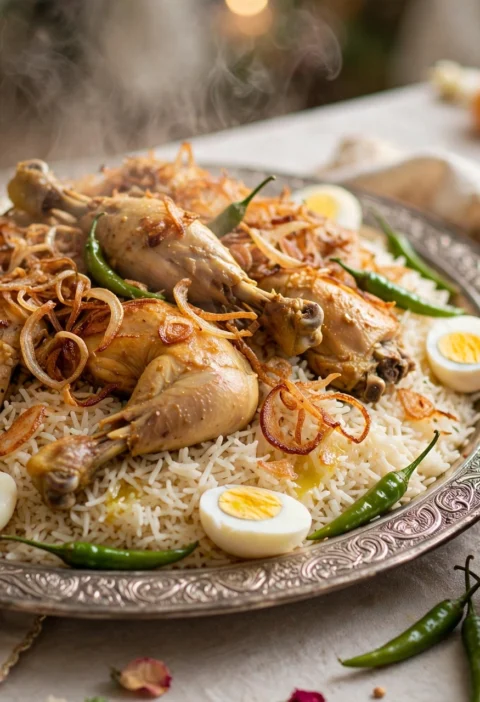
In Kolkata, chaap has one ordained partner, and it arrived on my table that first night without being asked: biryani. The dry, fragrant rice and the gravy-soaked chicken complete each other — a spoon of rice, a tear of chicken, a drag through the amber sauce, and the whole city’s food logic makes sense. My kacchi biryani is the closest match I know to what those old restaurants serve: raw marinated meat layered with rice and cooked in its own steam, so the two finish in the same breath. Add nothing more than a crunchy salad of onion rings, cucumber and chillies dressed with lemon, and a raita if the table insists — the gravy is the whole event.
If biryani feels like a project, chaap is just as happy with rumali rotis, naan or a plain pulao — anything pale and mild that carries the gravy without arguing. For a fuller Mughlai spread, set it beside my chicken rezala: the two poles of the old Kolkata kitchen, the rezala pale, silky and restrained, the chaap dark, sweet and ghee-drunk, both perfumed, neither fiery. Guests will divide into camps. Let them. A chilled firni afterwards is all the ending this meal asks for.
Storage and Reheating
This chicken chaap recipe keeps beautifully — better than most chicken curries, because the leg quarters stay moist in their thick gravy. Cool leftovers completely, store them covered in the fridge with the chicken submerged in sauce, and eat within 3 days. Honestly, a chaap made in the morning tastes deeper by dinner, and one made today peaks tomorrow, once the gravy has settled into the slashes. It freezes well too, sealed tight, for up to a month; let it thaw slowly in the fridge overnight rather than on the counter.
Reheat it the way it cooked: slowly, never at a boil. Tip the chicken and gravy into a wide pan with a splash of milk, cover, and warm over the lowest heat for 10 to 12 minutes, turning once, until the meat steams at the bone. A hard boil will grain the yogurt-cashew sauce and toughen the surface you worked to bronze. A fresh half-teaspoon of kewra water stirred through at the end wakes the perfume back up.
Frequently Asked Questions
What does “chaap” mean, and can I use other cuts?
Chaap refers to the cut — a whole leg quarter, thigh and drumstick in one piece, lightly flattened. The bone and the size are the point: they let the chicken survive a long marinade and slow braise without drying. Bone-in thighs are the best substitute and follow the same timings. Boneless breast is the one cut I would not use for this chicken chaap recipe: it dries long before the gravy is ready, and no kewra will rescue it.
I cannot buy poppy seeds where I live. What replaces them?
Poppy seeds are restricted in a few countries and some states, so you are not alone. The closest substitute is melon seeds (magaz), soaked and ground the same way — same pale body, same gentle sweetness. Failing that, use 2 extra tablespoons of cashew paste plus 1 tablespoon of white sesame seeds, ground fine. The gravy will be a shade richer, a touch less delicate, but still unmistakably chaap.
Why is chaap slightly sweet? Can I reduce the sugar?
The sweetness is structural, not decorative: all that onion paste cooks down to natural sugars, and the small added spoonful rounds the yogurt’s tang and the mace’s warmth. Traditional Kolkata chaap sits near a korma in sweetness. That said, it is your table — cut the finishing sugar if you prefer, but keep the teaspoon in the marinade, where it also helps the sear colour.
Can I make chicken chaap ahead for a party?
It is one of the best make-ahead mains I know. Cook it completely the day before, cool it in its gravy, and refrigerate it in the same pan. Reheat it covered over the gentlest heat with a splash of milk, holding back the kewra water and finishing ghee until the end — those two are the dish’s perfume, brightest added last. The raw marinade also holds a full 24 hours, so the work splits neatly across two days.
Recipe Summary
- Prep time: 30 minutes, plus at least 4 hours marinating
- Cook time: 45 minutes
- Total time: About 5 hours 15 minutes, mostly marinating
- Servings: 4
- Cuisine: Pakistani
- Course: Main Course