The first time I ate a mughlai paratha, I was standing in a slow-moving queue outside Anadi Cabin in Kolkata, close enough to the giant iron tawa to feel the heat on my face. I watched the cook stretch a ball of dough into a sheet so thin I could see through it, crack eggs into the centre, whisk them right there on the dough with onion and chillies, then fold the whole thing into a neat square parcel and slide it into shimmering oil. Two minutes later he lifted out something golden, crisp and impossibly flaky, cut it into pieces and served it with a ladle of potato curry. I went back the next evening, and the one after that. This mughlai paratha recipe is the one I finally worked out at home after that trip — my attempt to bottle a little of that cabin magic in an ordinary kitchen.
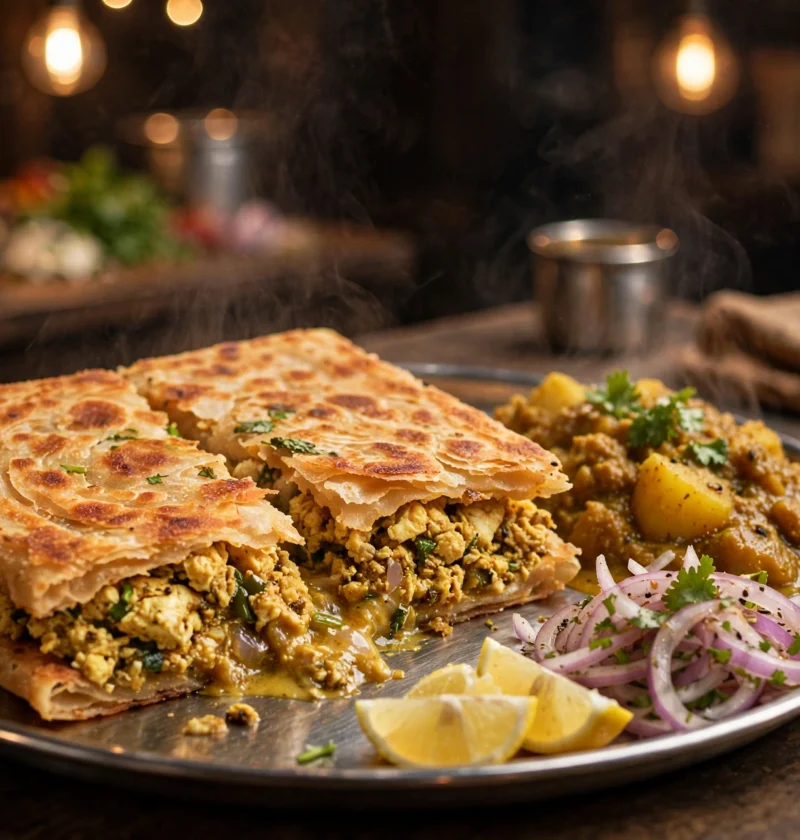
A mughlai paratha is not a regular stuffed paratha, and the difference matters. In most stuffed breads, the filling is sealed inside and rolled flat. Here, the dough is rolled almost to transparency first, the spiced beaten egg is spread over the middle, and the sheet is folded over it like an envelope before frying. The egg cooks gently inside its pastry parcel, so you get shattering, layered edges around a soft, savoury, almost omelette-like centre. It is a relic of the royal kitchens, simplified by Kolkata’s cabin restaurants into street food — rich enough to feel like a treat, humble enough to eat standing up with your fingers.
Why This Mughlai Paratha Recipe Works
Street stalls make this look effortless, but a few small disciplines separate a crisp, sealed parcel from a soggy, leaking one. This mughlai paratha recipe is built on five of them:
- The dough rests properly — twice. A short knead and a full 30-minute rest make the dough stretchy enough to roll paper-thin without tearing or springing back — the secret to that translucent sheet the cabins are famous for.
- The egg is seasoned like a keema, not a plain omelette. Onion, ginger, green chilli, roasted cumin and a whisper of garam masala give the filling the deep, savoury flavour you would expect from spiced mince — while staying egg-based and vegetarian.
- The filling goes on raw and cooks inside the parcel. Beaten egg spread thin sets quickly in the hot oil, steaming the inner layers as it firms up. Pre-cooking the egg first makes it rubbery and dry by the time the paratha is crisp.
- The envelope fold is sealed with intent. Folding opposite sides into the centre and pressing the seams with a dab of water or loose egg keeps the filling locked in, so nothing escapes into the frying oil.
- It fries in a shallow pool of oil, not a dry pan. Mughlai paratha is shallow-fried, not griddled — the oil bubbles up around the edges, puffing the layers apart and crisping every fold. Too little oil and you get a flat, leathery bread.
Ingredients
The beauty of this dish is how little it asks for. The base is a simple paratha dough — flour, salt, a pinch of sugar and oil — stretched thin the way breads have been made since the days of Mughlai cuisine, when royal kitchens layered dough with fat and folded it into delicate, flaky sheets. Everything else is already in your kitchen: eggs, an onion, ginger, green chillies and everyday spices. A few details do matter, though. For this mughlai paratha recipe, use all-purpose flour rather than whole wheat for the dough — atta makes a wholesome everyday paratha, but it will not stretch to that near-transparent thinness and fries up denser. Room-temperature eggs whisk more evenly into the spices and spread more smoothly over the dough. And if you can, fry in a mix of oil and a spoonful of ghee — the cabins mostly use oil, but the ghee adds a quiet richness that tastes like celebration.
Serves 4 (makes 4 large parathas)
For the dough:
- 2 cups all-purpose flour (maida), plus extra for dusting
- 1/2 teaspoon fine salt
- 1 teaspoon sugar
- 2 tablespoons neutral oil or melted ghee, plus more for greasing
- About 3/4 cup warm water, added gradually
For the spiced egg filling:
- 4 large eggs, at room temperature
- 1 medium onion, very finely chopped (about 3/4 cup)
- 1 tablespoon grated fresh ginger (or ginger paste)
- 2 green chillies, finely chopped (seeds removed for less heat)
- 1/4 teaspoon ground turmeric
- 1/2 teaspoon red chilli powder
- 1/2 teaspoon roasted ground cumin
- 1/2 teaspoon garam masala (or chaat masala, for tang)
- 1/2 teaspoon fine salt, or to taste
- 2 tablespoons finely chopped fresh cilantro
- 1 teaspoon lemon juice
For frying and serving:
- About 1/2 cup neutral oil, plus 1 tablespoon ghee (optional), for shallow-frying
- Spiced potato curry (alur torkari), to serve
- Onion salad with cucumber, lemon wedges and kasundi or any sharp mustard, to serve
How to Make This Mughlai Paratha Recipe – Step by Step
Step 1: Make the dough and let it rest. Stir the flour, salt and sugar together in a wide bowl, work the 2 tablespoons of oil into the flour with your fingertips until it resembles coarse crumbs, then add warm water a little at a time and bring it together into a soft, slightly tacky dough. Knead for 6 to 8 minutes until smooth and elastic — it should feel like an earlobe, not a tennis ball. Cover with a damp cloth and rest for at least 30 minutes; this rest is non-negotiable, because it is what lets you roll the dough whisper-thin later without it tearing or shrinking back.
Step 2: Whisk the spiced egg filling. While the dough rests, crack the eggs into a bowl and whisk them just until the yolks and whites are fully combined — no need for foam. Stir in the chopped onion, ginger, green chillies, turmeric, chilli powder, roasted cumin, garam masala, salt, cilantro and lemon juice. The mixture will look like a well-dressed omelette batter, and that is exactly right. Keep it near the stove; once the dough is rolled, you will work quickly, and the filling should be ready to pour.
Step 3: Roll the dough thin and lay on the filling. Divide the rested dough into 4 equal balls, grease them lightly with oil and rest them 10 minutes more under the cloth. On a lightly floured surface, roll one ball into a large, very thin sheet — roughly 10 to 11 inches across, thin enough that you can faintly see the work surface through it, with slightly thicker edges. Spoon about a quarter of the egg mixture into the centre and spread it into a rough square, leaving a generous 2-inch border of bare dough on all sides. Work calmly but without dawdling, so the egg does not soak through the thin sheet.
Step 4: Fold the envelope and seal it well. Fold the top and bottom borders of dough over the filling so they overlap in the middle, then fold in the two side flaps the same way, making a neat square parcel about 5 inches across. Press every seam down firmly with your fingertips, dabbing a little water or a smear of the egg mixture along the edges if a flap refuses to stick — a sealed seam is what stands between you and a leak in the hot oil. Set the parcel seam-side down and shape the remaining dough balls the same way.
Step 5: Shallow-fry until crisp, puffed and golden. Heat the oil (with the ghee, if using) in a wide, heavy frying pan over medium heat until it shimmers — a tiny scrap of dough should sizzle at once and rise slowly. Slide a parcel in seam-side down and fry for 2 1/2 to 3 minutes, spooning hot oil over the top as it cooks, until the underside is deep golden and crisp. Flip once, gently, and fry the second side for another 2 to 3 minutes, pressing the edges down lightly with a spatula so every fold cooks through. The paratha should puff slightly, sound crisp when tapped, and carry dark golden freckles. Drain on a rack or paper, rest one minute, and cut into quarters to serve.
Serving Suggestions
In Kolkata, a mughlai paratha is never served alone. The classic plate is a small bowl of alur torkari — a homestyle potato curry, tomatoey and mildly spiced — alongside a sharp little onion-cucumber salad with green chilli and lemon, and a smear of kasundi, the fierce Bengali mustard. The curry’s sauce soaks into the cut edges of the paratha, the salad cuts the richness, and a squeeze of lemon over everything wakes the plate up. A cup of sweet milky cha is not optional in most cabins; it is practically part of the recipe. If you are making a full street-food spread at home, this mughlai paratha recipe sits happily next to rolls, chops and chow mein on the table — but honestly, with the potato curry and salad, it is a complete meal by itself.
On mornings when a stuffed parcel feels like too much ceremony, my anda paratha is the everyday cousin — an egg-coated paratha that gives you much of the same savoury comfort in half the time. And if your house runs on stuffed breads the way mine does, my aloo paratha covers the other end of the craving: soft, potato-filled and made for dunking into yogurt. Between the three, you have a paratha for every mood — quick weekday, lazy Sunday, and this mughlai paratha recipe for the full cabin-style celebration.
Storage and Reheating
Mughlai paratha is at its best within minutes of leaving the pan, when the edges still crackle. If you must hold them, keep finished parathas in a low oven (about 200°F) on a rack for up to 30 minutes while you fry the rest — a rack, not a plate, so the undersides stay crisp instead of steaming soft. Leftovers keep in the fridge, wrapped, for up to 2 days.
To reheat, skip the microwave, which turns the layers leathery and the egg filling rubbery. Warm the paratha in a dry, heavy pan over medium-low heat for 2 to 3 minutes per side until the crispness returns, or give it 5 minutes in a 375°F oven. A leftover from this mughlai paratha recipe, reheated this way with fresh salad beside it, makes a breakfast I would happily choose over most fresh ones.
Frequently Asked Questions
Why does my egg filling leak out during frying?
Almost always, the seams were not sealed or the parcel was overfilled. Spread the egg in a thinner layer than looks right, leave the full 2-inch border, and press every fold down firmly, using a dab of water or egg as glue. Frying seam-side down first also helps, because the hot oil sets the seal before the egg has a chance to expand and push its way out.
How do I keep the paratha crisp instead of soft and greasy?
Two things: hot enough oil and patience. If the oil is merely warm, the dough drinks it up and turns heavy; it should shimmer, and a test scrap should sizzle immediately. Then resist flipping early — let the first side turn properly golden and set before you turn the parcel once. Drain on a rack rather than paper alone, so steam escapes instead of softening the crust you worked for.
Can I make the dough ahead of time?
Yes, and it actually improves. The dough keeps, well covered and lightly oiled, in the fridge for up to 24 hours; the long rest makes it even more supple and easier to roll thin. Bring it back to room temperature for 30 minutes before rolling, or it will fight the rolling pin. The egg filling, though, should be whisked fresh — chopped onion weeps and thins it out if it sits.
Can I bake or air-fry mughlai paratha instead of shallow-frying?
You can, with modest expectations. Brush the parcel generously with oil or ghee and bake at 425°F for 14 to 16 minutes, flipping once, or air-fry at 375°F for about 10 minutes. The result is lighter and pleasant, but it will not have the puffed, shattering layers of the pan-fried original — the shallow pool of oil is what separates and crisps those folds. For a first attempt, fry it the cabin way.
Recipe Summary
- Prep time: 20 minutes, plus 40 minutes resting the dough
- Cook time: 25 minutes
- Total time: About 1 hour 25 minutes
- Servings: 4
- Cuisine: Pakistani
- Course: Main Course