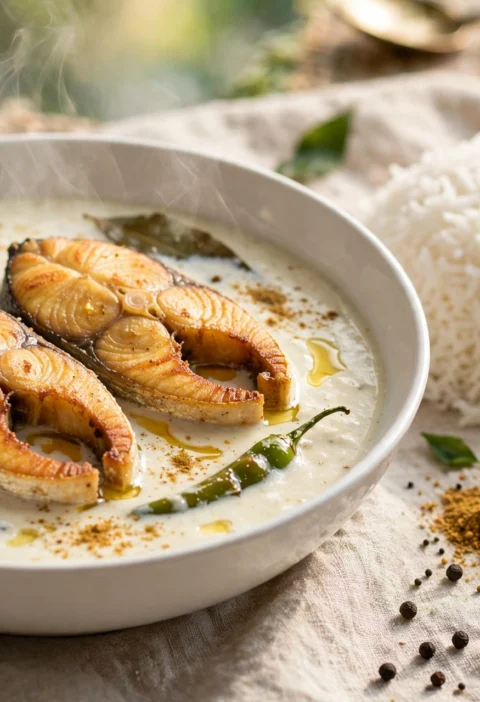
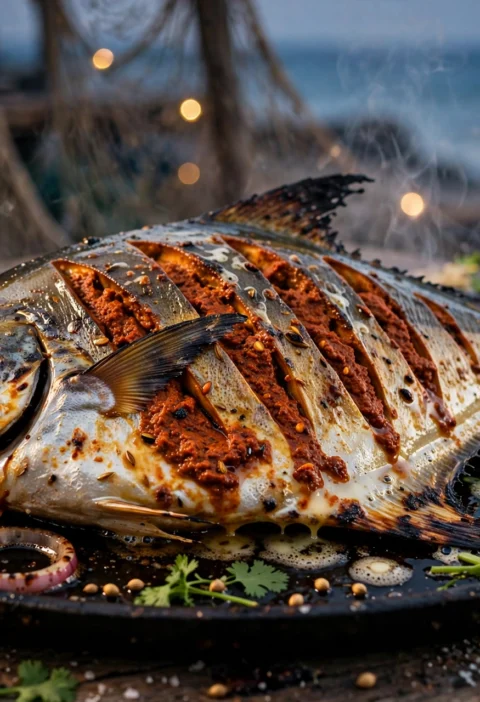
The first time I ate crab properly, I was seventeen and sitting on a plastic chair that kept sinking into the sand at a beach hut past Keamari, the Karachi harbour behind me and a platter of red-shelled crabs in front of me that looked like they might still make a run for it. My older cousin, who had ordered with the confidence of a man settling a bet, twisted off a claw, cracked it with the little hammer the waiter brought, and showed me how to dig out meat so sweet it made the fiery masala around it taste even hotter. I went home with masala under my fingernails and a permanent conviction: this crab masala recipe — shell-on, hands-on, no apologies — is the only way crab deserves to be eaten.
Let me be honest about what crab is to most of us: it is not an everyday fish, and nobody’s grandmother inland was simmering it on Tuesdays. Crab belongs to the coast — to Karachi’s harbour stalls and the fishing villages along the Sindh and Balochistan shoreline — and the rest of us adopted it the way you adopt anything that good: with enthusiasm and slightly sauce-stained shirts. Coastal cooks understood that crab is too sweet and delicate to drown in a thin curry. It wants a masala thick enough to cling to the shell, sour enough to cut the sweetness, and hot enough to send you reaching for the rice. That is the plate this crab masala recipe builds.
Why This Crab Masala Recipe Works
Crab masala fails in two ways I have personally committed: a watery gravy pooling under intact shells, and crab cooked so long the meat turns to string. This crab masala recipe is sequenced against both:
- The crabs are cracked before they meet the masala. An uncracked shell is a locked door — the sauce seasons the outside while the meat inside stays plain. One good crack in each claw and body lets the masala in, and lets you in later.
- The masala is fully fried before a single crab goes in. Crab cooks in minutes; a proper onion-tomato masala wants its own unhurried bhuno until the oil separates. Build the sauce completely first, or the crab will be finished long before the gravy is.
- The shells stay on, and they are doing flavour work. Shell-on crab turns its own cooking juices into something like a seafood stock, so the masala tastes of crab all through, not just around it. Peeled meat in sauce is a different, lesser dish.
- The simmer is short and covered, never a long boil. Eight to ten minutes once the masala is ready — enough for shells to turn red and meat to go opaque. Past that, the meat tightens, strings, and gives its sweetness up to the gravy instead of keeping it.
- Tamarind sourness is the counterweight. Crab meat is naturally sweet, almost rich. Tamarind and lemon keep every bite bright and stop the heat and sweetness from slumping flat and heavy.
Ingredients for This Crab Masala Recipe
Two things decide this dish before the stove is even lit. The first is the crab itself: around Karachi the everyday catch is the blue swimmer, sold live and feisty at the harbour, and it belongs to the family of dishes the world knows as crab curry — shell-on crab in a spiced sauce, eaten with the hands from Goa to Sri Lanka and up our own coast. Ask for medium crabs, four to six for this quantity; the very large ones look magnificent and eat stringy. The second is the souring. I use tamarind, a spoon of its dark paste stirred in at the end of the bhuno, because its fruity sourness suits crab better than vinegar or extra tomato. Mustard oil is the coastal fat of choice and gives a faint, pleasant pungency; a neutral oil works, just with a smaller voice.
For the crabs
- 2 1/2 pounds (about 1.1 kg) whole live crabs — 4 to 6 medium blue swimmer or mud crabs
- 1 tablespoon lemon juice
- 1/2 teaspoon ground turmeric
- 1 teaspoon fine sea salt
- A stiff brush, for scrubbing the shells
For the masala and finish
- 1/4 cup (60 ml) mustard oil or neutral oil
- 2 large onions (about 14 ounces / 400 g), thinly sliced
- 1 tablespoon ginger-garlic paste
- 3 medium tomatoes (about 1 pound / 450 g), finely chopped
- 1 teaspoon ground coriander
- 1 tablespoon tamarind paste, or the pulp squeezed from a walnut-size piece of block tamarind
- 2 teaspoons red chili powder
- 1/2 teaspoon ground turmeric
- 1 to 1 1/2 teaspoons fine sea salt, to taste
- 12 to 15 fresh curry leaves
- 3 or 4 fresh green chilies, slit
- 1 tablespoon julienned fresh ginger
- 1/2 teaspoon garam masala
- Lemon wedges and a handful of chopped fresh cilantro, to serve
How to Make This Crab Masala Recipe – Step by Step
Step 1: Clean and crack the crabs, kindly and practically. Put the live crabs in the freezer for 20 to 30 minutes until they go quiet and torpid — the humane way, and it makes everything after calmer. Scrub the shells under running water, then pull off the top shell, lift the little apron flap underneath and tear away the spongy grey gills — the feathery “dead man’s fingers” — which nobody eats. Twist off the claws and crack each claw and leg joint once with the back of a heavy knife or a rolling pin — one crack, not a shattering. Halve or quarter the bodies with your heaviest knife, toss everything with the salt, turmeric and lemon juice, and rest it all for 10 minutes.
Step 2: Cook the masala base until the oil rises at the edges. Heat the oil in a wide, heavy karahi or pot over medium-high heat; if it is mustard oil, let it come almost to smoking so its raw edge cooks off. Add the sliced onions and cook them down, stirring often, until they turn a deep, even gold — 10 to 12 minutes. Work in the ginger-garlic paste and fry it for a minute before the tomatoes, chili powder, coriander, turmeric and salt join. Now bhuno — cook and scrape — for 8 to 10 minutes, until the tomatoes have collapsed into a thick, dark red masala with beads of oil showing around the sides. Stir in the tamarind paste and cook one minute more.
Step 3: Add the crabs and toss them through the masala. Turn the heat up high and tip in all the crab pieces with their salty juices. Fold and toss with two spoons for 3 to 4 minutes, turning every piece through the masala until the shells are coated and beginning to blush orange-red at the edges. There will not be much liquid — the crabs release their own as they cook.
Step 4: Cover and simmer until the shells turn red and the meat is opaque. Splash in 1/4 cup (60 ml) of water, clamp the lid on, and simmer for 8 to 10 minutes, turning the pieces once halfway. They are done when the shells turn a full, confident red and a piece of body meat pulls out white and opaque. Do not stretch this timing to be safe — with crab, an extra five minutes buys you string, not safety.
Step 5: Finish the coastal way and serve it messy. Scatter over the curry leaves, slit green chilies, garam masala and ginger juliennes. Put the lid back on, take the pot off the heat, and let it sit for 5 minutes so the curry leaves perfume the steam. Pile everything into a serving dish or carry the karahi straight to the table, showered with cilantro and with lemon wedges alongside. Set out finger bowls of warm lemon water and a stack of napkins — these are not garnish; they are equipment.
Serving Suggestions
Serve this crab masala recipe the way the harbour huts do: the karahi in the middle, a mound of plain steamed basmati or zeera rice to catch the masala, and warm naan for whoever prefers to mop rather than scoop. A plain kachumber salad and something cold to drink are all the company it needs — anything richer would fight the crab. Put a small hammer or cracker at every place if you have them, and empty bowls for the shells, because the shells will come.
It helps to place this dish among its neighbours on this site. My Goan fish curry is coconut-led and proudly soupy — fish pieces in a tangy golden broth you could happily eat with a spoon. Crab masala is the opposite build: drier, thicker, a masala that clings to shells instead of a curry that pools in the bowl. And my prawn masala is the polite cousin — peeled prawns, three minutes in the pan, no tools required and no mess admitted. Crab refuses all that politeness. It is shell-on, slow at the table, and eaten almost entirely with your hands, which is not a flaw in the dish. It is the dish.
Storage and Reheating
This crab masala recipe is a cook-it, eat-it dish and I will not pretend otherwise — it peaks in the first hour, while the meat is still plump and the masala glossy. Leftovers, if your table allows any, keep in a sealed container in the fridge for 1 day, 2 at the very outside. Reheat them gently in a covered pan with a splash of water until just steaming through, about 165°F (74°C) in the centre; a hard second boil will string the meat. I do not freeze the finished dish, because crab meat turns fibrous in the freezer and the masala loses its shine. If you must plan ahead, freeze the crabs raw and cleaned instead, and make the masala fresh on the day.
Frequently Asked Questions
How do I choose fresh crabs, and what size is best?
Live and lively is the gold standard: a fresh crab waves its claws at you and feels heavy for its size, because a light crab is often an empty, recently moulted one. It should smell of the sea and nothing else — any whiff of ammonia means walk away. Medium crabs, roughly 4 to 6 inches (10–15 cm) across the shell, are the sweet spot: big enough to hold real meat, young enough to stay tender. If live crabs are impossible where you shop, buy whole cooked crabs from a fishmonger you trust and halve the simmer, since you are only reheating them through the masala.
How do I clean and crack crabs without special tools?
You need less than the seafood shops suggest. The back of your heaviest knife, or a rolling pin, delivers the one firm crack each claw needs; kitchen scissors open the thinner leg joints, and a teaspoon handle or a thin skewer fishes out meat from the corners better than most gadgets. The real trick is restraint — one crack, never a pulverising, because shattered shell mixes shards into the meat and turns every mouthful into detective work. A nutcracker works well if you own one, but it is a luxury here, not a requirement.
Can I use frozen crab or picked crab meat instead?
Frozen whole crab is the honest substitute: thaw it overnight in the fridge, clean and crack it as above, and expect meat a shade softer and less sweet than the live catch — still a good dinner. Picked crab meat alone is a different matter. With no shells there is no crab stock forming in the pan, so the masala has to carry the whole dish, and the meat only wants 2 minutes at the very end or it toughens. It makes a pleasant crab-meat masala, but it is not this dish. Tinned crab is the last resort; drain it well and season boldly.
How spicy is it — and how do I eat crab without wearing it?
As written, this crab masala recipe is properly fiery, the way the coast likes it. Halve the chili powder and leave the green chilies whole for a gentler pot, but keep the tamarind and lemon — the sourness is structural, not heat. As for eating: work over your plate, twist the legs and claws off first, crack, then suck the masala off the shell before you pick the meat out with fingers or a skewer, and dip each piece in the masala pooled on your rice. Rotate through the finger bowl and napkin without shame, wear nothing white, and accept the pace — crab slows a table down, and that slow, messy hour is exactly what people remember.
Recipe Summary
- Prep time: 35 minutes (including cleaning the crabs)
- Cook time: 25 minutes
- Total time: About 1 hour
- Servings: 4
- Cuisine: Pakistani
- Course: Main Course