The hummus that quietly ruined all other hummus for me was not served in a bowl of its own. It came spread in a thick, pale smear underneath sliced chicken at a little shawarma shop near my office — the kind of place with four plastic tables and a queue out the door at lunch. The chicken was good, but it was that smear I kept thinking about on the walk home: impossibly smooth, almost whipped, tasting of lemon and sesame in equal measure. This hummus recipe is where I finally landed after deciding I was not going to live in a world where the best hummus I knew came as a condiment under somebody else’s lunch.
My home attempts before that were, honestly, a bit sad. Grainy. Heavy. Flecked with skins like a dip that had not finished deciding what it wanted to be. I blamed my blender for years before I accepted the blender was never the problem — the chickpeas were. They were cooked until tender, when they needed to be cooked until they surrendered. Three fixes changed everything for me: a pinch of baking soda in the cooking water, blending the chickpeas while they are still hot, and treating tahini like a co-star instead of a seasoning. Get those right and the dip stops being a blended bean paste and becomes the cloud I chased out of that shop.
Why This Hummus Recipe Works
Hummus has five ingredients and nowhere to hide, so each one has to be handled properly. Here is what makes this hummus recipe come out smooth instead of sandy:
- Baking soda cooks the chickpeas past tender. A little soda in the soak and the pot softens the skins and breaks the chickpeas down until they are practically bursting — and a chickpea that soft has nothing left to make your hummus grainy with.
- The tahini is whipped first, on its own. Tahini, lemon and ice water beaten together before the chickpeas arrive turn pale and fluffy, like a savoury cream. That whipped base is the emulsion the whole dip hangs on.
- The chickpeas go in hot. Warm chickpeas blend silkier and absorb the tahini base willingly. Cold, fridge-stiff chickpeas fight the blades and leave grit behind no matter how long you run the machine.
- Ice water does the lightening. Added a spoonful at a time while blending, it loosens the dip to a soft, swooping consistency and keeps the colour pale instead of beige and heavy.
- Most of the skins come off. You do not need to peel every last chickpea, but slipping off the loose skins that float up after cooking removes the final flecks and takes the texture from very good to shop-smooth.
Ingredients for This Hummus Recipe
At its heart, hummus is a Levantine chickpea and sesame dip that travelled the whole region on flatbread before it ever reached our shawarma counters — and in this hummus recipe the two ingredients that matter most are the chickpeas and the tahini, the runny sesame paste that gives the dip its backbone. Buy tahini that pours like a thick sauce and stirs smooth; the stiff, separated paste at the bottom of an old jar will make your dip taste tired. Dried chickpeas give the best texture, but I have written the canned shortcut into Step 1 because a Tuesday-night craving should not need a twelve-hour plan. Everything else — fresh lemon, one small clove of garlic, good salt — is support staff.
For the hummus
- 1 1/2 cups dried chickpeas (about 300 g / 10 1/2 ounces), picked over and rinsed
- 1 teaspoon baking soda, divided between the soak and the pot
- 2/3 cup tahini (about 5 1/2 ounces / 160 g), well stirred
- 1/4 cup (60 ml) fresh lemon juice, from about 2 lemons, plus more to taste
- 1 small garlic clove, finely grated
- 3/4 teaspoon fine sea salt, plus more to taste
- 1/2 teaspoon ground cumin (optional, but I like its warmth)
- 4 to 6 tablespoons ice water, as needed
For serving
- 2 tablespoons extra-virgin olive oil, your best bottle
- 1/2 teaspoon sweet paprika or sumac
- 2 tablespoons reserved whole chickpeas, warmed
- Warm pita or naan, for scooping
How to Make This Hummus Recipe – Step by Step
Step 1: Soak and cook the chickpeas until they are bursting-soft. Cover the dried chickpeas with plenty of cold water and 1/2 teaspoon of the baking soda and leave them overnight, at least 12 hours. Drain, rinse, and tip them into a pot with fresh water and the remaining soda. Simmer for 40 to 50 minutes, skimming the foam, until the chickpeas are far softer than you would ever serve them in a curry — a squeezed one should collapse into mash without any fight. Reserve a handful of the prettiest whole ones for the top. Shortcut, honestly framed: two 15-ounce (425 g) cans, drained and rinsed, simmered in fresh water with the soda for 20 minutes, gets you most of the way there on a busy night.
Step 2: Slip off the loose skins. Tip the hot chickpeas into a big bowl of cold water and rub handfuls gently between your palms; the skins loosen and float, and you skim them off the surface. Five to ten unhurried minutes removes most of them. I will not pretend this is thrilling work, but it is the single biggest texture upgrade in this hummus recipe — the difference between smooth and truly silky. If you are in a rush, skip it and lean on a longer blend; just know what you traded away.
Step 3: Whip the tahini base first. Into a food processor go the tahini, lemon juice, grated garlic, salt, cumin and 3 tablespoons of the ice water. Run the machine for a full 2 minutes, scraping once, until the mixture turns pale, thick and almost fluffy — it should look like soft-serve, not sauce. This is the step home cooks skip, and it is the reason shop hummus tastes whipped. You are building the emulsion now, while there is nothing in the bowl to argue with it.
Step 4: Add the hot chickpeas and blend longer than feels reasonable. Drain the chickpeas and add them to the processor while they are still steaming. Blend for 3 to 4 minutes — longer than your instincts will suggest — stopping to scrape and adding ice water a spoonful at a time until the hummus is pale, soft and holds a gentle swoop on a spoon. Taste and adjust: more lemon for brightness, more salt than you expected (chickpeas drink it), another spoon of water if it sits too stiff. Remember it firms up as it rests, so leave it a shade looser than you want it.
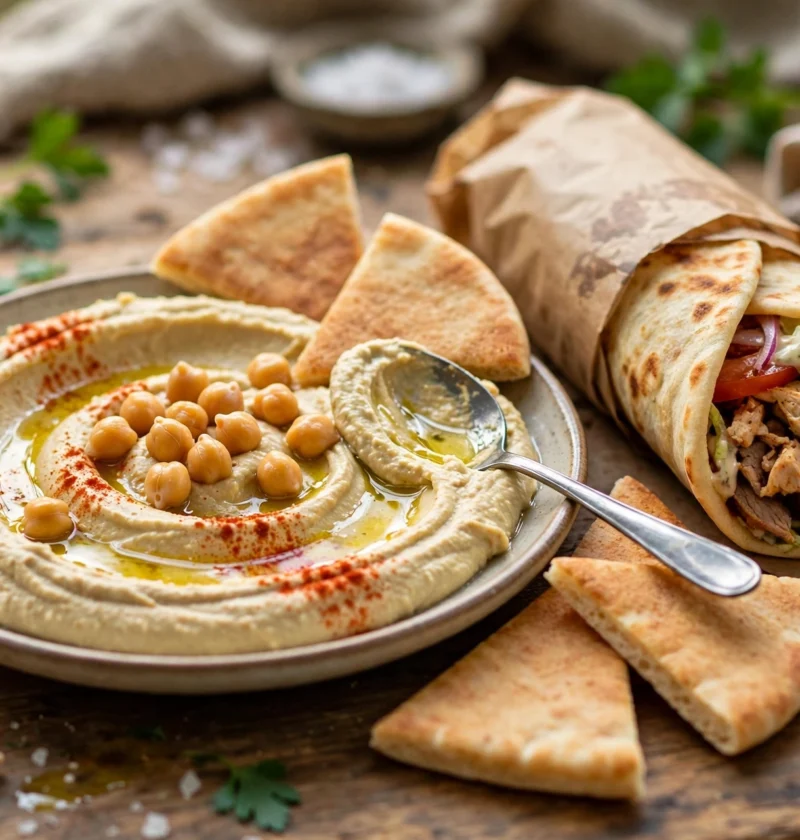
Step 5: Swirl, oil and serve it warm-breaded. Spoon the hummus onto a shallow plate and use the back of the spoon to swirl it into a wide spiral with a well in the middle. Pool the olive oil in that well, dust paprika over the top, and scatter the reserved warm chickpeas across it. Bring it to the table with warm pita or naan torn into scoops. The first drag through the oil well is the bite this whole hummus recipe exists for.
Serving Suggestions
Hummus at my house is rarely just a dip. It goes under grilled chicken and kebabs as a sauce-bed, gets schmeared inside wraps with salad and pickles, and anchors a mezze-style spread with cucumber, tomatoes, olives and boiled eggs when friends come over and I want the table to look generous without cooking four dishes. A thinner drizzle of it — loosened with extra lemon and water — makes a genuinely good salad dressing. Keep it thick, though, for the plate-swirl presentation; that is its party outfit.
Two of its oldest partners are already on this site, and the contrast between them is the chickpea’s whole story. My falafel takes the same chickpea and sends it the opposite direction — ground coarse, herbed, and fried into crisp patties with craggy edges. Hummus is that chickpea whipped completely smooth, and a hot falafel dragged through a cold swirl of it is one of the great bites I know. And if you met hummus the way I did, start with my chicken shawarma: the wrap is where most of us first taste the good stuff, spread inside as the sauce layer that keeps every bite moist. Make the wrap once with this batch and you will understand why I chased the recipe home.
Storage and Reheating
There is no reheating here — hummus is a fridge dip, and heat only dulls it. Spoon leftovers into a clean container, smooth the top, and pour a thin film of olive oil over the surface; that oil seal keeps the top from drying and darkening, and the hummus recipe keeps happily for 4 to 5 days in the fridge. Before serving, let it sit out for about 30 minutes to lose the fridge chill and stir it well — a splash of ice water worked in with a spoon brings back the swoop. You can freeze it for up to a month, but expect it to come back slightly grainier; a vigorous whisk with a spoonful of water and lemon mostly restores it.
Frequently Asked Questions
Canned chickpeas or dried — honestly, how much does it matter?
Dried chickpeas win, and it is not close at the extremes: they cook softer, their flavour is cleaner, and the soda trick works on them properly. But canned chickpeas simmered for 20 minutes with baking soda, the way Step 1 describes, get you a genuinely good hummus — I would say eighty percent of the way — on a night when the dried ones were never soaked. What I would not do is blend canned chickpeas straight from the tin, cold and firm; that is the grainy version, and it is the one most people have had.
Why did my hummus turn out grainy?
Almost always one of four things: the chickpeas were merely tender instead of collapsing-soft, they went into the processor cold, the blend was stopped at one minute instead of four, or the tahini was too little and too late. The fixes are all in this hummus recipe — cook the chickpeas past the point you think is done, blend them hot on top of an already-whipped tahini base, and let the machine run. Graininess is a technique problem, not an ingredient problem, which is the good news: it is fixable in the same batch by simmering and re-blending.
How much tahini is the right amount?
More than most home recipes dare to use. My working ratio is about 1/3 cup of tahini for every cup of cooked chickpeas, which is what this recipe’s amounts give you, and shawarma-shop and Levantine home cooks often push closer to half and half for an almost sesame-first dip. Below a quarter cup per cup of chickpeas, the dip tastes like seasoned bean purée — fine, but not hummus. If your tahini is excellent and runny, lean generous; if it is bitter or stiff, stay at the recipe’s amount and let lemon do more of the talking.
Is peeling the chickpeas actually worth it?
Worth it for silkiness, optional for dinner. The bowl-of-water rub in Step 2 takes under ten minutes and removes the flecks that keep a good hummus from feeling luxurious, and for guests or a mezze spread I always do it. On an ordinary weeknight, when the hummus is going inside a wrap, I skip the peeling entirely and add an extra minute of blending instead; nobody has ever once detected the crime. Decide based on where the hummus is headed — centre of the table, peel; inside a sandwich, do not bother.
Recipe Summary
- Prep time: 15 minutes (plus 12 hours soaking for dried chickpeas)
- Cook time: 45 minutes
- Total time: About 1 hour, plus soaking
- Servings: About 2 1/2 cups — serves 6 as a dip
- Cuisine: Pakistani
- Course: Main Course