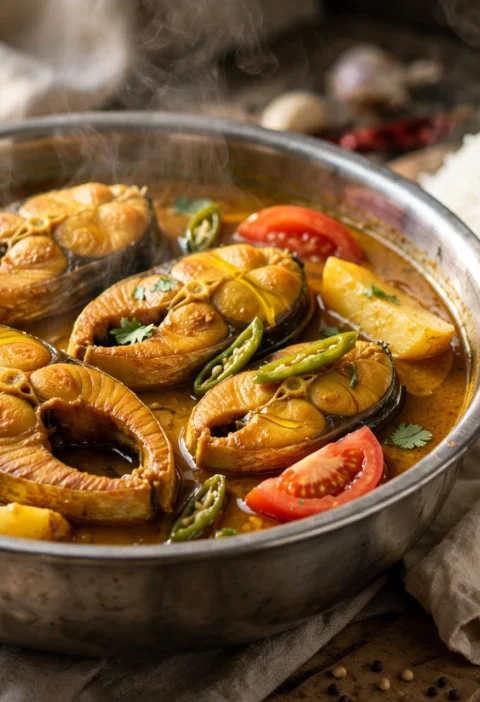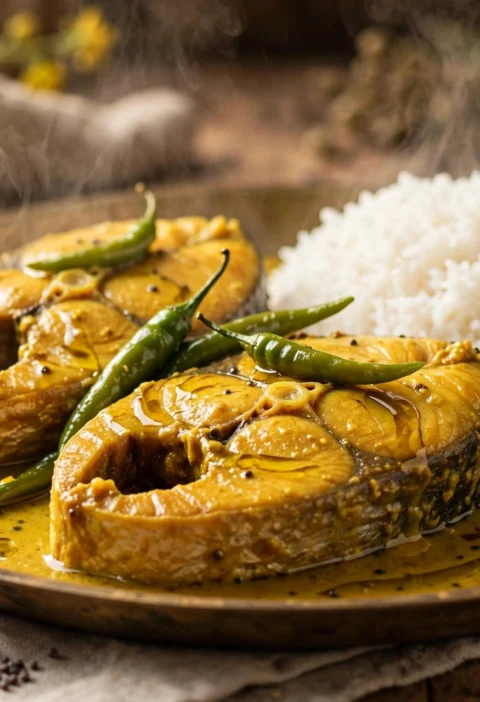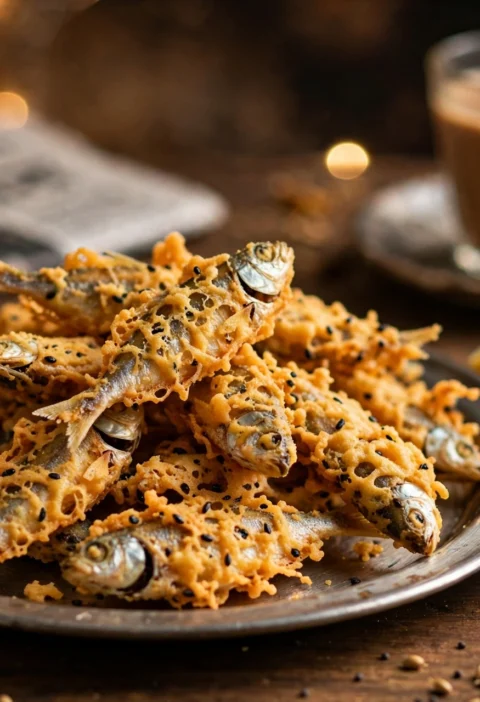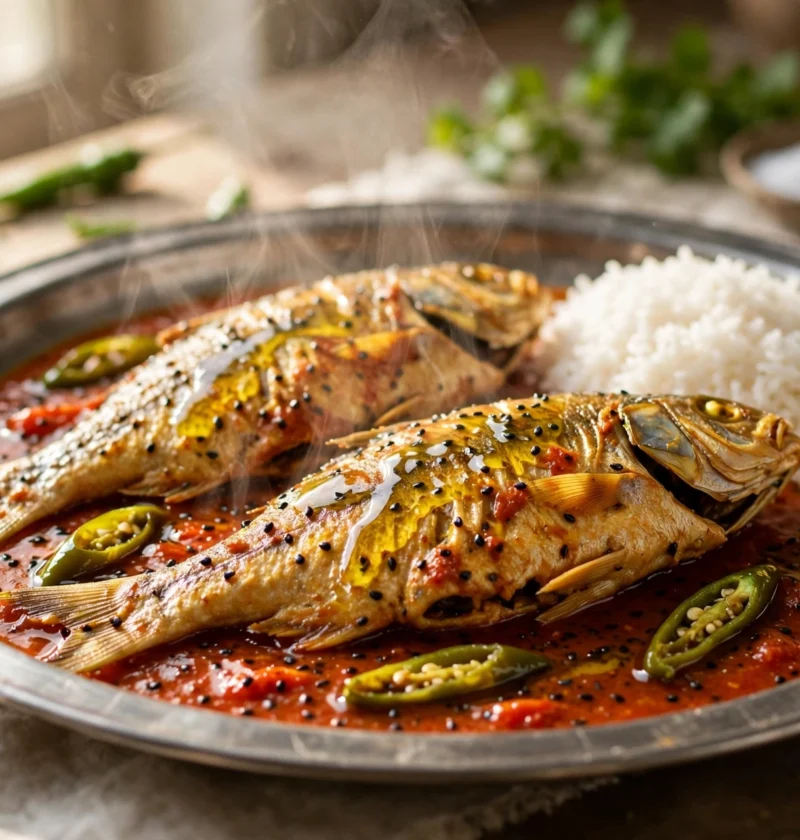
The pabda of my memory came home from the market still glistening, carried by my grandfather in a thin plastic bag with water sloshing at the bottom. Pabda waits for nobody, he used to say — it is too delicate to sit around — and so on pabda days lunch was early, and my grandmother went straight from the door to the stove. Her pabda jhal recipe was the one she made most often: a thin, fiery gravy, tomatoes cooked down in mustard oil, the fish fried just long enough to hold together. I have eaten grander fish curries since, but this is the one I cook when I want the taste of an ordinary, perfect weekday at her table.
Pabda is a small, silvery freshwater catfish, soft-fleshed and sweet, with none of the muddy heaviness bigger river fish can carry. Jhal means fiery, and the name is honest: this is a light curry, but it is not a timid one. Green chillies and a thread of mustard-oil heat run right through a gravy that stays thin and bright, built on tomato and nigella rather than a heavy onion masala. Where a celebration curry like kalia is dark and slow, pabda jhal is quick, sharp and clean — the fish poaches in minutes and goes to the table tasting of itself, with the gravy as a chilli-warm frame around it. It is also an honest fish-market dish: pabda is at its best in the monsoon and winter months, when the rivers run cold and the flesh firms up, and a good fishmonger will tell you to cook it the same day you buy it, because tomorrow it is only half the fish.
Why This Pabda Jhal Recipe Works
Pabda’s softness is its charm and its trap — handled carelessly it dissolves into the gravy. This pabda jhal recipe keeps every piece whole and the gravy bright with five small habits:
- The fish is fried briefly before it ever meets the gravy. Two minutes in hot mustard oil sets the delicate skin and firms the surface, so the pieces survive simmering instead of flaking apart the moment the gravy bubbles. The flavoured oil left behind becomes the base of the sauce.
- Nigella seeds do the seasoning work of a whole spice paste. A teaspoon of kalonji crackled in mustard oil gives that unmistakable, faintly peppery Bengali note — no grinding, no long masala fry, nothing to weigh down a fish this gentle.
- The tomatoes are cooked right down until the oil separates. That patient ten minutes turns raw, watery tomato into a concentrated, gently tangy base that gives the thin gravy its body — the difference between a sauce and a soup.
- Hardly any water is added, and the simmer is short. Pabda cooks in three or four minutes; a brief poach in a small amount of gravy keeps the flesh silken and the flavours undiluted, instead of boiling the fish into rags.
- Raw mustard oil and slit green chillies finish the dish off the heat. Cooking softens mustard oil’s famous pungency, so a final teaspoon drizzled over at the end restores the bright, nose-tingling top note that makes a jhal taste alive.
Ingredients
Two ingredients decide everything here. The first is the fish itself: pabda, a slender silvery catfish of Bengal’s rivers and ponds, prized because the flesh is soft, sweet and almost boneless compared with other river fish. In the US, look for it frozen at South Asian fish counters — thaw it slowly overnight in the fridge and handle it gently, because it bruises. The second is nigella, the tiny black seeds called kalonji, which carry the whole tempering. Beyond those two, this pabda jhal recipe asks for the everyday Bengali pantry: mustard oil, tomatoes, ginger and green chillies, nothing more.
Serves 4
For the fish:
- 1 1/2 pounds whole pabda, cleaned and cut into 2-inch pieces (or left whole if small)
- 1 teaspoon fine salt
- 1 teaspoon ground turmeric
- 3 tablespoons mustard oil, for frying
For the gravy:
- 2 tablespoons mustard oil
- 1 teaspoon nigella seeds (kalonji)
- 4 green chillies, slit lengthwise
- 2 medium tomatoes (about 1 1/2 cups when finely chopped)
- 1 tablespoon ginger paste
- 1 teaspoon Kashmiri red chilli powder (or 1/2 teaspoon regular, for more heat)
- 1/2 teaspoon ground turmeric
- 1/2 teaspoon ground cumin
- 1/2 teaspoon sugar
- Fine salt, to taste
- 3/4 cup warm water
- 1 teaspoon raw mustard oil, to finish
- Fresh coriander leaves, roughly torn, to serve
How to Make This Pabda Jhal Recipe – Step by Step
Step 1: Season the pabda, then let it rest. Pat the pabda pieces dry with paper towels — surface moisture is the enemy of a clean fry. Rub them all over with the salt and turmeric, getting the seasoning into every cut, and leave them at room temperature for 10 minutes. This brief cure firms the flesh slightly and seasons it through, and it takes the raw, watery edge off frozen fish. While the fish rests, chop the tomatoes and slit the chillies so everything is ready; once the oil is hot, this curry moves quickly.
Step 2: Fry the pabda briefly until just set. Heat the 3 tablespoons of mustard oil in a wide, heavy pan over medium-high heat until it shimmers and its sharp raw smell turns mellow — mustard oil needs that moment of heat. Lay the fish in a single layer, without crowding, and fry for about 1 1/2 minutes per side, turning once with a thin spatula. You are not cooking it through or crisping it hard; you are setting the skin to a pale gold. Lift the pieces onto a plate and keep the oil in the pan.
Step 3: Build the tomato base. Lower the heat to medium and add the remaining mustard oil to the same pan. Drop in the nigella seeds and slit green chillies; let them crackle for 20 seconds. Stir in the ginger paste for half a minute, then add the chopped tomatoes with the turmeric, chilli powder, cumin, sugar and a pinch of salt. Cook, stirring often and mashing the tomatoes down, for 8 to 10 minutes, until the mixture thickens, darkens and beads of oil gather at the edges — the sign the raw edge is gone. Do not rush this stage by raising the heat; scorched tomato turns bitter, and there is no cream or sugar later to hide it behind.
Step 4: Turn the base into a thin, fiery gravy. Pour in the warm water and stir it through, scraping up every bit of the tomato masala from the pan. Bring the gravy to a gentle boil, then lower the heat and simmer for 3 to 4 minutes, until it looks glossy and lightly coats a spoon — a jhal gravy should pour, not mound. Taste now and fix the seasoning: it should be bright, salty enough, with the sugar only rounding the tomato’s tang, never sweetening it.
Step 5: Poach the fish, rest it, and finish with raw mustard oil. Slide the fried pabda and any juices on the plate back into the gravy in a single layer. Simmer on the lowest heat for 3 to 4 minutes, spooning gravy over the tops instead of stirring — swirl the pan gently if you must move it. Take the pan off the heat, drizzle over the teaspoon of raw mustard oil, scatter the coriander, and rest the curry, covered, for 5 minutes. Serve straight from the pan, pieces intact.
Serving Suggestions
This pabda jhal recipe has exactly one true partner: plain steamed white rice, served hot and unadorned, so the thin fiery gravy can pool into the grains. Put the pan on the table and let everyone take a piece with its share of sauce; a wedge of lemon and extra green chillies alongside are all the ceremony it needs. Eat it soon after the rest — this is not a curry that improves by sitting around, because the fish keeps softening in the hot gravy. If the meal needs padding out, keep the additions plain: a simple masoor dal, a bowl of cucumber and onion with lemon, nothing that competes with the jhal’s clean, peppery heat.
For a Bengali fish-lover’s spread, pabda jhal sits at the quick, everyday end of a glorious range. At the festive end is my shorshe ilish, hilsa steamed in a fierce mustard sauce — the celebration dish against which all others are measured. And for the gentlest counterpoint, my lau chingri simmers prawns with bottle gourd into something pale and soothing. A weekend that moves from lau chingri’s calm to pabda’s bright fire to shorshe ilish’s full ceremony is, to my mind, the finest short course in Bengali fish cooking there is.
Storage and Reheating
Leftovers from this pabda jhal recipe keep for 1 day in the fridge — 2 at the very most — stored covered with the fish submerged in its gravy. Pabda is delicate and its texture is at its best on the day it is cooked, so I plan quantities to finish the pan; if you know you will have extra, undercook the fish by a minute so the reheat does not push it too far.
Reheat gently in a wide pan over the lowest flame, lid on, with a spoonful of water stirred through, just until the gravy steams — 4 to 5 minutes, no boiling, and turn the pieces once with a spatula rather than stirring. A drop of fresh raw mustard oil over the top revives the jhal’s sparkle. I do not freeze this curry; thawed pabda turns woolly and sheds its gravy.
Frequently Asked Questions
Why does my pabda break apart in the gravy?
Almost always, it was handled too much or never given its setting fry. Pabda’s flesh is exceptionally soft: fry it briefly first so the skin firms, slide it in once, and then leave it alone — spoon gravy over it or swirl the pan, but do not stir. Turning pieces once with a thin spatula is the most contact it can take. Frozen fish also breaks more easily, so thaw it fully and pat it dry before seasoning. And if a piece does collapse despite everything, take heart — the flakes melt into the gravy and flavour it; the dish forgives, even if it does not forget.
I cannot find pabda. What fish can I use instead?
Any small, soft, mild fish works in this pabda jhal recipe: whole butterfish or small pomfret are the closest in spirit, and catfish fillets cut into chunks behave well too. In a pinch, tilapia or even large shrimp make a fine jhal — the gravy is forgiving. Whatever you choose, keep the pieces thick enough to survive the poach, and keep the brief setting fry: it matters even more for softer substitutes.
Do I really need mustard oil, and should it smoke?
Mustard oil is half the dish’s character — its pungency is what a Bengali palate reads as “home”. Heat it until it just begins to shimmer and its raw bite mellows; you do not need it smoking hard. If you cannot find it, a neutral oil will cook the curry, and whisking 1/2 teaspoon of mustard powder into the gravy at the end restores a little of the missing warmth — close, though not quite the same.
How hot is a jhal, and how do I make it milder?
Jhal literally means hot, and traditionally this curry has a clear, clean chilli heat rather than a numbing one. For a milder version, halve the green chillies, scrape out their seeds, and lean on the Kashmiri chilli powder, which gives colour with gentle warmth. For a fiercer one, keep the seeds, add a fifth chilli, and finish with an extra pinch of black pepper — my grandfather’s way.
Recipe Summary
- Prep time: 15 minutes, plus 10 minutes resting the fish
- Cook time: 20 minutes
- Total time: About 45 minutes
- Servings: 4
- Cuisine: Pakistani
- Course: Main Course