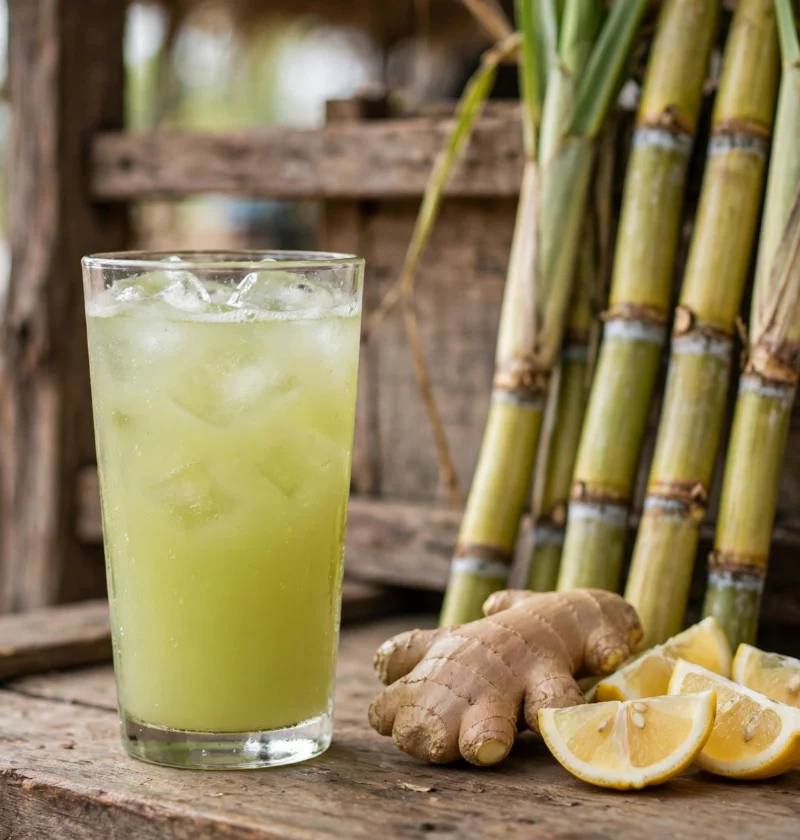
The first time I tried to make this sugarcane juice recipe at home, I was chasing a memory more than a drink. Every summer of my childhood, the walk home from school ended at the same cart, where the vendor fed long green stalks through a squeaking hand-cranked press and handed over a glass so cold it fogged up instantly. It was sweet in a way no bottled drink has ever matched, grassy and fresh, with a bite of ginger and a squeeze of lemon that kept it from ever tasting flat. Years later, standing in my own kitchen with a bag of cane stalks from an Asian grocery store, I realized I did not need the cart at all. This sugarcane juice recipe is the version I worked out through trial and error, and it gets remarkably close to that roadside glass.
What surprised me most was how simple the whole thing is once you understand the cane itself. Sugarcane is basically nature’s own sweetened water, locked inside fibrous stalks, and all you really have to do is crush it, catch the juice, and season it lightly. This sugarcane juice recipe needs no cooking, no special syrup, and no fancy equipment beyond a strong blender or a juicer, and it is ready in about fifteen minutes.
Why This Sugarcane Juice Recipe Works
- The ginger and lemon balance the sweetness. Pure cane juice can taste one-note and almost too sweet. A thumb of ginger and a good squeeze of lemon give this sugarcane juice recipe a warm, bright edge that makes each sip refreshing instead of cloying.
- Everything is served ice cold. Cane juice oxidizes fast and loses its fresh flavour within minutes at room temperature. This sugarcane juice recipe is built around chilling everything first, so the glass stays sweet, grassy, and bright from the first sip to the last.
- The cane is peeled properly. The tough outer rind carries bitterness and grit, so we strip it completely before juicing. That single step is what separates a clean, golden-green juice from a muddy, bitter one.
- It is strained twice. Fibrous cane pulp sneaks into everything, so this sugarcane juice recipe passes the juice through a coarse strainer and then a fine one, leaving you with a smooth drink and nothing stringy between your teeth.
- No sugar is added at all. The cane does all the sweetening on its own, which means this sugarcane juice recipe tastes naturally sweet without ever tipping into syrupy territory.
Ingredients
Shopping for this sugarcane juice recipe is delightfully short. Look for cane stalks that feel heavy for their length, with smooth green or pale purple skin and no dried, shriveled ends. Asian and Latin grocery stores usually carry them in the produce section, sometimes already cut into short lengths. If your stalks are very long, ask the store to cut them, or saw them at home into pieces your blender can handle.
- 4 to 5 fresh sugarcane stalks (about 2 pounds), cut into short pieces
- 1 tablespoon fresh ginger, peeled and roughly chopped
- 1 large lemon, halved
- 1/4 teaspoon black salt (kala namak), optional
- 1/2 cup cold water, only if your blender needs help
- Plenty of ice cubes, for serving
- Fresh mint sprigs and extra lemon wedges, for garnish
A note on the ginger: fresh ginger is essential here, because powdered ginger tastes dusty and flat in a cold drink. If you love heat, add a second tablespoon, but start with one, since raw ginger in cold juice tastes stronger than it does in cooked food. The black salt is optional but worth trying once, since it adds a savoury depth that makes the sweetness taste more grown-up, a little like the salted rim on a good lemonade.
Method
Step 1: Peel and chop the cane
Start by washing the cane stalks under cold water and patting them dry. Using a sharp knife or a sturdy vegetable peeler, strip off the entire tough outer rind until you reach the pale, moist inner flesh. Work carefully, because the rind is hard and the knife can slip, and cut away any dry or discoloured patches as you go. Once peeled, chop the cane into small chunks, roughly an inch long, so your blender blades can actually grab them. This is the most labour-intensive part of this sugarcane juice recipe, but do not rush it. Clean, well-peeled cane is the whole foundation of a good glass.
Step 2: Blend the cane with ginger
Place half the cane chunks in a strong blender with the chopped ginger and a splash of cold water, just enough to get the blades moving. Blend on high for a full minute, stopping once to push the pulp down, until you have a thick, fibrous, pale green mash. Repeat with the remaining cane, adding a little more water only if the blender stalls. You are not trying to make a smoothie here, just to crush the fibres open so the juice can escape.
Step 3: Strain it twice for a smooth drink
Set a coarse strainer over a large bowl and pour the blended mash through it, pressing firmly with the back of a ladle to squeeze out every drop. Gather the pulp in a clean kitchen towel or muslin, twist it tightly, and wring out the last of the juice over the bowl. Then pass the collected juice through a fine mesh strainer into a jug, which catches the fine fibres and leaves you with a smooth, clear drink.
Step 4: Season with lemon and black salt
Squeeze the lemon halves into the jug, starting with half a lemon and tasting as you go, since cane varies in sweetness and some batches need more brightness than others. Stir in the black salt if you are using it, and give the jug a good stir until everything is dissolved. The juice should taste sweet first, then bright and gingery, with the lemon lifting the whole thing rather than souring it. If it still tastes flat, add the remaining lemon juice a little at a time. This seasoning step is where a good sugarcane juice recipe becomes a great one, so trust your tongue over any fixed measurement.
Step 5: Chill hard and serve over ice
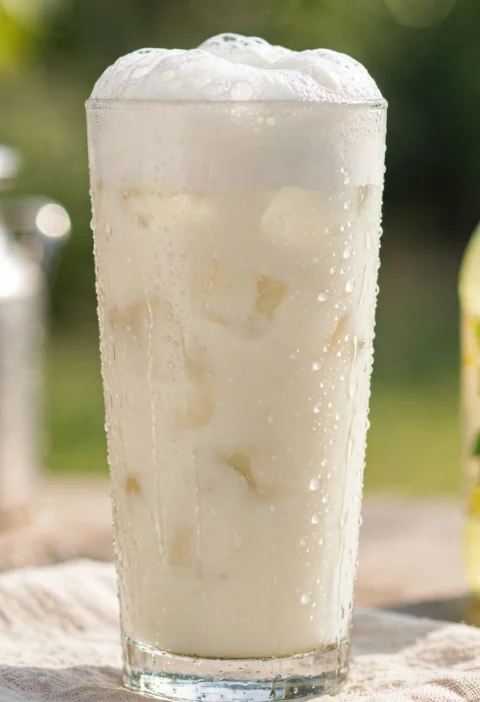
Cane juice darkens and loses its fresh edge quickly, so do not let it sit around. Fill tall glasses to the brim with ice cubes, pour the chilled juice over them, and top every glass with a mint sprig and a lemon slice. Drink it straight away, while the juice is still pale green and cold. If you must hold it for a short while, keep the jug in the coldest part of the fridge and stir before pouring, but honestly, this sugarcane juice recipe is at its best in the first ten minutes, exactly like the glass from the roadside cart.
Serving Suggestions
At my house, this sugarcane juice recipe rarely needs company. A tall, ice-cold glass on a hot afternoon, with nothing but a mint sprig on top, is genuinely enough. But it also shines next to food. Because it is sweet and cooling, it pairs beautifully with spicy street snacks, and I love serving it with samosas, pakoras, or a plate of chaat, where the cold sweetness calms the heat between bites.
For guests, set up a little cane-juice station and let people season their own glasses. Put out the chilled juice in a jug, a bowl of ice, lemon wedges, mint, and a small dish of black salt, and everyone can tune their glass to their own taste. Children usually skip the salt and ask for extra lemon, while adults tend to go heavier on the ginger. If you want a second cooling drink on the same table, my sattu sharbat recipe is an earthy, savoury contrast to this sweet one, and the bel sharbat recipe brings a gentle fragrance that sits happily beside the cane’s grassy freshness.
Storage and Reheating
Let me be honest with you: sugarcane juice does not store well, and that is part of its charm. The moment it leaves the cane, it starts to oxidize, turning darker and losing its bright, grassy flavour within an hour or two. This sugarcane juice recipe is therefore best made fresh and drunk immediately. If you absolutely must keep it, pour it into a completely full, airtight bottle with no air at the top, refrigerate it at once, and drink it within 4 to 6 hours, stirring well before serving.
Freezing works a little better than refrigerating, though it still changes the drink. Pour the freshly strained, unseasoned juice into ice cube trays and freeze it solid, then transfer the cubes to a sealed bag. A handful of cubes blended with a splash of water, ginger, and lemon gives you a passable glass of this sugarcane juice recipe on a day when fresh cane is not available. There is no reheating here, of course, since heat destroys everything that makes cane juice special, but if your fridge has made it too cold, just let the glass sit for five minutes before drinking. Never microwave it, and never boil it, because cooked cane juice tastes like flat syrup, not like summer.
Sugarcane Juice Recipe FAQs
Can I make this sugarcane juice recipe without a blender?
Yes, though it takes more elbow grease. If you have a slow juicer or a masticating juicer, feed the peeled cane chunks through it in small batches and it will do the crushing for you. Without any machine, you can pound the peeled cane in a large mortar, a few pieces at a time, then wrap the pulp in muslin and wring it out by hand. It is slower and yields less juice, but the flavour of this sugarcane juice recipe is just as good, and honestly, pounding cane feels satisfyingly old-fashioned.
Why did my juice turn dark so quickly?
That darkening is oxidation, the same process that browns a cut apple, and cane juice is especially prone to it. The lemon juice in this sugarcane juice recipe slows it down, as does keeping everything ice cold and serving fast, but it cannot stop it entirely. If your juice turned brown within minutes, it was probably left warm or in an open jug. Next time, chill your jug and glasses first, squeeze the lemon in immediately after straining, and pour over ice without delay.
Is sugarcane juice healthy?
Sugarcane juice is a natural, unrefined drink, and it is certainly a better choice than bottled sodas or sweetened carton juices, since it contains no added sugar, colours, or preservatives. That said, it is still naturally high in sugars, so this sugarcane juice recipe is best enjoyed as an occasional summer treat rather than an everyday health drink. One tall glass shared after a spicy meal is a delight; three glasses a day would be a lot of sweetness for anyone.
Where can I buy fresh sugarcane?
Fresh cane is easiest to find in Asian, Latin American, and Middle Eastern grocery stores, usually in the produce section near the tropical fruit. Look for stalks that feel heavy and firm, with moist cut ends and no mould or dried patches. Some stores sell it pre-peeled and cut, which saves a lot of work for this sugarcane juice recipe, though pre-cut cane dries out faster, so buy it the day you plan to juice.
Recipe Summary
This sugarcane juice recipe takes the simplest summer pleasure, fresh cane crushed and seasoned with ginger and lemon, and brings the roadside cart into your kitchen in about fifteen minutes. It needs no added sugar, no cooking, and no special equipment beyond a strong blender, yet it delivers a drink that tastes grassy, sweet, and unmistakably fresh. The cane itself, sugarcane, has sweetened drinks across South Asia for centuries, and the glass it makes, sugarcane juice, remains one of the region’s great street drinks for a reason.
Make a batch of this sugarcane juice recipe on the next hot afternoon, pour it over plenty of ice, and taste what real cane juice is supposed to be. Then keep an eye out for fresh stalks whenever you pass a good grocery store, because once you have tasted the fresh-pressed kind, the carton kind never quite satisfies again. That is the real charm of this drink: it is summer in a glass, plain and simple, and I hope it earns a regular spot in your kitchen the way it has in mine.