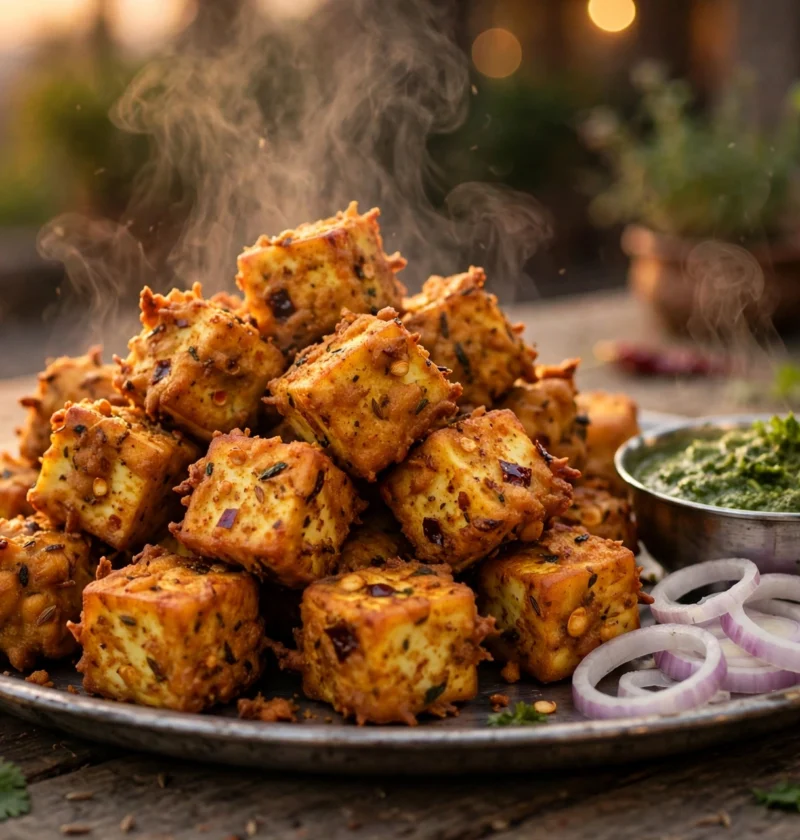
I first tasted paneer pakora at a roadside stall outside a college gate, and I still remember how wrong my expectations were. I had assumed paneer in a pakora would be rubbery, the way overcooked paneer so often is, and that the batter would be thick and doughy. Instead the cube I bit into was almost creamy inside, the coating shattered like thin glass, and the whole thing disappeared in two bites while I stood there in the drizzle wondering why I had waited so long to try one. That stall is long gone now, but the memory stuck, and this paneer pakora recipe is the version I worked out at home after many evenings of trial, error, and a few batches that were honestly too salty.
What I like best about making them at home is the control. You pick the paneer, you decide how thick the batter goes on, and you pull them out of the oil at exactly the golden moment instead of trusting a vendor’s rush-hour batch. The whole thing takes about twenty-five minutes from fridge to plate, and it needs nothing fancy, just a bowl, a pan, and oil hot enough to do its job. This paneer pakora recipe has become my default when someone announces they are coming over in half an hour and I have nothing planned, because it never fails to make the kitchen smell like a celebration.
Why This Paneer Pakora Recipe Works
- The paneer gets a quick soak first. A ten-minute dip in warm salted water wakes up even fridge-cold paneer, so the cubes fry up soft and yielding instead of squeaky and firm. It is the single step that separates a good paneer pakora recipe from a forgettable one.
- The batter is seasoned all the way through. Carom seeds, chilli, turmeric, and a pinch of chaat masala go into the batter itself, so every bite of this paneer pakora recipe is flavoured, not just the outside edge. Bland batter is the most common pakora mistake, and this paneer pakora recipe refuses to make it.
- Rice flour keeps the crust crisp. A couple of spoonfuls of rice flour in the chickpea batter fry up brittle and light, so the coating stays crunchy well after the pakoras leave the pan instead of turning soggy on the plate.
- The coating is thin, not heavy. The batter is whisked to a ribbon consistency that clings without drowning the cube, so you taste paneer and spice in balance rather than a mouthful of fried dough.
- Small batches protect the oil temperature. Frying six or seven pieces at a time keeps the oil hot, which means the crust seals instantly and drinks up far less oil than a crowded pan ever would.
Ingredients
The list is short, and if you cook desi food even occasionally, most of it is already in your cupboard. The one thing worth spending a minute on is the paneer itself. Fresh, soft paneer from a good dairy or a block you pressed yourself will always beat the driest supermarket slab, and since paneer is the star here, it deserves that small effort.
- 250 grams paneer, cut into chunky 1-inch cubes
- 1 cup gram flour (besan), sifted
- 2 tablespoonfuls of rice flour
- Half a teaspoon of soda bicarbonate
- 1 teaspoon ajwain (carom seeds), crushed between your palms
- 1 teaspoon Kashmiri red chilli powder, for colour more than heat
- 1/2 teaspoon turmeric powder
- 1 teaspoon chaat masala, plus a little extra for dusting at the end
- 1 teaspoon fine salt
- A small handful of fresh coriander leaves, finely chopped
- 1 green chilli, deseeded and finely chopped (optional)
- About 3/4 cup of water, adding a splash extra if the batter feels stiff
- A good squeeze of lemon juice
- Plenty of vegetable oil, for deep frying
- Mint chutney and raw onion rings, to serve
A note on cutting the paneer: keep the cubes chunky, about an inch on each side. Smaller pieces overcook in seconds and lose their soft centre, while bigger ones stay creamy inside after the batter crisps. If your paneer block is very firm, the soak step in this paneer pakora recipe brings back a tenderness that cold storage steals.
Method
Step 1: Soak and dry the paneer
Put the paneer cubes in a bowl, cover them with warm water, and stir in a good pinch of salt. Leave them for ten minutes while you get everything else ready. This short soak relaxes the paneer so it fries up tender rather than chewy, and it seasons the cubes from the inside out. Drain the water completely and spread the cubes on a clean kitchen towel, patting each one dry. Wet paneer makes batter slide straight off, so take the extra minute to dry them properly.
Step 2: Whisk the spiced batter
Tip the sifted gram flour, rice flour, soda bicarbonate, ajwain, chilli powder, turmeric, chaat masala, and salt into a wide mixing bowl and stir them together with a dry whisk so the spices spread evenly. Pour in the water a little at a time, whisking without stopping, until the mixture turns into a smooth coating batter that falls off the spoon in a thick, lazy ribbon, somewhere between dosa batter and cake batter in body. Fold in the chopped coriander, the green chilli if you are using it, and the lemon squeeze. Leave the batter alone for ten minutes, which lets the flours drink up the water and the soda start to fizz gently, and stir in a spoonful of water if it stiffens while it rests.
Step 3: Heat the oil to the right temperature
Fill a deep kadhai or heavy-bottomed pan with oil and set it over a medium-high flame until it reaches roughly 350°F. If you have no thermometer, test it with a pinch of batter: the drop should hiss loudly, puff up, and float straight to the top, holding its pale colour for a moment before turning gold. A drop that sinks quietly means the oil still needs time, and one that darkens in a blink means it has gone past the mark and will scorch the crust before the paneer warms. Nailing this temperature is the most important judgement call in this paneer pakora recipe.
Step 4: Batter and fry in small batches
Drop six or seven paneer cubes into the batter and roll them around gently with a fork so each cube gets covered on every side, holding each one above the bowl briefly so the surplus runs off. Slide them into the hot oil one by one, leaning away from the pan so nothing spatters toward you. Cook them for 3 to 4 minutes, flipping once with a slotted spoon, until the coating turns deep gold and rough-textured all over. Scoop them out onto a wire rack rather than paper towels, so air moves underneath and the crust keeps its snap. Wait for the oil to climb back to full heat before the next round, and fight the temptation to pack the pan, because an overloaded pan is how crisp pakoras end up drinking oil.
Step 5: Season and serve immediately
While the pakoras are still hot, sprinkle them lightly with extra chaat masala and a squeeze of lemon. That final seasoning lands on the warm, rough crust and wakes up every spice in the batter. This paneer pakora recipe is at its peak in the first fifteen minutes, when the outside is still shattering and the paneer inside is warm and soft, so pile them onto a plate with mint chutney and onion rings and get them to the table without delay.
Serving Suggestions for This Paneer Pakora Recipe
At my place, this paneer pakora recipe rarely survives the walk from the stove to the table. Someone always appears in the kitchen doorway at exactly the wrong moment, also known as exactly the right moment, and a few pieces vanish off the rack before I can plate them. When they do make it to a proper serving, mint chutney is the classic partner, cool and sharp against the warm spice, with raw onion rings and lemon wedges for anyone who likes extra bite.
For guests, I like to build a small snack spread rather than serving pakoras alone. A plate of these next to a bowl of chutney, some sliced onions, and a pile of papad makes an evening feel generous without much extra work. If your table already has fans of fried snacks, our vegetable pakora sits beautifully beside this one, the soft mixed vegetables against the rich paneer cubes, and for anyone who wants heat with their crunch, a plate of paneer 65 brings a fiery, saucy contrast to the same table.
Storage and Reheating
I will be straight with you: pakoras from this paneer pakora recipe are a cook-and-eat food, and no storage method fully recreates that first crisp bite. Still, leftovers are far from wasted if you handle them gently. Once completely cool, store them in a single layer in a lidded container in the fridge for up to a day, with the chutney kept separate, since moisture is what kills a crisp coating fastest.
To revive this paneer pakora recipe, arrange the pakoras spaced apart on a baking tray and reheat them in a hot oven at 375°F for six to eight minutes, turning them over halfway, until the crust crisps up again and the paneer centres warm through. A 350°F air fryer for 3 to 4 minutes does the same job even quicker. Avoid the microwave, which turns the coating limp within seconds and undoes all that frying work. The uncooked batter itself keeps chilled for a day, so the smartest party move is to batter and fry a fresh round just before guests walk in.
Paneer Pakora Recipe FAQs
Why does my batter fall off the paneer?
Almost always, the cubes were damp or the batter ran too loose. Pat the cubes completely dry after their soak, and whisk the batter until it coats a spoon in a thick, lazy ribbon. If the coating still slips, roll the cubes very lightly in dry gram flour before dipping, which gives the wet batter a rough surface to hold onto. A properly dried cube and a properly thick batter are the whole secret of this paneer pakora recipe.
Can I make this paneer pakora recipe in an air fryer?
Yes, and the result is honestly impressive. Spray the battered cubes all over with oil and cook them at 390°F for 10 to 12 minutes, giving the basket a shake halfway through, until they turn crisp and deeply golden. The shell comes out slightly smoother than the deep-fried version, but it still crunches well and uses far less oil. The soaking and battering stages remain unchanged, because those are what give this paneer pakora recipe its character rather than just roasted paneer.
Which paneer works best for pakoras?
Fresh, soft paneer wins every time. Look for a block that yields slightly when pressed and smells milky and clean, not sour. Very firm, rubbery paneer stays tough even after frying, though the warm salted soak in this paneer pakora recipe rescues it partway. If you make paneer at home, press it lightly rather than under a heavy weight, so the cubes stay tender inside their crisp shells.
Can I prepare paneer pakoras ahead for a party?
Partly, yes. You can cut the paneer, soak it, and whisk the batter a few hours ahead, keeping both chilled separately. What you should not do is batter the cubes in advance, because the coating goes soggy as it sits. Fry this paneer pakora recipe in batches just before serving, and keep finished batches warm in a low oven on a rack while the next batch fries. That way every guest gets a crisp pakora, which is the whole point of this paneer pakora recipe.
Recipe Summary
Prep time: 15 minutes, plus a ten-minute soak. Frying: about 15 minutes in batches. Total time: roughly 25 to 30 minutes. Serves: 4 as a snack. Difficulty: easy, with oil temperature the one thing to watch. This paneer pakora recipe takes soft paneer cubes, a well-spiced chickpea batter, and hot oil, and turns them into the snack that disappears fastest at any gathering I host. Give it one try on a rainy evening, and I suspect it will earn a permanent place in your snack rotation.
A little background for the curious: paneer is the fresh pressed cheese at the heart of so many North Indian dishes, and pakora is the beloved family of batter-fried snacks found at stalls, homes, and tea shops across South Asia. Putting the two together in one golden cube brings two much-loved traditions onto a single plate, and that combination is exactly what you taste in this paneer pakora recipe.