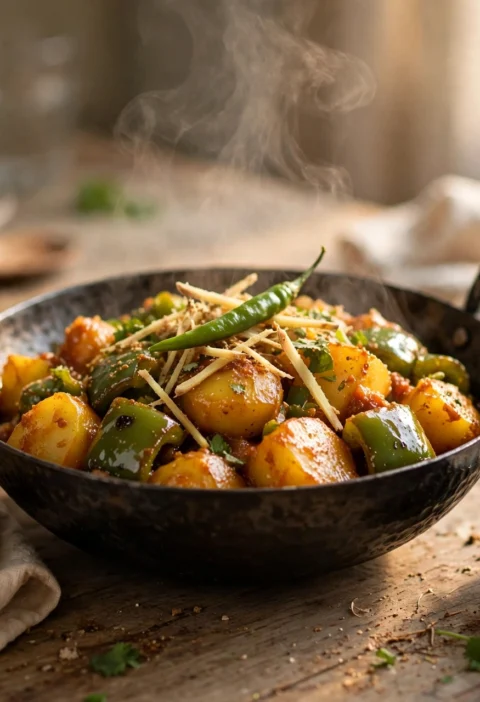
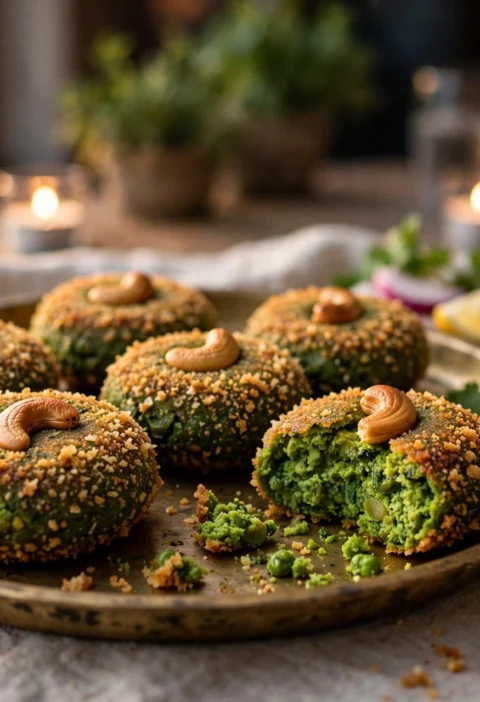
The first chhanar dalna I tasted properly was at my friend’s grandmother’s house in north Kolkata, on a festival morning when the kitchen smelled of warm milk and ginger before anything had reached the stove. She stood over a cloth bundle hanging from the tap, squeezing whey from fresh curds, while peeled potatoes waited nearby. Lunch was disarmingly simple: pale golden balls, soft as clouds, in a thin, bright gravy beside wedges of potato. One bite told me why this chhanar dalna recipe has survived generations without cream, cashews or any showmanship at all.
Part of the magic is what it refuses to be. It is often mistaken for a paneer curry, but the resemblance ends at the milk. Palak paneer and shahi paneer start with firm, pressed paneer cut into cubes that hold sharp corners in thick, rich, cream-heavy gravies. Dalna begins earlier, with unpressed fresh chhena — the soft curds themselves — kneaded while still tender, rolled into balls and fried only until they blush. The gravy stays deliberately light: ginger leads, cumin and tomato support, and there is no onion or garlic in the pot, because this is niramish cooking, Bengal’s festive vegetarian style for puja days and honoured guests. The balls drink in that gravy and stay spoon-soft, almost custardy inside.
Why This Chhanar Dalna Recipe Works
Fresh curd balls sound fragile, and badly made ones are — they crack in the oil or dissolve in the gravy. This chhanar dalna recipe is built around the small disciplines that keep them whole and melting at the same time:
- The chhena is kneaded warm, while it still holds a whisper of moisture. Over-drained curds turn dry and crumbly and no shaping will save them. Kneading for a full five minutes, until the mixture feels like soft dough and leaves a faint sheen of fat on your palm, gives the balls their smooth skin and tender centre.
- A spoonful of flour and a pinch of sugar go into the knead. The flour is insurance, not bulk — just enough to bind the curds so the balls survive frying and simmering. The sugar helps them colour evenly and echoes the gentle sweetness Bengali savoury cooking is known for.
- The balls fry gently, not fiercely. Oil that is too hot seals a dark crust while the middle stays raw; a calm, steady heat lets them puff slightly, set through and turn an even, pale gold. That delicate crust later holds them together in the gravy.
- Potatoes are fried before they meet the gravy. Dalna almost always pairs its star with potato, and frying the wedges first gives them golden edges that stay distinct instead of collapsing into the sauce. They also lend the gravy body as they finish in it.
- The gravy stays thin on purpose, and the balls simmer only briefly. A dalna gravy should be light and pourable, closer to a spiced broth than a masala blanket. Five unhurried minutes lets the balls absorb flavour without losing softness, and the final ghee and garam masala land at the end, where their perfume survives.
Ingredients
It all begins with chhena, the fresh, unpressed curd that Bengal turns into both its sweets and this beloved savoury — quiet proof of how inventive Bengali cuisine becomes when one ingredient is treated with respect. Making it at home takes twenty minutes and one decision: use fresh, full-fat whole milk, because skimmed milk gives you a miserable handful of curds. I prefer lemon juice for splitting, for its softer flavour, with a thorough rinse afterwards so no sourness rides into the curry. If you buy ready chhena from an Indian grocer, crumble it finely and knead it exactly as written below — just skip the hanging time, since shop chhena is usually drier.
Serves 6
For the chhena:
- 8 cups whole milk (about 1/2 gallon)
- 3 to 4 tablespoons lemon juice, mixed with 2 tablespoons warm water
- Cheesecloth or muslin, for draining
- Cold water, for rinsing
For the chhena balls:
- Fresh chhena from above (about 2 cups)
- 1 tablespoon all-purpose flour, plus more if needed
- 1/2 teaspoon fine salt
- 1/2 teaspoon sugar
- 1/4 teaspoon ground cardamom (optional, but lovely)
- Neutral oil or ghee, for shallow-frying
For the potato and gravy:
- 3 medium potatoes, peeled and cut into wedges
- 2 tablespoons mustard oil (or neutral oil, if you prefer it milder)
- 1 teaspoon cumin seeds
- 2 bay leaves
- 2 dried red chillies
- 1 tablespoon grated fresh ginger
- 2 medium tomatoes, finely chopped or pureed
- 1/2 teaspoon ground turmeric
- 1 teaspoon ground cumin
- 1/2 teaspoon Kashmiri chilli powder (optional)
- 3/4 teaspoon sugar
- 1 teaspoon fine salt, or to taste
- About 2 cups warm water
- 2 green chillies, slit lengthways
To finish:
- 1 tablespoon ghee
- 1/2 teaspoon Bengali garam masala (or regular garam masala)
- Fresh coriander leaves, roughly torn
How to Make This Chhanar Dalna Recipe – Step by Step
Step 1: Curdle the milk and hang the fresh curds. Pour the milk into a heavy pot over medium heat and bring it to a full boil, stirring near the end so a skin does not form. Lift the pot off the burner and let it stand for a minute. Now add the lemon mixture slowly, a splash at a time, moving a spoon through the milk in slow circles. White curds will bloom and drift apart from the thin greenish whey — once that separation looks complete, stop, even if some lemon mixture remains. Set a sieve lined with the cloth over a bowl, tip the curds in, and run cold water over them for half a minute to wash away the lemon. Gather the cloth, twist lightly and hang the bundle for just 20 to 25 minutes. You want chhena like soft clay, never dry crumbs.
Step 2: Knead the chhena and roll smooth balls. Turn the warm curds out onto a broad plate and work them with the base of your palm — pushing them away, gathering them back — for a full 5 minutes, until they form one smooth, soft mass. Work in the flour, salt, sugar and cardamom during the last minute. If the mixture cracks, wet your palm and continue; if it feels sticky, add another teaspoon of flour. Divide into 12 portions and roll each into a smooth ball a little smaller than a golf ball — cracks now become splits in the oil later.
Step 3: Fry the potatoes, then the balls, in the same pan. Warm the oil or ghee in a wide, heavy skillet over medium heat until it shimmers. Fry the potato wedges with a pinch of salt until their edges turn golden and a knife slides in with slight resistance, 6 to 8 minutes; lift them out. Slide the chhena balls in in a single layer, without crowding, and leave them undisturbed for the first minute so a skin forms. Turn gently until evenly pale gold all over, 4 to 5 minutes in total. Drain on a plate and try not to eat more than one cook’s tax.
Step 4: Build the light ginger-tomato gravy. Pour off all but 2 tablespoons of oil from the pan, or start the mustard oil fresh in a pot. Warm it until a faint wisp rises, then drop the heat and tip in the cumin seeds, bay leaves and dried red chillies. Let them crackle for 20 seconds, add the grated ginger and cook briefly until its raw edge softens. Add the tomatoes with the turmeric, ground cumin, chilli powder, sugar and salt, and cook down, stirring often, until the base thickens and oil glistens at the edges, 7 to 9 minutes. This frying is where the gravy earns its depth, since there is no onion to provide it. Pour in the warm water, stir, and bring to a lively simmer; the gravy should look thin and pourable, and that is correct.
Step 5: Simmer everything together and finish with ghee. Return the potatoes to the gravy and simmer for 5 minutes, until completely tender. Add the slit green chillies, then lower the chhena balls in gently, spooning gravy over any that sit proud of the surface. Simmer on the lowest heat for just 5 minutes more — no vigorous boiling, and no stirring; swirl the pan instead so the balls stay intact. Take the pot off the heat, drizzle over the ghee, scatter the garam masala and coriander, and cover for 5 minutes. In that rest the balls drink in the gravy and this chhanar dalna recipe reaches the soft, fragrant balance it is loved for.
Serving Suggestions
Dalna belongs at the centre of a Bengali vegetarian meal, and the plate builds itself around it. Begin, if you are doing it properly, with something bitter: my shukto is the classic opening — vegetables with bitter gourd and a splash of milk that wakes the palate up. Then bring this chhanar dalna recipe to the table with plain steamed rice or soft luchi, because the thin gravy deserves something that will carry it rather than compete with it. For a full festive spread, my labra makes a beautiful partner — seven vegetables simmered with panch phoron and ginger, no onion or garlic, in the same niramish spirit. Set the two side by side and you have the heart of a puja-day lunch: one dish structured around its golden balls, the other a gentle tumble of vegetables, both relying on ginger, restraint and a final touch of ghee.
Storage and Reheating
Leftover dalna keeps surprisingly well, because the balls go on absorbing gravy overnight and taste even more seasoned the next day — though they do grow a little firmer in the cold. Cool the curry completely, store it covered with the balls submerged, and refrigerate for up to 2 days. I do not freeze this chhanar dalna recipe; fresh chhena turns grainy after thawing, and the softness you worked for is the first thing lost.
Reheat it as gently as you cooked it. Tip the curry into a wide pan, add a splash of warm water to loosen the gravy, and warm over the lowest flame with a lid on for 6 to 8 minutes, swirling the pan instead of stirring. Never let it reach a rolling boil, which toughens the balls and can split them. A fresh half-spoon of ghee and a pinch of garam masala brings it back close to freshly made.
Frequently Asked Questions
Why did my chhena balls break apart while frying?
Almost always, the curds were either too wet or under-kneaded. Chhena that hangs too briefly weeps whey into the hot oil and falls apart, while briefly kneaded chhena never develops the bound texture it needs. Aim for that soft-clay feel, knead the full 5 minutes, roll without seams, and leave the balls undisturbed for the first minute in the oil so the skin sets. An extra teaspoon of flour rescues a fragile batch.
Can I use store-bought paneer instead of making chhena?
You can, with one adjustment. Firm block paneer is pressed and drier, so crumble it very finely, warm it slightly, and knead it with a spoonful or two of warm milk until it softens into a pliable dough before adding the flour. The balls will be a touch denser, but the curry will still be recognisably dalna. What does not work is cutting block paneer into cubes and calling it the same dish — that skips the soft dumpling texture defining this chhanar dalna recipe.
Why is there no onion or garlic in this curry?
Because dalna, in its festive form, is niramish — Bengali vegetarian cooking prepared for pujas, where onion and garlic are traditionally omitted. Far from tasting incomplete, the gravy leans on ginger, whole spices and tomato, and finishes with ghee and garam masala, giving it a clean, bright flavour that lets the delicate chhena stay in charge.
My gravy looks too thin. Should I thicken it?
Resist the urge, at least until you have served it once as written. A dalna gravy is meant to be light — thinner than a paneer masala, something you spoon over rice and watch soak in. The potatoes lend it body as it rests. If it still feels watery rather than light, simmer it uncovered for 3 or 4 minutes before adding the balls next time, and make sure the tomato base was properly fried down in Step 4.
Recipe Summary
- Prep time: 35 minutes, plus 25 minutes draining the chhena
- Cook time: 30 minutes
- Total time: About 1 hour 30 minutes
- Servings: 6
- Cuisine: Pakistani
- Course: Main Course