The Parcel I Was Too Shy to Open
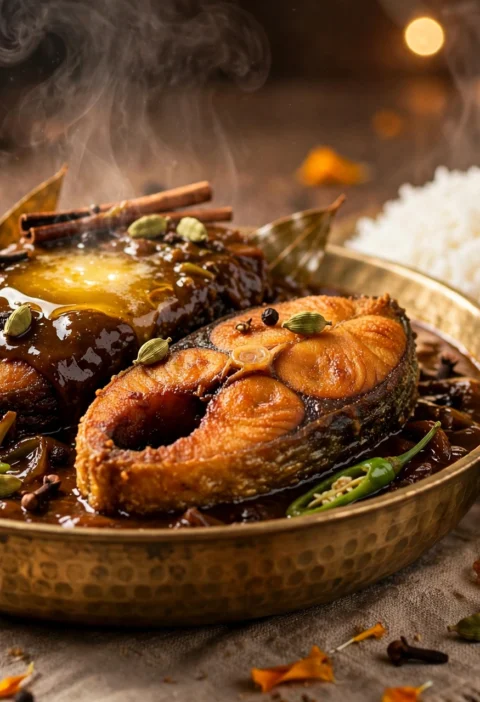
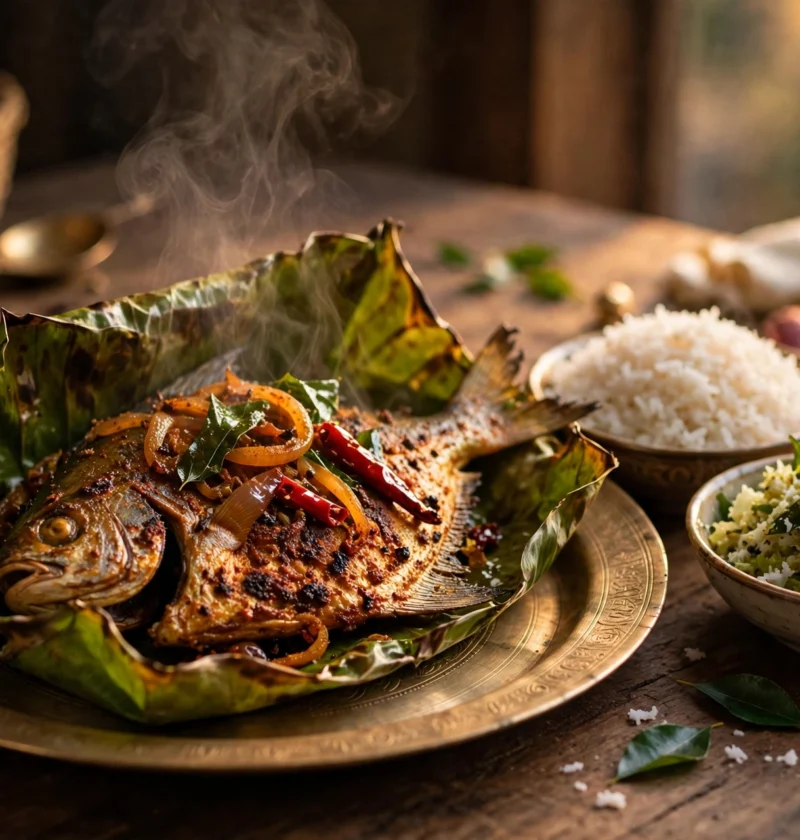
The first time someone put a banana leaf parcel in front of me, I had no idea what to do with it. I was eating at a friend’s family home outside Kochi, and the parcel sat on my steel plate like a small green gift, smelling faintly of smoke and fried onions. Everyone else was already tearing theirs open, steam curling up. I sat there politely, fork in hand, wondering whether I was supposed to unwrap it or eat around it, until my friend’s mother laughed and slit hers open with a spoon to show me the fish inside — golden, coated in a dark red masala, glistening with coconut oil. That first bite, eaten with hot rice, is why this meen pollichathu recipe exists in my kitchen today. The fish was moist in a way grilled fish rarely is, the masala had soaked into every flake, and the leaf had given it a green, smoky perfume I had never tasted.
What I learned that evening is that the banana leaf is not packaging, it is the cooking method. Wrapped tight, the fish steams in its own juices while the masala caramelizes around it, and the leaf protects it from drying out. This meen pollichathu recipe takes about forty minutes from marinade to table, uses one pan and ingredients from any Indian grocery store, and turns an ordinary weeknight fish dinner into something that feels like an occasion. If you have ever bought banana leaves and wondered what to do with them, this is your answer — and once you have opened your first parcel at the table, you will understand why Keralites guard this dish.
Why This Meen Pollichathu Recipe Works
- The leaf does two jobs at once: It traps steam so the fish stays juicy, while the outside chars gently in the pan and lends a smoky, grassy flavour no foil or parchment can copy.
- The masala is cooked before wrapping: Frying the onion-tomato masala first means it reaches the fish already deep and sweet, so this meen pollichathu recipe tastes slow-cooked though the whole dish takes forty minutes.
- Kokum keeps it bright: A piece of kokum or a spoon of tamarind cuts through the richness of the coconut oil and keeps the fish tasting clean and coastal rather than heavy.
- Shallow-frying, not deep-frying: The parcels need only a slick of oil in a wide pan, so the fish crisps at the edges without drinking up fat or falling apart.
- It waits politely for guests: You can marinate the fish and cook the masala hours ahead, then wrap and fry at the last minute — a rare fish dish that actually suits a dinner party.
Ingredients for This Meen Pollichathu Recipe
Everything below serves four as a main with rice. Buy the fish as fresh as you can, and read through once before you start — the masala stage moves quickly, so have your spices measured and waiting.
For the fish
- 4 whole pomfret (about 1 1/2 pounds total), cleaned, or 4 thick kingfish steaks
- 1/2 teaspoon turmeric powder
- 3/4 teaspoon fine sea salt, plus more to taste
- 1 tablespoon lemon juice, freshly squeezed
For the masala
- 3 tablespoons coconut oil, plus 2 more tablespoons for frying the parcels
- 1 teaspoon mustard seeds
- 2 medium onions, thinly sliced
- 1 tablespoon ginger, finely grated
- 4 cloves garlic, thinly sliced
- 2 green chillies, slit lengthwise
- 2 sprigs fresh curry leaves (about 20 leaves)
- 1 large tomato, finely chopped
- 1 teaspoon Kashmiri red chilli powder
- 1/2 teaspoon ground turmeric
- 1/2 teaspoon garam masala
- 1 generous teaspoon coriander powder
- 1 piece kokum, or 1 tablespoon tamarind pulp
- 1/2 teaspoon fine sea salt
For wrapping
- 4 large banana leaf pieces, each about 12 inches square (fresh or frozen, thawed)
- 4 toothpicks, or short lengths of cotton kitchen string
- Fresh cilantro, for garnish
- Lemon wedges, for serving
How to Make This Meen Pollichathu Recipe in 5 Steps
The method is five stages with one golden rule: do not rush the masala. The fish itself cooks in minutes, but the masala needs fifteen minutes of patient frying to turn sweet and dark, and that is where the flavour of this meen pollichathu recipe is built.
Step 1: Marinate the fish
Score each pomfret with three shallow diagonal cuts on both sides, so the masala reaches the flesh and the fish cooks evenly. Rub the fish all over with turmeric, salt and lemon juice, working the seasoning into the cuts, and set aside for 15 minutes while you start the masala. For kingfish steaks, skip the scoring and simply coat them well. Do not marinate much longer than twenty minutes, because the lemon will begin to firm up the surface of the fish, and this dish wants the fish tender, not cured.
Step 2: Fry the masala until dark and sweet
Warm the 3 tablespoons of coconut oil in a broad, heavy-bottomed skillet over a medium flame. When it shimmers, scatter in the mustard seeds and wait for the popping to settle, then add the onions with a pinch of salt and cook, stirring often, for about 8 minutes until soft and golden at the edges. Add the ginger, garlic, green chillies and curry leaves, stir for a minute until fragrant, then tip in the tomato and cook 5 minutes more, pressing it down, until it collapses into the onions. Now stir in the chilli powder, turmeric, coriander and garam masala, and cook for one minute until the oil glistens at the edges of the pan. Add the kokum and salt, stir once, and take the pan off the heat. Taste it — it should be salty, tangy and deeply savoury, with the onions sweet underneath. Let the masala cool for five minutes so it is easy to handle.
Step 3: Wilt the banana leaves
Banana leaves crack if you fold them straight from the packet, so they need a quick wilting first. Hold each leaf briefly over a low flame, or lay it in a dry hot pan for 20 to 30 seconds per side, until it turns brighter green and pliable. If a leaf tears at the edges, do not worry — patch it with a second smaller piece laid crosswise. Wipe each leaf with a damp cloth and lay them out, shiny side down, ready for wrapping. This small step is what keeps the parcels from splitting in the pan.
Step 4: Wrap the parcels
Spoon a generous layer of masala onto the centre of each leaf, lay a fish on top, and cover it thickly with more masala, tucking some into the cuts. Fold the sides over the fish like an envelope, then fold top and bottom over to make a neat parcel, and pin it shut with a toothpick or tie it with string. The parcel should feel snug but not bursting — too tight and the steam has nowhere to go, too loose and the masala leaks. If masala is left over, spoon it over the parcels when serving; nothing in this dish should go to waste.
Step 5: Pan-fry low and slow, then rest
Heat the remaining 2 tablespoons of coconut oil in a clean wide pan over medium-low heat. Lay the parcels seam-side down, cover, and cook 6 to 7 minutes without moving them, so the leaf chars gently and the fish steams inside. Flip each parcel carefully with a wide spatula, cover again, and cook 6 to 7 minutes more. The leaf will darken and smell smoky, which is exactly right. Take the pan off the heat and let the parcels rest, still wrapped, for 3 minutes, so the juices settle back into the fish instead of running out. Carry the parcels to the table whole and let everyone open their own — half the pleasure of this dish is that first puff of fragrant steam.
Serving Suggestions
The classic partner is the simplest one: hot steamed rice, the parcel opened right on top so the masala runs into the grains, and yogurt or cucumber salad on the side to cool the palate. That is how I serve this dish most often, and it needs nothing else — fish, masala and rice are a complete meal. For a fuller Kerala table, add a coconut vegetable dish and some papad for crunch.
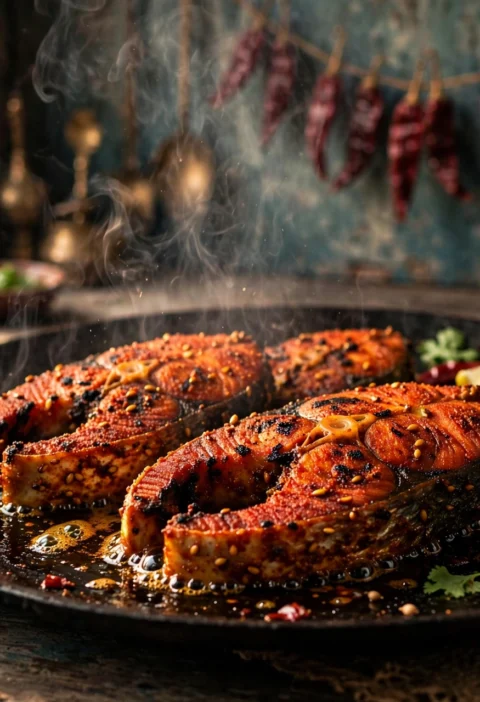
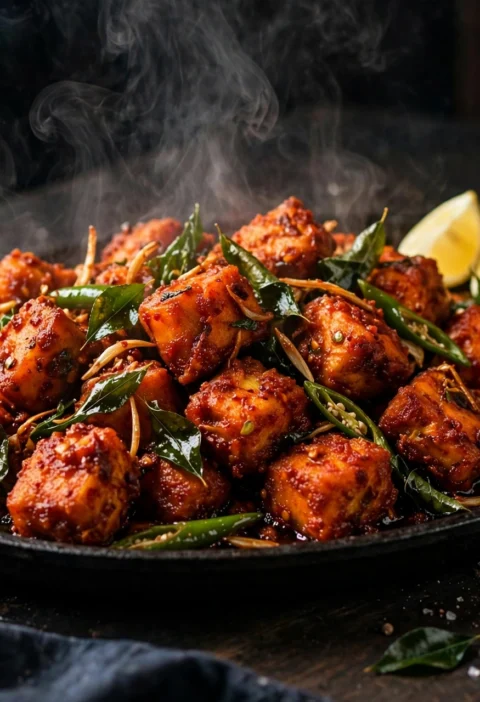
When cooking for a crowd that loves fish, I set this dish beside a simpler fried fish so guests can compare — my Fish Fry for those who want crunch, or the Apollo Fish when the table wants something fiery and restaurant-style. A cold glass of buttermilk suits the smoky masala, and lemon wedges on the table let everyone brighten their own plate.
Storage and Reheating
Leftovers go into an airtight box in the fridge, parcels still wrapped, and stay good for 2 days — the leaf protects the fish well, and the flavour deepens overnight. To reheat, warm the wrapped parcels in a covered pan over low heat for 5 to 6 minutes, turning once, until heated through — this keeps the fish moist in a way the microwave never does. Microwaving works in a pinch but softens the leaf and dries the fish edges, so I only reach for it when pressed for time. Freezing is something I skip for this dish, because the fish turns watery when thawed and the leaf goes limp. If you know you will have extras, keep some masala aside in the fridge — it spoons beautifully over freshly fried fish the next day.
Frequently Asked Questions
Can I make this dish with a different fish?
Yes, and it is a forgiving dish. Pomfret is traditional, and kingfish steaks are the easiest swap since they hold their shape well. Sea bass, red snapper and even salmon portions all work, though delicate fillets need gentler handling when you wrap and flip them — use two spatulas and keep the parcels snug. Avoid very thin fillets like sole, which overcook before the leaf chars, and always buy the freshest fish you can — a wrapped dish hides nothing once opened.
Where do I find banana leaves, and what if they tear?
Look in the frozen section of Indian or Southeast Asian grocery stores, where banana leaves are sold folded flat — frozen leaves work just as well as fresh for this dish, and are often cheaper. Thaw them fully in the fridge overnight, then wilt them over a flame or in a dry pan, which makes them flexible. Small tears are normal: lay a second small piece crosswise underneath, or fold so the tear sits on the underside, and the masala will stay put.
Can I bake this dish instead of pan-frying it?
Yes, and it is a good option when making many parcels at once. Lay the wrapped parcels in a single layer on a lined tray and bake at 400°F for 18 to 20 minutes, turning once halfway, until the leaves darken and the fish flakes easily. You will miss a little of the pan’s smoky char, but the fish stays just as moist, and two minutes under the broiler adds colour to the leaf. Either way, rest them wrapped for three minutes before serving.
Is this dish very spicy?
It is warmly spiced rather than fiercely hot, and you control the heat easily. Kashmiri chilli powder gives colour more than burn, so most warmth comes from the slit green chillies — leave them out or use one instead of two for a milder parcel. Children tend to like this dish with the chillies skipped and a spoonful of yogurt on the side, while adults who want fire can add a chopped bird’s eye chilli to the masala.
Recipe Summary
Count on 15 minutes of prep and marinating, then about 25 minutes of cooking, which puts this meen pollichathu recipe on the table in 40 minutes for four. It belongs to the Kerala coastal shelf, and a serving lands near 320 calories with rice on the side.
If you give this dish a go, I hope the moment of opening the parcel becomes the memory you keep — the steam, the smell of coconut oil and curry leaves, and fish so moist it barely needs a knife. That small ceremony is the whole point of the dish, and now it belongs to you. For more background on the tradition behind it, read about Kerala cuisine and the banana leaf on Wikipedia.