The Thick Crepe That Changed My Mind About Dosa
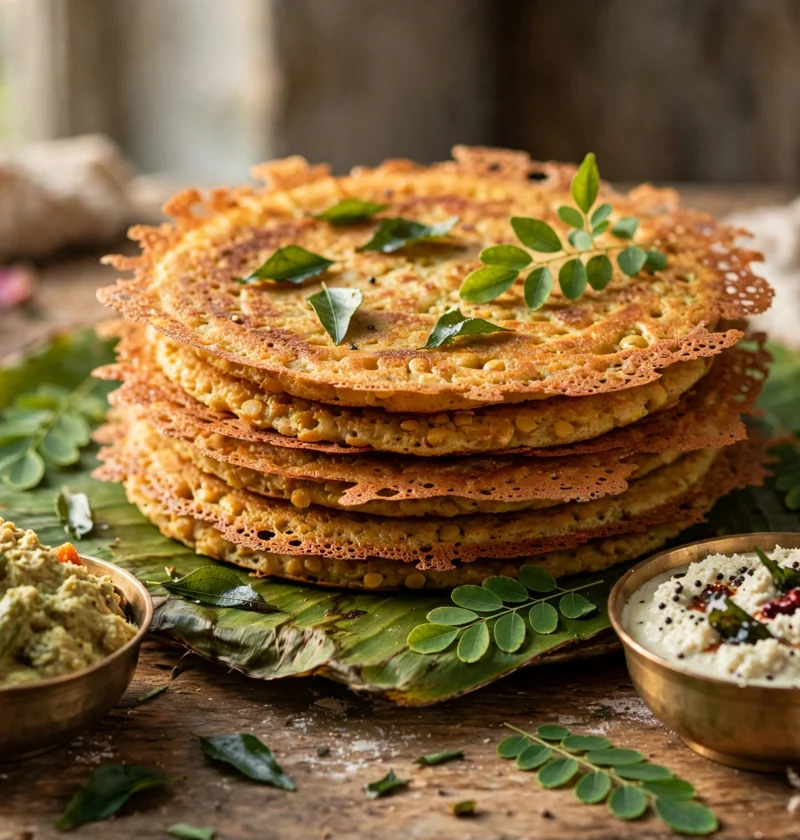
I used to think every South Indian crepe was a dosa, just thinner or thicker depending on the cook’s mood. Then a friend’s grandmother in Madurai set a plate in front of me that proved me wrong in the best possible way. It was not the paper-thin, shatteringly crisp dosa I knew, nor was it a soft uttapam. It was thick, golden and nubby, with a crust that crackled at the edges and a centre that stayed tender and almost fluffy, studded with curry leaves and little green flecks I later learned were drumstick leaves. She called it adai, and this adai recipe is my attempt to recreate that plate at home, after many mornings of grinding, resting and frying my way closer to her version.
What makes this adai recipe different is the batter itself. There is no fermentation, no waiting overnight, and no yeast coaxing anything to rise. Instead, a mix of rice and three dals is soaked for a few hours, ground coarse rather than smooth, and seasoned with red chillies, asafoetida and curry leaves. That coarse grind is the whole secret of this adai recipe: it gives the crepe its hearty bite and its golden crust, and it means you can decide at lunchtime to make adai for dinner without planning a day ahead. If you love dosa but want something more filling, more rustic and far more forgiving, this is the crepe to learn.
Why This Adai Recipe Works
- No fermentation, no waiting: Unlike dosa batter, this adai recipe needs only a few hours of soaking, so the batter is ready the same day you crave it.
- A coarse grind for real texture: Grinding the soaked dals and rice just short of smooth gives this adai recipe its signature nubby bite and crisp, lacy edges.
- Three dals for depth: Toor, chana and urad dals together make this adai recipe hearty, protein-rich and far more satisfying than a plain rice crepe.
- Greens folded right in: Drumstick leaves and curry leaves are mixed into the batter, so every bite of this adai recipe carries their fresh, earthy flavour.
- A thick pour that forgives: Adai is spread thick, not paper-thin, so this adai recipe is wonderfully forgiving for first-time crepe makers.
Ingredients for This Adai Recipe
Everything below makes about eight adai, enough for four people as a main meal with chutney and avial. Soak the dals and rice in the morning and you will be cooking by lunch. Read through once before you start, because the grinding goes best when everything is measured and waiting.
For the batter
- 1 cup raw rice (sona masoori or any short-grain rice)
- 1/2 cup toor dal (pigeon peas), rinsed
- 1/4 cup chana dal (split chickpeas), rinsed
- 1/4 cup urad dal (split black gram, skinless), rinsed
- 3 dried red chillies, broken in half
- 1/2 teaspoon asafoetida (hing)
- 1 teaspoon fine sea salt, plus more to taste
- Water, for soaking and grinding
For the flavouring and cooking
- 1 cup drumstick leaves (moringa leaves), picked and rinsed
- 1 sprig fresh curry leaves (about 10 to 12 leaves), finely chopped
- 1 small onion, finely chopped (optional)
- 2 tablespoons chopped fresh cilantro
- 1 teaspoon cumin seeds
- Oil or ghee, for cooking the adai
How to Make This Adai Recipe in 5 Steps
Cooking adai comes down to five stages and a single principle: keep the batter thick and a little coarse. A runny, silky batter makes a sad, flat pancake, while a thick, grainy batter fries up into the golden, nubby crepe you are after. A cast-iron tawa or a heavy skillet is ideal, because it holds steady heat and builds a proper crust.
Step 1: Soak the rice and dals
Rinse the rice and the three dals together until the water runs mostly clear, then soak them in plenty of fresh water with the dried red chillies for 4 to 5 hours. The chillies soften as they soak and grind smoothly into the batter, giving it warmth without a separate chilli paste. Do not rush this soak: properly softened dals grind evenly, and evenly ground batter fries evenly. Drain the mixture well before grinding, but keep a cup of the soaking water aside in case the batter needs loosening later.
Step 2: Grind coarse, not smooth
Tip the drained rice, dals and chillies into a wet grinder or a powerful blender with the asafoetida and salt. Add water a splash at a time and grind to a batter that is thick enough to coat a spoon and still feels faintly grainy when you rub a drop between your fingers. This texture is the heart of the dish: a smooth batter would make a plain pancake, while this coarse batter gives the finished crepe its bite. Scrape down the sides often and resist adding too much water; you can always loosen the batter later, but you cannot thicken an over-watered one.
Step 3: Fold in the greens and rest
Transfer the batter to a large bowl and stir in the drumstick leaves, chopped curry leaves, onion if using, cilantro and cumin seeds. The batter should be thick, like pancake batter that barely pours, and flecked generously with green. Let it rest for 15 to 20 minutes while you heat the tawa and set out the chutney. This short rest lets the rice absorb a little more water and the salt settle through the batter, so the adai seasons evenly rather than tasting salty in spots.
Step 4: Pour thick and cook low and slow
Heat a cast-iron tawa over medium heat until a drop of water dances on it, then brush it lightly with oil. Ladle in a generous scoop of batter and spread it gently into a thick round about 6 inches across, far thicker than you would ever spread a dosa. Do not try to make it thin or perfectly round; a slightly rustic shape is part of its charm. Drizzle a teaspoon of oil around the edges, cover with a lid, and cook for 3 to 4 minutes until the underside is deep golden and the top looks set. Patience here is what builds the crust.
Step 5: Flip, crisp and serve hot
Lift the lid and flip the adai carefully with a wide spatula. Cook the second side uncovered for 2 to 3 minutes more, pressing the edges down gently so they crisp against the hot tawa. The finished crepe should be golden on both sides, crisp at the rim and tender in the middle. Slide it onto a plate and serve at once, while the edges are still crackling, and cook the remaining batter the same way, brushing the tawa with oil between each one.
Serving Suggestions
The classic partner for adai is avial, the coconut-rich mixed vegetable curry, with a spoonful of coconut chutney on the side. The soft, saucy vegetables next to the crisp, hearty crepe make a complete meal on their own, and it is the way this adai recipe lands on my table most often. A dollop of butter melting over the hot crepe, or a spoonful of jaggery for those who like a sweet-savoury contrast, finishes the plate beautifully.
For a weekend breakfast, I often make this adai recipe a little smaller, almost pancake-sized, so everyone gets a crisp-edged round of their own with a small bowl of chutney for dipping. This adai recipe also travels well: a cooled adai wrapped in a banana leaf or foil stays tender for hours, which makes this adai recipe a favourite for school tiffins and office lunches. Whatever the occasion, serve this adai recipe hot off the tawa whenever you can, because the crackling edges are the first thing to fade.
For a fuller South Indian spread, set the adai beside a bowl of sambar and a crisp dosa-style side. If you want to compare two very different crepes from the same kitchen, try my Masala Dosa for the thin, potato-filled classic, or the Sambar when you want a tangy lentil curry to spoon over everything. Rolled up with chutney, leftover adai also makes a sturdy lunchbox wrap that holds up well at room temperature.
Storage and Reheating
Adai is at its best straight off the tawa, but leftovers keep well enough to be worth saving. Stack cooled adai with parchment between them, seal in an airtight box, and refrigerate for up to 2 days. The crisp edges soften as they sit, which is simply what happens to any fried crepe, but a hot, dry tawa brings much of the crunch back. Reheat each adai on a dry cast-iron tawa over medium heat for 2 minutes per side, pressing the edges down, until it crisps up again. Skip the microwave, which turns the crust soggy in moments and leaves the whole crepe limp. The batter for this adai recipe itself keeps refrigerated for a day; stir it well before cooking, since the dals settle, and loosen it with a splash of water if it has thickened. Freezing does not suit cooked adai, because the texture turns dry on thawing.
Frequently Asked Questions
Is adai the same as dosa?
No, and the difference is in the batter. Dosa batter is fermented rice and urad dal ground smooth and spread paper-thin, while adai batter is unfermented rice and three dals ground coarse and poured thick. That is why adai tastes heartier and more rustic, with a nubby bite rather than a shattering crispness. They share a tawa and a South Indian table, but they are different dishes, and this adai recipe celebrates exactly that difference.
Can I make this adai recipe without drumstick leaves?
Yes, though the leaves add a lovely earthy note. If you cannot find drumstick leaves, use a cup of finely chopped spinach, grated carrot or shredded cabbage instead. The batter method stays exactly the same; only the green flecks change. Frozen drumstick leaves also work well in this adai recipe — thaw them fully and squeeze out excess water before folding them in, so the batter stays thick.
Why did my adai turn out soft instead of crisp?
Almost always, the batter was too smooth or too thin, or the heat was too low. Keep the grind coarse, keep the batter thick enough to coat a spoon, and cook over steady medium heat with a lid on for the first side so the centre sets while the underside crisps. Do not rush the flip: if the underside is still pale, give it another minute. A well-seasoned cast-iron tawa also helps enormously, because it holds heat far better than a thin pan.
Can I make the batter ahead of time?
Partly, yes. Soak the rice and dals the night before and refrigerate them drained, then grind fresh in the morning for the best texture. Ground batter keeps in the fridge for a day, but the dals settle and the batter thickens, so stir it well and loosen it with a splash of water before cooking. I do not recommend grinding more than a day ahead, because the fresh, earthy flavour of the greens fades and the batter loses its lively edge.
Recipe Summary
Count on 10 minutes of measuring and grinding, plus 4 to 5 hours of soaking and about 20 minutes at the tawa, which puts thick, golden adai on the table for four people with chutney and avial. It belongs to the South Indian breakfast and dinner shelf, and a serving lands near 320 calories with the chutney.
This adai recipe is the dish I make when I want something hearty, honest and a little different from the usual dosa routine: coarse-ground dals, greens folded through, and a crust that crackles at the edges. If you try this adai recipe, grind coarse, pour thick, and bring it to the table straight off the tawa — those three habits are the entire trick, and now they belong to you. If you are curious about the dish itself, read more about adai and avial on Wikipedia.