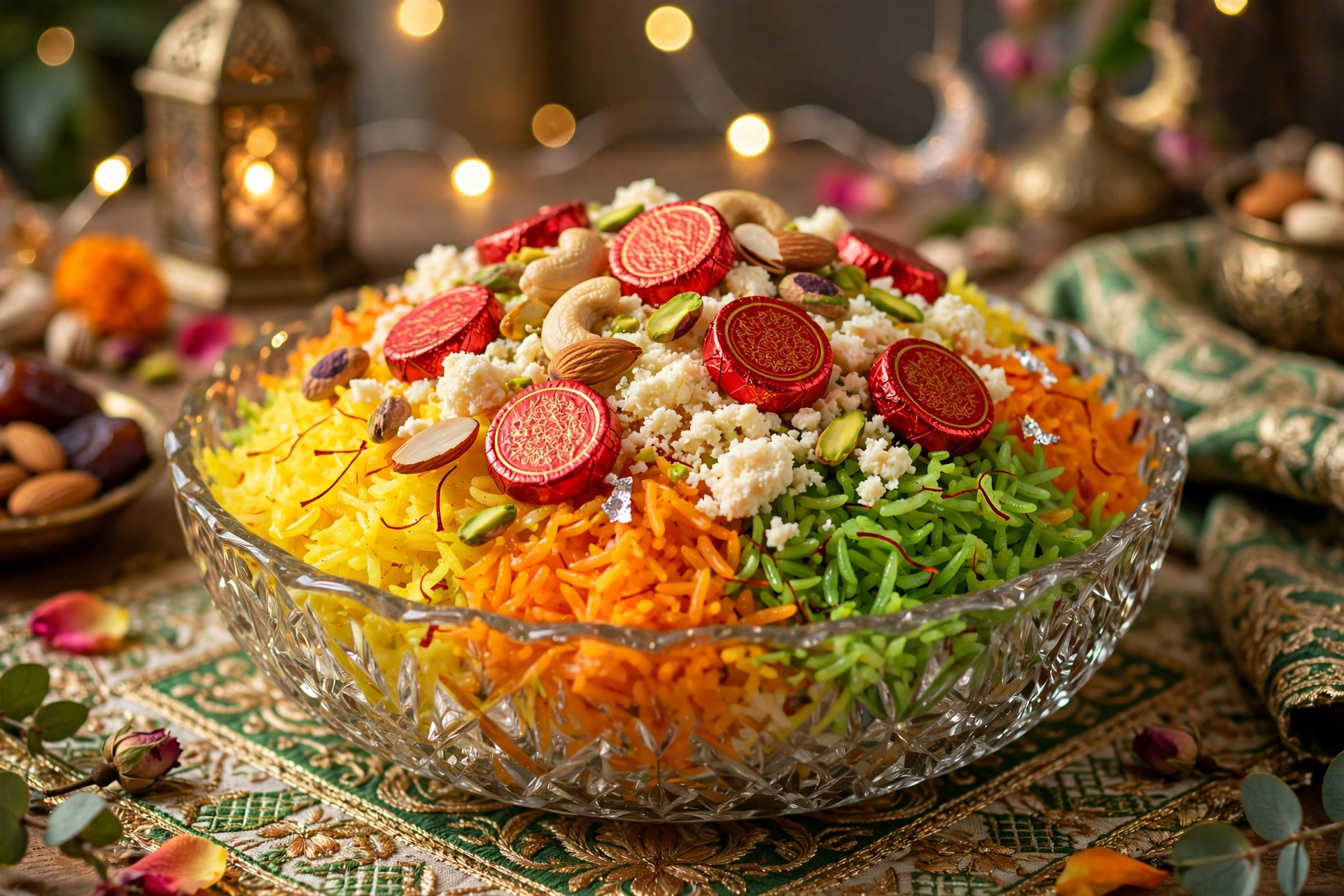
The first time I tasted the sweet behind this double ka meetha recipe, I was nineteen and wearing a borrowed sherwani at a Hyderabadi wedding in Karachi. The biryani had been demolished, the qorma bowls were empty, and I assumed the food was finished — then the waiters carried out wide, shallow dishes of something golden and glistening, cut into squares like a cake, and the whole hall went quiet in the way only a dessert queue can. An uncle I barely knew elbowed me forward and said, “Beta, this is the real shaadi. Everything before was just the introduction.” He was right. The square I was handed was crisp at the edges, meltingly soft in the middle, perfumed with saffron, and crowned with a thick smear of rabri. I ate two more before the dancing started and thought about it for a week.
It took me years of Ramzan iftars and a patient Hyderabadi neighbour named Farhana Aunty to learn how it is actually built. The secret, she told me, is that double ka meetha is not fried-and-served like so many bread sweets — it is assembled. The bread is fried first, laid in a dish like tiles, flooded with hot reduced saffron milk, and then left alone to rest and drink. That resting is where the magic happens: the crust softens into the milk, the crumb turns custardy, and the whole dish sets into tender squares you can lift out clean. My version below follows her method exactly — layer, pour, rest, crown — and it has ended every argument at my table about which dessert to make for Eid.
Why This Double Ka Meetha Recipe Works
Plenty of bread sweets are a race against sogginess. This double ka meetha recipe takes the opposite road — it plans the soaking from the start and controls it, so the finished dish is soft in the centre, golden at the edges, and never a puddle:
- The bread is dried before it ever meets the ghee. Day-old slices, left out for an hour or given a few minutes in a low oven, fry up firm and deeply golden instead of drinking oil and going limp. Dry crumb is structure.
- Ghee-frying builds the crust that holds the square together. Each triangle is fried until it is properly crisp and amber on both sides. That shell is what lets the finished pieces keep their shape after the milk goes on.
- The milk is reduced separately, with the saffron in it. Simmering the milk down before it touches the bread concentrates the flavour and means you are adding richness, not water. The saffron blooms in the warm milk and colours the whole dish.
- The assembled dish rests — and gets a short bake. Twenty minutes of resting (plus ten in a low oven) lets every layer absorb the milk evenly. No dry corners, no flooded middle, just uniform tenderness you can cut into clean squares.
- The rabri goes on at the end, never baked in. Spreading the thick rabri-style topping over the rested dish keeps two textures alive — the soft, milk-soaked bread below and the dense cream above. Baking it in would melt the two into one flat sweetness.
Ingredients
The name confuses people until you explain that “double” is short for double roti — the everyday sliced loaf — and that double ka meetha is Hyderabad’s way of turning that humble bread into a wedding sweet. The dish travelled from the royal kitchens of Hyderabad into homes across the subcontinent, and in Karachi it has become as much a Ramzan and Eid fixture as a shaadi one. For this double ka meetha recipe, plain white sandwich bread is genuinely the right choice — its soft, even crumb soaks the milk the way it should — though a day-old bakery loaf with the crusts trimmed works beautifully too. Whole milk is non-negotiable; this is not the dessert to lighten.
Serves 8
For the bread:
- 10 slices white sandwich bread, crusts trimmed, each cut diagonally into 2 triangles
- 1/2 cup ghee, for shallow-frying (add more as the pan needs it)
For the saffron milk:
- 4 cups whole milk
- 3/4 cup sugar
- A generous pinch of saffron strands (about 1/4 teaspoon), soaked in 2 tablespoons warm milk
- 1/2 teaspoon ground green cardamom
- 1 teaspoon rose water (optional)
For the rabri-style topping and finish:
- 2 cups whole milk, reduced separately (or 1 cup good shop-bought rabri)
- 2 tablespoons sugar
- 1/4 teaspoon ground cardamom
- 2 tablespoons slivered almonds
- 2 tablespoons slivered pistachios
- 1 tablespoon dried rose petals (optional)
How to Make This Double Ka Meetha Recipe – Step by Step
Step 1: Dry the bread and fry it golden in ghee. Lay the bread triangles on a tray for an hour to lose their surface softness, or set them in a 250°F oven for 8 to 10 minutes — you want them dry to the touch, not toasted. Heat the ghee in a wide, heavy pan over medium heat and fry the triangles in uncrowded batches, about 2 minutes per side, until they are deep golden and feel crisp when tapped. Lift them onto a rack or a plate lined with paper towels. A pale, soft-fried slice is the one mistake this dish does not forgive, so take the colour seriously.
Step 2: Reduce the saffron milk. Pour the 4 cups of milk into a heavy saucepan and bring it to a gentle boil over medium heat, then drop the heat and let it simmer for 15 to 18 minutes, stirring often and scraping the sides, until it has reduced to about 3 cups and turned a shade deeper. Stir in the sugar, the saffron with its soaking milk, and the cardamom, and simmer 2 minutes more. It should taste sweet and fragrant — sweeter than you would drink it, because the plain bread will pull the sweetness down. Keep it hot.
Step 3: Layer the bread and pour the milk over. Arrange half the fried triangles in a snug single layer in a heatproof dish (about 9 × 9 inches), edges overlapping slightly like roof tiles. Ladle over roughly a third of the hot saffron milk, letting it run into every gap. Lay the remaining triangles on top in the same way and pour the rest of the milk slowly over the whole surface, using the back of the spoon to nudge it toward any dry corners. Every piece should be bathed, with just a little milk pooling at the base.
Step 4: Rest the dish, then give it a short bake. Leave the assembled dish on the counter for 20 minutes — this is the heart of the method, when the bread drinks the milk and the layers settle into each other. Then bake at 300°F for 10 minutes, just until the top looks set and glossy and the edges bubble faintly. The centre should be soft and yielding when pressed, not firm. If you are serving later, this is your pause point: the dish waits happily, covered, for up to 2 hours.
Step 5: Crown with the rabri topping and nuts, and serve in squares. While the dish rests, make the quick topping: simmer the 2 cups of milk down to about 1 cup of thick, coating rabri-style milk, sweeten it with the sugar and cardamom, and let it cool slightly so it thickens further. Spread it over the warm bread in one generous layer, scatter the almonds, pistachios and rose petals across the top, and cut the dish into squares right there in the pan. Serve this double ka meetha recipe warm, lifting each square out with a wide spatula so the layers come with it.
Serving Suggestions
Warm is the way — not piping hot, which blurs the flavours, and never fridge-cold, which mutes the saffron. At weddings it arrives in its baking dish and is portioned at the table, and I copy that at home: the squares hold their shape, the milk glistens at the cut edges, and everyone can see exactly what they are getting. On a Ramzan table it follows the savouries beautifully, because one square is rich enough to close the meal.
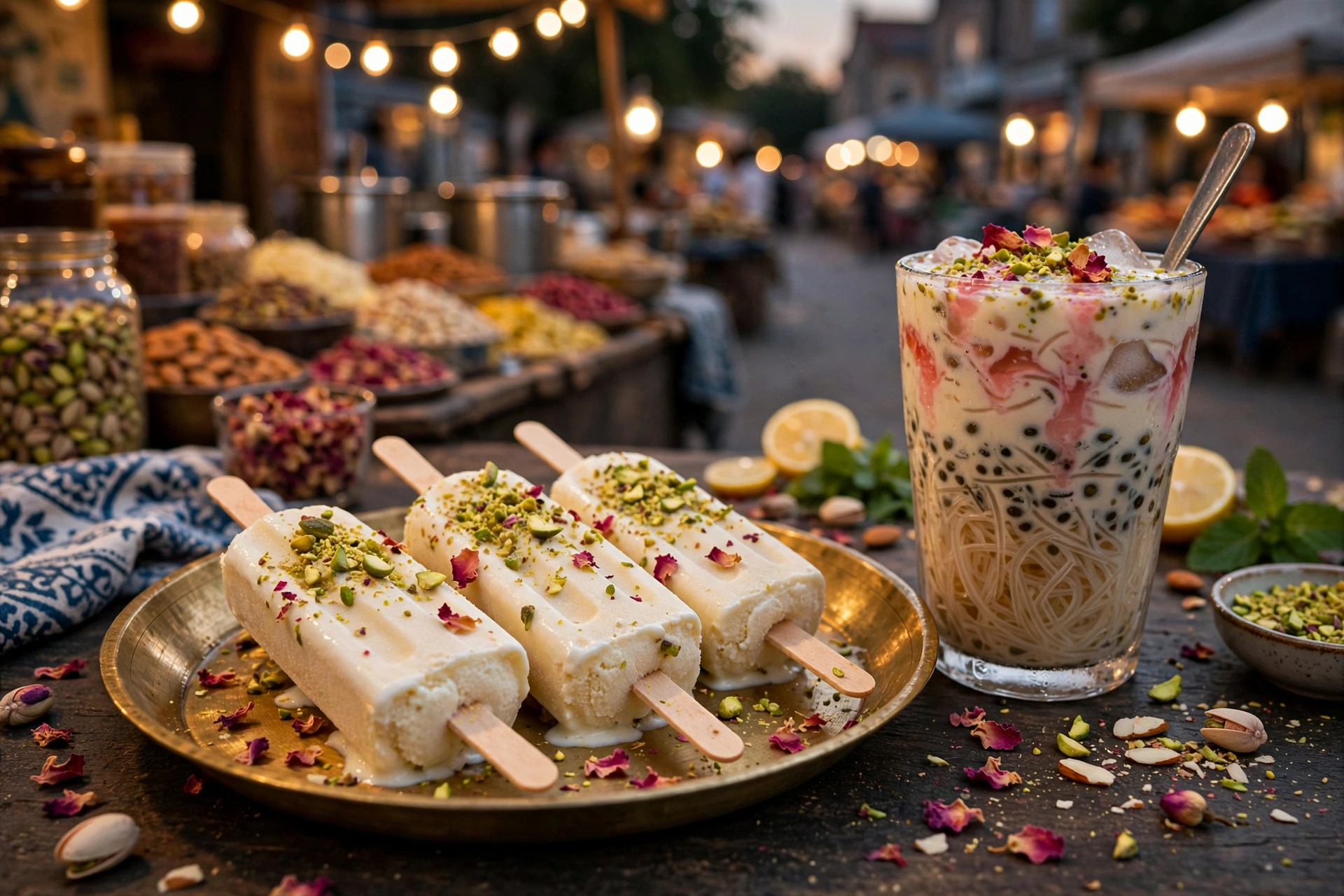
For a full dessert spread, I lean on contrast. A small extra bowl of my chilled rabri on the side lets the cream-lovers double down, since the topping here is deliberately just a taste of it. And when the table needs something cold and tall beside all this warmth, a glass of falooda — rose milk, vermicelli, basil seeds and a scoop of ice cream — is the classic partner; the two sweets have closed Hyderabadi and Karachi celebrations together for generations.
Storage and Reheating
Covered and refrigerated, the leftovers hold happily for 3 days, and something lovely happens overnight: the cardamom and saffron settle deeper into the crumb, so day two tastes even more perfumed than day one. The texture firms up cold, which some people in my house secretly prefer, eaten straight from the dish with a spoon.
To reheat, cover the dish with foil and warm it in a 300°F oven for 10 to 12 minutes, until the centre is loosened and glossy again; a splash of warm milk over the top before it goes in revives any square that looks dry. The microwave works for a single portion — 40 to 50 seconds at medium power — but the oven keeps the edges better. I do not freeze this dessert; the milk separates on thawing and the bread turns spongy in the wrong way.
Frequently Asked Questions
How is double ka meetha different from shahi tukray?
They are cousins, not twins. Shahi tukray keeps its fried bread crisp — the pieces are sauced with syrup and rabri at the moment of serving and eaten straight away, crackle intact. Double ka meetha is the Hyderabadi method: the fried bread is layered in a dish, soaked in hot reduced saffron milk, and rested (often briefly baked) until it turns soft and pudding-like all the way through, then cut into squares and topped with rabri. One is a crisp sweet dressed at the table; the other is a set, sliceable bread pudding.
Why did my double ka meetha turn soggy instead of soft?
Sogginess here has three usual causes. The bread was fresh and soft going into the pan, so it absorbed oil instead of crisping — always dry it first and fry it properly deep-golden. The milk went on unreduced, so there was simply too much thin liquid for the bread to hold. Or the dish sat far longer than the recipe’s rest before serving and the crust gave up entirely. A rescue for an over-soaked batch: give it 5 extra minutes uncovered in a low oven to drive off surface moisture before the rabri goes on.
Can I make double ka meetha a day ahead?
Yes, and weddings do exactly that. Assemble the dish through the rest and bake, cool it, cover and refrigerate. The next day, reheat it covered at 300°F for 15 minutes, then add the rabri topping and nuts fresh — the topping should never sit overnight on the bread, or it sinks in and you lose the two-layer contrast that makes the dish.
Which bread works best, and can I skip the frying?
Plain white sandwich bread is traditional and ideal, because its fine crumb soaks evenly; a soft bakery loaf is the next best thing. Avoid sourdough, seeded or very crusty breads — their flavour fights the saffron and their crumb stays chewy. The ghee-fry is not really skippable, since the crisp crust is the structure of the finished square. If you want a lighter version, brush the dried triangles with melted ghee and bake at 375°F for 8 to 10 minutes, turning once, until deep golden — the squares will be a little less rich but hold together the same way.
Recipe Summary
- Prep time: 20 minutes, plus 1 hour drying the bread
- Cook time: About 40 minutes
- Total time: Roughly 1 hour 30 minutes (including resting)
- Servings: 8
- Cuisine: Pakistani
- Course: Dessert