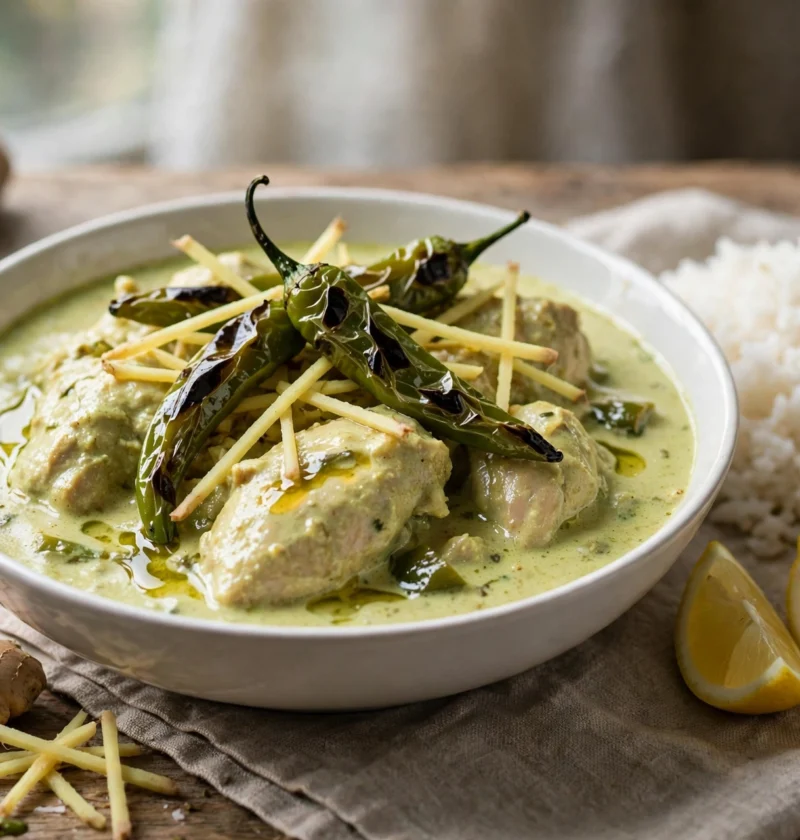
The first time this kacha lonka murgi recipe landed in front of me, I nearly laughed. It was a wet monsoon evening at a friend’s flat in south Kolkata, and she set down a bowl of chicken so pale it looked almost apologetic — cream-coloured gravy, a few whole green chillies floating on top, not a fleck of red anywhere. I grew up believing a serious chicken curry should glow the colour of sunset, so I took my first spoonful with low expectations and total confidence. Ten seconds later I was reaching for the water jug, then for more rice, then — this is the part nobody warns you about — straight back in for a second helping. The heat was real, but underneath it was something better: the fresh, green, almost floral perfume of raw chillies, the kind you smell when you snap one open at the market.
Kacha lonka means raw green chilli in Bengali, and murgi is chicken, so the name is simply the recipe: chicken cooked with green chillies used generously and treated gently, so their fragrance survives the pot. There is no dried red chilli powder here, no turmeric painting everything yellow, no heavy garam masala clouding the flavour. A green chilli paste goes in with ginger and garlic, whole slit chillies simmer in the gravy, and a small amount of yogurt rounds the edges into a pale, silky sauce. It is a relatively modern Kolkata favourite, the sort of dish home cooks and little neighbourhood cafés argue about, and once you taste it you understand why this kacha lonka murgi recipe has such loyal defenders. Friends in Kolkata tell me every neighbourhood has one small eatery famous for it — the kind of place with six plastic tables and a permanent queue — and regulars who ring ahead so their portion is not sold out by nine.
Why This Kacha Lonka Murgi Recipe Works
Green chillies are easy to use badly — cooked too hard they turn harsh, used timidly they disappear. These five habits are what keep the balance:
- The chillies go in three ways. A paste for body, whole slit chillies for slow perfume, and a fresh handful at the end for brightness — each layer lands differently on the tongue. Splitting them this way is what makes the finished dish taste fiery and fresh at the same time, never like a curry that is simply hot.
- The paste stays coarse, never watery. Grinding the chillies with ginger, garlic and just a spoonful of water gives a thick paste that clings to the chicken instead of thinning the gravy.
- The yogurt is whisked and tempered. Stirring a little hot gravy into the yogurt before it goes in keeps this kacha lonka murgi recipe silky instead of split and grainy. Letting the yogurt sit out of the fridge while the chicken marinates helps it behave, too.
- Nothing is allowed to brown. The onions cook only until soft and translucent, because browning would drag the gravy toward an ordinary curry colour and bury the fresh green flavour.
- Mustard oil and lemon finish it raw. A drizzle of pungent mustard oil and a squeeze of lemon go on off the heat, sharpening the chilli perfume right before the bowl reaches the table.
Ingredients
Everything in this dish orbits one ingredient, so buy the best you can: the humble chili pepper, fresh and green. Look for firm, glossy chillies that snap rather than bend; dull, wrinkled ones have already lost the bright aroma this curry lives on. Their heat comes from capsaicin, which lives mostly in the pale ribs and seeds, so you can steer the fire yourself — keep the seeds in for the full Kolkata experience, scrape some out for a gentler bowl. I use the long, thin, fiercely hot green chillies from an Indian grocer, roughly the heat of a Thai bird chilli; serranos are the closest supermarket swap. The remaining ingredients are modest: chicken on the bone, one onion, fresh ginger, garlic, plain yogurt, mustard oil if you can find it (any neutral oil works), and lemon. I keep everything else deliberately plain, because every extra spice I have ever tried in this pot — a stray spoon of coriander powder, a pinch of garam masala out of habit — has pulled the curry closer to an ordinary one and further from itself.
Serves 4
For the chicken and marinade:
- 2 pounds bone-in chicken pieces, skin removed, cut into curry-size pieces
- 1/2 cup plain full-fat yogurt, whisked smooth
- 1 teaspoon fine salt
- 1 tablespoon mustard oil or neutral oil
- 1 teaspoon lemon juice
For the green chilli paste:
- 12 fresh green chillies, stems removed (about 1 packed cup, roughly chopped)
- 2 tablespoons grated fresh ginger
- 6 garlic cloves, peeled
- 1 to 2 tablespoons water, only as needed to grind
For the curry:
- 3 tablespoons mustard oil or neutral oil
- 1 large onion, very finely sliced (about 1 1/2 cups)
- 1 bay leaf
- 1/2 teaspoon sugar
- 6 to 8 whole green chillies, slit lengthwise
- 1/2 cup warm water, plus more if needed
- Fine salt, to taste
- 1 teaspoon raw mustard oil, for finishing (optional but recommended)
- 1 tablespoon lemon juice, plus wedges to serve
- Fresh cilantro leaves, to serve
How to Make This Kacha Lonka Murgi Recipe – Step by Step
Step 1: Grind the chilli paste and marinate the chicken. Blend the chopped green chillies, ginger and garlic with just enough water to make a thick, slightly coarse paste — stop before it turns into juice. Tip the chicken into a bowl with the yogurt, salt, oil, lemon juice and two-thirds of the chilli paste, and massage everything together with your hands. Cover and leave it for at least 30 minutes at room temperature, or up to overnight in the fridge; the salt and yogurt start tenderising the meat long before the pan gets hot. If you are nervous about the heat, this is also the moment to decide about the seeds — leave them all in for the full experience, or scrape out half for a gentler marinade.
Step 2: Soften the onion without browning it. Warm the oil in a heavy pan or karahi over medium heat. Add the bay leaf, let it sizzle for a few seconds, then add the sliced onion with a pinch of salt. Cook, stirring often, for 8 to 10 minutes until the onion is completely soft, sweet and translucent, with at most the faintest golden edge. Patience here protects the pale colour this kacha lonka murgi recipe is known for.
Step 3: Fry the remaining paste and sear the chicken. Stir in the rest of the chilli paste and fry for 2 minutes, until the raw, grassy smell turns warm and fragrant and the oil begins to glisten at the edges. Add the chicken with all of its marinade, spread the pieces out, and cook over medium-high heat for 6 to 7 minutes, turning once or twice, until the meat has lost its raw pink surface and the yogurt clings to it in a thick coat. Do not rush this stage — the marinade needs a few minutes to dry onto the meat, because a wet, steaming surface never picks up that faint, appetising sheen.
Step 4: Simmer gently with the whole chillies. Pour in the warm water, add the sugar and the slit whole chillies, and stir once. Bring it to the barest simmer, cover, and cook on low for 18 to 20 minutes, until the chicken is tender right down to the bone and the gravy has thickened to a pale, spoon-coating sauce. Taste for salt near the end — the chillies will keep blooming, so judge the heat after a full minute, not on the first sip. If the gravy looks thinner than you like near the end, simply take the lid off for the final five minutes and let it reduce gently.
Step 5: Rest, finish, and serve. Take the pan off the heat and let the curry rest, covered, for 5 minutes; like most yogurt-based dishes, it tastes rounder and more settled after a short pause. Stir through the lemon juice and the raw mustard oil, scatter over the cilantro, and bring it to the table with extra lemon wedges for anyone who wants more brightness.
Serving Suggestions
Serve this curry the Kolkata way: over plain steamed rice, short-grain if you have it, with nothing fancier than a wedge of lemon and maybe a small mound of sliced onion on the side. The rice is not a side dish here, it is the fire blanket — spoon the pale gravy generously over it and let the grains soak it up. A simple cucumber raita or even a glass of salted lassi alongside is all the cooling help the table needs, and honestly, part of the fun is managing without.
For a fuller Bengali-leaning spread, I like to set this beside my chicken chaap, whose rich, nutty, gently sweet gravy could not be a better contrast to all this green fire — guests drift between the two bowls and argue happily about which one wins. On a quieter weeknight, pair it with my doi chicken instead and you get a lovely study in yogurt curries: one soft, mild and comforting, the other pale, perfumed and unapologetically hot.
Storage and Reheating
Any leftovers will sit in the fridge, covered, for a good 3 days without complaint. In fact, the curry tastes deeper and more settled on the second day, once the chicken has rested overnight in the chilli gravy — the fire softens a touch, though it never fully leaves.
Warm it back up slowly in a covered pan over the lowest heat, adding a spoonful or two of water and stirring now and then until it steams through; a fierce boil can split the yogurt and leave the meat stringy. It freezes acceptably for up to a month, but thaw it slowly in the fridge and expect the sauce to need a good stir and a fresh squeeze of lemon to wake it back up.
Frequently Asked Questions
How hot is kacha lonka murgi, and how do I make it milder?
As written, honestly hot — the chillies are the dish, not a garnish. To tame it, use 8 chillies in the paste instead of 12, scrape the seeds from half of them, and add an extra 1/4 cup of yogurt. Serve raita and rice alongside and the heat becomes very manageable without losing the perfume. That pale colour fools everyone the first time, by the way — my Kolkata friend still laughs about the look on my face.
Can I use jalapeños or dried red chillies instead?
Jalapeños work in a pinch, though they taste grassier and milder, so add a serrano or two if you have them. Dried red chillies I would not use — they bring a smoky, brown-spice flavour that is a completely different curry. This kacha lonka murgi recipe depends on the freshness of raw green chillies.
Why did my yogurt split and turn the sauce grainy?
Almost always, the yogurt went into a furiously boiling pan, or it was cold straight from the fridge. Whisk it smooth, let it come to room temperature, and stir a spoonful of the hot gravy into it before adding it to the chicken. Once the curry is assembled, keep it at a bare simmer and it will stay silky. If a sauce does turn grainy on you, it can usually be rescued off the heat with a spoonful of fresh whisked yogurt stirred through right at the end.
Does this work with boneless chicken?
It does, and thighs are the cut to choose — cut them into big, generous chunks so they stay juicy, and give them 12 to 15 minutes of simmering instead of 20. Breast meat cooks faster still and dries out if you look away, so check it early and pull the pan off the heat the moment it is done. Bone-in pieces remain my favourite here, because the bones give the pale gravy a depth and body that boneless meat never quite manages.
Recipe Summary
- Prep time: 20 minutes, plus 30 minutes marinating
- Cook time: 35 minutes
- Total time: About 1 hour 25 minutes
- Servings: 4
- Cuisine: Pakistani
- Course: Main Course