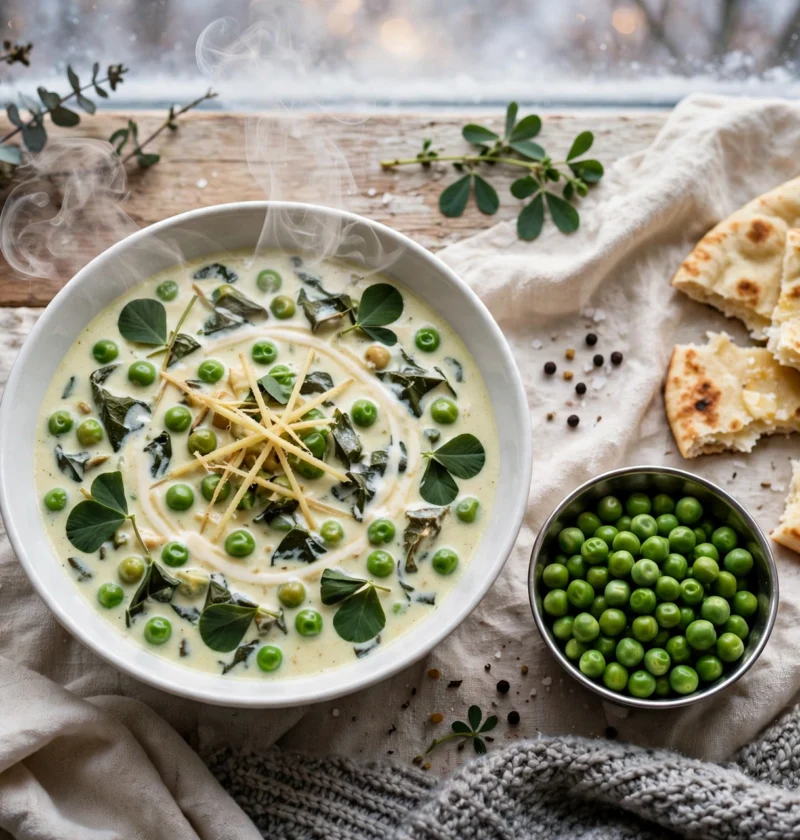
My first bowl of methi malai matar arrived at a friend’s winter dawat in Lahore, and I nearly walked straight past it. Everything else on that table was shouting — a red chicken curry, a biryani striped orange and white — and in the middle sat this pale bowl: ivory gravy, green flecks, not a hint of tomato. I took one spoonful to be polite. Then I quietly took the serving spoon. This methi malai matar recipe is the one I have been chasing since that night — sweet peas and fresh fenugreek folded through a silky cashew-cream gravy, rich and delicate, with the methi’s soft bitterness running underneath like a bass note. It tastes like a restaurant secret, but it is built from a handful of ordinary things and one firm rule: nothing in the pan is allowed to bully anything else.
At home, methi has always been winter food. My mother would come back from the sabzi wala with bunches bigger than her forearm, and the whole kitchen would smell green and faintly bitter while she picked leaves at the table, a steel bowl filling between her hands. Mostly those leaves became aloo methi or parathas. This is the dish I make now with the best of them. The methi here is fresh leaves — not the kasuri methi you crush over a finished curry. The two come from the same plant but behave like distant cousins, and this gravy needs the fresh one’s grassy, living bite. There is no tomato to hide behind and no paneer to lean on. Just methi, peas, and a white gravy that has to be seasoned with a light, confident hand.
Why This Methi Malai Matar Recipe Works
A methi malai matar recipe is a balancing act disguised as a simple curry. Five quiet decisions keep it standing:
- The gravy is white, and it stays white. Everything that would stain it — tomato, turmeric, red chili, browned onion — is left out on purpose. The base is onion and cashew simmered in water until soft, then blended; because nothing is fried for colour first, the gravy stays ivory and tastes of cream and gentle spice, not heavy masala.
- The methi is salted and squeezed before it cooks. Fresh fenugreek carries real bitterness, and fifteen minutes with salt draws out the harshest of its juices. Squeeze them dry and that bitterness softens into the pleasant, appetising bite the dish is loved for — skip the step, and the whole bowl can turn medicinal.
- The peas are protected from the heat. Peas simmered for twenty minutes go grey and mealy and lose the sweetness they are here to give. Added near the end instead, they stay bright, plump and sweet — little green bursts against the cream, exactly the contrast the methi needs.
- The spicing whispers instead of shouting. Cardamom, a bay leaf, two cloves and a drift of black pepper are the whole orchestra. Garam masala in quantity would trample the methi and tint the gravy besides; here the spices are warmth in the background, felt rather than identified.
- The cream goes in last, off the boil. Cream stirred into a bubbling gravy can split into greasy beads, and even when it behaves, hard heat dulls it. Lower the flame, swirl it through, let it barely warm — the gravy stays glossy and the malai tastes fresh rather than cooked.
Ingredients
Two ingredients carry this methi malai matar recipe, and both deserve a word before the list. The methi is the leaf of fenugreek — the same plant whose amber seeds are a spice-box staple and whose dried leaves are sold as kasuri methi. Fresh leaves are another creature entirely: grassy, tender, gently bitter, and sold in bunches in the cooler months, which is why this curry tastes like winter to me. The peas are the humble garden pea, and they bring the sweetness that keeps the methi honest; frozen peas, frozen within hours of picking, are honestly better here than tired fresh ones. Everything else is support: cashews for body, whole spices for warmth, and cream — the name promises malai, and we keep our promises.
For the methi and peas:
- 2 large bunches fresh methi (fenugreek leaves) — about 4 packed cups picked leaves (roughly 8 ounces / 225 g), washed well and roughly chopped
- 1/2 teaspoon salt, for resting the methi
- 1 1/2 cups green peas (about 8 ounces / 225 g), fresh or frozen
For the white gravy base:
- 1 large onion (about 8 ounces / 225 g), roughly chopped
- Raw cashews, 1/3 cup (50 g / about 1 3/4 ounces), soaked 20 minutes in hot water
- 1 tablespoon fresh ginger, roughly chopped
- 3 garlic cloves
- 1 or 2 green chilies, stems removed (optional, for a whisper of heat)
- 3/4 cup water, for simmering the base
Whole spices and seasoning:
- 2 tablespoons ghee (or butter, or a neutral oil)
- 1 bay leaf
- 3 green cardamom pods, lightly crushed
- 2 cloves
- 1/2 teaspoon sugar
- 1/4 teaspoon ground black pepper, plus more to taste
- Salt, to taste
To finish:
- 3/4 cup heavy cream (malai), plus a spoonful for swirling
- 1/4 cup whole milk or water, to loosen the gravy as needed
- A pinch of garam masala (optional — truly just a pinch)
- Fine ginger juliennes, for the top
How to Make This Methi Malai Matar Recipe – Step by Step
Step 1: Tame the methi and soak the cashews. Drop the cashews into a bowl of hot water and set them aside. Pick the methi leaves from their stems — a few tender stem tips are fine — then wash them in two changes of water, because methi hides grit like nothing else. Chop them, toss with the half teaspoon of salt in a colander, and leave for fifteen minutes. Dark green juice will gather below. Squeeze handfuls hard over the sink, wringing out as much of that bitter juice as you can; the leaves will look bruised and much reduced, which is exactly right.
Step 2: Simmer and blend the pale base. Put the onion, drained cashews, ginger, garlic and green chilies in a saucepan with the water. Bring it to a simmer, cover, and cook for twelve to fifteen minutes, until the onion is completely soft and translucent. Nothing should take on colour — if the edges start to catch, splash in a little water and lower the heat. Let it cool a few minutes, then blend until utterly smooth and pourable, the colour of fresh cream.
Step 3: Bloom the whole spices and marry the base to the ghee. Melt the ghee in a wide pan over medium heat and add the bay leaf, cardamom and cloves; give them thirty seconds, until they smell warm and fragrant. Pour in the blended base and simmer gently for six to eight minutes, stirring now and then, until it thickens slightly and a little ghee shimmers at the edges. Keep the heat honest but moderate: the moment this base browns, the white gravy is gone. Stir in the sugar, black pepper and salt, and taste; it should be mild, round and quietly seasoned.
Step 4: Fold in the methi, then the peas. Add the squeezed methi to the pan and stir it through the gravy. Cook for four to five minutes, until the leaves wilt down, darken to a deep green and lose their raw, grassy smell. Add the peas (frozen ones go straight in) with the milk or water if the gravy feels thick, and simmer just three to four minutes, until the peas are tender, plump and still bright green.
Step 5: Finish with the cream, off the boil. Drop the heat to its lowest setting and let the bubbling settle. Swirl in the cream and warm the curry through for about two minutes without ever letting it boil — a lazy wisp of steam is all you want. Add the pinch of garam masala if you are using it, then take the pan off the heat, cover, and rest it five minutes so the flavours settle. Serve with a final thread of cream and the ginger juliennes scattered over.
Serving Suggestions
Serve it in a shallow bowl so the ivory gravy shows — this curry looks as gentle as it tastes. It wants soft breads for scooping: butter naan, tandoori roti, or a missi roti whose own faint bitterness plays beautifully with the methi. A small mound of jeera rice alongside stretches it for guests, and at a dawat I set it beside something red and fiery, where its calm, creamy presence balances the whole spread. A plain cucumber raita is the only accompaniment it ever needs.
Peas and cream rotate through our winter table in a few forms. When I want peas in a homestyle tomato hug with soft cheese, I make matar paneer — all red gravy and paneer cubes, a completely different pleasure. When the occasion demands full shahi theatre, it is malai kofta, this dish’s richer cousin from the same pale-gravy family, where the cashew-cream sauce carries fried dumplings instead of leaves. Of the three, this methi malai matar recipe is the one I cook most: the lightest, the greenest, and the one that disappears fastest.
Storage and Reheating
Leftovers keep happily in the fridge for up to three days under a tight lid, and the flavours genuinely deepen overnight as the methi settles into the cream — some of us think it is better on the second day. The gravy will thicken as it chills, so loosen it with a splash of milk when you reheat. Warm it on the stove over the lowest heat, stirring, until it just steams; never let it boil, or the cream can split and the peas will surrender their colour. Freeze the blended white base alone for up to a month if you cook ahead; the assembled curry freezes poorly, since the methi darkens almost to black and the peas go dull.
Frequently Asked Questions
Can I use kasuri methi instead of fresh leaves?
You can, and in high summer many of us do — but know what changes. Kasuri methi is fresh fenugreek dried down to a concentrate: more perfume, more bitterness, none of the leafy freshness. Use about 3 tablespoons, crushed between your palms, and stir it in with the peas rather than at the start; if bitterness worries you, soak it in warm water for ten minutes and squeeze it first. In a methi malai matar recipe built around fresh leaves, the dried version makes a darker, earthier, more assertive bowl — a close relative of the dish, not quite the dish itself.
How do I keep the methi from making the whole dish bitter?
Three levers, in order of importance. First, the salt rest and hard squeeze in Step 1 — that is where most of the harsh juice leaves. Second, proportion: two bunches against a cup and a half of peas and the full measure of cream is a balance, not a suggestion — do not add a third bunch. Third, do not overcook the leaves past wilting, which concentrates their bite. Some cooks blanch instead; it works, but washes away flavour and colour too, and honestly the salt rest does ninety percent of the job without those losses. One warning: old, yellowing methi is bitter beyond rescue. Buy dark green, perky bunches.
Do frozen peas and frozen methi work?
Frozen peas, wholeheartedly — they are frozen within hours of picking, and their sweetness is exactly what this gravy wants; add them straight from the freezer for the last two to three minutes. Frozen methi, the compressed blocks sold in desi freezers, works too, with adjustments: thaw it completely, squeeze it very hard, and skip or halve the salt rest, since they are usually blanched already. The flavour runs a notch duller than fresh winter methi, so lean a little harder on the black pepper and finish with an extra swirl of cream. Weeknight-acceptable, absolutely.
Can I make a vegan version?
Yes — this dish adapts more gracefully than most cream curries. Use a neutral oil instead of ghee, and replace the cream with cashew cream — half a cup of soaked cashews blended with three-quarters of a cup of water until it pours like single cream. The base is already cashew, so the curry leans into itself rather than feeling substituted. Coconut cream also works, but be honest with yourself about the result: it drags the flavour south and makes a pleasant cousin of this dish, not the dish. One practical note — nut-cream versions are best served fresh, since they can separate a little on reheating.
Recipe Summary
- Prep time: 25 minutes (plus 15 minutes resting the methi)
- Cook time: 30 minutes
- Total time: 55 minutes
- Servings: 4
- Cuisine: Pakistani
- Course: Main Course