The Badam Halwa That Made My Wedding Table Feel Royal
The first time I tasted a truly great badam halwa recipe, it was at a cousin’s wedding, served in tiny brass bowls that barely held three spoonfuls each — and yet nobody at the table asked for anything else. The halwa was the colour of late-afternoon sun, so smooth it barely needed chewing, with a perfume of saffron and cardamom that rose before the spoon even reached my mouth. I remember thinking that something made from just almonds, ghee, milk, and sugar had no business tasting that luxurious. Years later, when I finally asked the cook how he did it, he laughed and said the whole trick was patience: soaked almonds, a slow roast, and a hand that never left the spoon. This badam halwa recipe is my faithful version of his, written down so your kitchen can smell like that wedding hall too.
What surprises most first-time cooks is how short the ingredient list is — and how much technique hides inside it. There is no flour, no semolina, no shortcut thickener; the body of the dessert comes entirely from almonds ground fine and cooked gently until they drink up the ghee and milk. Done right, this badam halwa recipe takes about forty-five minutes from the first soak to the last garnish, serves four to six people in small, rich portions, and keeps beautifully for days. If your past attempts at almond halwa came out grainy, oily, or oddly pale, the fixes are all here, and none of them require special equipment — just a heavy pan, a blender, and a willingness to stand at the stove a little longer than feels necessary.
Why This Badam Halwa Recipe Works
- Blanched almonds grind silk-smooth: Slipping the skins off after a hot soak removes the bitter, speckled coat, so this badam halwa recipe grinds into a pale, velvety paste instead of a gritty, brown-flecked one.
- A slow ghee roast builds the flavour: Cooking the almond paste in ghee over low heat until golden gives this badam halwa recipe its deep, nutty, almost toffee-like backbone — rushed roasting leaves it raw and flat.
- Milk, not water, makes it lush: Warm milk loosens the paste gradually and enriches it, which is why this badam halwa recipe finishes glossy and spoon-coating rather than thin or gluey.
- Saffron and cardamom perfume, never overpower: A small pinch of each, added at the right moment, lifts this badam halwa recipe into celebration territory.
- The sugar goes in after the roast: Sweetening only once the almonds are fully roasted keeps this badam halwa recipe from seizing or darkening too fast, so the colour stays golden instead of muddy.
Ingredients for This Badam Halwa Recipe
This batch makes four to six small, rich servings — a dessert of spoonfuls, not platefuls. Buy whole, unroasted almonds with their skins on; pre-blanched almonds save time but give up aroma, and the skins slip off easily after soaking. Use real ghee, not oil or butter, because ghee’s nutty depth is half the flavour of the finished halwa.
For the almond paste
- 1 cup whole almonds, skins on
- 1/2 cup warm whole milk, for grinding
For the halwa
- 1/2 cup ghee, plus 1 tablespoon more if needed
- 3/4 cup sugar, or to taste
- 1/2 cup warm whole milk, plus a splash more as needed
- 1 good pinch of saffron threads, steeped in 2 tablespoons hot milk
- 1/2 teaspoon ground cardamom
- 2 tablespoons slivered almonds, for garnish
- 1 tablespoon chopped pistachios, for garnish (optional)
How to Make This Badam Halwa Recipe in 5 Steps
The cooking has five stages, and the one cooks rush is the roast. Almond paste that is only warmed through tastes pasty and pale, while paste roasted slowly to gold tastes like a confectioner’s shop. Keep the flame low, keep the spoon moving, and this badam halwa recipe will reward you with a halwa that shines.
Step 1: Soak and peel the almonds
Tip the almonds into a bowl, cover them with boiling water, and leave them for 2 to 3 hours, or overnight in the fridge if you are planning ahead. When the skins wrinkle and slip at a pinch, drain and peel them — they should slide off with a gentle squeeze. This is the most meditative part of the whole badam halwa recipe, and it is worth doing properly: even a few leftover skins will darken the paste and leave bitter flecks in the finished halwa. Rinse the peeled almonds once and set them aside.
Step 2: Grind to a smooth paste
Put the peeled almonds in a blender with the 1/2 cup of warm milk and grind in short bursts, scraping down the sides, until you have a thick, smooth paste with almost no visible bits. Add milk a spoon at a time if the blades stall, but keep the paste thick — a watery paste takes far longer to roast. It should feel like soft peanut butter, not gritty sand — that texture is the quiet foundation of this badam halwa recipe, and getting it right here saves trouble at every later stage.
Step 3: Roast the paste in ghee
Melt the ghee in a heavy pan over low-medium heat, add the almond paste, and stir at once so it does not catch. Cook for 12 to 15 minutes, stirring constantly with a wooden spoon or spatula, scraping the bottom and corners as you go. The paste will first loosen, then thicken, then slowly turn from pale cream to a warm gold, and the kitchen will start to smell like toasted marzipan. If the mixture sticks or looks dry before it colours, add the extra tablespoon of ghee rather than turning up the heat — scorching is the one mistake this badam halwa recipe cannot recover from.
Step 4: Add milk, sugar, and saffron
Once the paste is golden and fragrant, pour in the warm milk a little at a time, stirring hard so no lumps form. The mixture will bubble and loosen, then begin to thicken again. Now stir in the sugar and keep cooking for 5 to 7 minutes, until the sugar dissolves completely and the halwa starts to leave the sides of the pan as one soft, glossy lump. Add the saffron milk and the ground cardamom, and stir once more. Taste at this point — the halwa should be sweet but not cloying, with the almond flavour leading and the saffron arriving just behind it.
Step 5: Finish, garnish, and rest
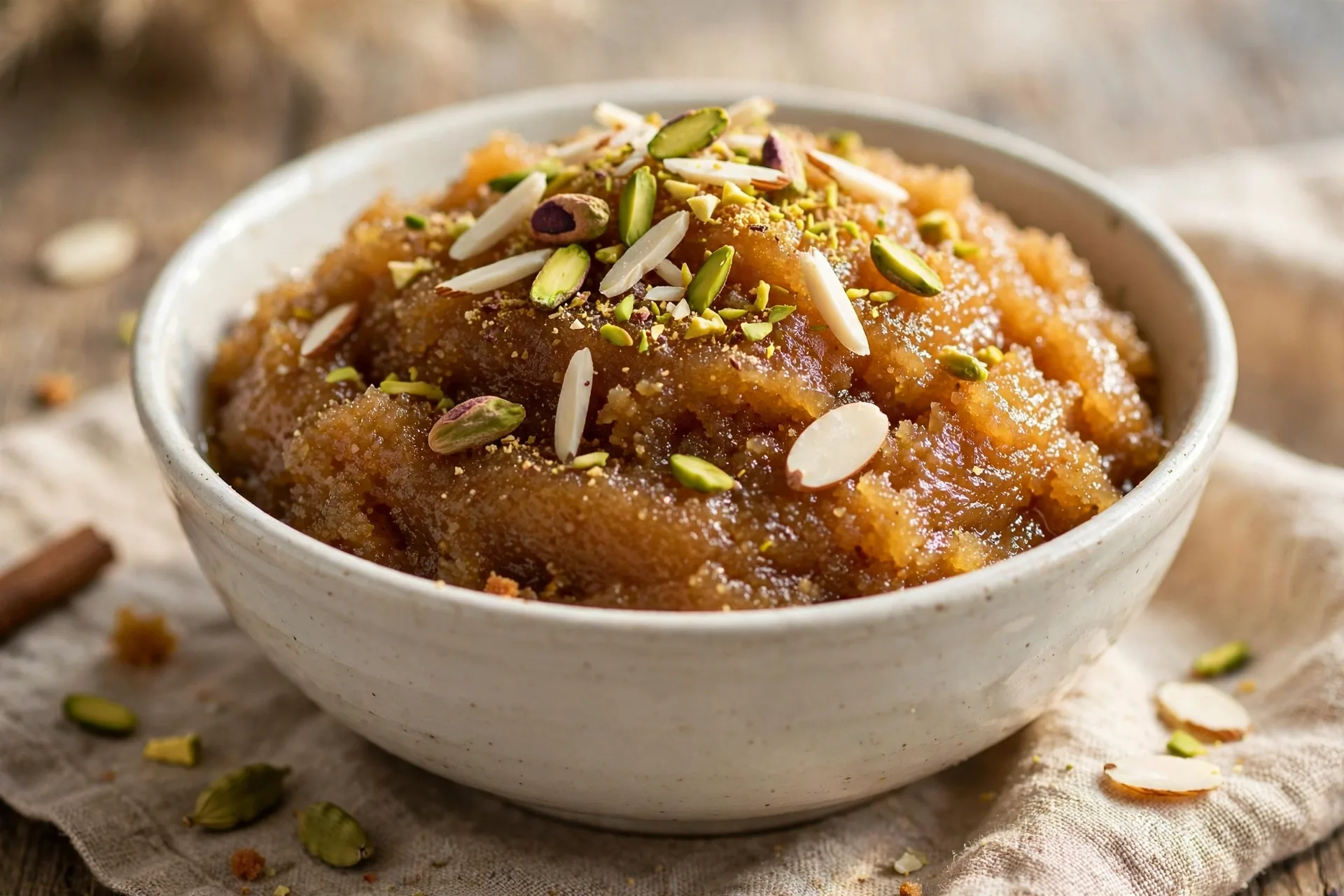
Take the pan off the heat and let the halwa rest, covered, for ten minutes. It will firm up slightly as it cools, turning from a soft pour into a spoonable, jewel-like mass that holds its shape in the bowl. Spoon it into small bowls and scatter the slivered almonds and pistachios over the top while it is still warm. Serve it warm for the fullest aroma, or at room temperature if you prefer a firmer set. That first golden spoonful, warm and fragrant, is what this badam halwa recipe was building toward.
Serving Suggestions
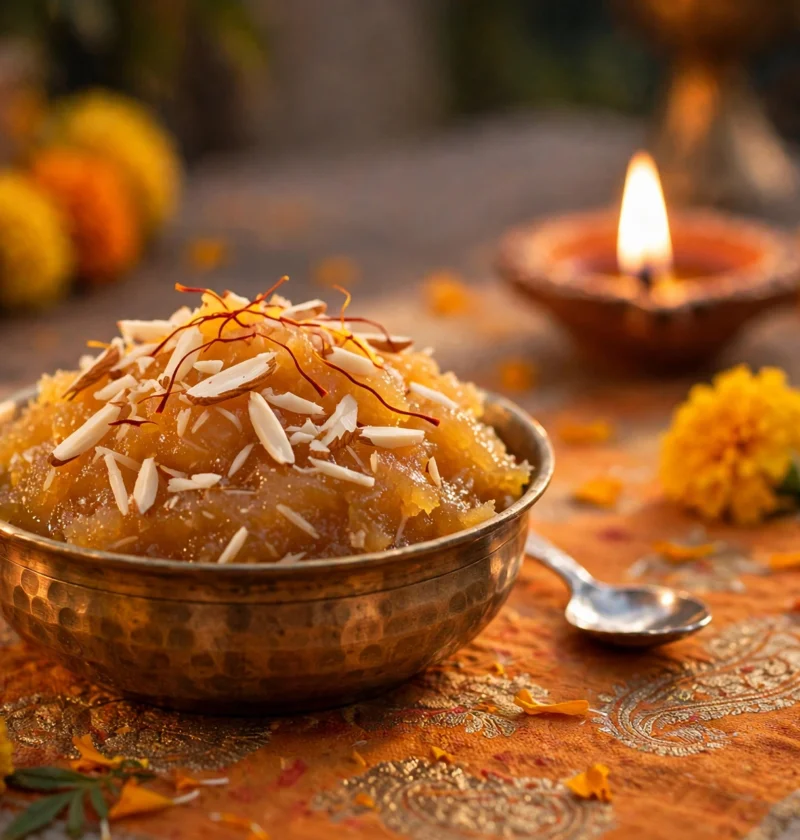
I love bringing this halwa to the table warm, in small brass or steel bowls, with nothing else on the plate — it carries the moment on its own. Unsweetened tea or black coffee alongside cuts the sweetness beautifully. For a wedding-style table, set out a tray of tiny bowls with a few marigolds scattered around, and let guests help themselves to seconds — they will.
When the table is full of desserts, I like to put this halwa out next to its cousins so everyone can compare textures. My Gajar Ka Halwa brings the slow-cooked, carrot-sweet warmth of winter to the same spread, while my Atta Halwa offers the simpler, everyday wheat version — and this badam halwa recipe sits between them as the most luxurious of the three, the one people save room for even after a heavy meal. A scoop of vanilla ice cream beside a warm spoonful is another lovely move, the cold cream melting into the gold.
For a festival, make the halwa a day ahead and warm it gently before serving — the flavour actually deepens overnight. It also makes a beautiful edible gift: pack it warm into small jars, top with slivered almonds, and tie a ribbon around the lid.
Storage and Reheating
Badam halwa keeps better than almost any other halwa I make. In a sealed container in the fridge it stays good for up to a week, and the texture holds — it firms when cold and softens again with gentle heat. To serve it again, warm it gently with a splash of milk, stirring until it loosens, and add a fresh pinch of cardamom at the end to wake the aroma back up.
For longer keeping, this halwa freezes well for up to a month: cool it completely, pack it into small freezer-safe boxes, and thaw overnight in the fridge before reheating. Skip the microwave for a full box — it heats unevenly and can turn the edges oily while the centre stays cold. One thing I never do is leave it sitting out all day at a warm party — ghee-rich sweets turn quickly in heat, so keep the serving bowl small and refill it from the fridge. Chilled, reheated gently, and garnished fresh, every bowl of this badam halwa recipe tastes just made.
Frequently Asked Questions
Why did my badam halwa turn out grainy?
Almost always, the almonds were under-soaked or under-ground. Skins left on, or a paste ground in a hurry with too little milk, will never smooth out in the pan no matter how long you stir. Soak until every skin slips off easily, grind with just enough warm milk to a peanut-butter smoothness, and the graininess disappears. A weak blender can also struggle — grind in small batches if yours stalls, rather than accepting a coarse paste.
Can I use almond flour instead of whole almonds?
You can, in a pinch, though the result will be a little less silky. Use finely ground blanched almond flour mixed with warm milk into a thick paste, and skip the soaking and peeling entirely. Reduce the roasting time by a few minutes, since the flour is already dry, and watch the colour closely — it goes from gold to dark fast. The flavour will be very close to this badam halwa recipe, but the texture of fresh-ground almonds is still the gold standard.
Can I make this badam halwa with less ghee?
You can trim it to about 1/3 cup, but expect a slightly drier, less glossy halwa. Ghee does two jobs here — it carries flavour and it stops the paste from sticking — so if you cut it, keep the heat lower and stir even more often. Adding an extra splash of milk at the end helps the texture, though it will not fully replace the richness. For a first attempt, I would make this badam halwa recipe as written, then adjust the ghee on the second batch once you know the target taste.
Is there a dairy-free version?
Yes, with a couple of swaps. Grind the almonds with warm oat or almond milk, and use neutral coconut oil in place of ghee — though the flavour will lean more tropical. Keep the heat low and the stirring steady, and the saffron and cardamom still do their perfuming work. Whatever milk you choose, taste and adjust the sweetness at the end, because that final tasting step decides whether a dairy-free take on this badam halwa recipe truly lands.
Recipe Summary
Count on a few hours of soaking (mostly hands-off), roughly twenty-five minutes at the stove, and four to six people are eating in about forty-five minutes of active time. Each small serving runs close to 420 calories, and this dish has earned its place on my festive shelf as the golden, saffron-scented halwa that turns an ordinary gathering into a proper celebration.
If you try it, I hope that first warm, nutty, cardamom-scented spoonful shows you why a tiny brass bowl at a wedding became one of my most-cooked desserts — rich, silky, and gone before the pot has cooled. To learn more, read about halva and the wider tradition of almonds in cooking on Wikipedia.